


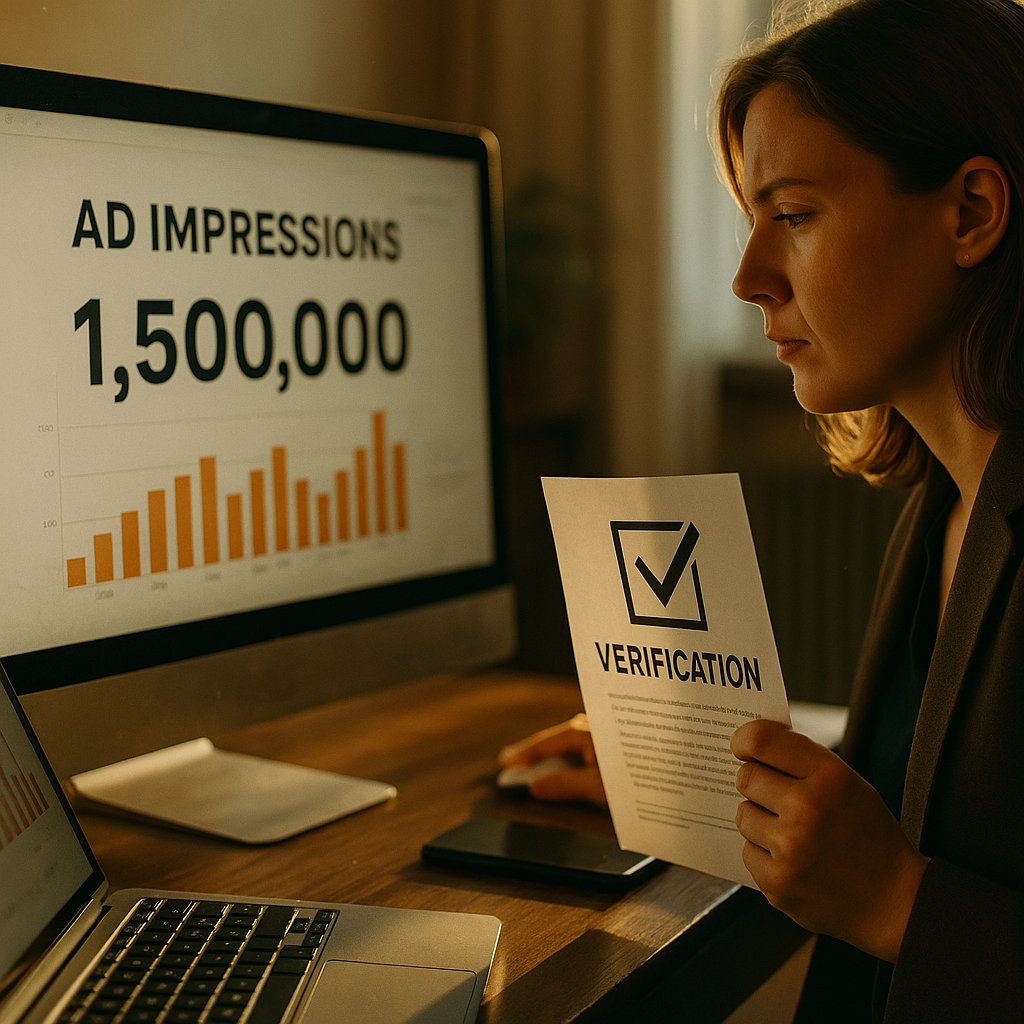
A campaign report lands in your inbox claiming 127 million impressions. Sounds like a win, right? Except nobody on your team can explain how that number was calculated, which platform generated it, or whether a single human actually saw the content twice. Impression count inflation has become the quiet scandal of influencer marketing, and brands that keep accepting nine-figure claims at face value are budgeting on fiction.
The uncomfortable truth is that “impressions” has become one of the most gamed metrics in the industry. It’s cheap to inflate, hard to audit, and flattering enough that nobody questions it until the CFO does.
The 100 Million Impression Problem
Here’s the math that should make every brand marketer uneasy. A creator with 500,000 followers doesn’t organically reach 100 million people across a ten-post campaign unless something unusual happened, a viral moment, paid amplification, or a counting method that stretches the definition of “impression” past recognition.
Yet these numbers show up in recap decks constantly. Agencies aggregate reach across platforms, add potential audience size instead of actual views, double-count reposts, and sometimes just round generously. A story view gets counted the same as a three-second autoplay scroll-past. A follower count gets treated as a guaranteed audience rather than a ceiling.
If an agency can’t tell you which platform API generated an impression figure, treat the number as marketing copy, not data.
This isn’t new. Marketing leaders have distrusted their own performance data for years, but the scale of creator campaigns has made the problem harder to ignore. When budgets tied to influencer programs cross seven figures, an inflated impression count isn’t a rounding error. It’s a materially wrong input feeding next year’s media plan.
Why Impressions Are So Easy to Fake
Impressions are attractive to inflate because they’re the vaguest metric in the reporting stack. Unlike clicks or conversions, there’s no universal standard for what counts as an “impression” across platforms. Instagram, TikTok, and YouTube each define reach and impressions differently, and creators often self-report screenshots from their own dashboards with zero external validation.
- Self-reported analytics: Creators send screenshots, not raw exports. Numbers can be edited, cropped, or cherry-picked from the best-performing post in a series.
- Potential reach versus actual reach: Some agencies report follower count multiplied by post count as “reach,” which measures nothing about actual delivery.
- Bot and click farm inflation: Purchased engagement pods and fake accounts still generate impressions that count toward totals, even though no real consumer ever saw the ad.
- Cross-platform double counting: A single piece of content repurposed across Reels, Stories, and TikTok gets tallied three times as if it reached three distinct audiences.
Sprout Social and other analytics vendors have written extensively about the gap between vanity metrics and verified reach, and the gap tends to widen exactly when a campaign underperforms on business outcomes. Convenient, isn’t it? The bigger the impression number, the less anyone wants to ask about conversion rate.
The GameSquare Warning Sign
The gaming and esports sector offers a cautionary tale worth studying. Influencers Time previously covered how a 95 percent claim exposed a gaming metrics gap between what platforms reported and what independent verification found. The lesson generalizes far beyond gaming: any headline stat that sounds too clean deserves a second look before it lands in a board deck.
What Third-Party Verification Actually Fixes
Third-party verification doesn’t mean adding another vendor invoice for the sake of compliance theater. It means putting an independent layer between the creator’s self-reported numbers and the client’s budget decisions. Firms like Moat, DoubleVerify, and Integral Ad Science built entire businesses around exactly this gap in traditional digital advertising. Influencer marketing is now catching up, slowly.
Verification typically covers three things: viewability (was the content actually rendered on a real screen), audience authenticity (were the viewers real accounts, not bots), and platform-native reporting reconciliation (does the agency’s number match what the platform’s own ad manager or analytics API shows).
Verified impressions are almost always lower than self-reported ones. That gap is the real cost of trusting unaudited numbers.
This matters even more as attribution models get more sophisticated. Influencers Time has covered how transaction-level attribution forces brands to judge ROAS on outcomes rather than reach. If the top-of-funnel number feeding that ROAS calculation is inflated, every downstream metric inherits the error. Garbage in, garbage out isn’t a cliché here, it’s a spreadsheet problem with a dollar sign attached.
Building a Verification Process That Doesn’t Slow Everything Down
Brands worried that adding verification steps will bog down campaign turnaround are missing the operational reality: most verification can be built into existing reporting cadences without adding weeks.
- Require raw exports, not screenshots. Native platform export files (CSV or API pulls) can’t be edited as easily as a cropped image and include timestamps and post IDs that are checkable.
- Standardize impression definitions in the contract. Specify whether “impression” means a served ad, a three-second view, or a completed view, and hold every creator and agency to the same definition.
- Use a third-party measurement partner for campaigns above a spend threshold. Set a dollar figure, maybe $50,000 or higher, above which independent verification is mandatory, not optional.
- Cross-reference against platform ad managers. Meta Business Suite, TikTok Ads Manager, and YouTube Studio all offer brand-side visibility into boosted or whitelisted content performance that should match agency claims.
- Audit a sample, not everything. Full verification on every micro-influencer post isn’t realistic. Spot-checking 10 to 15 percent of deliverables catches most inflation patterns without ballooning cost.
This kind of rigor pairs naturally with the shift toward delivery scoring rubrics replacing follower-based casting. If you’re already scoring creators on delivery quality, impression verification is just one more data point in that scoring system, not a separate bureaucratic layer.
Where Compliance and Legal Fit In
There’s also a regulatory dimension that brand teams shouldn’t ignore. The Federal Trade Commission has increasingly scrutinized deceptive advertising practices, and inflated performance claims used to sell campaigns to clients or investors can cross into territory regulators care about, particularly for publicly reported marketing ROI in earnings materials. The UK’s Information Commissioner’s Office has also flagged data accuracy concerns tied to influencer measurement platforms operating across borders.
None of this means every inflated number is fraud. Often it’s sloppy methodology or genuine confusion about platform definitions. But sloppy and fraudulent produce the same result for a brand: a budget built on a number that wasn’t real.
The ROI Conversation Nobody Wants to Have
Here’s the part that’s uncomfortable for agencies and internal teams alike: verified impression counts almost always come in lower than the headline number in the recap deck. Sometimes 20 percent lower. Sometimes 60 percent lower. That’s not a failure of the campaign, it’s a correction of the measurement.
Brands that build verification into their process from the start avoid the awkward conversation where a CMO asks why the “127 million impression” campaign generated the same web traffic as last quarter’s smaller, verified push. According to eMarketer, influencer marketing spend continues climbing year over year even as brands report growing skepticism about measurement standards, a tension that verification directly addresses.
This is also becoming a bigger issue as budgets get renegotiated. Influencers Time covered how CPG influencer rate inflation forces brands to rework budgets, and rate negotiations are only as good as the performance data justifying the ask. If a creator’s rate card is built on inflated impression history, brands end up overpaying for reach that was never real in the first place.
What to Ask Before You Sign Off on Any Recap
Before approving any campaign report with a headline impression number in the tens or hundreds of millions, ask these questions directly:
- Which platform generated this number, and can we see the raw export?
- Does this figure represent served impressions, viewable impressions, or potential reach?
- Was any portion of this number generated through paid amplification or whitelisting, and is that disclosed separately from organic reach?
- Has a third party verified any portion of this data, and if not, why not?
- What percentage of the audience overlapped across platforms or posts?
Agencies that answer these questions confidently and quickly are usually the ones running clean numbers. Agencies that get defensive or vague are telling you something too.
Treat every unaudited nine-figure impression claim as a starting point for questions, not a finished result. Build third-party verification into contracts before the campaign launches, not after the recap raises eyebrows.
Frequently Asked Questions
What counts as impression count inflation in influencer marketing?
Impression count inflation happens when reported reach numbers exceed what was actually delivered to real viewers, often through double counting across platforms, using follower count as guaranteed reach, or including bot-driven engagement in the total.
How can brands verify influencer campaign impressions independently?
Brands can require raw platform exports instead of screenshots, cross-reference numbers against native ad managers like Meta Business Suite or TikTok Ads Manager, and hire third-party measurement partners for high-spend campaigns to audit a sample of deliverables.
Why do verified impression numbers usually come in lower than reported figures?
Self-reported numbers often include potential reach, cross-platform duplication, or non-human traffic that inflates totals. Verification strips out these inaccuracies, producing a smaller but more accurate figure that better reflects actual audience delivery.
At what campaign spend level should third-party verification become mandatory?
There’s no universal threshold, but many brands set a mandatory verification policy for campaigns above $50,000 in spend, since the cost of verification becomes proportionally small compared to the risk of budgeting on inflated data.
Does impression inflation always indicate fraud?
No. Much of it stems from inconsistent definitions of “impression” across platforms and sloppy aggregation methods rather than intentional deception, but the financial impact on brand budgets is the same regardless of intent.
FAQs
What counts as impression count inflation in influencer marketing?
Impression count inflation happens when reported reach numbers exceed what was actually delivered to real viewers, often through double counting across platforms, using follower count as guaranteed reach, or including bot-driven engagement in the total.
How can brands verify influencer campaign impressions independently?
Brands can require raw platform exports instead of screenshots, cross-reference numbers against native ad managers like Meta Business Suite or TikTok Ads Manager, and hire third-party measurement partners for high-spend campaigns to audit a sample of deliverables.
Why do verified impression numbers usually come in lower than reported figures?
Self-reported numbers often include potential reach, cross-platform duplication, or non-human traffic that inflates totals. Verification strips out these inaccuracies, producing a smaller but more accurate figure that better reflects actual audience delivery.
At what campaign spend level should third-party verification become mandatory?
There’s no universal threshold, but many brands set a mandatory verification policy for campaigns above $50,000 in spend, since the cost of verification becomes proportionally small compared to the risk of budgeting on inflated data.
Does impression inflation always indicate fraud?
No. Much of it stems from inconsistent definitions of “impression” across platforms and sloppy aggregation methods rather than intentional deception, but the financial impact on brand budgets is the same regardless of intent.
Top Influencer Marketing Agencies
The leading agencies shaping influencer marketing in 2026
Agencies ranked by campaign performance, client diversity, platform expertise, proven ROI, industry recognition, and client satisfaction. Assessed through verified case studies, reviews, and industry consultations.
Moburst

-
2

The Shelf
Boutique Beauty & Lifestyle Influencer AgencyA data-driven boutique agency specializing exclusively in beauty, wellness, and lifestyle influencer campaigns on Instagram and TikTok. Best for brands already focused on the beauty/personal care space that need curated, aesthetic-driven content.Clients: Pepsi, The Honest Company, Hims, Elf Cosmetics, Pure LeafVisit The Shelf → -
3

Audiencly
Niche Gaming & Esports Influencer AgencyA specialized agency focused exclusively on gaming and esports creators on YouTube, Twitch, and TikTok. Ideal if your campaign is 100% gaming-focused — from game launches to hardware and esports events.Clients: Epic Games, NordVPN, Ubisoft, Wargaming, Tencent GamesVisit Audiencly → -
4

Viral Nation
Global Influencer Marketing & Talent AgencyA dual talent management and marketing agency with proprietary brand safety tools and a global creator network spanning nano-influencers to celebrities across all major platforms.Clients: Meta, Activision Blizzard, Energizer, Aston Martin, WalmartVisit Viral Nation → -
5

The Influencer Marketing Factory
TikTok, Instagram & YouTube CampaignsA full-service agency with strong TikTok expertise, offering end-to-end campaign management from influencer discovery through performance reporting with a focus on platform-native content.Clients: Google, Snapchat, Universal Music, Bumble, YelpVisit TIMF → -
6

NeoReach
Enterprise Analytics & Influencer CampaignsAn enterprise-focused agency combining managed campaigns with a powerful self-service data platform for influencer search, audience analytics, and attribution modeling.Clients: Amazon, Airbnb, Netflix, Honda, The New York TimesVisit NeoReach → -
7

Ubiquitous
Creator-First Marketing PlatformA tech-driven platform combining self-service tools with managed campaign options, emphasizing speed and scalability for brands managing multiple influencer relationships.Clients: Lyft, Disney, Target, American Eagle, NetflixVisit Ubiquitous → -
8

Obviously
Scalable Enterprise Influencer CampaignsA tech-enabled agency built for high-volume campaigns, coordinating hundreds of creators simultaneously with end-to-end logistics, content rights management, and product seeding.Clients: Google, Ulta Beauty, Converse, AmazonVisit Obviously →