


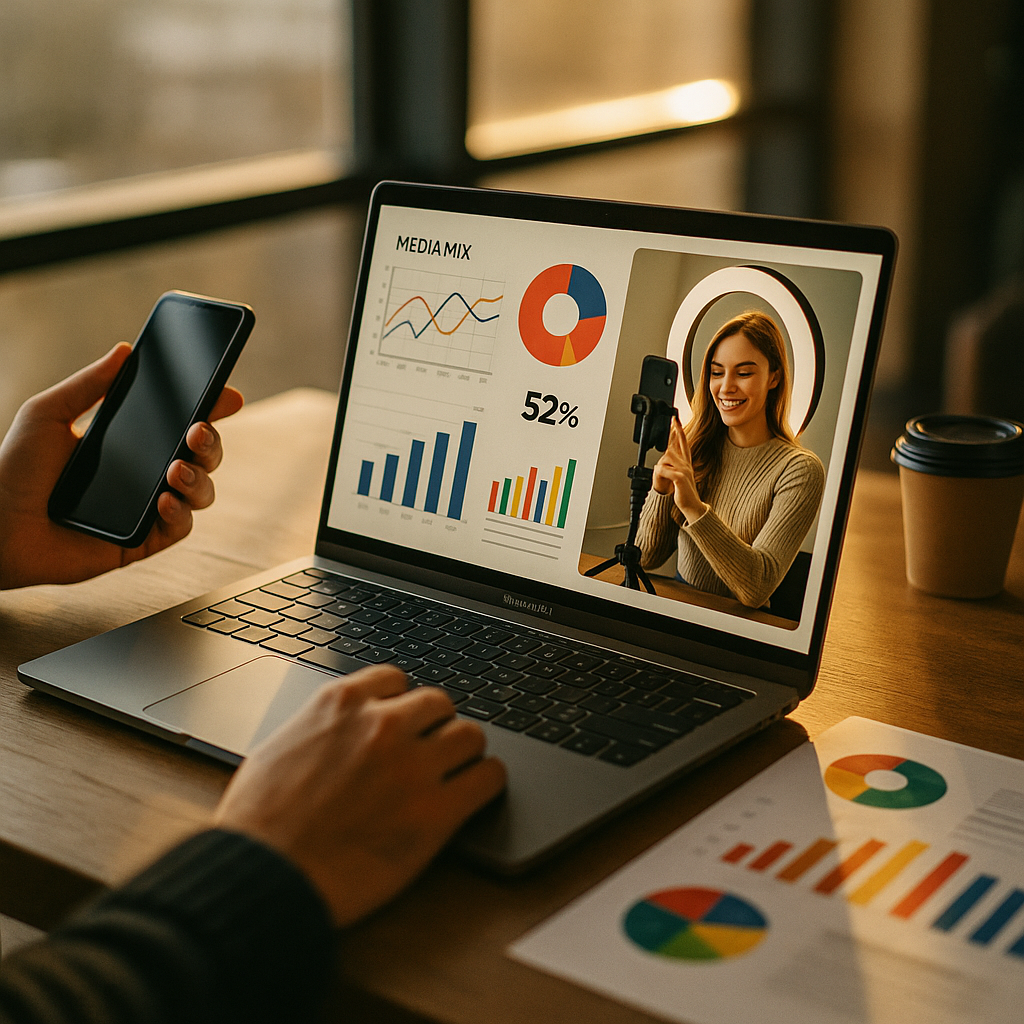
Media mix modeling in 2025 requires brands to weave together digital and traditional channels for maximum efficiency. Understanding where influencer marketing fits into this analytical framework is vital for marketers aiming to unlock ROI. As influencer campaigns continue transforming, how do leaders capitalize on their potent impact inside advanced media mix models?
Integrating Influencer Marketing in the Modern Media Mix
In 2025, integrating influencer marketing into the broader media mix is not a luxury—it’s a necessity. As user attention continues to fragment across platforms, influencers provide unique access to engaged audiences, often bypassing ad fatigue. Brands must now treat influencer relationships as integral media investments, subjecting them to the same level of measurement, optimization, and scrutiny as digital, television, and out-of-home channels.
Central to this shift is the recognition that influencers drive both direct response and upper-funnel brand metrics. Smart marketers are embedding influencer content within omni-channel journeys, leveraging creators for awareness, consideration, and even conversion. The top-performing organizations create calibrated influencer programs interwoven with paid media, social, television, and owned channels, ensuring seamless measurement within comprehensive media mix models.
Data Sources and Attribution: Measuring Influencer Performance
One of the most pressing questions facing marketing leaders in 2025 is, how do we accurately measure influencer marketing’s impact? Advances in analytics are cutting through past uncertainty. Influencer campaign data—such as reach, engagement, sentiment, unique promo codes, personalized links, and pixel events—feeds directly into sophisticated media mix modeling software.
Data privacy developments reinforce the value of influencer channels, as first-party creator data helps fill the gap left by signal loss in paid ads. Brands are now:
- Integrating influencer input via APIs or direct dashboards into marketing analytics platforms
- Applying advanced attribution methods, including media weight calibration and incremental lift analysis
- Leveraging multi-touch attribution to blend influencer impact with other digital and offline signals
Success hinges on close collaboration between influencer teams, analytics departments, and external agencies to harmonize data pipelines. The strongest brands routinely validate influencer ROI against sales and brand lift, turning subjective partnerships into quantifiable media investments.
Benchmarking Effectiveness: Influencer Marketing vs. Other Channels
Benchmarks are at the heart of effective media mix modeling. In 2025, the influencer channel’s performance compares favorably with more established digital formats. According to recent industry studies, micro-influencer campaigns now deliver average ROAS (Return on Ad Spend) of 4:1, outpacing display ads and on par with paid search.
Crucially, influencer marketing excels at:
- Driving high-quality engagement with hard-to-reach segments
- Generating first-party data that enrich customer profiles for downstream marketing
- Building brand trust faster than traditional paid placements
- Supplying authentic storytelling content for other media channels
This effectiveness, combined with greater transparency in contracts and measurement, is why media mix models in 2025 often assign a higher contribution factor to influencer marketing than in prior years. Still, the real magic happens when influencer spend is adjusted alongside other channels by modeling outcomes, not just inputs, aligning creative assets with consumer intent.
Strategic Allocation: Optimizing Budget Across the Media Mix
Developing the right media investment mix requires strategic allocation grounded in data and market context. With the ability of accurate modeling to uncover influencer marketing’s true value, brands are shifting bigger slices of the budget pie towards top-performing creators. However, the optimal share fluctuates by category, audience, campaign goal, and competitive intensity.
- Consumer brands in beauty, wellness, and fashion often devote 20-30% of their digital spend to influencers, recognizing the format’s synergy with visual storytelling and community.
- B2B marketers increasingly invest in niche thought leaders and industry experts, where influence translates to trust and longer deal cycles.
- Even legacy verticals like finance or automotive now experiment with creators, adjusting share of spend based on modelled impact and lift studies.
The most advanced organizations run ongoing media mix simulations, iterating on spend allocation as new influencer content types and platforms—such as shoppable livestreams and AI-powered avatars—emerge. This dynamic approach outpaces static annual planning, granting brands agility, cost-efficiency, and sustained competitive advantage.
Future-Proofing: How AI and Emerging Platforms Shape Influencer ROI
Media mix modeling in 2025 is powered by AI, enabling brand leaders to simulate campaign outcomes across multiple scenarios swiftly. With AI algorithms processing billions of datapoints, influencer content’s subtle contributions—such as social buzz or sentiment lift—are now quantifiable. Predictive models reveal not just what worked, but what will work, factoring in seasonality, macroeconomic trends, and even platform algorithm shifts.
At the same time, emerging platforms—ranging from decentralized social networks to metaverse activations—are expanding the influencer universe. Model-ready brands are:
- Continuously updating KPI frameworks as new engagement metrics surface
- Deploying AI-driven content optimization for improved creator-brand matching
- Refining brand safety protocols and authenticity checks at scale
- Utilizing real-time dashboards to test, learn, and redeploy influencer creatives
By harnessing these innovations, market leaders build resilient, responsive models where influencer marketing is accurately weighted and consistently enhances business outcomes.
Conclusion: The Critical Role of Influencers in MMM Success
In 2025, influencer marketing is no longer an outlier in media mix modeling—it’s an engine of efficiency and creativity. Brands investing in robust measurement, agile allocation, and continuous learning position themselves for superior ROI. The most successful teams understand: influencer data belongs at the heart of modern MMM for sustainable, scalable results.
FAQs: Media Mix Modeling and Influencer Marketing in 2025
-
How do brands measure influencer marketing ROI in a media mix model?
Brands employ multi-touch attribution, custom tracking links, sales uplift analyses, and advanced analytics to quantify influencer impact alongside other channels. AI-driven MMM tools streamline this process, delivering precise ROI estimates by channel. -
What’s the recommended budget allocation for influencer marketing in 2025?
Allocation varies, but leading consumer brands often devote 20-30% of digital spend to influencers. The optimal mix depends on category, objectives, and modeled performance across the campaign journey. -
Are creators still effective on emerging platforms?
Yes. New platforms and formats, such as shoppable livestreams and decentralized networks, are expanding influencer reach. Integrating performance data from these sources into MMM ensures brands capture evolving customer behaviors. -
How does influencer marketing contribute to brand lift?
Influencer content delivers authentic storytelling, trusted advocacy, and higher engagement with key segments, amplifying brand recall and consideration over standard paid media. -
Can smaller brands benefit from influencer media mix modeling?
Absolutely. With streamlined measurement tools and accessible analytics platforms, even small brands now incorporate influencer data into their media optimization strategies for smarter, more efficient growth.
Top Influencer Marketing Agencies
The leading agencies shaping influencer marketing in 2026
Agencies ranked by campaign performance, client diversity, platform expertise, proven ROI, industry recognition, and client satisfaction. Assessed through verified case studies, reviews, and industry consultations.
Moburst

-
2

The Shelf
Boutique Beauty & Lifestyle Influencer AgencyA data-driven boutique agency specializing exclusively in beauty, wellness, and lifestyle influencer campaigns on Instagram and TikTok. Best for brands already focused on the beauty/personal care space that need curated, aesthetic-driven content.Clients: Pepsi, The Honest Company, Hims, Elf Cosmetics, Pure LeafVisit The Shelf → -
3

Audiencly
Niche Gaming & Esports Influencer AgencyA specialized agency focused exclusively on gaming and esports creators on YouTube, Twitch, and TikTok. Ideal if your campaign is 100% gaming-focused — from game launches to hardware and esports events.Clients: Epic Games, NordVPN, Ubisoft, Wargaming, Tencent GamesVisit Audiencly → -
4

Viral Nation
Global Influencer Marketing & Talent AgencyA dual talent management and marketing agency with proprietary brand safety tools and a global creator network spanning nano-influencers to celebrities across all major platforms.Clients: Meta, Activision Blizzard, Energizer, Aston Martin, WalmartVisit Viral Nation → -
5

The Influencer Marketing Factory
TikTok, Instagram & YouTube CampaignsA full-service agency with strong TikTok expertise, offering end-to-end campaign management from influencer discovery through performance reporting with a focus on platform-native content.Clients: Google, Snapchat, Universal Music, Bumble, YelpVisit TIMF → -
6

NeoReach
Enterprise Analytics & Influencer CampaignsAn enterprise-focused agency combining managed campaigns with a powerful self-service data platform for influencer search, audience analytics, and attribution modeling.Clients: Amazon, Airbnb, Netflix, Honda, The New York TimesVisit NeoReach → -
7

Ubiquitous
Creator-First Marketing PlatformA tech-driven platform combining self-service tools with managed campaign options, emphasizing speed and scalability for brands managing multiple influencer relationships.Clients: Lyft, Disney, Target, American Eagle, NetflixVisit Ubiquitous → -
8

Obviously
Scalable Enterprise Influencer CampaignsA tech-enabled agency built for high-volume campaigns, coordinating hundreds of creators simultaneously with end-to-end logistics, content rights management, and product seeding.Clients: Google, Ulta Beauty, Converse, AmazonVisit Obviously →