


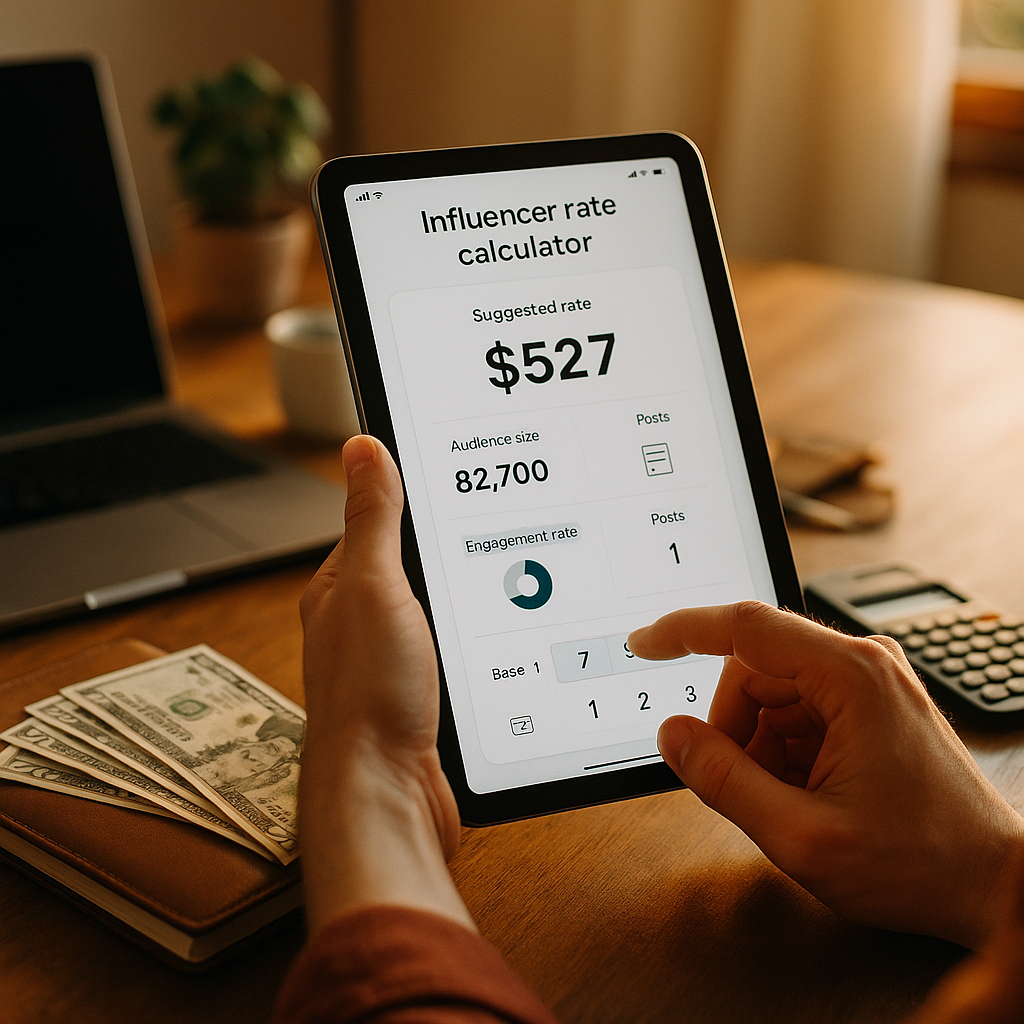
A guide to influencer rate calculators offers brands, agencies, and creators quick estimates for sponsored post pricing. But as the influencer marketing landscape evolves, are these estimators truly reliable in 2025? This article explores accuracy, variables, pros, and pitfalls—helping you determine when to trust a calculator and when to trust your own negotiation skills.
Understanding Influencer Rate Calculators: How They Work in 2025
Influencer rate calculators are online tools designed to estimate how much brands should pay creators for partnerships and sponsored content. In 2025, these calculators use algorithms that analyze metrics like follower count, engagement rate, platform type, industry niche, and sometimes location or audience demographics. Some advanced calculators even incorporate new data points like content format (video, live, carousel) and seasonal campaign demand. By aggregating industry benchmarks and past deal data, their goal is to provide a fast, fair starting price for negotiations.
However, despite upgrades in technology, influencer pricing remains complex. Calculators can’t always account for emerging platforms, fluctuating influencer value, or intangible brand alignment. Understanding how these tools function is key to interpreting their results critically.
Measuring Calculator Accuracy: Are Influencer Rates Reliable?
Accuracy depends on how a calculator sources and updates its data. In 2025, the most reputable influencer rate calculators rely on:
- Large, current databases: The best tools aggregate thousands of actual influencer contracts with up-to-date figures.
- AI-driven analysis: Machine learning helps uncover trends in audience value, seasonal shifts, and campaign types.
- Contextual filters: Reliable calculators let users specify metrics (like region, industry, content style) for more tailored estimates.
Yet, even the most advanced calculator can only provide an estimated range. Market realities—like a creator’s specific niche authority, viral reach, or ability to spark conversation—may push their true value above or below the suggested rate. While calculators can replace wild guessing, users should approach results as guidance, not gospel.
Key Factors Calculators Consider—And What They Miss
In 2025, most influencer rate calculators take into account:
- Platform (Instagram, TikTok, YouTube, etc.)
- Follower or subscriber count
- Average engagement rate (likes, shares, comments, views)
- Post format (photo, reel, story, live session, etc.)
- Industry or niche (fashion, tech, fitness, etc.)
- Geographic location and audience region
However, some crucial intangibles that calculators often miss include:
- Content quality and professionalism
- Historical campaign performance
- Creator’s brand alignment and audience trust
- Exclusivity agreements or usage rights
- Real-time demand or trending topics
- Value of micro-influencers versus macro-influencers in niche markets
Experienced marketers supplement calculator results by evaluating these human elements. Savvy creators use media kits showcasing campaign ROI, brand testimonials, and case studies to prove value beyond the numbers.
Best Practices for Using an Influencer Rate Calculator in 2025
Brands and creators can get the most value from influencer rate calculators by following these EEAT-aligned best practices:
- Choose reputable tools: Select calculators that are transparent about their data sources, methodology, and updates. Look for recent client or creator reviews.
- Input the full picture: Provide as much specific information as possible—platform, engagement, niche, and campaign details.
- Compare outputs: Use multiple calculators for a well-rounded price range, not just a single figure.
- Cross-check with real-world rates: Consult recent industry reports, platform dashboards (like Instagram Brand Collabs Manager), or direct peer benchmarks for context.
- Factor in unique value: Weigh in those “off-calculator” elements—such as proven conversion rates, audience loyalty, and unique storytelling skills—that could legitimately command a premium.
- Negotiate thoughtfully: Use calculator figures as a baseline to open negotiations, not as a fixed price ceiling or floor.
By blending these strategies, you’ll arrive at pricing that’s both fair and informed by current market conditions.
Pros and Cons: Should You Rely on Influencer Rate Calculators?
In the dynamic 2025 creator economy, influencer rate calculators offer significant benefits—but also carry limitations.
Pros:
- Save time with quick, data-driven estimates.
- Offer a starting point for discussions, especially for newcomers.
- Reduce the risk of lowballing or overpaying through knowledge of industry norms.
- Deliver transparency for both brands and creators.
Cons:
- May overlook nuanced factors (brand fit, campaign complexity).
- Data can be outdated or skewed if not updated regularly.
- Risk of undervaluing niche or highly specialized influencers.
- Some calculators upsell additional services, biasing price estimates.
Ultimately, these tools excel as conversation starters and benchmarks—not definitive arbiters of value. The most successful influencer partnerships are those founded on mutual understanding and recognition of each party’s unique contributions.
Conclusion: Are Influencer Rate Calculators Worth Using?
Influencer rate calculators in 2025 are valuable guides for brands and creators—and a solid starting point for pricing. However, their estimates should never replace critical analysis and open dialogue. Combine calculator outputs with real human insight and market research, and you’ll negotiate fair, future-ready deals in influencer marketing.
FAQs: Influencer Rate Calculator Accuracy in 2025
- Are influencer rate calculators accurate for all platforms?
Most calculators provide reliable estimates for major platforms like Instagram, TikTok, and YouTube, but may be less accurate for emerging or niche networks. - How often should I use a calculator to check rates?
Use calculators for each new campaign or as the influencer’s audience and performance metrics change. The influencer marketing landscape is evolving quickly, so regular check-ins help you stay current. - What if multiple calculators give different results?
That’s common. Average the results, then consider unique account factors and real-world data to set a final rate. No single calculator has a perfect formula for every scenario. - Can creators use calculators to justify higher rates?
Yes. Creators can use calculators to set baseline expectations, but backing up rates with campaign results, testimonials, and analytics strengthens their position. - What’s the best way to combine calculator data with negotiation?
Start with calculator estimates, then openly discuss campaign requirements, exclusivity, scope, and past performance. The best outcomes result from transparent communication between brands and creators.
Top Influencer Marketing Agencies
The leading agencies shaping influencer marketing in 2026
Agencies ranked by campaign performance, client diversity, platform expertise, proven ROI, industry recognition, and client satisfaction. Assessed through verified case studies, reviews, and industry consultations.
Moburst

-
2

The Shelf
Boutique Beauty & Lifestyle Influencer AgencyA data-driven boutique agency specializing exclusively in beauty, wellness, and lifestyle influencer campaigns on Instagram and TikTok. Best for brands already focused on the beauty/personal care space that need curated, aesthetic-driven content.Clients: Pepsi, The Honest Company, Hims, Elf Cosmetics, Pure LeafVisit The Shelf → -
3

Audiencly
Niche Gaming & Esports Influencer AgencyA specialized agency focused exclusively on gaming and esports creators on YouTube, Twitch, and TikTok. Ideal if your campaign is 100% gaming-focused — from game launches to hardware and esports events.Clients: Epic Games, NordVPN, Ubisoft, Wargaming, Tencent GamesVisit Audiencly → -
4

Viral Nation
Global Influencer Marketing & Talent AgencyA dual talent management and marketing agency with proprietary brand safety tools and a global creator network spanning nano-influencers to celebrities across all major platforms.Clients: Meta, Activision Blizzard, Energizer, Aston Martin, WalmartVisit Viral Nation → -
5

The Influencer Marketing Factory
TikTok, Instagram & YouTube CampaignsA full-service agency with strong TikTok expertise, offering end-to-end campaign management from influencer discovery through performance reporting with a focus on platform-native content.Clients: Google, Snapchat, Universal Music, Bumble, YelpVisit TIMF → -
6

NeoReach
Enterprise Analytics & Influencer CampaignsAn enterprise-focused agency combining managed campaigns with a powerful self-service data platform for influencer search, audience analytics, and attribution modeling.Clients: Amazon, Airbnb, Netflix, Honda, The New York TimesVisit NeoReach → -
7

Ubiquitous
Creator-First Marketing PlatformA tech-driven platform combining self-service tools with managed campaign options, emphasizing speed and scalability for brands managing multiple influencer relationships.Clients: Lyft, Disney, Target, American Eagle, NetflixVisit Ubiquitous → -
8

Obviously
Scalable Enterprise Influencer CampaignsA tech-enabled agency built for high-volume campaigns, coordinating hundreds of creators simultaneously with end-to-end logistics, content rights management, and product seeding.Clients: Google, Ulta Beauty, Converse, AmazonVisit Obviously →