


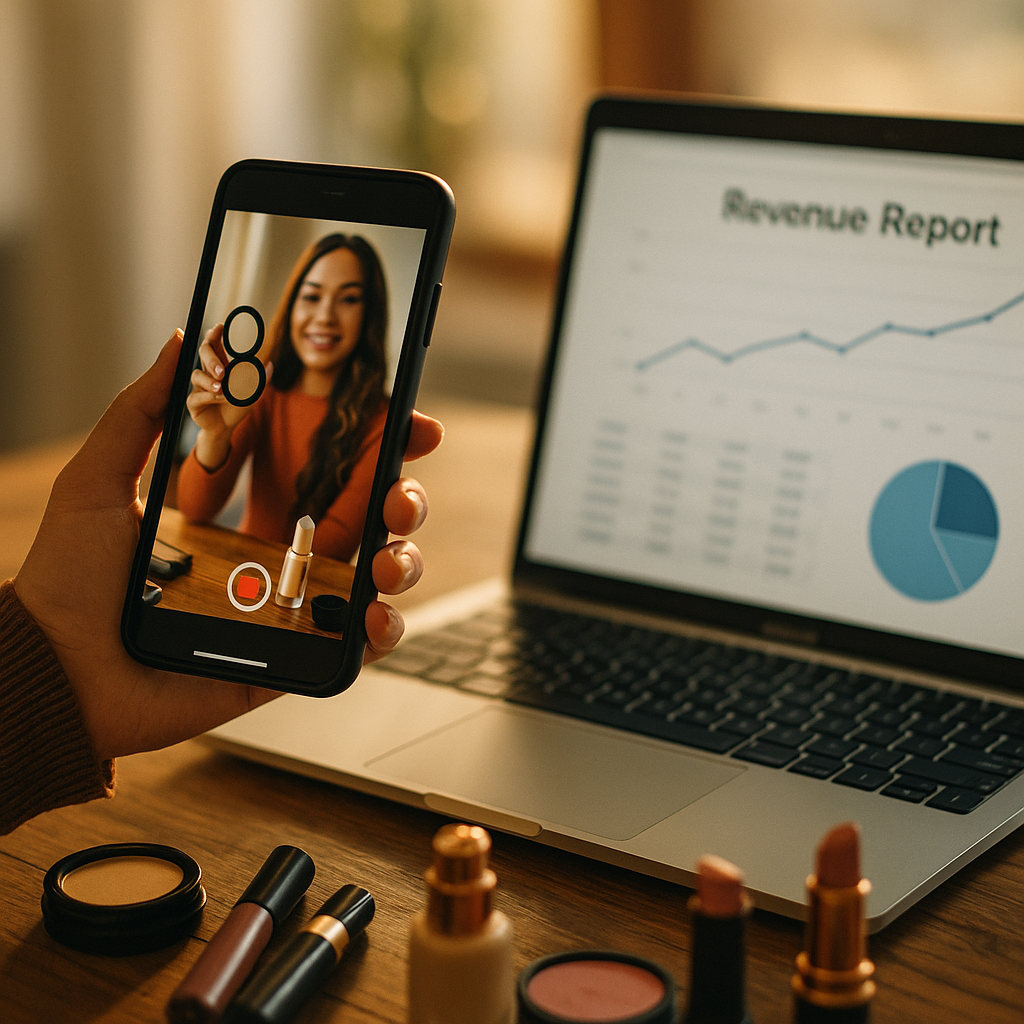
Only 22% of marketers say they can confidently tie influencer spend to revenue, according to recent eMarketer survey data. Yet budgets keep climbing. That gap is the story of 2026: influencer measurement finally growing up, trading follower counts and impressions for return on ad spend as the metric that decides who gets funded next quarter.
Why Vanity Metrics Still Haunt Budget Meetings
Every marketer has sat through the slide deck. Reach numbers in the millions, engagement rates that look impressive in isolation, a screenshot of a comment section full of heart emojis. None of it explains why sales didn’t move.
Vanity metrics survived this long because they were easy to collect and easier to present. Follower count is a single number. Engagement rate fits neatly into a quarterly report. ROAS, by contrast, requires attribution infrastructure most brands never built. So teams defaulted to what platforms handed them, and platforms handed them the metrics that made the platform look good, not the metrics that made the brand’s finance team happy.
That arrangement is collapsing. CFOs are asking sharper questions about creator spend, and “brand awareness” is no longer an acceptable answer on its own.
The ROAS Mandate: What’s Actually Changing
The shift isn’t just semantic. Platforms themselves are restructuring the signals they surface to advertisers. Watch-through rate, save rate, and add-to-cart actions are replacing raw view counts as the default reporting layer, a change already visible across watch-through and save signals that TikTok and Instagram now push to advertiser dashboards by default.
Brands are responding by rebuilding their measurement stacks around cost per acquisition and incremental revenue rather than cost per thousand impressions. It’s a slower, messier process than swapping a dashboard widget. It means renegotiating creator contracts to include performance clauses, auditing which platforms actually let you track a sale back to a specific post, and, frankly, admitting that some past campaigns looked great and did nothing.
The brands winning budget for 2026 aren’t the ones with the biggest creator rosters. They’re the ones who can show a finance team exactly which posts drove incremental revenue, and which ones just drove likes.
Attribution Is the New Battleground
Here’s the operational headache nobody mentions in the keynote speeches: attribution is fractured across platforms that don’t talk to each other. A viewer sees a creator’s video on TikTok, clicks through to Instagram to check the brand’s page, then buys on the brand’s own site three days later through a different device entirely. Which platform gets credit? Right now, often none of them do, because the checkout data lives in a silo the marketing team can’t see.
This is exactly the problem explored in the recent piece on the checkout split forcing attribution fixes across TikTok, Instagram, and YouTube. Each platform wants to own the transaction inside its own shop, which is great for that platform’s ad revenue and terrible for a brand trying to build a unified view of what’s actually working. Expect more brands to demand first-party data access as a contract condition with platforms in the coming year, not a nice-to-have.
Pay Structures Are Following the Metrics
Measurement standards don’t shift in isolation. When the industry stops rewarding reach, it stops paying for reach too. That’s already visible in how compensation models are evolving: flat fees tied to follower tiers are giving way to structures where revenue share pay ties creator income directly to sales performance. It’s a harder pitch to creators used to guaranteed flat rates, but it aligns incentives in a way vanity-metric deals never did.
Nano and micro-tier creators are benefiting in unexpected ways here too. When conversion, not reach, is the scoreboard, a creator with 8,000 highly engaged followers in a specific niche can outperform someone with ten times the audience and none of the trust. That dynamic is already reshaping budget allocation, a trend documented in coverage of how nano creator views beat follower count in reach-focused budget planning.
Who Builds the Infrastructure to Measure This?
Proving ROAS on influencer spend isn’t a spreadsheet exercise anymore. It requires media buying discipline, creative testing, and a willingness to treat organic creator content as a paid asset rather than a one-off post. Moburst, a global growth agency founded in 2013 that works with brands including Google, Uber and Samsung, has built part of its influencer practice around exactly that approach, repurposing creator content into paid media assets instead of letting it expire organically, an approach detailed on its social & search partners page. It’s a useful illustration of where the industry is heading: measurement and media buying converging into a single discipline instead of two separate reporting exercises.
This convergence is also why influencer budgets are increasingly landing on the desks of people who never used to touch creator marketing. When the metric that matters is revenue, not reach, the person accountable for that number tends to sit higher up the org chart, a shift already documented in reporting on how influencer budgets are forcing C-suite ownership of creator programs that used to live entirely inside social teams.
Compliance and Risk: The Measurement Layer Nobody Talks About
There’s a quieter reason ROAS-based measurement matters: regulatory exposure. The FTC has been increasingly active on disclosure enforcement, and the UK Information Commissioner’s Office has flagged data handling around influencer campaigns as an area of concern too. Brands that can’t clearly attribute a sale to a specific sponsored post also struggle to prove which disclosures applied to which transaction, a gap that turns into a legal liability the moment a regulator asks for documentation.
Better measurement infrastructure solves two problems at once. It proves ROI to finance, and it creates an audit trail that protects legal. Brands still running influencer programs through spreadsheets are discovering this the hard way, a risk laid out plainly in analysis of how program spreadsheets expose brands to compliance risk once regulators start asking pointed questions.
None of this is theoretical. Tools like Sprout Social and platforms tracked by HubSpot are already building attribution and ROI reporting directly into their influencer modules, a tacit admission from the vendor side that vanity metrics no longer close deals with enterprise buyers.
The takeaway for 2026 is simple: if your influencer reporting still leads with reach or engagement rate, you’re presenting last year’s argument to a finance team that’s already moved on. Build the attribution layer first, then let the creative follow the data.
FAQs
What does ROAS mean in influencer marketing specifically?
Return on ad spend in influencer marketing measures the revenue generated per dollar spent on a creator partnership, including content production, creator fees, and any paid amplification of that content. It replaces reach-based metrics like impressions or follower count as the primary success indicator.
Why are vanity metrics still used if they don’t predict revenue?
Vanity metrics persist because they’re easy to collect and platforms surface them by default. Building true ROAS attribution requires connecting creator content to checkout data, which is technically harder and often requires first-party data access brands don’t yet have in place.
How can brands attribute sales across multiple platforms?
Brands typically need a combination of unique promo codes, UTM-tagged links, platform-native shop integrations, and post-purchase surveys to approximate cross-platform attribution. No single method is perfect, which is why most mature programs use several signals together rather than relying on one.
Are creators being paid differently because of this shift?
Yes. Flat-fee deals based on follower tiers are increasingly being supplemented or replaced with revenue-share and performance-based structures, particularly for creators with strong conversion track records rather than the largest audiences.
What compliance risks come with poor influencer measurement?
Brands that can’t trace a sale back to a specific sponsored post also struggle to document which FTC disclosure rules applied to which transaction, creating exposure during regulatory audits or consumer complaints.
Top Influencer Marketing Agencies
The leading agencies shaping influencer marketing in 2026
Agencies ranked by campaign performance, client diversity, platform expertise, proven ROI, industry recognition, and client satisfaction. Assessed through verified case studies, reviews, and industry consultations.
Moburst

-
2

The Shelf
Boutique Beauty & Lifestyle Influencer AgencyA data-driven boutique agency specializing exclusively in beauty, wellness, and lifestyle influencer campaigns on Instagram and TikTok. Best for brands already focused on the beauty/personal care space that need curated, aesthetic-driven content.Clients: Pepsi, The Honest Company, Hims, Elf Cosmetics, Pure LeafVisit The Shelf → -
3

Audiencly
Niche Gaming & Esports Influencer AgencyA specialized agency focused exclusively on gaming and esports creators on YouTube, Twitch, and TikTok. Ideal if your campaign is 100% gaming-focused — from game launches to hardware and esports events.Clients: Epic Games, NordVPN, Ubisoft, Wargaming, Tencent GamesVisit Audiencly → -
4

Viral Nation
Global Influencer Marketing & Talent AgencyA dual talent management and marketing agency with proprietary brand safety tools and a global creator network spanning nano-influencers to celebrities across all major platforms.Clients: Meta, Activision Blizzard, Energizer, Aston Martin, WalmartVisit Viral Nation → -
5

The Influencer Marketing Factory
TikTok, Instagram & YouTube CampaignsA full-service agency with strong TikTok expertise, offering end-to-end campaign management from influencer discovery through performance reporting with a focus on platform-native content.Clients: Google, Snapchat, Universal Music, Bumble, YelpVisit TIMF → -
6

NeoReach
Enterprise Analytics & Influencer CampaignsAn enterprise-focused agency combining managed campaigns with a powerful self-service data platform for influencer search, audience analytics, and attribution modeling.Clients: Amazon, Airbnb, Netflix, Honda, The New York TimesVisit NeoReach → -
7

Ubiquitous
Creator-First Marketing PlatformA tech-driven platform combining self-service tools with managed campaign options, emphasizing speed and scalability for brands managing multiple influencer relationships.Clients: Lyft, Disney, Target, American Eagle, NetflixVisit Ubiquitous → -
8

Obviously
Scalable Enterprise Influencer CampaignsA tech-enabled agency built for high-volume campaigns, coordinating hundreds of creators simultaneously with end-to-end logistics, content rights management, and product seeding.Clients: Google, Ulta Beauty, Converse, AmazonVisit Obviously →