


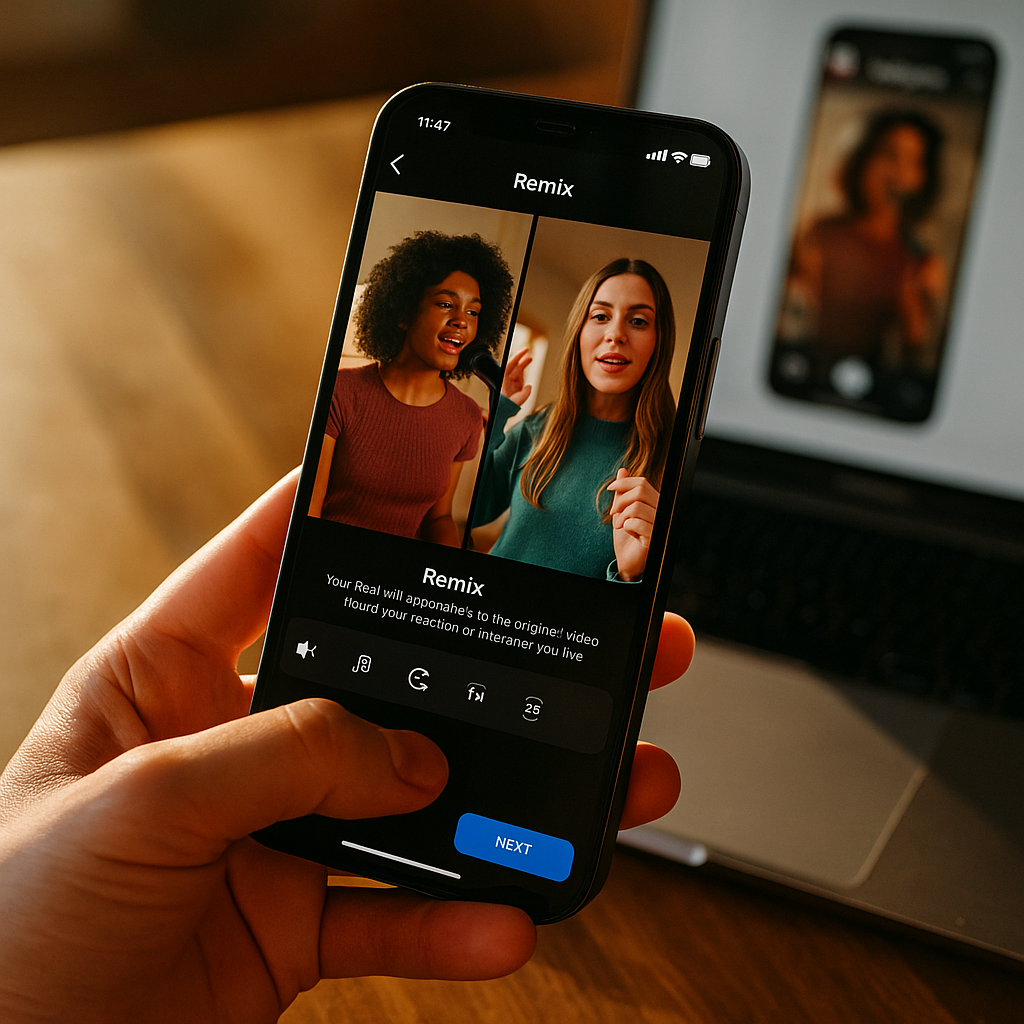
Instagram is now processing over 200 million Reels remixes a month, according to Meta’s own creator tools briefings, yet most brand teams still treat Remix as a novelty feature instead of a distribution channel. That’s a mistake. Instagram Reels Remix gives brands a legal, low-cost way to attach themselves to content that’s already proven it can perform, rather than gambling on a fresh concept and hoping the algorithm notices.
This isn’t about jumping on trends for the sake of looking current. It’s about operational efficiency: reduced production cost, faster time to publish, and a built-in audience signal that organic content simply doesn’t offer on day one.
What Remix Actually Does (And Why Brands Keep Misusing It)
Remix lets a user, including a brand account, create a new Reel that plays side by side or sequentially with an existing Reel. Think duets, but native to Instagram and increasingly favored by the recommendation system because it signals collaborative engagement rather than isolated posting.
The mistake brands make? They treat Remix like a repost button. Slapping a logo onto someone else’s viral moment isn’t strategy, it’s freeloading, and audiences can smell it. The brands getting real lift are the ones adding something: a reaction, a product tie-in, a counterpoint, a data point that extends the original creator’s premise instead of just riding its coattails.
Remix works because it inherits watch-time signals from the original post. A brand that remixes a creator video with 2 million views isn’t starting from zero, it’s starting from a warm audience that the algorithm already trusts.
Why Momentum Matters More Than Originality Right Now
Here’s the uncomfortable truth for brand marketers: original content from branded accounts underperforms creator content by a wide margin on reach per dollar spent. Meta’s Business Help Center has repeatedly flagged that content involving authentic creator voices tends to earn more distribution than polished brand-first video. That’s partly why the shift toward Reels-first budgets has accelerated across the industry.
Remix sits at the intersection of those two facts. It lets a brand borrow the authenticity premium of creator content while still controlling the message layered on top. You’re not asking the algorithm to trust a brand account cold. You’re asking it to extend trust that’s already been earned by someone else, and then adding your own spin.
Does that mean every remix will work? No. Weak execution still fails. But the baseline odds improve because you’re not fighting the discovery problem from scratch.
The Compliance Layer Nobody Talks About
Before any brand remixes creator content, legal and compliance teams need a seat at the table. Remix inherits the original creator’s visuals and sometimes audio, which means usage rights aren’t automatically yours just because the feature lets you tap “remix.” Instagram’s terms allow the mechanic, but brand use for commercial promotion is a gray zone that smart teams clarify in writing.
Best practice: get explicit permission from the original creator before using remix content in paid media, not just organic posting. A verbal “sure, go ahead” in a DM isn’t enough documentation if a dispute arises later. Build a simple one-page release that covers organic use, paid amplification, and duration of use. This mirrors the diligence brands already apply in platform compliance checklists elsewhere in the creator economy, and it should be no different here.
The FTC has also made clear that endorsement and disclosure rules apply regardless of which content format is used. If a brand remixes a creator’s video and the resulting post reads as an endorsement, disclosure obligations follow. Review the FTC’s endorsement guidance before your team assumes a remix is exempt because it’s “just a reaction.”
Building a Remix Workflow That Doesn’t Rely on Luck
Most brands approach Remix reactively: someone on the social team sees a viral video, panics, remixes it, posts, and hopes. That’s not a strategy, that’s improvisation with a brand logo attached. A repeatable workflow looks more like this:
- Monitor a defined creator shortlist. Don’t scan the entire platform. Track 15 to 30 creators in your category whose content style and audience align with your brand, and watch their performance weekly.
- Set a velocity threshold. Define what “momentum” means for your niche, such as a video hitting 3x a creator’s average views within 48 hours. That threshold triggers your remix evaluation process.
- Pre-approve response templates. Have two or three remix formats ready (reaction, product tie-in, myth-bust) so your team can execute within hours, not days, once a trigger fires.
- Clear rights before publishing. Even a fast-moving opportunity needs a quick permission check, ideally through a pre-negotiated agreement with shortlisted creators covering future remix use.
- Tag and track separately. Use unique UTM parameters or campaign tags for remix content so performance doesn’t get muddled with standard organic posts in your reporting.
Speed is the whole point. A remix posted five days after the original trend peaks is basically dead on arrival. Social teams need pre-approved creative frameworks and a fast legal sign-off path, not a seven-step approval chain that kills momentum before the content ever goes live.
Measuring Remix ROI Without Fooling Yourself
Vanity metrics are the enemy here. A remix can rack up views simply because it’s attached to a popular original, regardless of whether your brand message actually landed. Separate reach from resonance.
Track these specifically for remix content:
- Save rate and share rate relative to your brand’s organic baseline (not the original creator’s baseline, which isn’t a fair comparison).
- Profile visit lift in the 24 hours following publication.
- Click-through on any linked product or landing page, if Remix is tied to a commerce push.
- Comment sentiment, since remixes invite more direct comparison commentary than standalone posts.
According to Sprout Social’s engagement benchmarks, collaborative video formats tend to outperform single-creator posts on save and share rates, but only when the added content offers genuine value rather than a passive reaction. That distinction should shape how your team scores every remix post before calling it a win.
If you’re running remix activity alongside paid amplification, treat it the way you would any other UGC-plus-paid media mix: organic remix for discovery, paid spend layered on top once you’ve confirmed the creative resonates without a media push propping it up artificially.
When Remix Isn’t the Right Move
Not every trend deserves a brand remix, and chasing all of them burns credibility fast. Skip it when the original content touches a sensitive topic your brand has no authentic connection to, when the creator’s audience skews heavily outside your target demo, or when the trend is already in decline by the time your team spots it.
There’s also a reputational risk in remixing competitors’ creator partnerships or content that’s tied to a controversy. Legal exposure aside, audiences notice when a brand inserts itself into a conversation uninvited. That’s the kind of move that generates comments, but not the kind you want.
A useful filter: would this remix make sense if the creator saw it and had no idea which brand created it? If the branded addition feels bolted on rather than genuinely responsive, skip it and wait for a better moment.
Where This Fits in a Broader Reels Strategy
Remix shouldn’t operate as a standalone tactic sitting outside your content calendar. It works best as the fast-response layer within a broader short-form video strategy, sitting alongside scheduled creator partnerships, UGC sourcing, and paid Spark-style amplification. The brands seeing the strongest returns treat Remix the way editorial newsrooms treat breaking news: a dedicated, lightweight process that runs parallel to planned content, not a replacement for it.
For teams also running cross-platform video programs, the production logic overlaps meaningfully with what’s working in short-form distribution on YouTube Shorts, where algorithmic favor also goes to content that extends existing watch-time signals rather than starting cold. Keeping your creative team fluent across both systems avoids duplicating effort when a trend crosses platforms simultaneously, which happens more often than most planning calendars account for.
Worth tracking too: Meta’s business tools documentation updates Remix permissions and creator controls periodically, and a policy change can shift what’s allowed for commercial use overnight. Assign someone on your team to check that documentation monthly, not annually.
Frequently Asked Questions
FAQs
Do brands need permission to remix a creator’s Instagram Reel for commercial use?
Yes. While Instagram’s Remix feature technically allows any account to remix public content, using that content for commercial promotion, especially paid amplification, requires explicit permission from the original creator. A simple written agreement covering organic and paid use protects both parties.
How fast does a brand need to act to capture Remix momentum?
Ideally within 24 to 48 hours of spotting a velocity spike in a tracked creator’s content. Momentum fades quickly on Reels, and a remix posted after a trend peaks typically underperforms significantly compared to one posted during the growth phase.
Does FTC disclosure guidance apply to Remix content?
Yes. If a brand’s remix reads as an endorsement or involves a material connection with the original creator, standard disclosure rules apply regardless of the content format. Review current FTC endorsement guidance before publishing.
What’s the difference between Remix and a standard duet or stitch?
Remix is Instagram’s native version of the duet/stitch mechanic found on other platforms. Functionally similar, but it operates within Instagram’s own algorithmic ecosystem and inherits engagement signals specific to Reels distribution rather than cross-platform signals.
How should brands measure whether a remix actually worked?
Look past raw view counts. Track save rate, share rate, profile visit lift, and comment sentiment relative to your brand’s own organic baseline, not the original creator’s numbers, which reflect a different audience relationship.
The takeaway: build the shortlist, pre-clear the rights, and set a velocity trigger this week, because the brands winning with Remix aren’t more creative, they’re just faster and cleaner on process.
Top Influencer Marketing Agencies
The leading agencies shaping influencer marketing in 2026
Agencies ranked by campaign performance, client diversity, platform expertise, proven ROI, industry recognition, and client satisfaction. Assessed through verified case studies, reviews, and industry consultations.
Moburst

-
2

The Shelf
Boutique Beauty & Lifestyle Influencer AgencyA data-driven boutique agency specializing exclusively in beauty, wellness, and lifestyle influencer campaigns on Instagram and TikTok. Best for brands already focused on the beauty/personal care space that need curated, aesthetic-driven content.Clients: Pepsi, The Honest Company, Hims, Elf Cosmetics, Pure LeafVisit The Shelf → -
3

Audiencly
Niche Gaming & Esports Influencer AgencyA specialized agency focused exclusively on gaming and esports creators on YouTube, Twitch, and TikTok. Ideal if your campaign is 100% gaming-focused — from game launches to hardware and esports events.Clients: Epic Games, NordVPN, Ubisoft, Wargaming, Tencent GamesVisit Audiencly → -
4

Viral Nation
Global Influencer Marketing & Talent AgencyA dual talent management and marketing agency with proprietary brand safety tools and a global creator network spanning nano-influencers to celebrities across all major platforms.Clients: Meta, Activision Blizzard, Energizer, Aston Martin, WalmartVisit Viral Nation → -
5

The Influencer Marketing Factory
TikTok, Instagram & YouTube CampaignsA full-service agency with strong TikTok expertise, offering end-to-end campaign management from influencer discovery through performance reporting with a focus on platform-native content.Clients: Google, Snapchat, Universal Music, Bumble, YelpVisit TIMF → -
6

NeoReach
Enterprise Analytics & Influencer CampaignsAn enterprise-focused agency combining managed campaigns with a powerful self-service data platform for influencer search, audience analytics, and attribution modeling.Clients: Amazon, Airbnb, Netflix, Honda, The New York TimesVisit NeoReach → -
7

Ubiquitous
Creator-First Marketing PlatformA tech-driven platform combining self-service tools with managed campaign options, emphasizing speed and scalability for brands managing multiple influencer relationships.Clients: Lyft, Disney, Target, American Eagle, NetflixVisit Ubiquitous → -
8

Obviously
Scalable Enterprise Influencer CampaignsA tech-enabled agency built for high-volume campaigns, coordinating hundreds of creators simultaneously with end-to-end logistics, content rights management, and product seeding.Clients: Google, Ulta Beauty, Converse, AmazonVisit Obviously →