


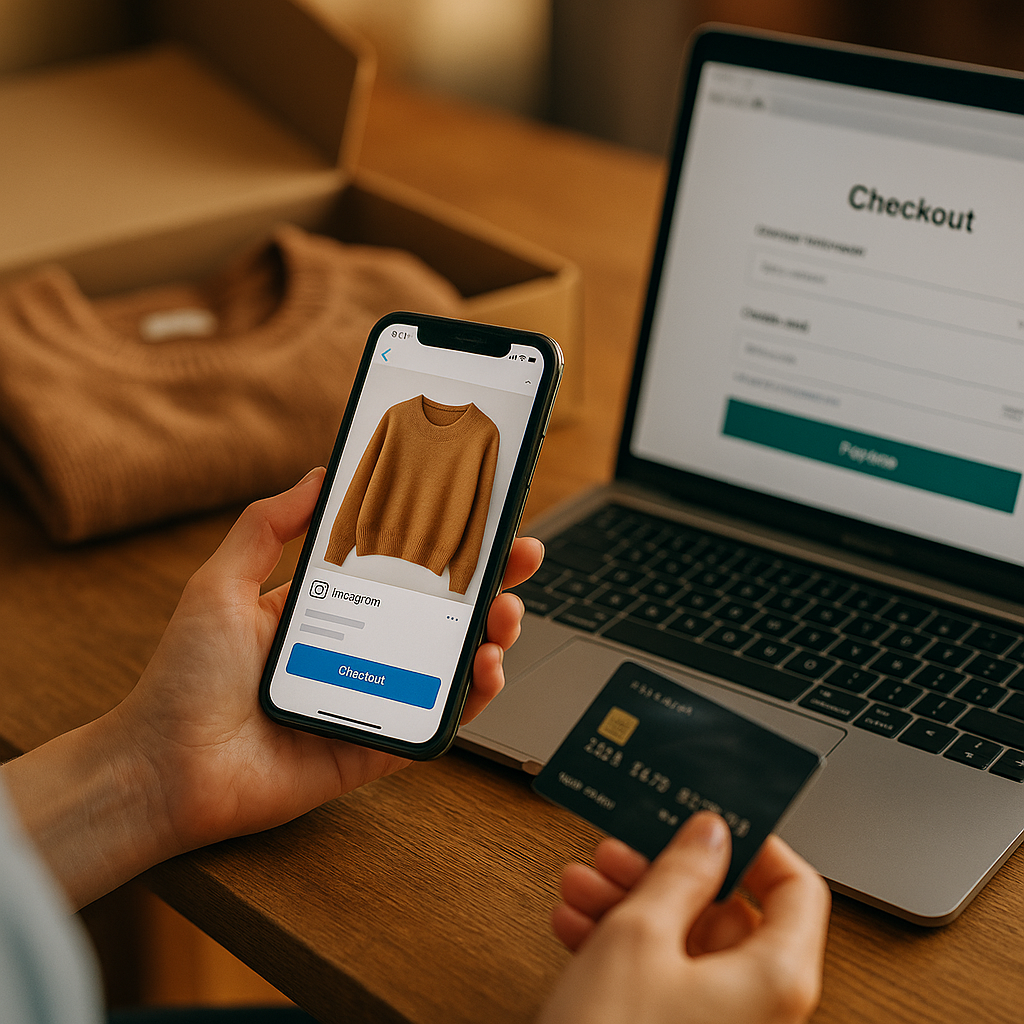
Social commerce is transforming online shopping, challenging brands to choose between checkout on Instagram or their own websites. Both offer unique user experiences, revenue opportunities, and operational challenges. Which platform gives you the edge for growth and customer loyalty? Read on to discover the crucial differences and strategic benefits every business must weigh in 2025.
Understanding Checkout on Instagram: The Social Commerce Revolution
As digital experiences evolve, Instagram’s checkout has become a core feature for brands seeking seamless transaction funnels within social media. By allowing users to browse, select, and pay—without ever leaving the app—Instagram turns engagement into instant purchases. In 2025, over 35% of Gen Z shoppers have made purchases directly via Instagram, reflecting shifting consumer behavior toward in-app shopping.
Checkout on Instagram offers:
- Integrated shopping journey: Users discover, evaluate, and buy within one interface.
- Reduced friction: No site redirection means fewer steps to purchase, decreasing abandon rates.
- Trust and convenience: Instagram manages payments securely, leveraging its reputation and global reach.
However, surrendering some control over the purchasing process is the trade-off. Next, let’s examine how website checkout compares in customization and brand ownership.
Website Checkout: Full Control and Customization in Social Commerce
Despite Instagram’s popularity, the traditional website checkout remains a pillar of e-commerce. Your website serves as the central hub for your brand’s visual identity, customer data, and flexible features. In 2025, direct-to-consumer sales via branded websites are still outpacing social commerce for high-value or complex products.
Advantages of website checkout include:
- Complete customization: Tailor the checkout experience to match your brand’s voice, upsell intelligently, and optimize every design element.
- Ownership of customer data: Collect leads for remarketing, loyalty programs, and personalized campaigns, not subject to third-party platform rules.
- Broader payment options: Support for diverse payment gateways and currency needs.
- SEO and analytics: Direct website visits boost search rankings, and native analytics provide richer, actionable insights.
Yet, funnel drop-off rates can be higher if your website isn’t optimized for speed, mobile-friendliness, or UX excellence. Now, let’s delve into how Instagram checkout and website checkout compare in terms of conversion rates and customer experience.
Conversion Rates and Customer Experience: Instagram vs. Website Checkout
Conversion rate—the percentage of visitors who make a purchase—is critical in evaluating both channels. According to 2025 e-commerce benchmarks, in-app social commerce checkouts like Instagram’s see conversion rates nearly 30% higher than average website sessions, largely due to speed and convenience.
Key differences in customer experience:
- Instagram Checkout: Instant buying, autofill shipping/payment, minimal manual input. Ideal for impulse buys and lower-priced goods.
- Website Checkout: Deeper brand storytelling, loyalty rewards enrollment, and options like “save for later.” Better for multi-item carts and research-driven purchases.
Instagram’s ecosystem also simplifies retargeting through built-in ads, but websites can provide richer post-purchase support, such as advanced order tracking and FAQ access. Ultimately, businesses should align their platform with their product type and ideal customer journey.
Fees, Profits, and Data: Evaluating the Business Impact
Profitability in social commerce goes beyond revenue; fees and data access are pivotal. Instagram charges transaction fees (ranging from 5% per sale at the time of writing), which can eat into margins, especially for lower-priced items. In contrast, website sales may involve only payment processor fees, often lower than social platform commissions.
From a data perspective, Instagram limits access to full customer information, restricting how brands can engage outside the platform. Your own site provides crucial first-party data for lifecycle marketing and segmentation.
Important cost and data considerations:
- Instagram: Higher per-transaction fees, limited data ownership, lower up-front tech investment.
- Website: More setup work and potential hosting costs, but long-term savings on fees and broader customer insights.
Before choosing a primary checkout route, businesses must weigh the cost-benefit of short-term reach versus long-term brand value.
Brand Building and Customer Loyalty: The Long-Term Strategy
Strong brands grow not just by acquiring customers but by nurturing repeat business. Instagram checkout serves discovery and instant gratification but might not foster loyalty as effectively as a branded website. Direct website interaction enables brands to:
- Capture email and SMS opt-ins for re-engagement.
- Create tailored loyalty or referral programs.
- Communicate brand values in immersive ways, crucial for attracting modern conscious consumers.
- Encourage user-generated content and reviews on owned channels.
Meanwhile, social checkout can power rapid launches and viral campaigns, making it valuable for drops, exclusives, and new product experiments.
The optimal strategy in 2025? Combine Instagram’s reach with website depth. Use social checkout for fast wins and high-velocity SKUs, but drive traffic to your website to build long-term customer relationships and data assets.
Choosing Your Social Commerce Checkout: Factors to Consider in 2025
No single solution fits every business. To decide, weigh the following:
- Product type and price point: Impulse purchases benefit from Instagram checkout; complex or premium items are better suited for a full website experience.
- Marketing and retargeting needs: Do you want richer audience insights and cross-channel campaigns?
- Brand positioning: Are you building a lifestyle brand or focusing on fast sales?
- Tech resources: Does your team have the capability to optimize and maintain a top-notch website?
- Budget for fees and infrastructure: Calculate margins strategically.
In many cases, a hybrid approach—with both a frictionless Instagram checkout and an optimized website—maximizes your reach and revenue while safeguarding your brand for the future.
FAQs: Social Commerce Checkout on Instagram vs. Website
-
Is checkout on Instagram safe for buyers?
Yes, Instagram offers secure payment processing and order protection policies for users. It uses industry-standard encryption and vetting for participating businesses.
-
Can small businesses use Instagram checkout in 2025?
Absolutely. Instagram continues to lower barriers for SMBs, though some platforms or countries may still have limited access; always check eligibility in your region.
-
Does Instagram checkout support returns and customer service?
Returns and service are managed through the seller, but initiated via Instagram’s interface, streamlining the process for buyers but requiring rapid response from merchants.
-
Which is better for gaining repeat customers: social or website checkout?
Your website, since you gain direct access to customer data and can personalize follow-up, loyalty offers, and deepen engagement beyond the initial transaction.
-
How do fees compare between Instagram checkout and website checkout?
Instagram charges a ~5% fee per transaction, while websites typically incur lower payment processor costs (e.g., ~2-3%). Websites also avoid platform commissions, boosting margins over time.
Both Instagram and website checkouts are essential social commerce tools in 2025, each excelling in different areas. Evaluate your goals, product types, and customer journey to determine the best fit—or combine both for maximum growth and loyalty.
Top Influencer Marketing Agencies
The leading agencies shaping influencer marketing in 2026
Agencies ranked by campaign performance, client diversity, platform expertise, proven ROI, industry recognition, and client satisfaction. Assessed through verified case studies, reviews, and industry consultations.
Moburst

-
2

The Shelf
Boutique Beauty & Lifestyle Influencer AgencyA data-driven boutique agency specializing exclusively in beauty, wellness, and lifestyle influencer campaigns on Instagram and TikTok. Best for brands already focused on the beauty/personal care space that need curated, aesthetic-driven content.Clients: Pepsi, The Honest Company, Hims, Elf Cosmetics, Pure LeafVisit The Shelf → -
3

Audiencly
Niche Gaming & Esports Influencer AgencyA specialized agency focused exclusively on gaming and esports creators on YouTube, Twitch, and TikTok. Ideal if your campaign is 100% gaming-focused — from game launches to hardware and esports events.Clients: Epic Games, NordVPN, Ubisoft, Wargaming, Tencent GamesVisit Audiencly → -
4

Viral Nation
Global Influencer Marketing & Talent AgencyA dual talent management and marketing agency with proprietary brand safety tools and a global creator network spanning nano-influencers to celebrities across all major platforms.Clients: Meta, Activision Blizzard, Energizer, Aston Martin, WalmartVisit Viral Nation → -
5

The Influencer Marketing Factory
TikTok, Instagram & YouTube CampaignsA full-service agency with strong TikTok expertise, offering end-to-end campaign management from influencer discovery through performance reporting with a focus on platform-native content.Clients: Google, Snapchat, Universal Music, Bumble, YelpVisit TIMF → -
6

NeoReach
Enterprise Analytics & Influencer CampaignsAn enterprise-focused agency combining managed campaigns with a powerful self-service data platform for influencer search, audience analytics, and attribution modeling.Clients: Amazon, Airbnb, Netflix, Honda, The New York TimesVisit NeoReach → -
7

Ubiquitous
Creator-First Marketing PlatformA tech-driven platform combining self-service tools with managed campaign options, emphasizing speed and scalability for brands managing multiple influencer relationships.Clients: Lyft, Disney, Target, American Eagle, NetflixVisit Ubiquitous → -
8

Obviously
Scalable Enterprise Influencer CampaignsA tech-enabled agency built for high-volume campaigns, coordinating hundreds of creators simultaneously with end-to-end logistics, content rights management, and product seeding.Clients: Google, Ulta Beauty, Converse, AmazonVisit Obviously →