


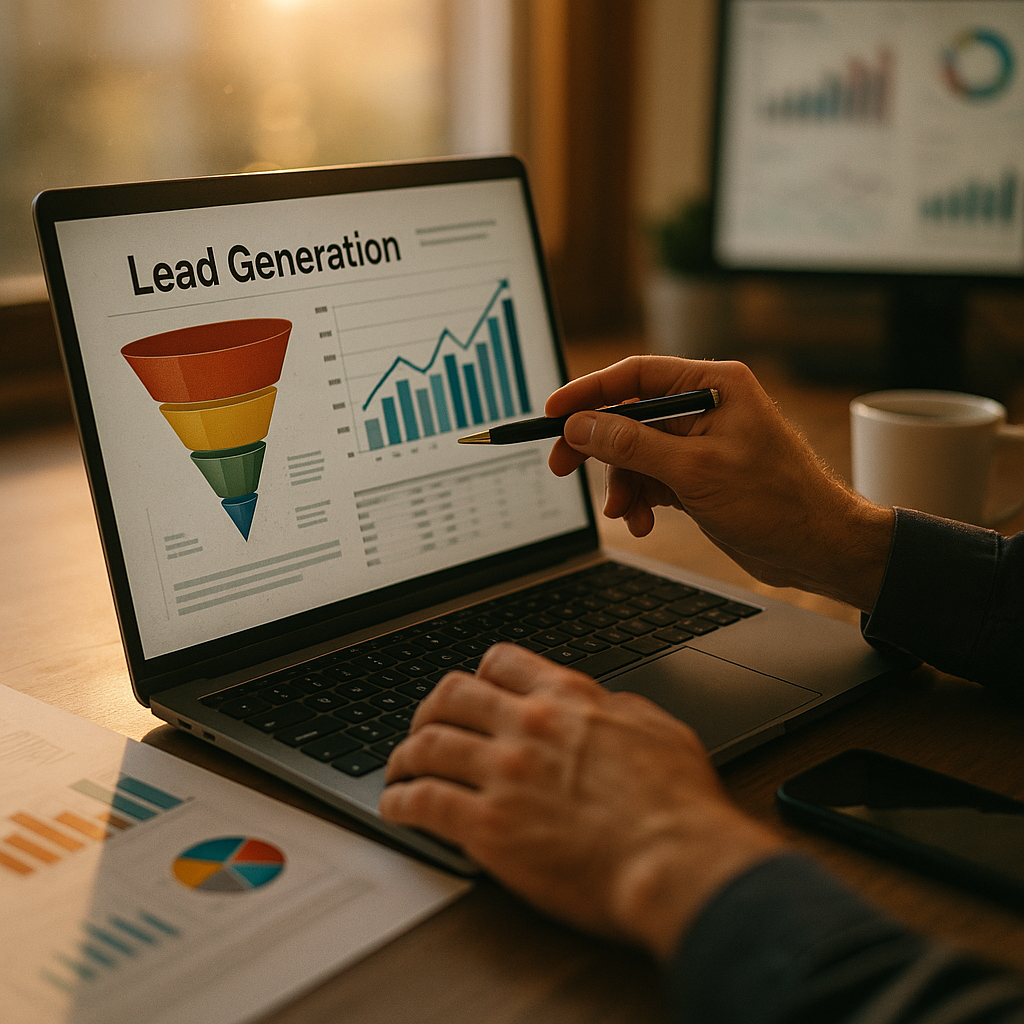
Creating a framework for measuring the success of a lead generation campaign is essential in today’s data-driven business climate. Marketers who measure accurately optimize campaigns, boost ROI, and fuel meaningful growth. But what does an effective measurement model involve—and where should you begin?
Understanding the Purpose and Goals of Lead Generation
Every successful lead generation campaign begins with clear objectives and defined success metrics. Without these, it’s impossible to determine what “success” really means for your business. The secondary keyword here is lead generation goals.
- Set SMART Goals: Establish Specific, Measurable, Achievable, Relevant, and Timely targets. Are you aiming to increase qualified leads by 30%? Reduce cost-per-lead by 15%? Make these ambitions concrete.
- Align Marketing & Sales: Unify teams to agree on what counts as a high-quality lead. This collaboration ensures that generated leads are actionable and relevant for your organization.
- Define the Buyer Persona: Knowing exactly whom you want to target sets the scope for tracking relevant data and evaluating campaign success accurately.
Start with the “why,” then you’ll have meaningful benchmarks to measure every activity against.
Choosing the Right Lead Generation Metrics
Once goals are set, success hinges on tracking the right lead generation metrics. Accurate measurement helps marketers spot trends and allocate resources more effectively. The key metrics include:
- Lead Volume: The number of leads collected during the campaign. High volume is promising, but quality is paramount.
- Lead Quality or Qualification Rate: The percentage of leads that fit your target profile, often measured using scoring models or qualification questions.
- Conversion Rates: Percentage of leads who complete desired next steps, such as booking a demo or entering the sales pipeline.
- Cost Per Lead (CPL): Total campaign spend divided by number of leads generated. Helps track marketing efficiency.
- Customer Acquisition Cost (CAC): The cost of acquiring each new customer, factoring in all touchpoints from initial lead through closed sale.
- Return on Investment (ROI): The ultimate performance metric: Does the campaign deliver more revenue than it costs?
Tools like Google Analytics 4, HubSpot, and Salesforce make it easy to track these metrics in real-time in 2025, so data-driven adjustments can be swift and precise.
Mapping the Lead Journey for Deeper Insights
To truly measure your campaign’s impact, visualize and analyze the customer journey in lead generation. This means tracking every touchpoint from awareness through conversion and beyond.
- Multi-Touch Attribution: Instead of last-click attribution, use data to understand which stages or channels contributed most to conversions.
- Lead Nurturing Analysis: Not all leads buy immediately. Track how leads engage with content, emails, and nurturing campaigns over time.
- Sales Cycle Length: Measure how long it takes for a lead to progress from first contact to customer. Identify bottlenecks and use this data to streamline processes.
- Behavioral Triggers: Monitor which behaviors—such as form submissions or content downloads—most reliably precede conversion, so you can invest more in what works.
Detailed journey analysis uncovers hidden friction points and surfaces high-value moments, allowing teams to refine targeting and accelerate lead conversion rates.
Leveraging Advanced Tools for Data-Driven Lead Generation Success
Modern technology plays a crucial role in data-driven lead generation. Companies leading in 2025 employ sophisticated analytics, AI-powered platforms, and robust CRMs to enhance both measurement and results.
- CRM Integration: Align marketing platforms with CRM systems (like Salesforce or HubSpot) to enable seamless tracking from first interaction to closed sale.
- Marketing Automation: Use automation tools for lead scoring, behavioral tracking, and nurture sequencing to gather granular data and take real-time action.
- Predictive Analytics: AI models forecast lead quality and conversion likelihood, empowering marketers to optimize targeting and budget allocation.
- Data Visualization: Dashboards make it easy to spot trends and share actionable insights across teams for faster iteration.
Adopting and integrating these tools won’t just give you clearer results—it gives you the agility to respond quickly to changing customer behavior, keeping your campaigns ahead of the competition.
Transforming Insights into Action for Campaign Optimization
Measurement is only as valuable as the actions it inspires. The core of lead generation campaign optimization is the feedback loop: Learn, adjust, and iterate for better results with every cycle.
- Test and Refine: A/B test landing pages, email content, and ad strategies to see what drives the best lead quality and conversion rates.
- Adjust Outreach Strategies: Use metric insights to determine if certain channels underperform—and either revamp campaigns or allocate spend elsewhere.
- Close the Loop with Sales: Feedback from the sales team reveals which leads close most frequently, enabling tighter targeting and score recalibration.
- Continual Learning: Monitor changing customer preferences and market conditions. Ongoing learning ensures your framework remains agile and effective over time.
Convert data insights into action plans. Informed iterations are the cornerstone of continuous growth in lead generation.
Ensuring Data Accuracy and Team Alignment
Reliable lead generation measurement demands more than just the right tools—it depends on data integrity and a well-aligned team. Ensure your measurement framework is built on a strong foundation:
- Data Hygiene: Routinely audit contact lists, deduplicate leads, and confirm tracking codes are correctly deployed.
- Cross-Departmental Collaboration: Align marketing, sales, and data teams so everyone agrees on definitions, attributions, and reporting standards.
- Transparent Reporting: Standardize dashboards and communication so stakeholders can quickly grasp how campaigns are performing.
- Compliance: In 2025, strict data privacy rules apply. Make sure all data collection and storage meets current compliance standards to avoid penalties and maintain customer trust.
Accuracy, transparency, and collaboration turn your measurement efforts from a siloed activity into a company-wide growth engine.
Conclusion: Building Growth with a Framework for Lead Generation Measurement
By implementing a comprehensive framework for measuring the success of a lead generation campaign, marketers can optimize spend, boost quality, and drive sustainable growth. Make data-driven decisions, refine strategies quickly, and keep all teams aligned for maximal impact—your next campaign’s success is in the numbers.
FAQs: Measuring Lead Generation Campaign Success in 2025
-
What is the most important metric for lead generation success?
The answer depends on your campaign goals, but conversion rate and lead quality are usually top priorities since they directly impact sales outcomes.
-
How can I improve the quality of leads generated?
Align marketing and sales teams to clearly define a qualified lead, implement lead scoring, and regularly refine your targeting strategies based on feedback.
-
Which tools are essential for measuring lead generation in 2025?
CRMs like HubSpot and Salesforce, marketing automation platforms, and analytics tools (Google Analytics 4, Tableau) enable holistic, real-time measurement and analysis.
-
How often should I review lead generation metrics?
Monitor key metrics weekly for agile campaigns, but conduct deeper monthly and quarterly reviews to identify long-term trends and inform strategy updates.
-
How do I ensure data accuracy in my measurement framework?
Regularly audit your data sources, use standardized processes for data entry and deduplication, and verify all tracking and reporting tools are correctly configured and compliant with privacy regulations.
Top Influencer Marketing Agencies
The leading agencies shaping influencer marketing in 2026
Agencies ranked by campaign performance, client diversity, platform expertise, proven ROI, industry recognition, and client satisfaction. Assessed through verified case studies, reviews, and industry consultations.
Moburst

-
2

The Shelf
Boutique Beauty & Lifestyle Influencer AgencyA data-driven boutique agency specializing exclusively in beauty, wellness, and lifestyle influencer campaigns on Instagram and TikTok. Best for brands already focused on the beauty/personal care space that need curated, aesthetic-driven content.Clients: Pepsi, The Honest Company, Hims, Elf Cosmetics, Pure LeafVisit The Shelf → -
3

Audiencly
Niche Gaming & Esports Influencer AgencyA specialized agency focused exclusively on gaming and esports creators on YouTube, Twitch, and TikTok. Ideal if your campaign is 100% gaming-focused — from game launches to hardware and esports events.Clients: Epic Games, NordVPN, Ubisoft, Wargaming, Tencent GamesVisit Audiencly → -
4

Viral Nation
Global Influencer Marketing & Talent AgencyA dual talent management and marketing agency with proprietary brand safety tools and a global creator network spanning nano-influencers to celebrities across all major platforms.Clients: Meta, Activision Blizzard, Energizer, Aston Martin, WalmartVisit Viral Nation → -
5

The Influencer Marketing Factory
TikTok, Instagram & YouTube CampaignsA full-service agency with strong TikTok expertise, offering end-to-end campaign management from influencer discovery through performance reporting with a focus on platform-native content.Clients: Google, Snapchat, Universal Music, Bumble, YelpVisit TIMF → -
6

NeoReach
Enterprise Analytics & Influencer CampaignsAn enterprise-focused agency combining managed campaigns with a powerful self-service data platform for influencer search, audience analytics, and attribution modeling.Clients: Amazon, Airbnb, Netflix, Honda, The New York TimesVisit NeoReach → -
7

Ubiquitous
Creator-First Marketing PlatformA tech-driven platform combining self-service tools with managed campaign options, emphasizing speed and scalability for brands managing multiple influencer relationships.Clients: Lyft, Disney, Target, American Eagle, NetflixVisit Ubiquitous → -
8

Obviously
Scalable Enterprise Influencer CampaignsA tech-enabled agency built for high-volume campaigns, coordinating hundreds of creators simultaneously with end-to-end logistics, content rights management, and product seeding.Clients: Google, Ulta Beauty, Converse, AmazonVisit Obviously →