


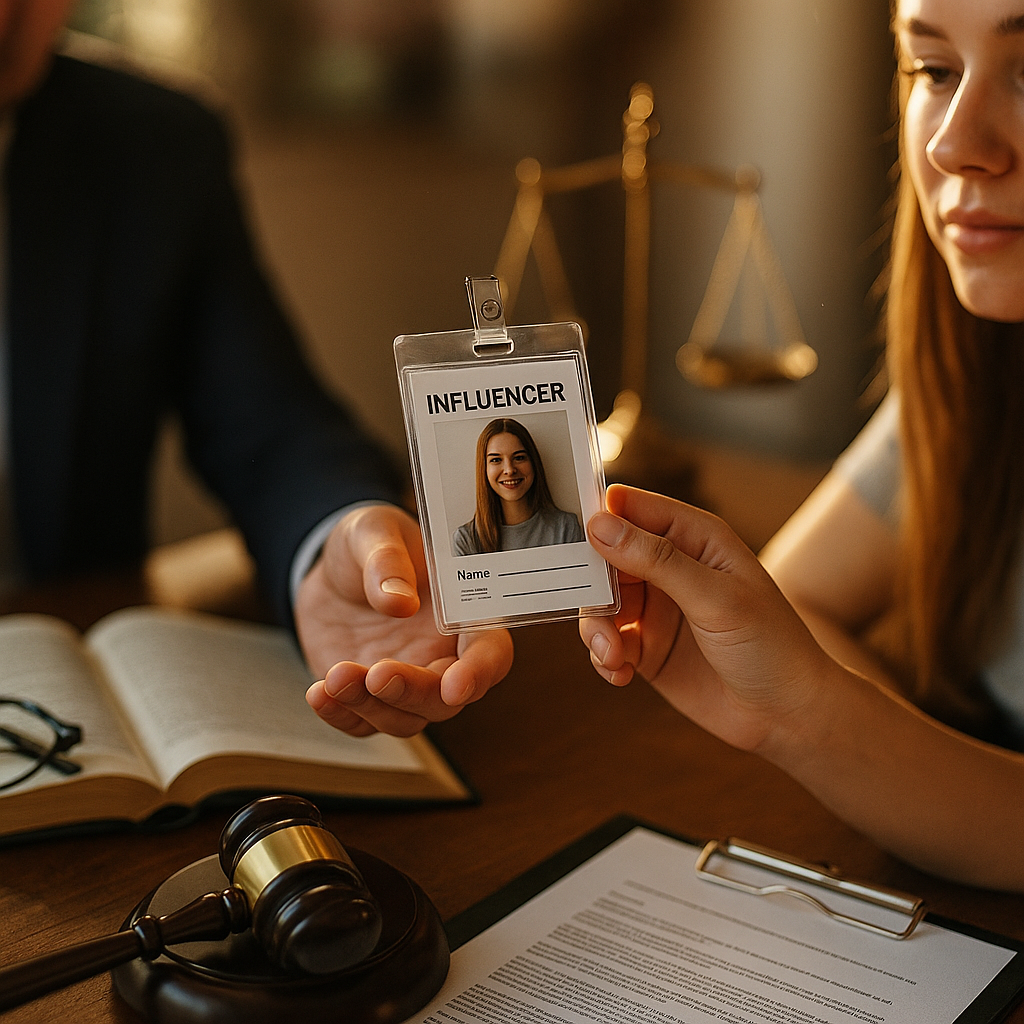
In 2025, creators who market expertise face rising scrutiny from platforms, regulators, and consumers. Legal best practices for influencer professional credentials help you promote qualifications without drifting into false advertising, illegal endorsements, or unlicensed practice. This guide compares China and the EU, explains how to verify and disclose credentials, and shows how to reduce risk while keeping campaigns effective—so what should you fix first?
EU influencer marketing compliance: credentials, claims, and consumer law
In the EU, professional credentials become a legal issue when they influence purchasing decisions. If you present yourself as a “doctor,” “lawyer,” “dietitian,” “financial adviser,” or similar, you are making a claim that can be assessed under misleading commercial practices rules, sector regulations, and platform policies. Your first compliance objective is straightforward: ensure every credential claim is truthful, current, and verifiable, and ensure the audience understands when content is an ad.
Key legal and practical expectations in the EU typically include:
- No misleading identity signals: Do not use protected titles, regulated profession labels, or regulated service descriptions unless you are entitled to use them in the relevant jurisdiction. If you have a qualification but are not licensed to practice, separate “academic degree” from “licensed practitioner.”
- Evidence for performance and efficacy claims: Credentials do not “prove” a product works. If you make health, beauty, finance, or tech efficacy claims, you need substantiation appropriate to the claim (for example, robust evidence rather than anecdotes).
- Clear advertising disclosure: If compensation, free products, affiliate links, or any material connection exists, disclose it in a way that is immediately visible and understandable for the average viewer.
- Country-by-country nuances: Enforcement and guidance can vary by Member State (e.g., disclosure wording, placement, and treatment of gifts). Plan for localization rather than one-size-fits-all scripts.
Practical follow-up question: Can you say “expert” in the EU? Yes, but treat it as a claim. If “expert” implies regulated status or specialized professional competence, you should be able to justify it. Prefer precise language: “I have a master’s degree in X,” “I worked in Y for 8 years,” or “I’m certified by Z,” with evidence available.
China advertising law for influencers: titles, endorsements, and platform rules
China’s compliance risks often concentrate around advertising identification, endorsement restrictions, and heightened sensitivity around medical, health, and education-related claims. Professional credentials can trigger investigations when they are used to boost trust in products or services, especially in regulated categories.
Strong practices for China include:
- Use credentials without exaggeration: Avoid “national-level,” “top,” “best,” or “authoritative” phrasing unless you can substantiate it and it is permitted. Superlatives are frequently sensitive in Chinese advertising compliance.
- Avoid implying official endorsement: Do not present credentials in a way that suggests government approval, official rank, or institutional sponsorship unless that is accurate and authorized.
- Follow platform governance: Major platforms (and MCNs) often apply stricter rules than baseline law. Expect content checks for medical/health topics, finance, and education. Build compliance into scripts and on-screen text.
- Be careful with testimonials and “before/after” effects: Even where not strictly prohibited, these formats can become high-risk if paired with professional titles that imply clinical certainty.
Likely follow-up question: Is it safer to remove titles entirely? Not necessarily. A credential can be used responsibly if you keep it factual, avoid regulated practice, and avoid turning credentials into guarantees (“as a doctor, I can promise…”). The safer approach is accurate labeling + documented verification + conservative claims.
Credential verification and due diligence: how brands and agencies should vet creators
Credential misuse is both a legal problem and a reputational event. Brands, agencies, and MCNs should run a documented due diligence process. This supports EEAT by demonstrating experience-based governance and trustworthy sourcing if challenged by regulators, platforms, or consumers.
A workable verification workflow:
- Collect proof: Request copies of degrees, certificates, licenses, and membership cards where relevant. Ask for license numbers and issuing bodies.
- Validate authenticity: Where feasible, verify via official registries or issuer confirmation. In cross-border campaigns, confirm whether a credential grants the right to use a professional title in the target market.
- Confirm scope and status: Is the license active? Does it cover the activity shown (e.g., “nutrition coach” versus licensed dietitian)? Is the creator practicing or simply educated?
- Document limitations: Capture what the creator may say and may not say (e.g., “educational content only,” “not medical advice,” “not financial advice”), and ensure this is consistent with the content format.
- Re-check on a schedule: For longer campaigns, re-verify periodically or on renewal dates.
Likely follow-up question: What if a creator refuses to share documents? Treat it as a red flag. Offer privacy-respecting options (secure upload, redaction of sensitive IDs) but keep the requirement for verification. If credentials are central to conversion, do not run the campaign without evidence.
Professional title and endorsement disclosure: avoiding misleading claims
Two issues often get conflated: (1) whether the credential is real and usable; (2) whether viewers understand the commercial context. You must handle both.
Use these best practices across China and the EU:
- Separate identity from endorsement: “I’m a licensed X” is an identity claim; “this product is effective” is a product claim. Validate both independently.
- Keep credentials specific and current: State the issuing body and the nature of the credential when space allows: “Registered physiotherapist (Country/Region),” “Chartered accountant (membership no. on file).” Avoid vague “board-certified” language unless it is standard and verifiable.
- Make advertising disclosures unmissable: Put disclosure at the start of the post/caption and on-screen early in video. Use plain language that viewers understand as advertising.
- Do not imply professional-client relationships: Avoid phrasing that resembles intake, diagnosis, or personal consultation unless you are legally authorized and operating in a compliant service setting.
- Use disclaimers carefully: Disclaimers help clarify intent but do not cure misleading claims. If the main message overpromises or misstates your status, a disclaimer will not fix it.
Likely follow-up question: Can a creator say “this is not medical advice” and still recommend supplements? That depends on the claim. If the content suggests treatment or guaranteed outcomes, it can still be viewed as misleading or as regulated advice. Keep recommendations general, avoid disease claims, and ensure brand claims are substantiated and permitted.
Regulated sectors (health, finance, legal, education): licensing boundaries in the EU and China
Credentials create the highest exposure in regulated sectors because audiences rely on perceived authority. You should map each campaign to a risk tier and apply stricter controls where licensing, protected titles, or sector advertising rules apply.
Health and wellness:
- EU: Be cautious with medical claims, therapeutic promises, and any implication of diagnosis or treatment. Ensure product claims align with permitted claims and evidence, and avoid leveraging titles to imply certainty.
- China: Expect stricter scrutiny for medical and health-related advertising, especially where titles could suggest clinical endorsement. Avoid “cure,” “guarantee,” and similar certainty language.
Finance and investments:
- EU: Financial promotions can be heavily regulated depending on the product and country. Credentials such as “financial adviser” can be sensitive if they imply authorization. Use risk warnings where required and avoid individualized advice.
- China: Promotions involving investment returns, guaranteed profit, or implied inside access are high-risk. Keep content educational and avoid return guarantees.
Legal services:
- EU and China: “Lawyer” is typically a protected professional identity with local licensing requirements. Do not provide legal advice to the public in ad content unless you are operating within the legal framework and professional rules for that jurisdiction.
Education and training:
- EU and China: Credentials used to sell courses can still be misleading if outcomes are exaggerated (“guaranteed job,” “guaranteed admission”). Keep outcomes realistic and supportable, and clarify what is included.
Likely follow-up question: What if the creator is qualified in one country but posts to another? Treat the audience location and campaign targeting as decisive. A credential may be valid academically but not grant the right to use a protected title everywhere. Use neutral wording (“holds a degree in…”) when licensing equivalency is uncertain.
Contracts, recordkeeping, and crisis response: operationalizing legal best practices
Compliance succeeds when it is built into production, not bolted on during legal review. Brands and agencies should translate rules into contracts, checklists, and escalation paths that creators can follow.
Include these contract and workflow controls:
- Credential warranty and evidence clause: Creator warrants credentials are accurate and agrees to provide verification on request.
- Content guardrails: Prohibited phrases (e.g., guaranteed outcomes), required disclosures, and claim substantiation rules. Attach script templates for high-risk sectors.
- Pre-approval and takedown rights: Require pre-publication review for regulated categories; reserve the right to demand edits or removal rapidly if risk emerges.
- Recordkeeping: Keep copies of verification documents (securely), approvals, substantiation files for claims, and disclosure screenshots. This is essential if challenged later.
- Training and creator enablement: Provide short, practical training on what the credential allows them to say, where disclosure must appear, and how to respond to audience questions without giving regulated advice.
- Crisis response plan: Define who decides, who contacts the platform, what is deleted versus corrected, and how public statements are approved. Speed matters when credential allegations spread.
Likely follow-up question: How strict should pre-approval be? Match it to risk. For skincare entertainment content, spot checks may work. For health, finance, or any “professional authority” positioning, require pre-approval of scripts, on-screen text, and captions.
FAQs: influencer professional credentials in China and the EU
What counts as a “professional credential” for influencer marketing?
Degrees, licenses, registrations, professional memberships, certifications, and titles that signal specialized competence or regulated status. Work history claims (“former auditor,” “ex-pharmacist”) can also function as credentials if used to increase trust in a product.
Can influencers use “Dr.” in the EU if they have a PhD but are not a medical doctor?
Often yes, but it must not mislead. If the content concerns health, audiences may assume a medical qualification. Use clarifying language like “PhD in chemistry” and avoid medical-style advice or clinical claims.
Do brands have liability if an influencer lies about credentials?
Yes, risk can extend to brands, agencies, and MCNs, especially if they failed to conduct reasonable due diligence or amplified misleading claims. Strong vetting, clear contracts, and documented approvals reduce exposure.
How should disclosures be placed for short-form video?
Use an early on-screen label plus a clear caption disclosure. The disclosure should be visible without clicks and understandable immediately. Do not rely on a disclosure only at the end of a video.
Is a disclaimer like “for educational purposes only” enough to avoid regulation?
No. Disclaimers help but do not override misleading impressions or prohibited claims. If you imply licensed practice, guarantee results, or make unsupported efficacy claims, a disclaimer will not fix the underlying issue.
What is the safest way to discuss expertise across China and the EU?
State credentials factually, avoid protected-title implications unless clearly licensed for the target market, separate identity claims from product claims, substantiate all performance claims, and use prominent ad disclosures whenever there is a material connection.
In 2025, influencer authority sells, but it also attracts enforcement and fast-moving reputational risk. The safest approach in China and the EU is consistent: verify credentials, use titles precisely, disclose endorsements clearly, and avoid turning qualifications into product guarantees or regulated advice. Build these controls into contracts and approvals, and you protect trust while keeping campaigns scalable.