


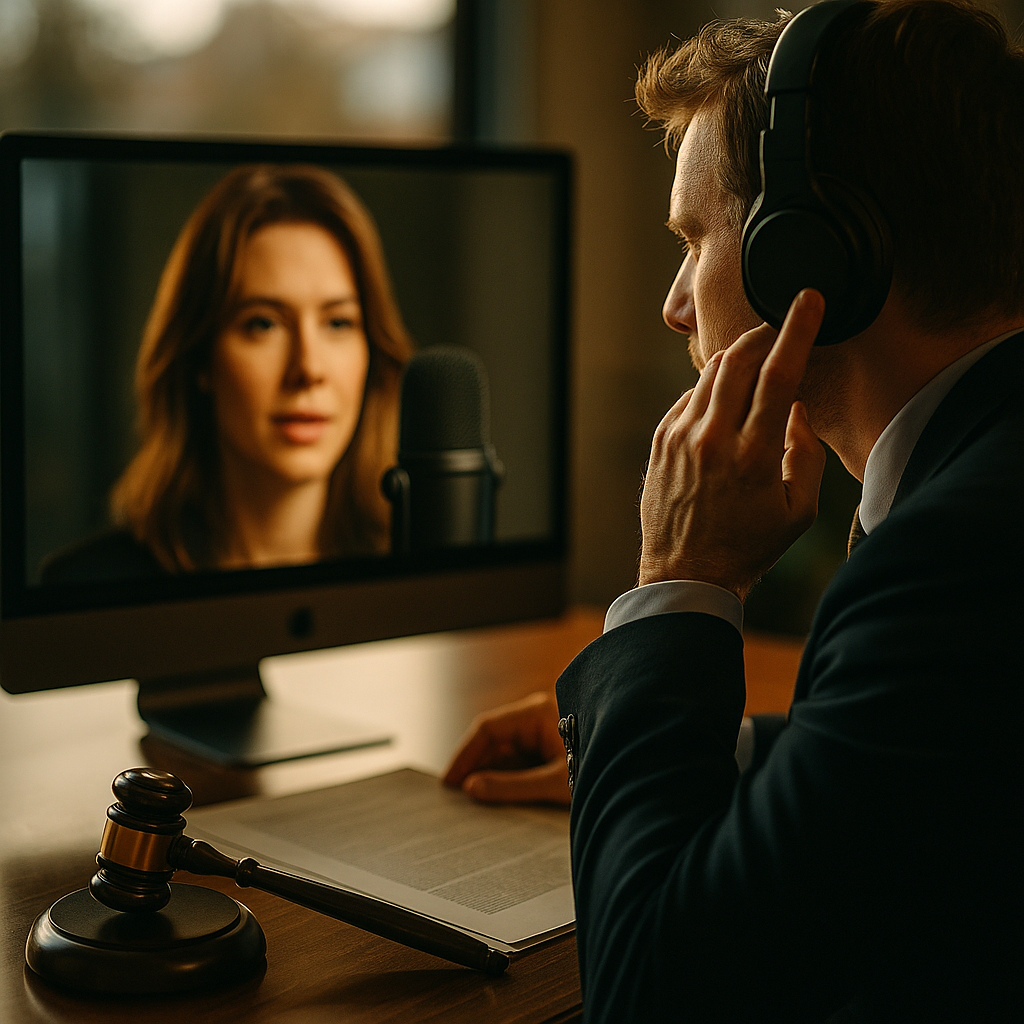
Understanding Legal Risks In Synthetic Celebrity Voice Licensing has moved from a niche concern to a board-level issue in 2025, as voice cloning tools and distribution channels scale faster than legal norms. Brands, studios, and platforms now face lawsuits, takedowns, and reputational blowback when consent or attribution is unclear. This guide breaks down the key risks and practical controls—before your next campaign becomes a headline.
Right of publicity and celebrity voice rights
A celebrity’s voice is often protected under the right of publicity (and related state-level or country-specific personality rights), which generally prohibits commercial use of someone’s identity without permission. Even when you do not use a name or image, a distinctive voice can qualify as an identifying feature. The legal theory is simple: if an average listener recognizes the person, you may be exploiting their identity.
In 2025, synthetic voice models make “sound-alike” disputes more likely because the output can be extremely close while leaving few obvious traces of copying. The core questions that courts and regulators tend to ask include:
- Was the use commercial? Ads, sponsorships, branded content, and product placements create higher exposure.
- Was there consent? Consent should be explicit, written, and scoped to specific uses.
- Is the voice identifiable? A generic “narrator” voice is lower risk; a recognizable cadence, accent, or catchphrase can be enough.
- Did the use imply endorsement? Even non-ad contexts can trigger liability if they suggest the celebrity supports a product or cause.
Practical takeaway: Treat a synthetic celebrity voice as you would a celebrity photo. If the output is meant to evoke a specific person, assume publicity-rights clearance is required, and document that clearance before release.
Copyright, sound recording, and AI training data compliance
Many teams assume that voice cloning is only a publicity-rights issue. In practice, copyright and related rights can also matter, especially when the model is built from protected recordings. A human voice itself is not typically “copyrighted” as a raw attribute, but recorded performances, sound recordings, and underlying scripts can be protected.
Key risk points to evaluate before you build or buy a voice model:
- Training data provenance: Did the vendor lawfully obtain the recordings? Were the terms broad enough to permit machine learning training and derivative outputs?
- Chain of title: If the source audio came from films, podcasts, music, or audiobooks, multiple rights holders may exist (label, studio, publisher, performer).
- Output similarity: Even if you avoid copying a specific line, the model might reproduce recognizable fragments, ad-libs, or stylistic elements tied to a particular performance.
- Script and character considerations: Mimicking a famous character voice may implicate additional rights tied to the character and the production.
Practical takeaway: Ask for a written data provenance statement and training permissions from any synthetic voice vendor. If they cannot provide it, you inherit avoidable legal uncertainty.
Contractual safeguards in voice licensing agreements
Even when you have consent, poorly drafted agreements are a common source of disputes. A robust voice licensing agreement should anticipate how synthetic voices are created, deployed, iterated, and retired. Because synthetic voices are easy to reuse, the contract must be more specific than traditional voiceover deals.
Include clear answers to these operational questions:
- Scope of rights: Which media, territories, languages, products, and channels are covered? Does it include paid ads, organic social, podcasts, in-app narration, and live events?
- Term and renewal: How long may you use the synthetic voice? What happens to assets already published when the term ends?
- Model ownership and access: Who owns the trained model and prompts? Can the celebrity or their estate revoke access? Can you transfer the license during an acquisition?
- Approval and guardrails: Does the talent approve scripts, tone, sensitive categories, political content, or competitor restrictions?
- Exclusivity: Is the voice exclusive to your brand or category? If not, how do you avoid consumer confusion?
- Audit rights and logs: Can the talent audit usage and receive usage reports?
- Indemnities: If the vendor’s training data is defective, who pays? Indemnities should match the real risk and be backed by insurance where possible.
Licenses should also cover post-production and editing. For example, if you plan to blend the synthetic voice with human performance, add effects, translate, or localize, those uses should be explicitly permitted.
Practical takeaway: The best contract is one your production team can follow. Convert legal terms into a simple internal checklist: where the voice can appear, who approves, what is prohibited, and how to log usage.
Deepfake laws, deception, and consumer protection risk
Synthetic celebrity voices can trigger exposure beyond private lawsuits. In 2025, regulators and platforms increasingly focus on deceptive AI, impersonation, and consumer harm. Even with a valid license, you can still create risk if the audience is likely to be misled about what is real, what is endorsed, or what was actually said.
High-risk scenarios include:
- Undisclosed synthetic endorsements: Using a cloned celebrity voice to sell a product without clear disclosure can invite consumer protection scrutiny and platform penalties.
- Political or social issue content: These uses attract heightened attention and can raise additional legal restrictions depending on jurisdiction.
- Financial services and health claims: Combining synthetic celebrity voices with claims about investments, supplements, or treatments increases the risk of investigations and class actions.
- “News-like” formats: A familiar voice used in a documentary, explainer, or audio segment may create confusion about authenticity.
To reduce deception risk, implement clear, proximate disclosures such as “Voice created using licensed synthetic performance” or “Dramatization using AI-generated voice with permission.” Make disclosures audible in audio-first placements and not buried in a description field that listeners never see.
Practical takeaway: Compliance is not only about consent; it is also about audience clarity. If a reasonable listener could believe the celebrity personally recorded the message, disclose the synthetic nature prominently.
Privacy, biometric data, and consent management
A voice can function as biometric data in many contexts. That matters because privacy rules often impose stricter requirements for collection, storage, and use—especially when the data can uniquely identify a person. Even if your team works with a celebrity who is willing to license their voice, you still need a privacy-grade process for handling the underlying voiceprints and recordings.
Build a compliance workflow that addresses:
- Informed consent: Consent should describe that a model will be trained, how it will be used, who will access it, and how long it will persist.
- Data minimization: Collect only the recordings needed for the project. Avoid open-ended collection “just in case.”
- Security controls: Encrypt stored training audio and models, restrict access, and keep logs of generation events.
- Retention and deletion: Define when training data and models are deleted, and how deletion is verified.
- Third-party processors: If a vendor hosts the model, confirm their security posture, subcontractor list, and breach notification obligations.
This area is also where reputational risk concentrates. A breach that exposes raw celebrity recordings or model access keys can lead to unauthorized impersonations at scale. From a risk management perspective, the cost is not only legal—it is also operational and brand trust.
Practical takeaway: Treat synthetic voice assets like sensitive credentials. Limit access, log usage, and define deletion procedures before the first recording session.
Risk mitigation checklist for brands, studios, and platforms
Legal risk decreases sharply when teams combine rights clearance, technical controls, and documentation. Use the following checklist to align marketing, legal, production, and procurement.
- Confirm identity strategy: Are you intentionally evoking a specific celebrity? If yes, obtain a signed license; if no, design away from recognizability.
- Vendor due diligence: Require data provenance, training permissions, security details, and indemnities in writing.
- Script governance: Create approval rules for sensitive categories, prohibited claims, and endorsement language.
- Disclosure standard: Adopt a consistent disclosure line for synthetic voices and require it across channels.
- Usage logging: Keep generation logs, asset IDs, distribution lists, and timestamps to respond to disputes quickly.
- Human review: Review outputs for accidental similarity to protected lines, offensive content, or implied endorsements.
- Incident response: Prepare takedown and correction procedures, including platform contacts and a public statement template.
Answering a common follow-up question: Is it safer to use “celebrity-inspired” voices? Not necessarily. If listeners still identify the person, you can face the same claims, and you may lose the benefit of having negotiated permissions and approvals.
Practical takeaway: The safest path is explicit licensing plus transparent disclosure, backed by verifiable vendor practices and disciplined internal controls.
FAQs
Do I need a license if the voice is “only inspired by” a celebrity?
If the output is likely to be recognized as that person by ordinary listeners, you may trigger publicity-rights and endorsement-related claims. “Inspired by” language does not replace consent. When in doubt, either redesign to be clearly non-identifying or obtain a license and document it.
Can I use a synthetic celebrity voice for parody or satire?
Parody defenses can exist, but they are fact-specific and depend on jurisdiction, context, and whether the use is commercial. A paid advertisement that sounds like a celebrity is far riskier than a clearly comedic, non-deceptive creative work. Get counsel review before release and avoid confusion about endorsement.
What should a celebrity voice license include for AI?
At minimum: scope (media/territory/term), approval rights, prohibited uses, model ownership and access rules, security and retention, disclosure requirements, compensation (including reuse), audit/logging, and remedies for misuse. Also address what happens if the relationship ends: deletion, wind-down, and continued use of already-published assets.
Is it enough that my vendor says the model is “legally trained”?
No. Ask for written data provenance, training permissions, and contractual indemnities. You should also confirm security controls and whether subcontractors touched the data. If a dispute arises, vague assurances rarely hold up compared with detailed documentation.
Do I have to disclose that a celebrity voice is synthetic if I have permission?
Disclosure is not always mandated by a single rule, but it is a strong risk reducer for deception, consumer protection issues, and platform enforcement—especially in advertising. If listeners could believe the celebrity personally recorded the message, disclose clearly and close to the content.
What are the biggest red flags that create lawsuits?
Launching without written consent, using the voice in ads or fundraising, implying endorsement, training on questionable audio sources, failing to control who can generate outputs, and refusing to remove content after a complaint. Most high-impact disputes combine rights issues with avoidable governance gaps.
In 2025, synthetic celebrity voice projects succeed when teams treat licensing as a full lifecycle, not a one-time signature. Secure publicity and data rights, demand training provenance, and draft AI-specific contract terms that production can follow. Add prominent disclosure to reduce deception risk, and protect models like sensitive data. The takeaway: consent plus controls is the defensible baseline.
Top Influencer Marketing Agencies
The leading agencies shaping influencer marketing in 2026
Agencies ranked by campaign performance, client diversity, platform expertise, proven ROI, industry recognition, and client satisfaction. Assessed through verified case studies, reviews, and industry consultations.
Moburst

-
2

The Shelf
Boutique Beauty & Lifestyle Influencer AgencyA data-driven boutique agency specializing exclusively in beauty, wellness, and lifestyle influencer campaigns on Instagram and TikTok. Best for brands already focused on the beauty/personal care space that need curated, aesthetic-driven content.Clients: Pepsi, The Honest Company, Hims, Elf Cosmetics, Pure LeafVisit The Shelf → -
3

Audiencly
Niche Gaming & Esports Influencer AgencyA specialized agency focused exclusively on gaming and esports creators on YouTube, Twitch, and TikTok. Ideal if your campaign is 100% gaming-focused — from game launches to hardware and esports events.Clients: Epic Games, NordVPN, Ubisoft, Wargaming, Tencent GamesVisit Audiencly → -
4

Viral Nation
Global Influencer Marketing & Talent AgencyA dual talent management and marketing agency with proprietary brand safety tools and a global creator network spanning nano-influencers to celebrities across all major platforms.Clients: Meta, Activision Blizzard, Energizer, Aston Martin, WalmartVisit Viral Nation → -
5

The Influencer Marketing Factory
TikTok, Instagram & YouTube CampaignsA full-service agency with strong TikTok expertise, offering end-to-end campaign management from influencer discovery through performance reporting with a focus on platform-native content.Clients: Google, Snapchat, Universal Music, Bumble, YelpVisit TIMF → -
6

NeoReach
Enterprise Analytics & Influencer CampaignsAn enterprise-focused agency combining managed campaigns with a powerful self-service data platform for influencer search, audience analytics, and attribution modeling.Clients: Amazon, Airbnb, Netflix, Honda, The New York TimesVisit NeoReach → -
7

Ubiquitous
Creator-First Marketing PlatformA tech-driven platform combining self-service tools with managed campaign options, emphasizing speed and scalability for brands managing multiple influencer relationships.Clients: Lyft, Disney, Target, American Eagle, NetflixVisit Ubiquitous → -
8

Obviously
Scalable Enterprise Influencer CampaignsA tech-enabled agency built for high-volume campaigns, coordinating hundreds of creators simultaneously with end-to-end logistics, content rights management, and product seeding.Clients: Google, Ulta Beauty, Converse, AmazonVisit Obviously →