


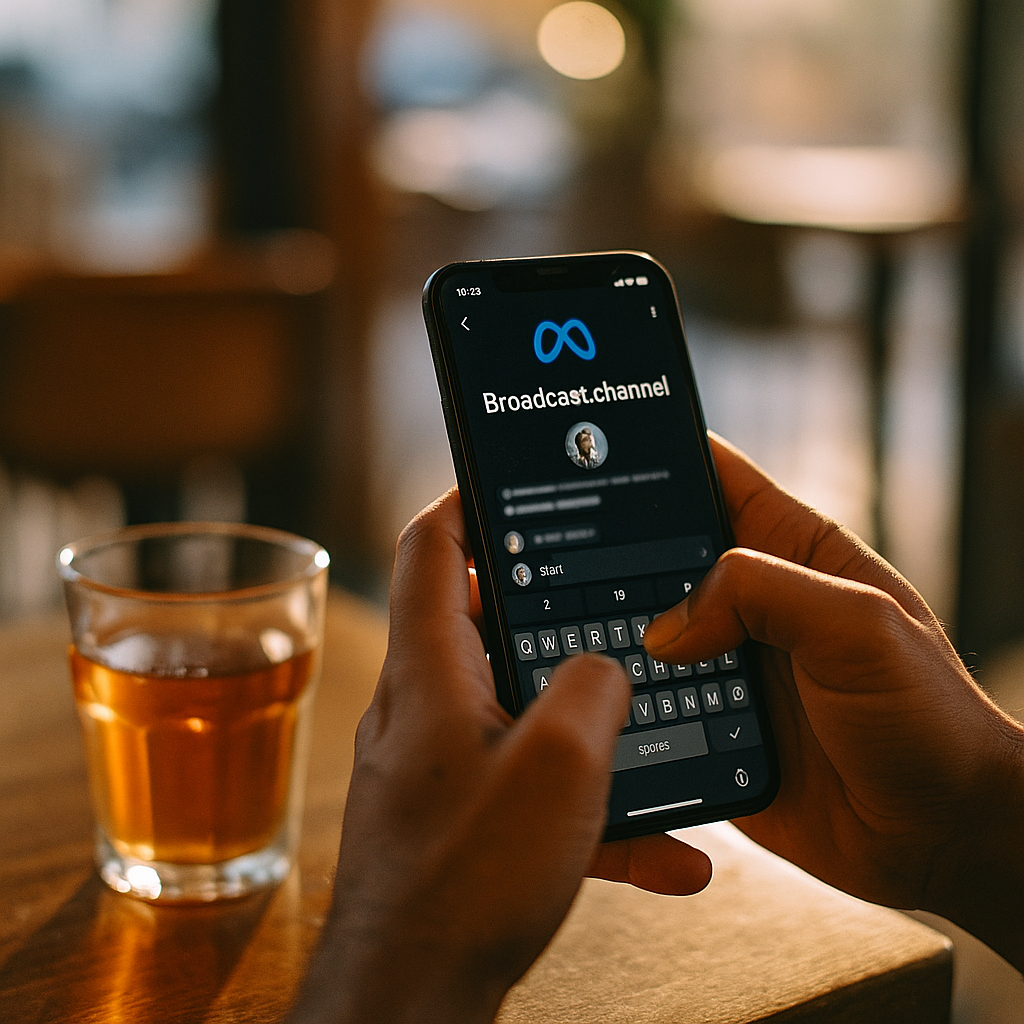
In 2025, attention is scarce and inboxes feel crowded. A Playbook for Leveraging Broadcast Channels on Meta Platforms helps brands and creators build a direct line to followers inside Instagram and Facebook, without fighting algorithms for every post. This guide breaks down strategy, setup, content, measurement, and governance—so you can grow reliably, communicate consistently, and convert interest into action. Ready to turn “followers” into a reachable audience?
Broadcast channels strategy
Broadcast channels on Meta platforms are one-to-many messaging streams where admins share updates and subscribers receive them in a dedicated space. They sit between public posting and private DMs: more intimate than a feed post, less intrusive than individual messages. The strategic advantage is simple—when people opt in, you earn permission to communicate repeatedly with higher intent than passive scrolling.
Start by defining the “job” your channel will do. Most high-performing channels fall into a few proven lanes:
- Announcements: launches, restocks, event dates, new content drops.
- Insider value: behind-the-scenes, early access, exclusive offers, creator notes.
- Education: short lessons, checklists, quick audits, templates, weekly tips.
- Community pulse: polls, Q&A prompts, feedback requests, taste tests.
- Support and clarity: policy changes, shipping updates, how-to guidance.
Then choose a primary outcome and one secondary outcome. Examples:
- Outcome: increase sales from launches. Secondary: reduce customer service volume by pre-empting common questions.
- Outcome: grow event attendance. Secondary: collect audience input to refine topics.
- Outcome: boost content consumption. Secondary: improve retention by delivering predictable weekly value.
Audience fit matters more than size. Ask: “What would make someone subscribe and stay?” A strong answer is specific and repeatable: “Weekly 5-minute growth experiments,” “First look at new arrivals,” or “Daily market snapshot at 9am.”
Editorial positioning tip: name the channel like a product. A clear promise (“The Friday Playbook,” “Drop Alerts,” “Studio Notes”) outperforms generic naming because it sets expectations instantly.
Meta platform setup
Execution begins with a clean setup that removes friction. Your goal is to make discovery obvious, joining effortless, and expectations clear from the first message.
Core setup checklist:
- Channel description: state who it’s for, what you share, and how often.
- Welcome message: deliver immediate value (a link, a quick tip, a poll) so subscribers feel rewarded for joining.
- Posting cadence: commit to a schedule you can sustain. Consistency beats intensity.
- Rules and boundaries: clarify what you will and won’t do (e.g., “No spam, no constant sales blasts, replies handled via support email/DM”).
- Link hygiene: use trackable links (UTM parameters) and a reliable landing page.
Discovery and promotion: treat the channel as a distribution asset. Promote it where attention already exists:
- Instagram: Stories, Reels end cards, Highlights, link in bio, pinned posts, and collaboration posts.
- Facebook: Page posts, Groups (where allowed), event pages, and pinned announcements.
- Cross-channel: email footer, website banners, checkout pages, and YouTube descriptions.
Make the “why subscribe” message consistent everywhere. A simple structure works: Value (what), cadence (when), exclusivity (why here), and next step (join now).
Operational roles: assign at least two admins. One person owning strategy and voice, another owning scheduling and analytics, prevents gaps when someone is unavailable. If you operate in a regulated space (health, finance), involve compliance early and document approval steps.
Content calendar and formats
Broadcast channels win when you publish messages people would miss if they weren’t subscribed. That requires a content system—lightweight, repeatable, and designed for mobile attention.
Use a 3-pillar framework:
- Value: tips, checklists, “how we did it,” short lessons, templates.
- Access: early links, behind-the-scenes, pre-orders, RSVP priority.
- Action: clear next steps—buy, register, reply to a poll, save a post, share.
Recommended cadence (adjust to your audience):
- 2–4 messages per week for most brands.
- Daily for newsy creators or time-sensitive categories (sports, market updates), if each message is genuinely useful.
Format mix that keeps retention high:
- Short text updates: quick context, one idea, one action.
- Polls: fast engagement and instant research. Follow up with “Here’s what we’re doing with the results.”
- Images and short clips: product previews, step-by-step visuals, screenshots, before/after.
- Links: always answer “What happens if I tap?” with a clear payoff.
- Serialized posts: recurring series (“Tip Tuesday,” “Monthly drop calendar,” “3-minute audit”).
Write like a human, structure like a strategist: open with the point, add one supporting detail, then give a single next step. Avoid multi-link dumps. If you have several resources, drip them across days to create anticipation and reduce fatigue.
Sample weekly plan:
- Monday (Value): “One change we made that increased sign-ups—here’s the checklist.”
- Wednesday (Community pulse): poll on what subscribers want next; tease results.
- Friday (Access + Action): early link to a new drop/event + clear deadline.
Answer likely subscriber questions inside your posts. If you announce a launch, include: price range (if possible), timing, quantities, shipping or availability, and where to get support. Reducing uncertainty improves conversion and lowers inbound support volume.
Audience growth and engagement
Growth comes from two levers: conversion to subscribe and retention after subscribing. Many channels over-focus on sign-ups and under-invest in reasons to stay. In 2025, retention is the real advantage because it compounds with every message.
Increase conversion to subscribe:
- Use a single, specific promise: “Get drop alerts 30 minutes early” beats “Stay updated.”
- Place the invite at the moment of peak intent: right after a Reel that performs, right after a live stream, immediately after someone votes in a Story poll, and on product pages.
- Offer a “first subscriber reward”: a downloadable template, early RSVP link, or a limited offer. Keep it aligned with your brand and avoid bait-and-switch.
- Pin a “Start here” post: explain what the channel is and what subscribers get weekly.
Increase retention and engagement:
- Deliver early value: your first three messages should prove the promise quickly.
- Create predictable rhythms: recurring series build habits.
- Make polls meaningful: ask questions you will act on, then show the outcome.
- Limit sales-only messaging: follow a “give-give-ask” pattern to protect trust.
- Segment with multiple channels (when needed): one channel per audience intent (e.g., “Education,” “Drop Alerts,” “Events”) reduces noise for subscribers.
Cross-promotion and partnerships: collaborate with adjacent creators or brands by co-creating content and inviting audiences to join your channel for a specific continuation (e.g., “We’ll share the full checklist in the channel”). Keep the continuation real—subscribers should instantly see the promised follow-up.
Customer journey alignment: map channel messages to where someone is in their decision process:
- Awareness: simple, non-technical tips and proof points.
- Consideration: comparisons, FAQs, behind-the-scenes validation.
- Decision: offers, deadlines, bundles, easy checkout links.
- Retention: onboarding, usage tips, new feature education, loyalty perks.
Measurement and analytics
Broadcast channels feel conversational, but they should be managed like a performance channel. The best measurement approach combines Meta’s native signals with your own tracking so you can tie messages to outcomes.
Key metrics to monitor weekly:
- Subscriber growth: new subscribers minus churn (where visible) and net growth rate.
- Reach/opens (where provided): directional health indicator of attention.
- Poll participation: a proxy for engagement quality and audience relevance.
- Link clicks: by message, using UTM parameters.
- Downstream conversions: email sign-ups, registrations, purchases, or qualified leads.
Attribution that actually helps: in 2025, expect multi-touch journeys. Use UTMs that encode channel, campaign, and message type (e.g., utm_source=instagram, utm_medium=broadcast_channel, utm_campaign=drop_alert, utm_content=poll_followup). Then review performance by message category: “Value,” “Access,” “Action.” This reveals what earns trust and what triggers conversions.
Testing plan (simple and sustainable):
- Cadence test: 2 vs. 4 messages per week for one month, compare clicks and churn.
- Hook test: “Outcome-first” opening line vs. “story-first” opening line.
- Offer test: early access vs. bonus bundle vs. free resource.
- Format test: image + short caption vs. text-only.
When results dip, diagnose in order: relevance (are you still serving the promise?), clarity (is the action obvious?), frequency (too much or too little?), and friction (slow landing pages, unclear pricing, confusing forms). Fix the highest-leverage bottleneck first.
Brand safety, compliance, and operations
Broadcast channels can strengthen trust—or weaken it quickly if the experience feels spammy or careless. Operational discipline protects your audience and your brand.
Trust and safety principles:
- Permission and expectation: never misrepresent frequency or content type.
- Privacy: avoid sharing personal customer details, sensitive screenshots, or identifiable data without explicit consent.
- Accuracy: fact-check claims, especially for health, financial, or legal topics. If you reference data, cite the source on the landing page you link to, or provide a brief “source” note in the message when possible.
- Clear boundaries for support: if you can’t handle support inside the channel, direct people to the right place every time (help center, email, order page).
Compliance workflow (practical):
- Create a message library: approved disclaimers, claims language, and offer terms.
- Set an approval threshold: routine posts can be pre-approved; high-risk posts require review.
- Keep records: store screenshots or exports of major campaign messages and linked offer terms.
Operational playbook: define a weekly production rhythm:
- Monday: plan messages and links, confirm any promo terms.
- Midweek: publish engagement post (poll/Q&A), collect insights.
- Friday: publish action post, then monitor performance and support needs.
If you manage multiple admins, standardize voice with a short style guide: preferred greeting (or none), sentence length, emoji policy (if any), capitalization, and how you format links and deadlines. Consistency reduces confusion and reinforces credibility.
FAQs about Meta broadcast channels
What are broadcast channels on Meta platforms used for?
They’re used for one-to-many updates that subscribers opt into, such as announcements, behind-the-scenes content, exclusive offers, educational series, and quick polls to gather audience feedback.
Are broadcast channels better than email newsletters?
They’re different. Broadcast channels can drive faster engagement inside Meta apps and feel more immediate, while email is stronger for ownership, long-form communication, and portability. Many teams use channels for timely updates and email for deeper content and lifecycle flows.
How often should I post in a broadcast channel?
Most brands perform well with 2–4 posts per week. Increase frequency only if each message delivers clear value. If engagement drops or unsubscribes rise, reduce frequency and improve relevance.
What should my first three messages be?
Start with a welcome that states the promise, a quick-value post (tip/checklist/resource), and an engagement post (poll) that shapes the next week’s content. This sequence proves usefulness and sets expectations fast.
How do I measure ROI from broadcast channels?
Use trackable links with UTM parameters, then measure downstream conversions (purchases, sign-ups, registrations) in analytics. Pair that with native metrics like subscriber growth and poll participation to evaluate both revenue and audience health.
Can I run promotions and product launches in a broadcast channel?
Yes, and they often work well because subscribers have opted in. Keep trust by balancing promotions with non-sales value, stating terms clearly (deadline, quantities, exclusions), and linking to a landing page with full details.
What are common mistakes to avoid?
Overposting, vague promises (“updates”), posting only sales messages, sending untracked links, failing to follow up on poll results, and directing subscribers to confusing landing pages.
Broadcast channels reward clarity, consistency, and respect for the subscriber’s attention. In 2025, the strongest operators treat them as a permission-based product: a clear promise, a sustainable cadence, and measurable outcomes. Set up your channel to be easy to join, publish a balanced mix of value and action, and track what drives clicks and conversions. Build trust, and the audience will stay—then respond when it matters most.