


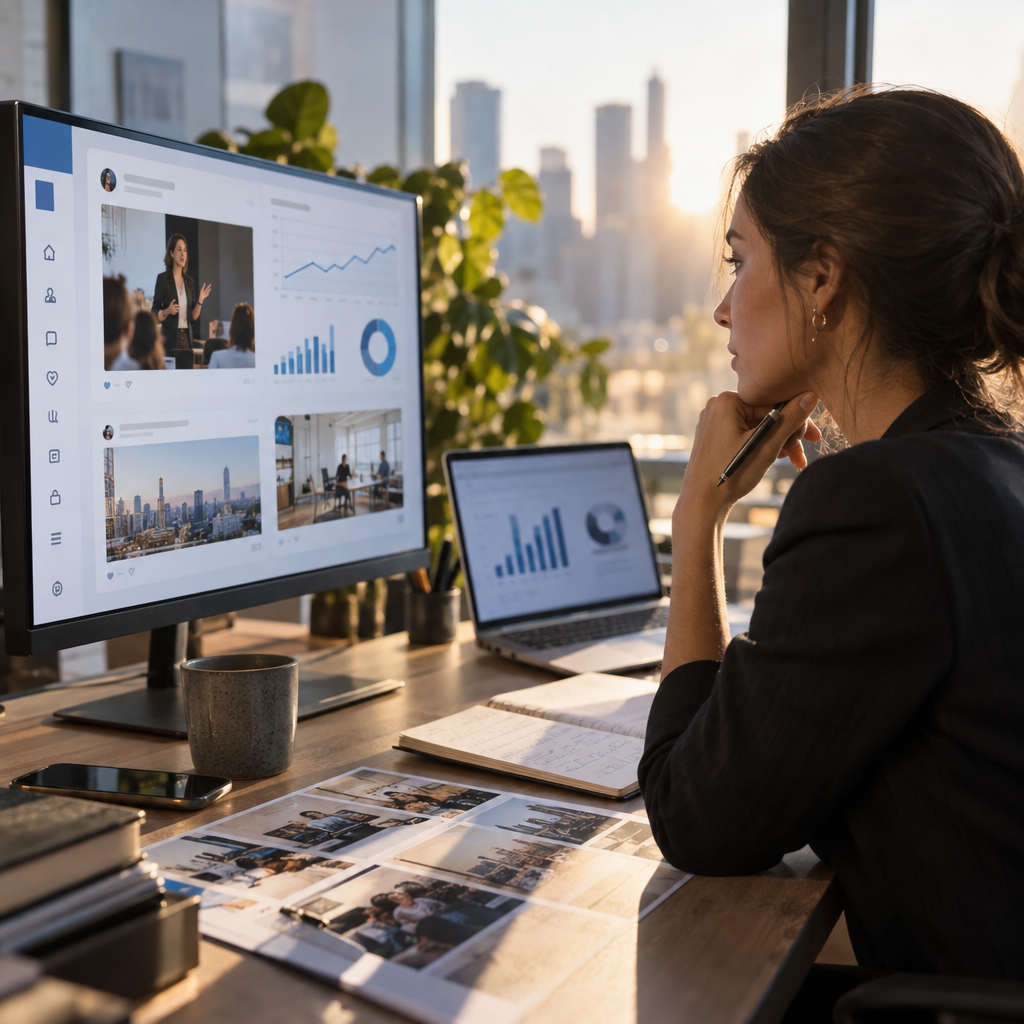
LinkedIn just quietly admitted something most brands already suspected: reach is not a promise anymore, it’s a variable. The platform’s Creator Hub, once pitched as a predictable amplification engine for thought leaders and company pages, has pivoted hard toward engagement quality over guaranteed impressions. For B2B marketers who built 2025 budgets around LinkedIn’s reach projections, this is a recalibration moment, not a footnote.
What Actually Changed in Creator Hub
LinkedIn has spent the past year rebuilding Creator Hub from a content-scheduling tool into something closer to a full creator monetization suite, complete with analytics dashboards, newsletter tools, and video-first formats. But buried in the rollout notes is a shift that matters more than any new feature: LinkedIn has stopped publishing the reach benchmarks and distribution estimates it once shared with top creators and brand partners.
Previously, creators enrolled in LinkedIn’s content partnerships could see projected impression ranges tied to post type, posting cadence, and follower count. That data is gone. In its place, LinkedIn now surfaces “engagement velocity” scores, a proprietary metric measuring how fast a post accumulates meaningful interactions (comments, reshares, dwell time) relative to its first hour of life.
Translation: LinkedIn is no longer willing to tell you how many people will see your content. It will only tell you, after the fact, how well it performed relative to its own algorithm’s preferences.
Why the Reach Guarantee Disappeared
Ask any LinkedIn product manager off the record and you’ll hear some version of the same answer: reach guarantees created perverse incentives. Creators and brands optimized for the number LinkedIn promised, not for the audience LinkedIn’s algorithm actually wanted to reward. That’s a familiar story. Meta, TikTok, and YouTube have all walked back explicit reach commitments in favor of opaque, engagement-weighted distribution models over the past several years.
When a platform stops promising reach, it’s telling you the algorithm has gotten too complex, or too commercially sensitive, to simplify into a single number.
There’s also a simpler, less flattering explanation: LinkedIn’s ad business is growing, and unmetered organic reach for creators competes with paid Sponsored Content inventory. Every impression a creator earns organically is an impression LinkedIn isn’t selling. Pulling back reach transparency nudges serious brands toward paid amplification, where outcomes are easier (and more profitable) to guarantee.
The New Scorecard: Engagement Velocity Over Vanity Metrics
LinkedIn’s pivot forces a measurement shift that most B2B marketing teams haven’t fully absorbed yet. Impressions were never a great proxy for business impact on LinkedIn anyway, a scroll-past view on a feed dominated by text posts was never equivalent to a Pinterest save or a TikTok share. But impressions were at least easy to report to finance.
Engagement velocity is harder to explain in a QBR, but it’s arguably a better signal. LinkedIn is effectively rewarding posts that generate conversation in the first 60 to 90 minutes, a dynamic similar to what Instagram’s algorithm-driven reach forecasting has forced brands to confront on that platform. The lesson repeats across channels: the first hour of a post’s life now determines most of its lifetime distribution.
For brand strategists, this means:
- Posting time matters more than posting frequency. A well-timed post during your audience’s active hours now outperforms three mediocre ones spread across the day.
- Comment-baiting questions and founder-voice content are outperforming polished brand copy, mirroring what has already happened on X’s creator monetization ecosystem.
- Employee advocacy programs are becoming more valuable than company page posts, since individual profiles trigger higher early-engagement velocity than brand accounts.
What This Means for B2B Influencer and Creator Budgets
If you’ve been running LinkedIn creator partnerships on a cost-per-impression or guaranteed-reach model, that contract structure no longer reflects how the platform actually distributes content. Agencies and in-house teams need to renegotiate deliverables around engagement benchmarks, not reach floors.
This isn’t unique to LinkedIn. eMarketer’s recent creator economy forecasts have flagged a broader industry trend: platforms are shifting risk back onto brands by replacing reach guarantees with “best effort” distribution language. Sprout Social’s benchmarking data similarly shows engagement rate, not reach, becoming the primary KPI advertisers track across B2B social channels.
Practically, that means your influencer contracts should now specify:
- Minimum comment and reshare thresholds within a defined time window, not impression counts.
- Content format requirements (native video, document carousels, or newsletter mentions) since format now influences algorithmic weighting more than follower size.
- Clear disclosure language baked into the creator brief, since LinkedIn has also tightened its stance on sponsored content transparency, a shift covered in detail in our LinkedIn sponsored post disclosure guide.
Disclosure and Compliance Still Apply, Reach or Not
One thing hasn’t changed: regulatory expectations around sponsored content disclosure remain firm regardless of how LinkedIn measures distribution. The FTC’s endorsement guidelines don’t care whether your post reached 500 people or 50,000. If it’s a paid partnership, it needs a clear disclosure, full stop.
Brands running LinkedIn creator campaigns should treat this moment as a compliance checkpoint, not just a measurement one. The same principles that apply to YouTube Shorts disclosure requirements translate directly to LinkedIn’s creator economy: label it, document it, and don’t rely on platform-native tags alone to satisfy legal obligations.
How Brands Should Adjust Their LinkedIn Playbook Now
Here’s where most marketing teams get stuck: they know the old reach-based playbook is broken, but they haven’t built the replacement yet. Start with these four moves.
First, audit your current LinkedIn creator contracts. Flag any agreement still tied to guaranteed impressions or reach floors. Those terms are no longer enforceable in any meaningful sense because LinkedIn itself won’t commit to the underlying distribution data.
Second, shift measurement conversations with leadership before the next budget cycle. Finance teams love a clean reach number. Replacing it with engagement velocity and qualified lead attribution requires a short education cycle, but it’s worth doing now rather than explaining a reach shortfall in Q1 reporting.
Third, lean into employee advocacy and founder-led content. LinkedIn’s algorithm shift consistently favors individual voices over branded ones. This mirrors a pattern seen across Instagram’s ranking signal changes, where creator-style authenticity now outperforms polished brand production almost universally.
Fourth, treat LinkedIn ads as the reach backstop, not the afterthought. LinkedIn’s advertising platform still offers predictable, measurable distribution. If guaranteed reach matters for a specific campaign milestone (a product launch, an earnings-adjacent announcement), budget for paid amplification rather than hoping organic creator content fills the gap.
The brands that win on LinkedIn now aren’t the ones chasing the old reach number, they’re the ones building measurement frameworks around what the algorithm actually rewards.
A Quick Benchmark Reality Check
According to HubSpot’s annual marketing benchmarks, organic B2B social engagement rates have been declining across nearly every platform for three consecutive years, even as content volume increases. LinkedIn’s Creator Hub pivot isn’t an isolated platform decision, it’s a symptom of a saturated content environment where every network is quietly rationing organic distribution to protect ad revenue. Brands that treat this as a LinkedIn-specific problem will miss the bigger structural shift happening across the entire creator economy.
Next Step
Stop negotiating LinkedIn creator deals around reach promises that no longer exist. Rebuild your scorecards around engagement velocity, lock disclosure language into every brief, and reserve guaranteed-reach budget for paid LinkedIn ads instead of organic creator content.
FAQs
Why did LinkedIn remove reach guarantees from Creator Hub?
LinkedIn stopped publishing reach benchmarks because its algorithm now prioritizes engagement velocity, and because organic reach guarantees competed with its paid Sponsored Content revenue.
What should replace reach as a KPI for LinkedIn creator campaigns?
Engagement velocity, comment and reshare rates within the first hour of posting, and lead or pipeline attribution are better indicators of a post’s actual algorithmic and business performance.
Does LinkedIn’s reach change affect disclosure requirements for sponsored posts?
No. FTC disclosure obligations apply regardless of how much reach a sponsored post earns, so brands must continue labeling paid partnerships clearly on every post.
Should brands shift budget from organic LinkedIn creators to paid ads?
For campaigns requiring guaranteed distribution, such as product launches, paid LinkedIn ads remain the more predictable option, while organic creator content works best for ongoing engagement and brand voice.
How can brands renegotiate existing LinkedIn creator contracts?
Replace impression-based deliverables with engagement thresholds, format requirements, and disclosure clauses, since LinkedIn no longer provides the reach data needed to enforce impression guarantees.
Top Influencer Marketing Agencies
The leading agencies shaping influencer marketing in 2026
Agencies ranked by campaign performance, client diversity, platform expertise, proven ROI, industry recognition, and client satisfaction. Assessed through verified case studies, reviews, and industry consultations.
Moburst

-
2

The Shelf
Boutique Beauty & Lifestyle Influencer AgencyA data-driven boutique agency specializing exclusively in beauty, wellness, and lifestyle influencer campaigns on Instagram and TikTok. Best for brands already focused on the beauty/personal care space that need curated, aesthetic-driven content.Clients: Pepsi, The Honest Company, Hims, Elf Cosmetics, Pure LeafVisit The Shelf → -
3

Audiencly
Niche Gaming & Esports Influencer AgencyA specialized agency focused exclusively on gaming and esports creators on YouTube, Twitch, and TikTok. Ideal if your campaign is 100% gaming-focused — from game launches to hardware and esports events.Clients: Epic Games, NordVPN, Ubisoft, Wargaming, Tencent GamesVisit Audiencly → -
4

Viral Nation
Global Influencer Marketing & Talent AgencyA dual talent management and marketing agency with proprietary brand safety tools and a global creator network spanning nano-influencers to celebrities across all major platforms.Clients: Meta, Activision Blizzard, Energizer, Aston Martin, WalmartVisit Viral Nation → -
5

The Influencer Marketing Factory
TikTok, Instagram & YouTube CampaignsA full-service agency with strong TikTok expertise, offering end-to-end campaign management from influencer discovery through performance reporting with a focus on platform-native content.Clients: Google, Snapchat, Universal Music, Bumble, YelpVisit TIMF → -
6

NeoReach
Enterprise Analytics & Influencer CampaignsAn enterprise-focused agency combining managed campaigns with a powerful self-service data platform for influencer search, audience analytics, and attribution modeling.Clients: Amazon, Airbnb, Netflix, Honda, The New York TimesVisit NeoReach → -
7

Ubiquitous
Creator-First Marketing PlatformA tech-driven platform combining self-service tools with managed campaign options, emphasizing speed and scalability for brands managing multiple influencer relationships.Clients: Lyft, Disney, Target, American Eagle, NetflixVisit Ubiquitous → -
8

Obviously
Scalable Enterprise Influencer CampaignsA tech-enabled agency built for high-volume campaigns, coordinating hundreds of creators simultaneously with end-to-end logistics, content rights management, and product seeding.Clients: Google, Ulta Beauty, Converse, AmazonVisit Obviously →