


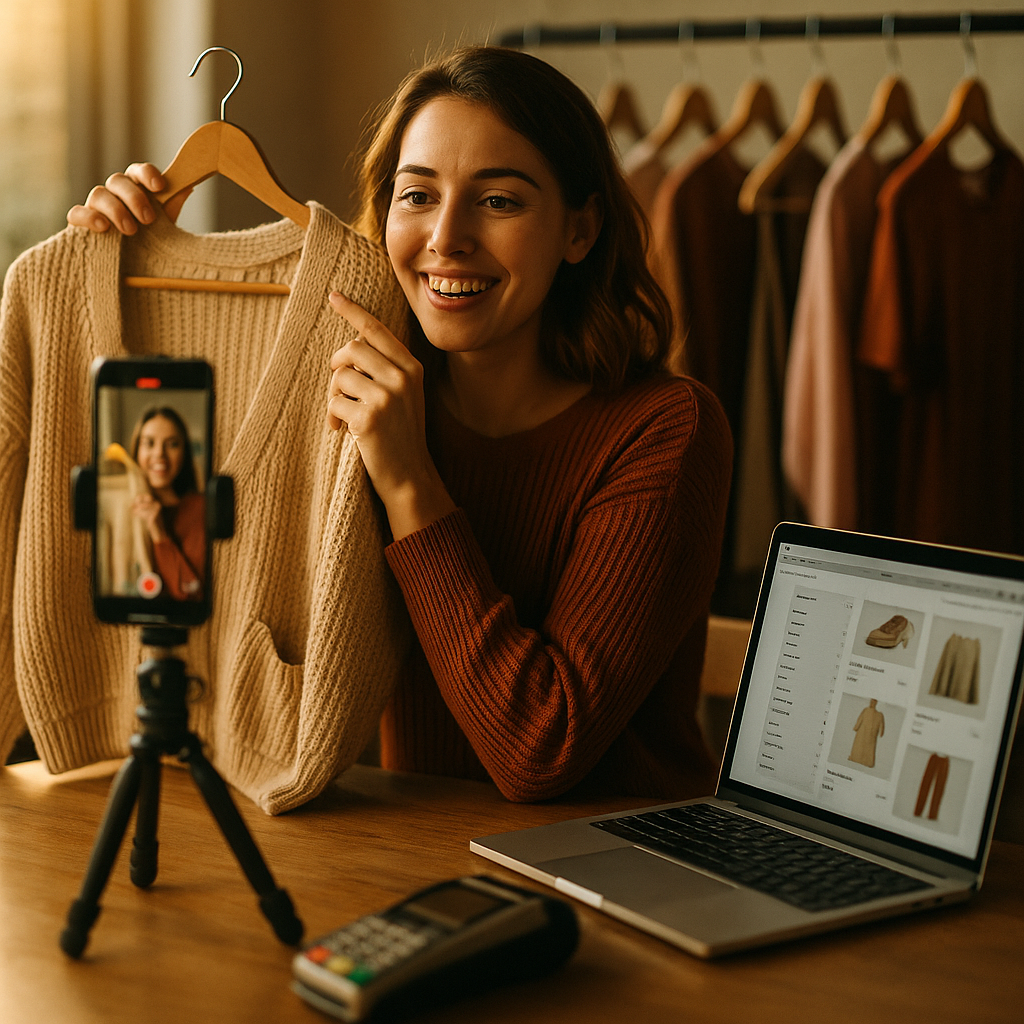
Thirty percent. That’s the average conversion rate brands are reporting on live shopping events, compared to the 2-3% you’d celebrate on a standard e-commerce product page. If you’re still treating live shopping as a niche QVC throwback, the numbers say you’re leaving revenue on the table. Here’s what’s actually driving that gap, and whether it holds up under scrutiny.
The Conversion Gap Is Real, Not a Rounding Error
Let’s start with the skepticism, because it’s warranted. Marketers have been burned by inflated “engagement” metrics before — remember when every platform claimed double-digit lifts that never showed up in the P&L? Live shopping is different because the conversion event is immediate and trackable. There’s no multi-touch attribution puzzle. Someone watches, someone clicks “buy,” someone completes checkout, often inside the same session.
McKinsey and multiple retail platforms operating in China’s livestream commerce market (which pioneered the format at scale) have documented conversion rates in the 20-30% range for live shopping events, versus roughly 2-3% for standard online retail. That’s not a marginal improvement. That’s an order-of-magnitude difference in how efficiently traffic turns into revenue.
Live shopping doesn’t just convert better — it compresses the entire consideration cycle into a single session, eliminating the drop-off points that kill traditional e-commerce funnels.
Why does this matter to you as a brand or agency lead? Because your paid media budget is being spent to drive traffic into funnels that leak at every stage — cart abandonment, comparison shopping, “I’ll buy it later” syndrome. Live shopping collapses that funnel into minutes.
Why the Format Outperforms: Three Structural Advantages
It’s not magic. It’s mechanics. Three structural features explain most of the lift.
- Urgency is engineered, not implied. Limited-time offers, visible stock counters, and live host commentary create real scarcity pressure. Static product pages can fake urgency with countdown timers, but shoppers have learned to ignore those. A live host saying “we have 40 left” while viewers comment in real time is a different psychological trigger entirely.
- Trust transfers instantly. A creator demonstrating a product, answering questions live, and reacting authentically closes the credibility gap that product photography and review sections can’t. This lines up with broader shifts in how trust-based algorithm ranking is reshaping which content earns distribution in the first place.
- Friction is removed at the point of maximum intent. One-tap checkout inside the livestream interface means the moment someone decides to buy, they can. No redirect, no new tab, no “add to cart and come back later.”
Compare that to a typical influencer post driving traffic to a landing page. Even with a great creator and a great product, you’re asking someone to context-switch: leave the app, load a page, navigate a cart, enter payment info. Every one of those steps is a chance to lose the sale. Live shopping keeps intent and action in the same breath.
Platform Data Backs the Trend
TikTok Shop, Amazon Live, and Instagram’s live shopping tools have all pushed hard into this format over the past two years, and the platforms wouldn’t be investing engineering resources into it if the ROI data weren’t showing up internally. TikTok’s own advertiser resources highlight live shopping as a core commerce feature, not an experimental add-on. You can see the platform’s positioning directly on TikTok’s advertising hub.
The economics also make sense for the platforms themselves. Live shopping keeps users in-app longer, generates first-party purchase data, and creates a defensible moat against pure-play e-commerce sites. That’s a triple win platforms are eager to capitalize on, which is partly why creator economy budgets are being rebuilt around commerce-native formats rather than pure awareness plays.
Who’s Actually Winning With This Format?
Beauty and fashion brands were early adopters, largely because product demonstration (texture, fit, application) sells better live than in a static photo. But the format has expanded well beyond those categories. Home goods, electronics, and even B2B SaaS companies running live product walkthroughs have adapted the mechanics.
The common thread isn’t the product category. It’s the presence of a demonstrable, visually explainable value proposition. If your product benefits from being shown rather than described, live shopping is worth testing regardless of vertical.
Micro and mid-tier creators are proving especially effective hosts, a trend consistent with broader data showing that micro and nano creators now claim half of influencer budgets. Smaller creators bring higher-trust audiences and lower costs per stream, which matters when you’re running these events weekly or even daily.
What This Means for Budget Allocation
Here’s the uncomfortable question every CMO should be asking: if live shopping converts 10x better than standard e-commerce, why is it still a rounding error in most media plans?
Part of the answer is operational inertia. Live shopping requires production coordination, creator scheduling, and real-time customer service in a way a static product page doesn’t. It’s genuinely harder to execute well. But “harder to execute” isn’t the same as “not worth executing,” and brands that have built repeatable live shopping playbooks are compounding an advantage that’s getting harder for latecomers to close.
The other part of the answer is measurement maturity. Many brands still don’t have the attribution infrastructure to properly credit live shopping events against other channels, which makes it hard to justify reallocating budget with confidence. This is the same infrastructure gap explored in research on attribution infrastructure driving martech spend — brands with solid measurement stacks invest more confidently in emerging formats because they can actually prove the return.
If your attribution stack can’t isolate live shopping revenue from the rest of your creator spend, you’re not measuring the channel — you’re guessing at it.
A Quick Gut-Check Before You Scale
Before pouring budget into weekly livestreams, run a smaller test. Pick one product line, one creator, one platform. Track completed checkouts inside the stream against your standard product page conversion for the same SKU over the same window. If you’re seeing even a fraction of the 20-30% range reported industry-wide, you have your business case. If you’re not, diagnose before scaling: was it the host, the offer, the platform, or the audience size?
Don’t skip this step. Live shopping amplifies whatever’s already working (or broken) in your creator selection process. A mismatched host with a disengaged audience won’t magically convert at 30% just because the format is “live.” This is precisely why vetting still matters even as AI cuts creator discovery costs but not vetting rigor — the tools find candidates faster, but judgment still determines who actually converts.
Risks and Limitations Brands Should Plan For
No format is risk-free, and live shopping has real operational exposure.
Real-time claims made by hosts are harder to control than pre-approved ad copy. If a creator overstates a product benefit live, on camera, in front of thousands of viewers, that’s a compliance headache you can’t edit after the fact. Brands should brief hosts as rigorously as they’d brief any paid spokesperson, with clear guardrails on claims, especially around health, beauty, and financial products. The FTC’s endorsement guidelines apply just as much to live commerce as to a sponsored post, and enforcement scrutiny on influencer disclosures isn’t going away.
There’s also a scalability ceiling. Live shopping works well when you have engaged hosts and a genuinely interested audience tuning in at a specific time. It doesn’t scale as a “set it and forget it” channel the way programmatic display does. You’re trading efficiency at the top of the funnel for a format that requires ongoing production investment.
Finally, measurement across platforms remains inconsistent. TikTok Shop, Amazon Live, and Instagram each report metrics differently, and stitching together a unified view of live shopping performance across channels is still a manual, often messy process. Tools referenced in industry benchmarking from sources like eMarketer and Statista are starting to standardize this, but brands running multi-platform live commerce still need internal dashboards to make sense of the full picture.
Where Live Shopping Fits in a Broader Creator Strategy
Live shopping isn’t a replacement for your always-on influencer program. It’s a high-conversion layer that sits on top of it. Use ongoing creator partnerships to build the audience trust and discovery that make a live event worth tuning into, then use the live format to convert that attention at a rate your product pages simply can’t match.
This pairs naturally with the shift toward retainer-based creator relationships rather than one-off posts, since a creator who’s worked with your brand for months brings pre-built credibility into every stream they host. The data on why retainers outperform one-off deals applies directly here: the same creator hosting a fifth live shopping event for your brand will almost always outconvert a first-time partner, because the audience already trusts the relationship.
The takeaway is simple: run a live shopping pilot this quarter, measure it against your actual product page conversion rate for the same SKU, and let that number — not the hype — decide how much budget it earns next quarter.
FAQs
What conversion rate should brands expect from live shopping?
Industry data points to a 20-30% conversion rate for well-executed live shopping events, compared to 2-3% for standard e-commerce product pages. Actual results vary by product category, host quality, and audience size, so brands should benchmark against their own baseline rather than assuming the top-end figure applies universally.
Which platforms support live shopping today?
TikTok Shop, Amazon Live, and Instagram all offer native live shopping tools with in-stream checkout. Each platform reports metrics differently, so brands running multi-platform campaigns need a unified measurement approach to compare performance accurately.
Is live shopping only effective for beauty and fashion brands?
No. While beauty and fashion were early adopters because their products benefit from visual demonstration, home goods, electronics, and even B2B products have seen strong results. The key factor is whether a product’s value proposition is easier to show than to describe.
What compliance risks come with live shopping?
Real-time host commentary is harder to pre-approve than static ad copy, increasing the risk of unsubstantiated claims, particularly in regulated categories like health and finance. Brands should brief hosts with the same rigor as any paid spokesperson and stay current on FTC endorsement guidelines.
How should brands test live shopping before scaling investment?
Run a small pilot: one product, one creator, one platform. Compare completed in-stream checkouts against the standard product page conversion rate for the same SKU over the same time period before committing further budget.
Top Influencer Marketing Agencies
The leading agencies shaping influencer marketing in 2026
Agencies ranked by campaign performance, client diversity, platform expertise, proven ROI, industry recognition, and client satisfaction. Assessed through verified case studies, reviews, and industry consultations.
Moburst

-
2

The Shelf
Boutique Beauty & Lifestyle Influencer AgencyA data-driven boutique agency specializing exclusively in beauty, wellness, and lifestyle influencer campaigns on Instagram and TikTok. Best for brands already focused on the beauty/personal care space that need curated, aesthetic-driven content.Clients: Pepsi, The Honest Company, Hims, Elf Cosmetics, Pure LeafVisit The Shelf → -
3

Audiencly
Niche Gaming & Esports Influencer AgencyA specialized agency focused exclusively on gaming and esports creators on YouTube, Twitch, and TikTok. Ideal if your campaign is 100% gaming-focused — from game launches to hardware and esports events.Clients: Epic Games, NordVPN, Ubisoft, Wargaming, Tencent GamesVisit Audiencly → -
4

Viral Nation
Global Influencer Marketing & Talent AgencyA dual talent management and marketing agency with proprietary brand safety tools and a global creator network spanning nano-influencers to celebrities across all major platforms.Clients: Meta, Activision Blizzard, Energizer, Aston Martin, WalmartVisit Viral Nation → -
5

The Influencer Marketing Factory
TikTok, Instagram & YouTube CampaignsA full-service agency with strong TikTok expertise, offering end-to-end campaign management from influencer discovery through performance reporting with a focus on platform-native content.Clients: Google, Snapchat, Universal Music, Bumble, YelpVisit TIMF → -
6

NeoReach
Enterprise Analytics & Influencer CampaignsAn enterprise-focused agency combining managed campaigns with a powerful self-service data platform for influencer search, audience analytics, and attribution modeling.Clients: Amazon, Airbnb, Netflix, Honda, The New York TimesVisit NeoReach → -
7

Ubiquitous
Creator-First Marketing PlatformA tech-driven platform combining self-service tools with managed campaign options, emphasizing speed and scalability for brands managing multiple influencer relationships.Clients: Lyft, Disney, Target, American Eagle, NetflixVisit Ubiquitous → -
8

Obviously
Scalable Enterprise Influencer CampaignsA tech-enabled agency built for high-volume campaigns, coordinating hundreds of creators simultaneously with end-to-end logistics, content rights management, and product seeding.Clients: Google, Ulta Beauty, Converse, AmazonVisit Obviously →