


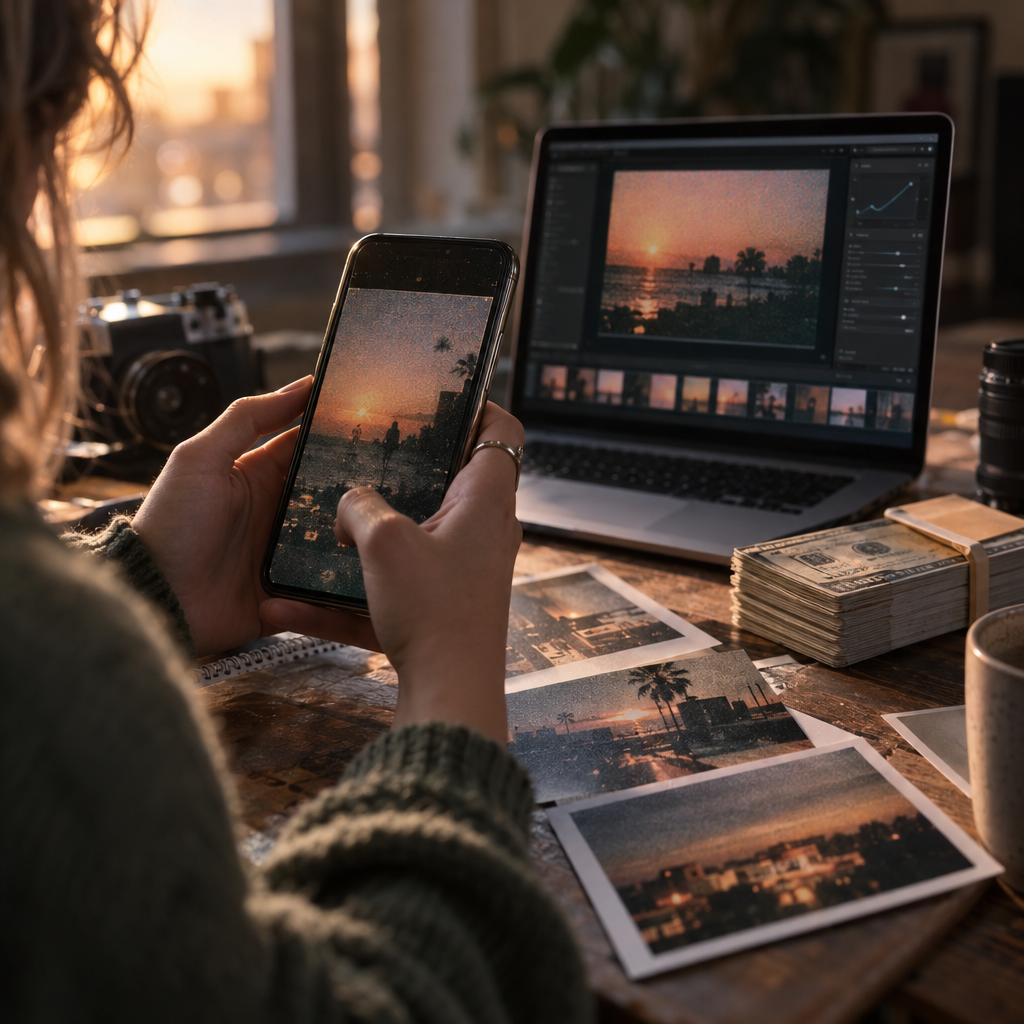
Scroll-stopping content isn’t polished anymore, it’s shaky, grainy, and shot on a three-year-old iPhone. According to eMarketer, consumers are exposed to thousands of branded impressions a day, and most get ignored the second they look like an ad. That’s why the lo fi phone aesthetic has quietly become one of the most requested content styles in creator briefs. Brands aren’t settling for unpolished footage. They’re paying extra to get it.
What “Lo Fi” Actually Means in Content Budgets
Lo fi isn’t an accident. It’s a deliberate visual language: handheld camera shake, flat lighting, ambient background noise, zero color grading, and timestamps that look like they belong on a 2016 Snapchat story. It mimics the look of a text from a friend, not a commercial from a brand.
What’s changed is who’s commissioning it. Two years ago, this look was the default for organic UGC because creators simply didn’t have studio gear. Now agencies are writing it into briefs on purpose, sometimes specifying exact phone models, lighting conditions, and even “acceptable” levels of audio hiss. Production teams are reverse-engineering amateur mistakes and charging professional rates to replicate them.
Some agencies now pay creators more to “rough up” polished footage in post than they originally paid to shoot it clean.
Why Unpolished Footage Converts Better
There’s a trust gap between branded content and organic content, and audiences have gotten scary good at spotting the difference. A 4K product shot with studio lighting reads as an ad before the viewer even processes the message. A shaky clip filmed in a bathroom mirror reads as a recommendation from a peer.
This isn’t just a vibe, it shows up in performance data. Sprout Social has repeatedly flagged authenticity as the top factor influencing purchase decisions on social platforms, ahead of production quality or celebrity endorsement. Lo fi content exploits that trust gap on purpose. It borrows the credibility of a friend’s camera roll and attaches it to a brand message.
It also works because it slows the scroll in a different way than polish does. A hyper-produced ad signals “skip me” in the first half second. A grainy, handheld clip signals “wait, is this real?” That half-second of hesitation is where conversion happens.
Lo Fi Isn’t Cheap. It’s Engineered.
Here’s the part that surprises brand managers: unpolished doesn’t mean low budget. A genuinely lo fi campaign often costs more than a studio shoot once you factor in strategy, scripting, and compliance review. You’re not paying for lighting rigs, you’re paying for someone who understands exactly which “mistakes” build trust and which ones just look sloppy.
Good lo fi content still needs a hook in the first three seconds, a clear product moment, and a call to action that doesn’t feel bolted on. Stripping away gloss doesn’t mean stripping away structure. If anything, the script has to work harder because there’s no cinematography to hide behind.
- Camera shake that feels natural, not disorienting
- Audio that’s rough but still intelligible
- Lighting that’s flat but doesn’t obscure the product
- Pacing that mimics a real person talking, not a teleprompter read
Brands building these briefs internally often borrow structure from formats like silent vlog scripting, where the visual storytelling has to carry weight without relying on narration. The same discipline applies here: every unpolished second still needs intent behind it.
Where This Format Wins, and Where It Flops
Lo fi works brilliantly for categories built on trust and relatability: skincare, supplements, personal finance apps, dating platforms, and anything where the buyer is skeptical of marketing claims. It performs especially well paired with price transparency content, the kind of format covered in receipt reveal video scripting, where showing the real number on screen does more persuasive work than any voiceover.
It flops in categories where credibility depends on precision or safety. Nobody wants their medical device, their investment platform, or their B2B software demoed with shaky footage and bad lighting. In those cases, polish signals competence, not distance. Matching the aesthetic to the category isn’t optional, it’s the whole strategy.
It’s also worth noting that lo fi fatigue is real. As more brands pile into the format, the novelty wears off, and audiences start recognizing “fake amateur” content as fast as they recognized “fake authentic” influencer posts five years ago. The format has a shelf life. Treat it as one tool, not a permanent content strategy.
Building a Lo-Fi Brief Without Losing Brand Control
The biggest operational risk with lo fi content isn’t quality, it’s consistency. When your visual standard is intentionally loose, it’s harder to enforce brand guidelines across dozens of creators. You need guardrails that protect the message without flattening the rawness that makes the format work in the first place.
Start with a documented brief that separates non-negotiables (claims language, disclosure placement, product visibility) from stylistic flexibility (camera angle, setting, tone of voice). Teams managing high-volume creator output often lean on structures similar to UGC brief templates that tie creative requirements directly to performance metrics rather than subjective “does this look good” reviews.
If you’re running this at scale across a content calendar, pacing matters too. A weekly UGC cadence keeps the lo fi well from running dry and gives your paid team a steady stream of fresh, testable hooks instead of recycling the same three videos until they burn out.
Can AI Replicate This, or Does It Need a Real Person?
Naturally, the AI tools have come for this format too. There are now generators that can simulate handheld shake, timestamp overlays, and even “accidental” audio distortion on synthetic footage. The results are improving fast, but they still struggle with the micro-imperfections that make real lo fi convincing: inconsistent framing, genuine ambient noise, the slight delay between a person moving and the camera catching up.
Brands testing this tradeoff should look at the comparisons laid out in AI UGC versus real creator testing. The short version: AI-generated lo fi is cheaper and faster, but it currently performs worse on trust metrics once audiences catch on, and they do catch on. For now, the safest bet is human-shot footage with light post-production roughening, not full synthetic generation.
Compliance Still Applies, Even When It Looks Like a Text Message
Here’s where a lot of marketing teams get sloppy. Because lo fi content looks informal, there’s a temptation to treat disclosure as optional. It isn’t. The FTC doesn’t care how shaky your footage is, if a creator was compensated or received free product, that relationship needs to be disclosed clearly, regardless of aesthetic.
This gets trickier with formats that intentionally blur the line between organic and sponsored. Build disclosure into the script itself rather than treating it as an afterthought slapped on in editing. Platforms like Meta Business have their own branded content tagging requirements on top of FTC rules, and skipping them creates legal exposure that no amount of “authentic” styling will excuse.
For reference, the broader principles covered in content on passing FTC disclosure rules apply directly here. Unpolished doesn’t mean unregulated.
FAQs
What does “lo fi phone aesthetic” mean in marketing?
It refers to deliberately unpolished video content, shaky camera work, flat lighting, ambient noise, shot or styled to look like it was filmed casually on a phone rather than professionally produced.
Is lo fi content actually cheaper to produce?
Not always. Strategic lo fi content often costs the same as or more than polished video because it requires skilled scripting, authentic performance, and careful post-production “roughening” to look convincingly amateur.
Which brands benefit most from this aesthetic?
Trust-dependent categories like beauty, supplements, personal finance, and lifestyle apps tend to see the strongest results. Categories requiring precision credibility, like medical or financial services, usually perform better with polished production.
Does lo fi content still need FTC disclosure?
Yes. Disclosure requirements from the FTC and platform policies apply regardless of production quality. Any paid or gifted relationship between a brand and creator must be clearly disclosed.
Can AI tools replicate the lo fi look convincingly?
AI-generated lo fi is improving, but it still underperforms real creator footage on trust metrics because audiences notice the absence of genuine micro-imperfections like natural camera lag and authentic ambient sound.
If you’re testing the lo fi phone aesthetic for the first time, run it against your current best-performing polished ad in a small paid split test before committing budget to a full creator roster. Let the data decide which look earns the click, not internal opinion about what “looks professional.”
Top Influencer Marketing Agencies
The leading agencies shaping influencer marketing in 2026
Agencies ranked by campaign performance, client diversity, platform expertise, proven ROI, industry recognition, and client satisfaction. Assessed through verified case studies, reviews, and industry consultations.
Moburst

-
2

The Shelf
Boutique Beauty & Lifestyle Influencer AgencyA data-driven boutique agency specializing exclusively in beauty, wellness, and lifestyle influencer campaigns on Instagram and TikTok. Best for brands already focused on the beauty/personal care space that need curated, aesthetic-driven content.Clients: Pepsi, The Honest Company, Hims, Elf Cosmetics, Pure LeafVisit The Shelf → -
3

Audiencly
Niche Gaming & Esports Influencer AgencyA specialized agency focused exclusively on gaming and esports creators on YouTube, Twitch, and TikTok. Ideal if your campaign is 100% gaming-focused — from game launches to hardware and esports events.Clients: Epic Games, NordVPN, Ubisoft, Wargaming, Tencent GamesVisit Audiencly → -
4

Viral Nation
Global Influencer Marketing & Talent AgencyA dual talent management and marketing agency with proprietary brand safety tools and a global creator network spanning nano-influencers to celebrities across all major platforms.Clients: Meta, Activision Blizzard, Energizer, Aston Martin, WalmartVisit Viral Nation → -
5

The Influencer Marketing Factory
TikTok, Instagram & YouTube CampaignsA full-service agency with strong TikTok expertise, offering end-to-end campaign management from influencer discovery through performance reporting with a focus on platform-native content.Clients: Google, Snapchat, Universal Music, Bumble, YelpVisit TIMF → -
6

NeoReach
Enterprise Analytics & Influencer CampaignsAn enterprise-focused agency combining managed campaigns with a powerful self-service data platform for influencer search, audience analytics, and attribution modeling.Clients: Amazon, Airbnb, Netflix, Honda, The New York TimesVisit NeoReach → -
7

Ubiquitous
Creator-First Marketing PlatformA tech-driven platform combining self-service tools with managed campaign options, emphasizing speed and scalability for brands managing multiple influencer relationships.Clients: Lyft, Disney, Target, American Eagle, NetflixVisit Ubiquitous → -
8

Obviously
Scalable Enterprise Influencer CampaignsA tech-enabled agency built for high-volume campaigns, coordinating hundreds of creators simultaneously with end-to-end logistics, content rights management, and product seeding.Clients: Google, Ulta Beauty, Converse, AmazonVisit Obviously →