


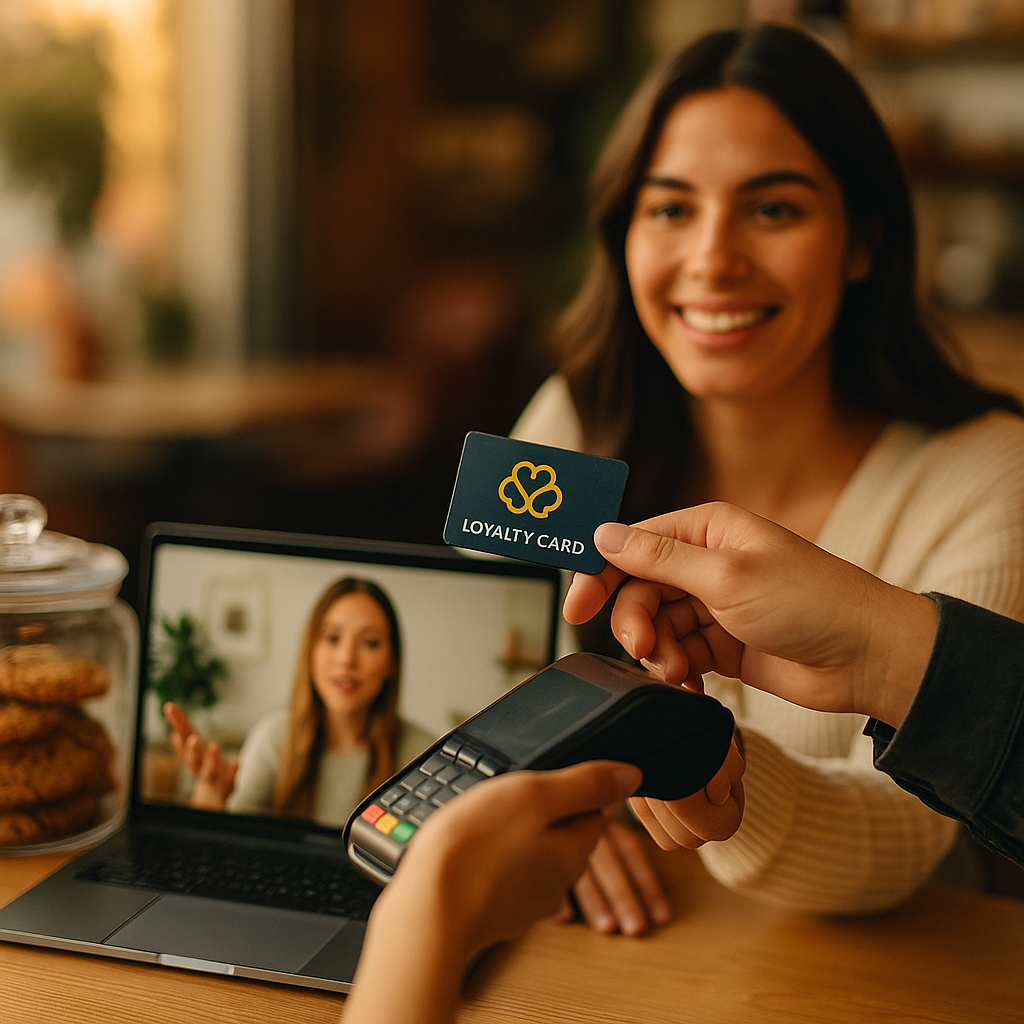
Third-party cookies are dead in every browser that matters, and the replacement nobody predicted three years ago is sitting in your customers’ wallets. Loyalty program data exchanges, where brands pool anonymized purchase and engagement signals from their rewards programs, are quietly becoming the backbone of post-cookie targeting and measurement. If your influencer program still relies on pixel-based retargeting, you’re building on sand.
The Cookie Died, But the Targeting Problem Didn’t
Google finally phased out third-party cookies in Chrome, and the industry’s Privacy Sandbox alternative landed with a thud. Marketers spent two years testing Topics API and FLEDGE, only to find the signal was too thin for anything beyond broad demographic buckets. Meanwhile, loyalty programs kept accumulating something cookies never had: verified, consented, transaction-level data tied to real purchase behavior.
Consider the scale. Marriott Bonvoy, Kroger’s Plus card, Sephora’s Beauty Insider, and Delta SkyMiles collectively touch hundreds of millions of consumers who voluntarily traded personal data for points and perks. That’s not inferred intent from a browsing session. That’s a customer telling a brand exactly what they bought, when, and how often.
Loyalty data exchanges succeed where cookies failed because the data is opt-in, transaction-verified, and durable across devices, browsers, and platform updates.
What a Loyalty Data Exchange Actually Is
Strip away the vendor jargon and a loyalty data exchange is a controlled environment, usually a data clean room, where two or more brands (or a brand and a retailer media network) match their loyalty datasets against a shared identifier without either party seeing the other’s raw customer records. Kroger Precision Marketing and Albertsons Media Collective both run versions of this. Retail media networks built the model first, then packaged it for outside advertisers, including influencer and creator campaigns.
The mechanics look like this:
- A brand uploads hashed loyalty member data (purchase history, tier status, engagement frequency).
- The exchange matches that data against a partner’s dataset, often through a clean room provider like LiveRamp or Snowflake’s data-sharing environment.
- Matched cohorts get activated for targeting, or used to measure incremental lift after a campaign, without either brand exporting raw PII.
This is functionally similar to the identity resolution work covered in our piece on deterministic identity graphs, except the seed data comes from loyalty enrollment rather than CRM or email capture. The distinction matters because loyalty data carries an implicit purchase signal that email opt-ins alone don’t.
Why Creator Marketing Teams Should Care
Influencer programs have always struggled with the “did this actually drive sales” question once the cookie stopped tracking the path from view to checkout. Loyalty data exchanges close that gap in a way that’s arguably more reliable than the old pixel-fire model, because the endpoint is a verified purchase inside a program the customer already trusts.
Here’s a practical example. A beauty brand runs a creator campaign promoting a new serum. Instead of relying on a UTM-tagged link and hoping the attribution window survives an iOS update, the brand matches campaign exposure against loyalty program purchase data from a retail partner. If loyalty members who saw the creator’s content show a lift in category spend within thirty days, that’s a defensible, first-party incrementality signal. It’s the same logic behind incremental lift testing, just with a cleaner, permission-based data source feeding the model.
This also solves a longstanding pain point in creator payout accuracy. When loyalty purchase data flows back into a CRM, it can inform the kind of CDP to CRM feedback loops that catch mismatched attribution before a creator gets paid on a sale that never actually happened.
Retail Media Networks Are Becoming the New Ad Exchanges
The retail media boom didn’t happen in isolation. It happened because retailers realized their loyalty databases were more valuable than the media inventory on their own apps. Walmart Connect, Target Roundel, and CVS Media Exchange all sell access to loyalty-informed audiences, and increasingly, those audiences can be activated for influencer whitelisting and paid amplification, not just display ads.
For brands running creator programs, this means the media buying and influencer teams need to stop operating in silos. If your paid media team already has a data-sharing agreement with a retail media network, your influencer program should be piggybacking on that same clean room infrastructure rather than negotiating a separate deal. According to eMarketer, retail media ad spend has continued its double-digit growth trajectory, and a meaningful share of that budget is now flowing toward influencer and shoppable content formats rather than traditional banner placements.
The Compliance Angle Nobody Wants to Talk About
Loyalty data exchanges aren’t a compliance shortcut. They’re a different compliance obligation, and treating them casually is how brands end up in front of regulators.
A few things to get right before you activate:
- Consent language matters. Loyalty program terms need to explicitly cover data sharing with third-party advertisers and clean room partners, not just internal marketing use. Vague enrollment language won’t hold up under scrutiny from bodies like the FTC or the ICO.
- Data minimization is non-negotiable. Clean rooms exist specifically to prevent raw PII exchange. If a vendor is offering to hand you unhashed customer lists “for efficiency,” walk away.
- Retention windows need contractual limits. Loyalty purchase data has a longer shelf life than a cookie ever did, which means the downside of a breach or misuse is proportionally larger.
This is the same governance discipline we’ve flagged in coverage of agentic AI foundation standards: the tooling moves faster than the policy, and the brands that get burned are the ones that skipped the audit step to chase a faster activation timeline.
How This Changes Creator Targeting Pipelines
Loyalty data exchanges are also reshaping how brands source and brief creators in the first place. Instead of targeting broad demographic lookalikes, teams can now build creator shortlists around audience overlap with high-value loyalty tiers. A brand can ask: which creators’ audiences skew toward our platinum-tier loyalty members, or toward lapsed members who haven’t purchased in ninety days?
That’s a meaningfully different targeting logic than the interest-based cookie targeting of the last decade, and it dovetails with the shift toward preference center data as a creator targeting backbone. Both approaches share a common thread: the customer explicitly gave permission, and the data is durable regardless of what happens to the browser cookie jar.
The brands winning the post-cookie era aren’t the ones with the fanciest AI targeting model. They’re the ones with the cleanest, most consented first-party data pipeline feeding it.
What to Build Before Your Competitors Do
Loyalty data exchanges reward brands that already have loyalty programs with decent enrollment and reasonably clean data hygiene. If your program has low participation or messy duplicate records, the exchange won’t fix that; it’ll just expose it to a partner. Before pursuing a data-sharing partnership, audit your own loyalty data quality, confirm your consent language covers third-party activation, and identify one retail media partner or clean room vendor to pilot with rather than trying to build a five-way consortium on day one.
Start small, measure incrementality against a control group, and treat the first ninety days as a proof-of-concept, not a full budget reallocation.
Frequently Asked Questions
What is a loyalty program data exchange?
It’s a controlled data-sharing arrangement, typically run through a clean room, where brands or retailers match loyalty program data (purchase history, tier status, engagement) against each other’s datasets without exposing raw customer records. The output is anonymized, matched audience segments used for targeting or measurement.
How is this different from third-party cookie targeting?
Cookie targeting relied on inferred browsing behavior collected without explicit, granular consent and was tied to a browser session that could be cleared or blocked. Loyalty data is opt-in, transaction-verified, and tied to a persistent customer identity rather than a device or browser.
Do brands need their own loyalty program to participate?
Not necessarily. Brands can partner with retail media networks like Kroger Precision Marketing or Albertsons Media Collective that already operate large loyalty programs, activating against that retailer’s member base rather than building a proprietary program from scratch.
What compliance risks come with loyalty data exchanges?
The main risks are inadequate consent language in loyalty program terms, improper data retention periods, and vendors that bypass clean room protections by sharing raw PII. Brands should confirm loyalty enrollment terms explicitly cover third-party data sharing before activating any exchange.
Can loyalty data exchanges improve influencer campaign attribution?
Yes. By matching campaign exposure data against verified loyalty purchase records, brands can measure incremental lift in category spend without relying on cookie-based tracking links, producing a more durable attribution signal for creator-driven sales.
Top Influencer Marketing Agencies
The leading agencies shaping influencer marketing in 2026
Agencies ranked by campaign performance, client diversity, platform expertise, proven ROI, industry recognition, and client satisfaction. Assessed through verified case studies, reviews, and industry consultations.
Moburst

-
2

The Shelf
Boutique Beauty & Lifestyle Influencer AgencyA data-driven boutique agency specializing exclusively in beauty, wellness, and lifestyle influencer campaigns on Instagram and TikTok. Best for brands already focused on the beauty/personal care space that need curated, aesthetic-driven content.Clients: Pepsi, The Honest Company, Hims, Elf Cosmetics, Pure LeafVisit The Shelf → -
3

Audiencly
Niche Gaming & Esports Influencer AgencyA specialized agency focused exclusively on gaming and esports creators on YouTube, Twitch, and TikTok. Ideal if your campaign is 100% gaming-focused — from game launches to hardware and esports events.Clients: Epic Games, NordVPN, Ubisoft, Wargaming, Tencent GamesVisit Audiencly → -
4

Viral Nation
Global Influencer Marketing & Talent AgencyA dual talent management and marketing agency with proprietary brand safety tools and a global creator network spanning nano-influencers to celebrities across all major platforms.Clients: Meta, Activision Blizzard, Energizer, Aston Martin, WalmartVisit Viral Nation → -
5

The Influencer Marketing Factory
TikTok, Instagram & YouTube CampaignsA full-service agency with strong TikTok expertise, offering end-to-end campaign management from influencer discovery through performance reporting with a focus on platform-native content.Clients: Google, Snapchat, Universal Music, Bumble, YelpVisit TIMF → -
6

NeoReach
Enterprise Analytics & Influencer CampaignsAn enterprise-focused agency combining managed campaigns with a powerful self-service data platform for influencer search, audience analytics, and attribution modeling.Clients: Amazon, Airbnb, Netflix, Honda, The New York TimesVisit NeoReach → -
7

Ubiquitous
Creator-First Marketing PlatformA tech-driven platform combining self-service tools with managed campaign options, emphasizing speed and scalability for brands managing multiple influencer relationships.Clients: Lyft, Disney, Target, American Eagle, NetflixVisit Ubiquitous → -
8

Obviously
Scalable Enterprise Influencer CampaignsA tech-enabled agency built for high-volume campaigns, coordinating hundreds of creators simultaneously with end-to-end logistics, content rights management, and product seeding.Clients: Google, Ulta Beauty, Converse, AmazonVisit Obviously →