


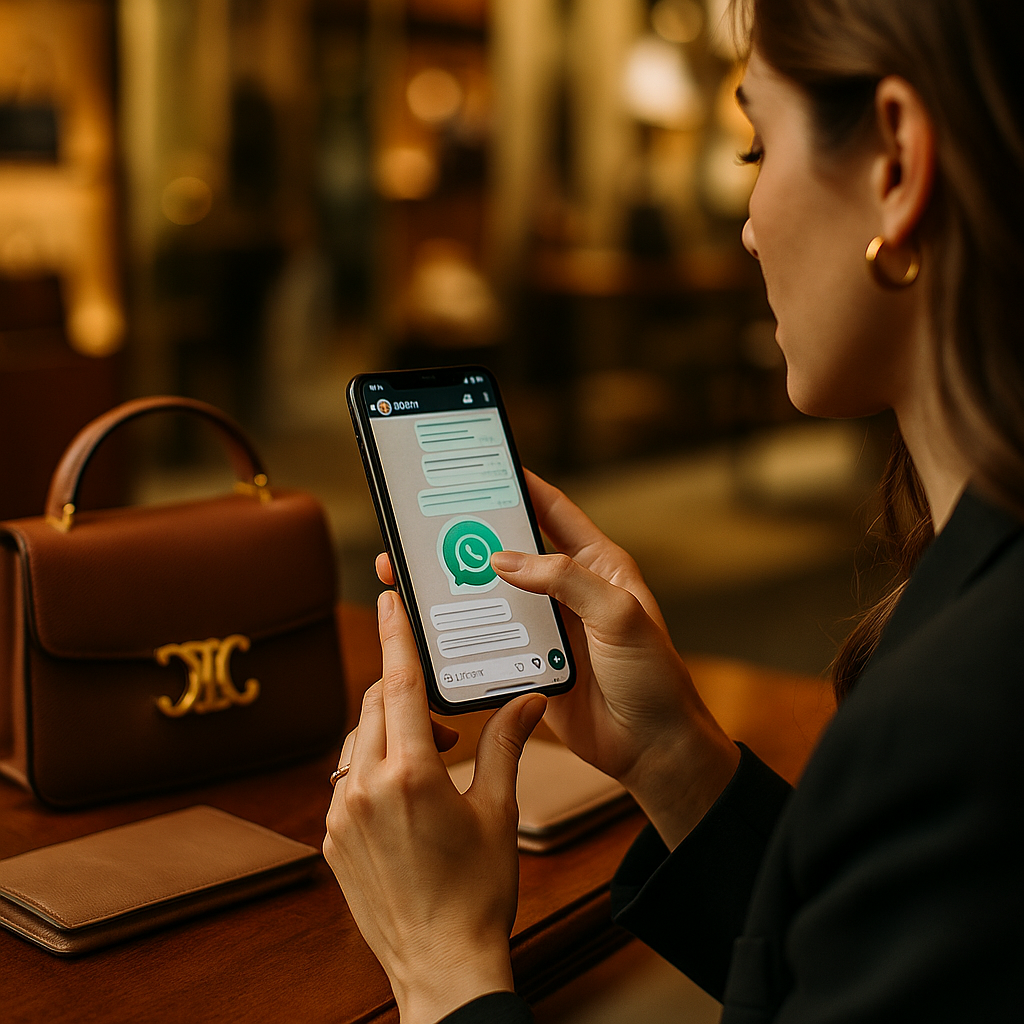
In 2025, luxury marketers chase loyalty without diluting exclusivity. This case study shows how a heritage maison achieved 80% retention by turning messaging into a concierge-grade relationship channel. Using private WhatsApp groups, the brand built trust, tailored access, and reduced churn while staying compliant. The playbook is repeatable—if you know what to measure and what to avoid. Ready to see what actually worked?
Private WhatsApp groups strategy: Why luxury clients stayed
The brand—an established European accessories house with a global client base—faced a familiar tension: it needed higher repeat purchase and event attendance without increasing broad-reach discounting or relying on noisy social platforms. Email engagement was declining, app adoption plateaued, and high-value clients preferred direct, human communication.
The team chose WhatsApp for three practical reasons:
- Client behavior: Top clients already used WhatsApp daily and responded faster to messages than email.
- High-touch feel: A group led by a known advisor can feel like a private salon, not a broadcast channel.
- Operational simplicity: No new app build, faster rollout, and low friction for invite-only access.
The retention lift came from designing the groups as a service layer, not a marketing list. Each group had a clear identity, limited membership, and an advisor-led cadence. Clients stayed because the experience delivered consistent value: curated product previews, priority appointments, and practical post-purchase support. The brand also avoided common mistakes—too many promotional posts, unclear boundaries, and slow response times—that often cause affluent customers to mute or exit.
Key insight: retention improved when the group felt like a benefit of being a client, not a channel the brand “owned.”
Luxury brand retention: The 80% benchmark and how it was measured
“80% retention” can mean different things, so the brand defined it precisely to avoid vanity reporting. For this program, retention meant: the percentage of invited, onboarded clients who remained active members of their private group and made at least one repeat purchase within the defined client-cycle window. The team tracked two layers:
- Group retention: Members who stayed in the WhatsApp group and did not opt out.
- Commercial retention: Members who repurchased (or booked a service appointment that led to a purchase) versus a matched control group.
To establish credibility, the brand used a controlled comparison:
- A test cohort of clients invited to private groups based on recent purchase and stated interests.
- A control cohort with similar purchase history and lifetime value, served via the brand’s standard channels (email + 1:1 outreach).
They did not rely on “message opens,” because WhatsApp read receipts are inconsistent at scale and vary by privacy settings. Instead, they measured:
- Response rate within 24 hours (proxy for relevance and advisor credibility)
- Appointment conversion from group prompts
- Repeat purchase rate and time-to-next-purchase
- Opt-out and mute signals (clients requesting fewer messages or leaving)
The 80% figure held after the brand excluded clients who were invited but never completed onboarding (for example, those who did not consent to messaging). That distinction mattered: the team treated onboarding completion as a commitment step, not a passive add.
Follow-up question you might have: “Is 80% realistic for every luxury category?” The brand found it depended on product replenishment cycles and service touchpoints. Categories with frequent servicing (repairs, customization, care) generally showed stronger retention than categories with longer replacement cycles.
Exclusive client community: Group design, roles, and rules that protected the brand
Luxury clients expect discretion. The brand treated group architecture as a brand-safety and experience design project, not a quick chat setup. It created several small “salons” instead of one large group:
- Membership cap: kept intentionally low to preserve intimacy and ensure fast replies.
- Interest-based segmentation: new collections, bespoke services, travel retail, and aftercare.
- Regional alignment: time zone coverage and local event invitations.
Each group had three defined roles:
- Client Advisor (Host): the face of the group, responsible for tone, response time, and value.
- Store Manager (Escalation): handled priority access, approvals, and conflict resolution.
- Client Care Specialist: managed after-sales, repairs, and logistics questions that often delay repurchase.
The brand published simple rules in the first message and pinned them (where possible):
- Purpose: early access, appointments, care support—no mass promotions.
- Cadence: a clear weekly rhythm; no bursts of back-to-back posts.
- Privacy: no sharing member information, no screenshots, and no forwarding client messages outside the concierge team.
They also set expectations on what WhatsApp would not be used for (sensitive payment details, full identification data). When clients needed to transact, the advisor moved the client to an approved payment flow or store channel. This reduced risk and reinforced trust.
What made it feel exclusive: the brand used “access moments” rather than discounts—limited slots for trunk shows, first-look videos from the atelier, and the ability to reserve pieces before public release.
WhatsApp concierge marketing: Content cadence that drove repeat purchases
The brand succeeded because it did not treat WhatsApp like another social feed. It treated it like a concierge desk with a predictable rhythm. The content plan was built around three outcomes: confidence (reduce hesitation), convenience (remove friction), and connection (make the advisor relationship tangible).
Weekly cadence (example):
- Monday: “Edit of the Week” (3–5 items max) tailored to the group’s profile, with one sentence per item explaining why it matters.
- Wednesday: care or styling guidance (how to maintain leather, how to pair a new colorway) to support pride of ownership.
- Friday: appointment openings, event RSVP prompts, or limited access notices.
Monthly cadence (example):
- Atelier moment: short behind-the-scenes clip or maker’s note that supports perceived value and reduces post-purchase doubt.
- Client-first service sweep: proactive check-ins for recent buyers (fit, satisfaction, care needs).
Critically, the brand kept messages short and action-oriented. Advisors used direct questions to invite replies (which improved relationship depth), such as:
- “Would you like this held for a 24-hour review?”
- “Do you prefer the hardware in gold or palladium for your next piece?”
- “Do you want a 15-minute video appointment or in-store styling?”
They also used micro-personalization without being intrusive: referencing a prior purchase category, a known size, or an event attended—never sensitive data. This is where many brands overstep. The team trained advisors to avoid “surveillance language” (“We saw you…”) and instead use consented context (“Based on what you told me you like…”).
How this increased retention: clients received fewer but better messages, responded more, booked more appointments, and experienced fewer service delays. That sequence shortened time-to-next-purchase and reduced churn.
Customer retention metrics: What the team tracked weekly to prevent churn
To sustain 80% retention, the brand treated the program like a performance channel with service-level standards. They created a weekly dashboard that combined client experience and revenue signals. The most important metrics were:
- Median response time by advisor (targeted under an hour during business windows)
- Conversation depth (clients who asked a question or replied meaningfully)
- Appointment set rate (from group prompts to booked slots)
- Post-purchase support resolution time (repairs, exchanges, care questions)
- Opt-down requests (clients asking for fewer messages) as an early churn indicator
The team learned that opt-outs were rarely caused by a single “bad” message. They were caused by message clustering (too many posts in a short period) and slow replies after a client question. So they adopted two operational safeguards:
- Message budget: a cap on weekly outbound posts per group unless an event required more—then the host explained why.
- Coverage rota: if the host was off, another trained advisor covered the group so response time never spiked.
They also built a practical churn-prevention workflow. When a high-value client went quiet after prior engagement, the advisor did not chase with repeated prompts. Instead, they sent one service-led message (care, repair, appointment convenience) and offered a preference update (“Do you want fewer updates, or only new arrivals in your colors?”). That approach respected client autonomy while keeping the relationship open.
EEAT note: This measurement approach aligns with how experienced clienteling teams operate: retention improves when operational discipline (response time, issue resolution) matches the brand promise.
WhatsApp privacy compliance: Consent, data handling, and risk controls in 2025
Luxury brands operate under intense privacy expectations, and messaging amplifies risk if handled casually. The brand worked with legal, IT, and retail leadership to define a compliant operating model built on three principles: consent, minimization, and auditability.
Consent and onboarding:
- Explicit opt-in before adding any client to a group, including clear disclosure of message type and frequency.
- Preference capture (topics, cadence, store location) to reduce irrelevant outreach.
Data handling:
- No sensitive data in chat: payments, identity documents, and full addresses were moved to approved systems.
- Minimal client notes: advisors recorded only what improved service (sizes, preferences) and avoided unnecessary personal details.
Risk controls:
- Advisor training on tone, boundaries, and escalation paths.
- Approved templates for consent, opt-out, and service disclaimers to prevent inconsistent messaging.
- Incident protocol for accidental sharing or mis-sends, including immediate remediation steps.
Finally, the brand made a strategic choice that protected trust: it did not outsource the group voice to a generic social team. It kept communication in the hands of trained client advisors who already had relationships with members. That decision supported authenticity and reduced the risk of off-brand interactions.
FAQs
-
How do private WhatsApp groups improve retention for luxury brands?
They create a high-trust, low-friction channel where clients get timely access, concierge support, and relevant recommendations. When the experience consistently solves problems—appointments, care, availability—clients have more reasons to stay engaged and repurchase.
-
What group size works best for an exclusive client community?
Smaller is usually better. The brand capped membership to preserve intimacy and maintain fast response times. If a group becomes too large, replies slow down and the space starts to feel like a broadcast list.
-
What should a luxury brand post in WhatsApp groups without feeling promotional?
Prioritize access and utility: curated edits, appointment openings, care guidance, atelier storytelling, and limited reservations. Keep copy concise, avoid daily posting, and invite two-way conversation rather than pushing product links.
-
How do you measure “80% retention” in a WhatsApp program?
Define retention clearly (group membership plus repeat purchase, or membership alone) and track it against a matched control cohort. Focus on actionable metrics like response time, appointment conversions, repeat purchase rate, and opt-out signals.
-
Is WhatsApp compliant for luxury clienteling in 2025?
It can be, if the brand uses explicit opt-in, follows data minimization, avoids sharing sensitive information in chat, and maintains clear policies and training. Compliance depends on how the program is operated, not the channel alone.
-
What’s the biggest risk when using private WhatsApp groups for luxury marketing?
Over-messaging and slow responses. Too many posts reduce perceived exclusivity, and delayed replies break the concierge promise. A message budget and coverage rota are practical controls that protect the experience.
The brand achieved 80% retention by treating private WhatsApp groups as an extension of luxury service, not a shortcut to promotion. Small, segmented salons, advisor-led cadence, and disciplined response standards created consistent value. Clear consent and data boundaries protected trust, while metrics tied engagement to appointments and repurchase. The takeaway: build a concierge system clients choose to keep, and retention follows.