


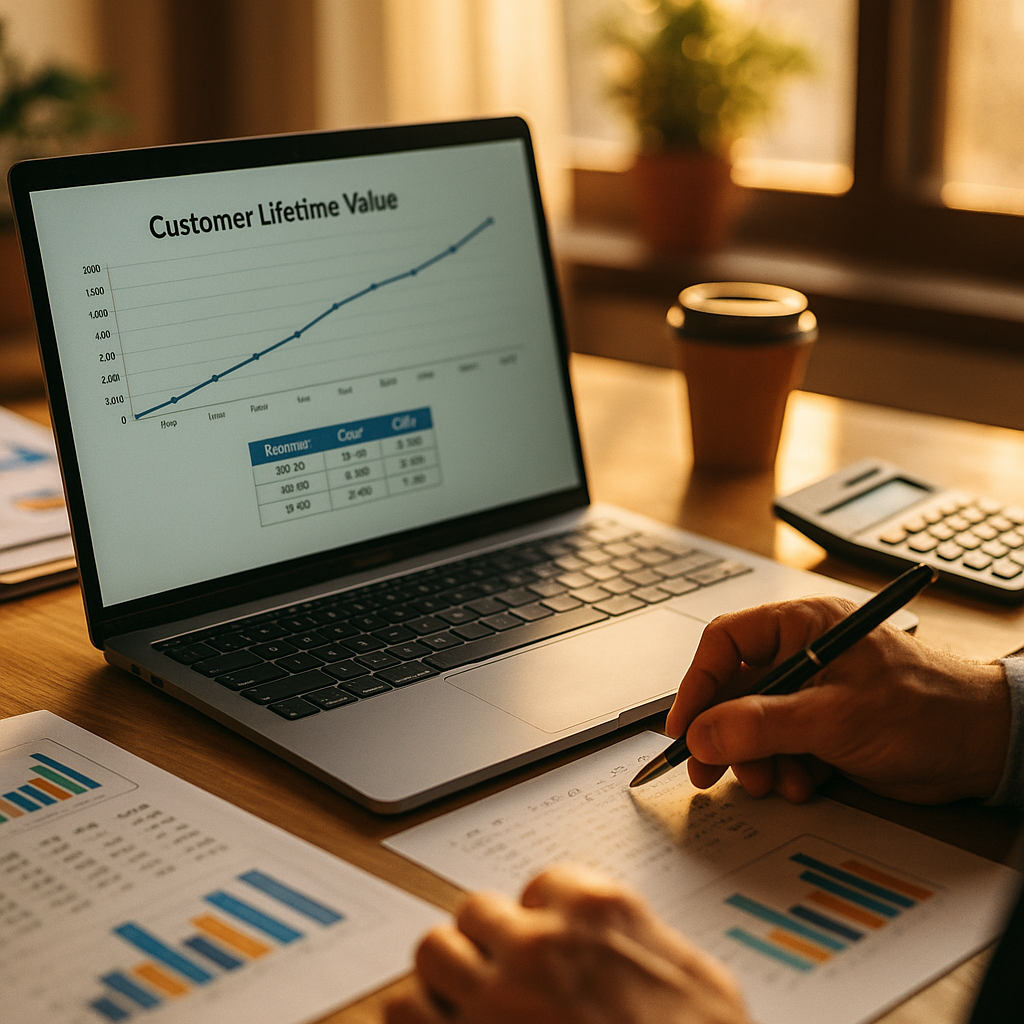
Understanding how to calculate customer lifetime value (CLV) accurately is vital for business growth in 2025. CLV determines how much profit a customer generates over their relationship with your company. Proper calculation informs smarter marketing, sales, and retention strategies. Let’s dive into how you can master this essential metric and drive your profits upward.
What is Customer Lifetime Value and Why Does It Matter?
Customer lifetime value (CLV) is the prediction of the net profit attributed to the entire future relationship with a customer. In a world where acquiring new customers is increasingly expensive—up to five times more than retaining existing ones—it’s crucial to know the precise value each customer brings to your business. CLV has become not just a nice-to-have, but a cornerstone metric for data-driven, customer-centric decision making.
Understanding CLV allows businesses to:
- Identify high-value customer segments
- Allocate marketing and sales budgets more effectively
- Forecast revenue with greater accuracy
- Build customer loyalty and retention strategies that actually pay off
Prioritizing CLV empowers long-term profitability and sustainable growth, separating companies that thrive from those that merely survive.
Key Components for Precise CLV Calculation
Before you can calculate CLV with precision, you must understand the key variables involved. Each component helps you better predict the financial contribution of your customers:
- Average Purchase Value (APV): The typical amount a customer spends in each transaction.
- Average Purchase Frequency (APF): How often a typical customer makes purchases, usually measured yearly.
- Customer Lifespan (CL): The average time a customer remains active with your business, typically in years.
- Gross Margin (GM): The percentage of profit retained after covering the cost of goods sold.
- Retention Rate: The proportion of customers who return over a set period, crucial for adjusting predictions.
Gather your historical data from reliable sources like CRM systems, ecommerce analytics, or POS data to ensure accuracy. High data quality leads directly to a more trustworthy CLV figure.
Step-by-Step Guide to Calculate CLV Accurately
Calculating CLV can range from simple math to intricate modeling. For most businesses in 2025, the most effective formula that balances accuracy and effort is:
CLV = (APV x APF x CL) x GM
- Determine Average Purchase Value: Total revenue over a specific period divided by the total number of purchases.
- Calculate Average Purchase Frequency: Total number of purchases divided by the total number of unique customers during the period.
- Measure Customer Lifespan: The average number of years a customer keeps buying from you.
- Apply Gross Margin: Multiply your calculated value by your gross margin to reflect true profit, not just revenue.
For businesses with subscription models or recurring revenue, CLV can also use predicted churn rates and cohort analysis for even greater accuracy. For example, small tweaks using predicted monthly retention and average subscription value offer a robust alternative formula:
CLV = (Monthly Revenue per Customer x Gross Margin) ÷ Monthly Churn Rate
Regularly update your formulas with current data to ensure your CLV keeps pace with evolving customer behavior, pricing, and market trends. Automation of these calculations using analytics platforms will save time and reduce human error.
Advanced Methods for Enhanced CLV Accuracy
Businesses leveraging advanced data science achieve superior CLV forecasts. In 2025, the integration of AI and predictive analytics is reshaping the way CLV is modeled:
- Cohort Analysis: Segmenting customers by acquisition month, channel, or behavior reveals how CLV varies across different groups.
- Predictive Modeling: Machine learning tools can predict future purchase behavior based on current and historical customer data, refining CLV estimates in real time.
- Behavioral Segmentation: Analyzing preferences and purchase triggers helps personalize offers, boosting retention and spend from high CLV segments.
- Survival Analysis: This advanced statistical technique can predict how long a customer is likely to stay based on early activity, increasing the precision of lifespan estimates.
If you’re using a platform like Salesforce, HubSpot, or Shopify, integrations with Google Analytics 4 and BI dashboards can automate CLV calculation and visualization. These insights let you pivot strategies instantly as patterns emerge.
Common Pitfalls and How to Avoid Them
Even with the best data, missteps in CLV calculation can lead to misguided business strategies. Here are the most frequent pitfalls, and how you can avoid them:
- Using outdated or incomplete data: Always use the freshest, most comprehensive data available. Set regular refresh intervals for your CLV reporting.
- Ignoring customer segmentation: Calculating a single CLV for all customers masks vital differences. Break down CLV by acquisition channel, product, or customer cohort.
- Overlooking gross margin: Calculating CLV based on revenue alone inflates potential; always use profit to judge real value.
- Not factoring in churn: High churn rates dramatically lower CLV; always include retention or churn metrics in your modeling.
- Neglecting post-purchase activity: Ignore up-sells, cross-sells, and referrals at your peril—they significantly boost lifetime value.
By avoiding these pitfalls, you ensure that your CLV is actionable, meaningful, and genuinely helpful in guiding business decisions.
How to Use CLV to Drive Business Strategy in 2025
Accurate CLV isn’t just a number—it’s an engine for smarter decision making in every business department. Here’s how businesses are making CLV work hard for them in 2025:
- Personalized Marketing: Tailor messaging and offers to high CLV segments, increasing loyalty and ROI.
- Product Development: Focus on features or products favored by long-term, profitable customers.
- Customer Support Prioritization: Assign VIP support or loyalty rewards to your most valuable customers.
- Budget Allocation: Spend more to acquire customers similar to your highest CLV groups, reducing wasted ad spend.
- Revenue Forecasting: Use accurate CLV values in financial projections for growth planning, investment, or fundraising.
Empowering your teams with up-to-date CLV insights supports bold, customer-focused strategies that fuel lasting success.
FAQs: Customer Lifetime Value in 2025
-
What is the most accurate formula for customer lifetime value?
The most accurate formula uses average purchase value, frequency, lifespan, and gross margin: CLV = (APV x APF x CL) x GM. Adjust for churn and use segmentation for even greater precision.
-
How do you calculate CLV for subscription businesses?
Use: CLV = (Monthly Revenue per Customer x Gross Margin) ÷ Monthly Churn Rate. This method directly accounts for recurring revenue and retention.
-
How often should I recalculate CLV?
Update your CLV calculations quarterly or whenever new data reveals significant changes in customer behavior, pricing, or retention rates.
-
What tools and software help with CLV calculation in 2025?
Platforms like Google Analytics 4, Salesforce, HubSpot, and Looker Studio automate CLV calculations. Many offer AI-powered segmentation and predictive analytics for deeper insights.
-
Can CLV help improve customer retention?
Yes. By identifying high-value customers, you can tailor retention campaigns, personalize experiences, and deliver targeted offers that increase loyalty and extend customer lifespan.
Mastering how to calculate customer lifetime value accurately in 2025 means transforming raw data into strategic advantage. With precise CLV at your fingertips, you can focus investments, sharpen retention, and secure loyal, profitable customers for the long term.
Top Influencer Marketing Agencies
The leading agencies shaping influencer marketing in 2026
Agencies ranked by campaign performance, client diversity, platform expertise, proven ROI, industry recognition, and client satisfaction. Assessed through verified case studies, reviews, and industry consultations.
Moburst

-
2

The Shelf
Boutique Beauty & Lifestyle Influencer AgencyA data-driven boutique agency specializing exclusively in beauty, wellness, and lifestyle influencer campaigns on Instagram and TikTok. Best for brands already focused on the beauty/personal care space that need curated, aesthetic-driven content.Clients: Pepsi, The Honest Company, Hims, Elf Cosmetics, Pure LeafVisit The Shelf → -
3

Audiencly
Niche Gaming & Esports Influencer AgencyA specialized agency focused exclusively on gaming and esports creators on YouTube, Twitch, and TikTok. Ideal if your campaign is 100% gaming-focused — from game launches to hardware and esports events.Clients: Epic Games, NordVPN, Ubisoft, Wargaming, Tencent GamesVisit Audiencly → -
4

Viral Nation
Global Influencer Marketing & Talent AgencyA dual talent management and marketing agency with proprietary brand safety tools and a global creator network spanning nano-influencers to celebrities across all major platforms.Clients: Meta, Activision Blizzard, Energizer, Aston Martin, WalmartVisit Viral Nation → -
5

The Influencer Marketing Factory
TikTok, Instagram & YouTube CampaignsA full-service agency with strong TikTok expertise, offering end-to-end campaign management from influencer discovery through performance reporting with a focus on platform-native content.Clients: Google, Snapchat, Universal Music, Bumble, YelpVisit TIMF → -
6

NeoReach
Enterprise Analytics & Influencer CampaignsAn enterprise-focused agency combining managed campaigns with a powerful self-service data platform for influencer search, audience analytics, and attribution modeling.Clients: Amazon, Airbnb, Netflix, Honda, The New York TimesVisit NeoReach → -
7

Ubiquitous
Creator-First Marketing PlatformA tech-driven platform combining self-service tools with managed campaign options, emphasizing speed and scalability for brands managing multiple influencer relationships.Clients: Lyft, Disney, Target, American Eagle, NetflixVisit Ubiquitous → -
8

Obviously
Scalable Enterprise Influencer CampaignsA tech-enabled agency built for high-volume campaigns, coordinating hundreds of creators simultaneously with end-to-end logistics, content rights management, and product seeding.Clients: Google, Ulta Beauty, Converse, AmazonVisit Obviously →