


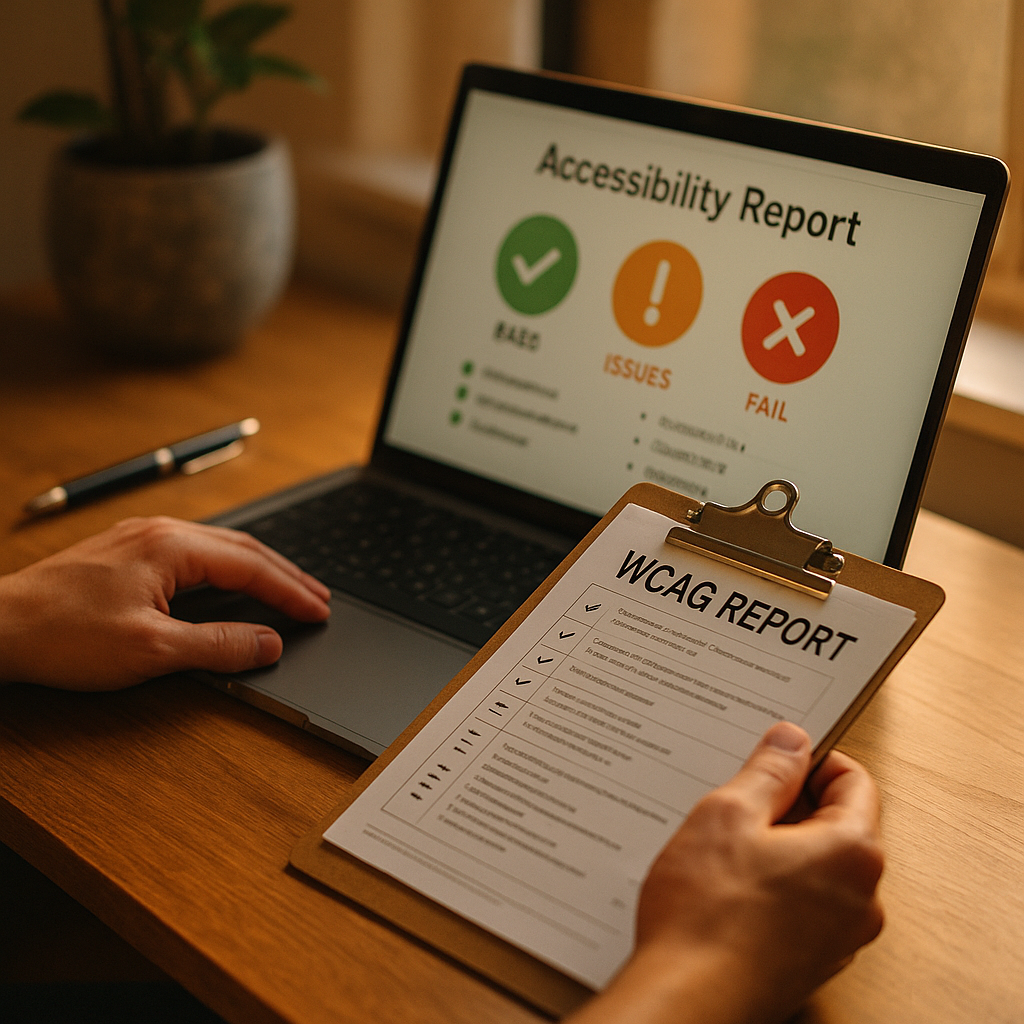
Writing a clear and effective website accessibility conformance report (WCAG) is crucial for demonstrating your commitment to digital inclusivity, regulatory compliance, and user trust. Whether you are a developer, designer, or business owner, an accessible web presence can open your brand to a wider audience. Ready to simplify the process and draft a conformance report that stands out?
Understanding WCAG and Accessibility Conformance Reports
Before diving into the structure of a website accessibility conformance report, it’s vital to know what WCAG (Web Content Accessibility Guidelines) entails and why formal documentation matters. WCAG is a set of internationally recognized guidelines published by the W3C Web Accessibility Initiative. At its core, WCAG aims to make websites usable for people with disabilities by focusing on four main principles: Perceivable, Operable, Understandable, and Robust (POUR).
Accessibility conformance reports serve as evidence of your site’s accessibility status. They’re typically requested by clients, procurement teams, or legal auditors. A well-structured report communicates transparency, builds trust, and supports your organization’s legal compliance with regulations like the ADA, Section 508, or EN 301 549. As of 2025, maintaining such documentation is now considered a best practice in enterprise procurement processes worldwide.
Key Elements of an Effective Accessibility Compliance Report
The structure and clarity of your website accessibility compliance report directly impact its usefulness. To ensure thoroughness, consider these essential elements:
- Executive Summary: Briefly describe the purpose of the assessment and summarize the overall accessibility findings.
- Evaluation Scope: Define what was tested (specific URLs, templates, types of content) and outline the WCAG version and level (A, AA, AAA) applied.
- Methodology: Detail the tools (both automated and manual testing), assistive technologies, and user testing methods used. Explain who performed the assessment and their qualifications, which boosts credibility.
- Detailed Findings: Present each issue against relevant WCAG success criteria. Clearly distinguish between fully supported, partially supported, or not supported requirements.
- Remediation Recommendations: Advise on how identified issues can be remedied, prioritizing critical blockers.
- Conformance Statement: State the overall WCAG conformance level, citing supporting evidence from your findings.
- Date of Evaluation: Note when the report was completed to provide context, as accessibility is an ongoing effort.
Including these elements ensures that your accessibility compliance report is comprehensive, user-friendly, and actionable for both technical and non-technical audiences.
Best Practices for Clear WCAG Conformance Reports
Crafting website accessibility conformance reports that are both clear and effective requires adherence to best practices. Keeping the following strategies in mind will enable you to create documentation that’s both authoritative and easy to digest:
- Use Plain Language: Avoid jargon whenever possible. Explain technical terms to make the report accessible to all stakeholders, regardless of their expertise.
- Be Objective and Transparent: If certain criteria aren’t fully met, document this openly and suggest practical next steps. Transparency strengthens trust.
- Leverage Visual Aids: Consider including annotated screenshots, code snippets, or tables that illustrate findings. Visuals clarify complex issues and support comprehension.
- Ensure Logical Organization: Structure your report with clear headings, subheadings, and bullet points. This allows readers to navigate and find key information quickly.
- Reference Authoritative Sources: Link directly to official WCAG documentation, W3C resources, or relevant government guidance, reinforcing EEAT (experience, expertise, authority, trustworthiness) standards.
- Include Contextual User Impact: Explain how certain barriers affect users with specific disabilities. This supports empathy-driven remediation and stronger business cases for fixes.
Consistently applying these best practices will elevate the quality of your WCAG conformance reporting and make it a valuable resource for your organization or clients.
How to Structure Your Website Accessibility Statement
While the comprehensive report provides an in-depth technical overview, many organizations publish a separate, public-facing website accessibility statement. This statement summarizes the site’s accessibility status and demonstrates your ongoing commitment to inclusivity. Here’s how to structure an accessibility statement, aligned with WCAG best practices:
- Accessibility Commitment: Clearly state your dedication to providing accessible digital experiences for all users.
- Current Standards: Reference which version and level of WCAG your website targets (for example, WCAG 2.2 Level AA).
- Known Issues: Outline any areas of partial or non-conformance and describe your plan for addressing them.
- User Feedback Mechanism: Provide a simple way for users to report accessibility barriers and receive assistance, such as a dedicated email or contact form.
- Date and Review Policy: Mention when the statement was last updated and how frequently it’s reviewed.
By complementing your conformance report with a public accessibility statement, you provide transparency, encourage user engagement, and demonstrate a proactive approach to web accessibility.
Ensuring Ongoing Compliance and Stakeholder Engagement
Accessibility conformance is not a one-time achievement—it’s an ongoing responsibility. To keep your website accessibility compliance report relevant and effective, cultivate a culture of continuous monitoring and improvement. Here’s how:
- Regular Re-Assessments: Schedule periodic reviews, particularly after redesigns, content updates, or as WCAG standards evolve.
- Staff Training: Invest in regular accessibility training and workshops for content creators, developers, and designers to reinforce inclusive practices.
- Feedback Loops: Encourage ongoing dialogue with users, especially those with disabilities, to identify new challenges and refine solutions.
- Collaborative Remediation: Assign clear responsibility for addressing issues, and track progress transparently.
- Leverage Technological Advancements: Stay current with new accessibility tools or assistive technologies poised to strengthen assessments in 2025.
Adopting these measures ensures your website remains accessible, maintains legal compliance, and delivers a seamless digital experience for all users.
Conclusion
Mastering how to write a clear and effective website accessibility conformance report (WCAG) empowers your organization to ensure inclusivity, trust, and regulatory compliance. Prioritize plain language, transparency, and regular updates. By doing so, you create documentation that guides continuous improvement and strengthens your site’s accessibility for all users in 2025—and beyond.
FAQs: Website Accessibility Conformance Reports
- What is a WCAG conformance report?
A WCAG conformance report is a formal document that assesses how well a website meets the Web Content Accessibility Guidelines (WCAG), detailing compliance with accessibility standards for users with disabilities.
- Why is a website accessibility compliance report important in 2025?
With digital accessibility regulations tightening, a compliance report in 2025 demonstrates legal adherence, builds user trust, and supports business opportunities with governments and enterprises that require evidence of accessibility.
- Who should write a WCAG conformance report?
Ideally, the report should be authored by certified accessibility professionals familiar with WCAG guidelines, though internal teams can also contribute if properly trained.
- How often should WCAG conformance reports be updated?
Update reports after major site updates, design changes, or at least annually to ensure ongoing accuracy, especially as WCAG standards evolve and new content is added.
- How can I improve the credibility of my accessibility conformance report?
Include clear methodologies, name qualified assessors, reference official guidelines, and provide user impact statements. Transparency about known barriers and expected remediation further enhances credibility.
Top Influencer Marketing Agencies
The leading agencies shaping influencer marketing in 2026
Agencies ranked by campaign performance, client diversity, platform expertise, proven ROI, industry recognition, and client satisfaction. Assessed through verified case studies, reviews, and industry consultations.
Moburst

-
2

The Shelf
Boutique Beauty & Lifestyle Influencer AgencyA data-driven boutique agency specializing exclusively in beauty, wellness, and lifestyle influencer campaigns on Instagram and TikTok. Best for brands already focused on the beauty/personal care space that need curated, aesthetic-driven content.Clients: Pepsi, The Honest Company, Hims, Elf Cosmetics, Pure LeafVisit The Shelf → -
3

Audiencly
Niche Gaming & Esports Influencer AgencyA specialized agency focused exclusively on gaming and esports creators on YouTube, Twitch, and TikTok. Ideal if your campaign is 100% gaming-focused — from game launches to hardware and esports events.Clients: Epic Games, NordVPN, Ubisoft, Wargaming, Tencent GamesVisit Audiencly → -
4

Viral Nation
Global Influencer Marketing & Talent AgencyA dual talent management and marketing agency with proprietary brand safety tools and a global creator network spanning nano-influencers to celebrities across all major platforms.Clients: Meta, Activision Blizzard, Energizer, Aston Martin, WalmartVisit Viral Nation → -
5

The Influencer Marketing Factory
TikTok, Instagram & YouTube CampaignsA full-service agency with strong TikTok expertise, offering end-to-end campaign management from influencer discovery through performance reporting with a focus on platform-native content.Clients: Google, Snapchat, Universal Music, Bumble, YelpVisit TIMF → -
6

NeoReach
Enterprise Analytics & Influencer CampaignsAn enterprise-focused agency combining managed campaigns with a powerful self-service data platform for influencer search, audience analytics, and attribution modeling.Clients: Amazon, Airbnb, Netflix, Honda, The New York TimesVisit NeoReach → -
7

Ubiquitous
Creator-First Marketing PlatformA tech-driven platform combining self-service tools with managed campaign options, emphasizing speed and scalability for brands managing multiple influencer relationships.Clients: Lyft, Disney, Target, American Eagle, NetflixVisit Ubiquitous → -
8

Obviously
Scalable Enterprise Influencer CampaignsA tech-enabled agency built for high-volume campaigns, coordinating hundreds of creators simultaneously with end-to-end logistics, content rights management, and product seeding.Clients: Google, Ulta Beauty, Converse, AmazonVisit Obviously →