


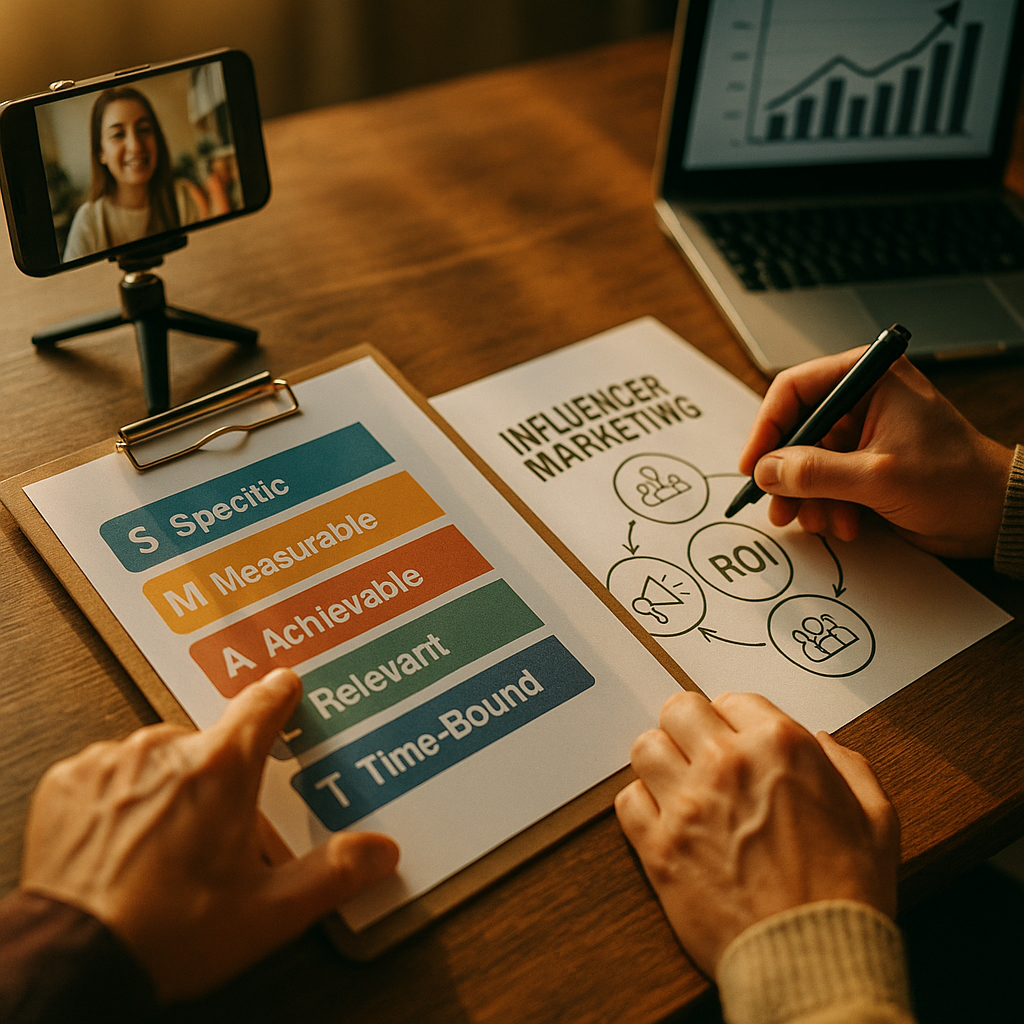
Setting SMART goals for your influencer marketing campaigns is crucial for achieving measurable success in 2025’s highly competitive digital landscape. A structured approach not only streamlines strategies but also validates investments in influencer partnerships. Understanding how to develop strategic, measurable objectives will transform campaigns from guesswork to guaranteed progress—are you ready to maximize your influencer marketing ROI?
Understanding SMART Goals in Influencer Campaign Planning
In influencer marketing, SMART goals—Specific, Measurable, Achievable, Relevant, and Time-bound—serve as the backbone for strategic planning. According to a 2024 Influencer Marketing Hub report, brands outlining SMART objectives saw a 32% higher return on investment compared to those with vague ambitions. But what do these five components mean for influencer campaigns?
- Specific: Clear, focused outcomes, like “increase Instagram followers by 20% in three months.”
- Measurable: Goals you can track using defined metrics such as reach, engagement rate, or conversions.
- Achievable: Objectives that are realistic given your resources and influencer network.
- Relevant: Aligning goals with broader marketing and business priorities.
- Time-bound: Setting a concrete deadline for completion.
Instilling these principles brings clarity and accountability, positioning your campaign for success from the outset.
Choosing Relevant Metrics for Influencer Campaign Measurement
Selecting the right metrics is vital for influencer marketing campaign measurement. The days of vanity metrics are over—experts recommend focusing on actionable data linked directly to your marketing objectives. Recent industry analysis emphasizes these key insights:
- Engagement Rate: Tracking likes, shares, comments, and saves above reach numbers signals real audience interaction.
- Conversion Tracking: Use UTM codes or affiliate links to tie influencer actions to site traffic, leads, or sales.
- Brand Sentiment: Advanced social listening tools in 2025 analyze the emotional response to influencer content.
- Audience Quality: Authenticity and demographic alignment matter more than large, disengaged audiences.
Align these metrics directly with your SMART goals to ensure every data point supports decision-making and campaign refinement.
Defining Achievable Targets with Strategic Influencer Selection
Setting realistic, achievable objectives hinges on strategic influencer selection. In 2025, micro-influencers (10,000–100,000 followers) often yield higher engagement rates compared to mega-influencers. Consider these best practices for goal-attainment:
- Historical Performance Analysis: Examine past collaborations to estimate realistic outcomes, such as average clicks or sales per post.
- Influencer Fit: Match influencers with brand values and audience overlap for higher authenticity and conversion rates.
- Resource Assessment: Evaluate budget, creative assets, and tracking tools to support your campaign’s scope.
By leveraging data and aligning influencer partnerships to SMART goals, you greatly increase the likelihood of campaign success—eliminating wasted effort and driving measurable impact.
Ensuring Campaign Relevance Through Audience and Brand Alignment
Influencer marketing campaign relevance is essential for impacting business objectives. In 2025, platforms are more fragmented—meaning the right message must reach the right audience at the right time. This hinges on:
- Audience Research: Use data-driven personas and platform analytics to understand followers’ behaviors and preferences.
- Content Alignment: Develop briefs that reflect both influencer creativity and brand vision to foster authentic advocacy.
- Trend Responsiveness: Stay agile by tapping into topical conversations, leveraging timely trends that resonate with your target audience.
Aligning your campaign with audience expectations and your brand’s overall marketing strategy keeps your influencer initiatives relevant and impactful.
Setting Time-Bound Milestones for Campaign Optimization
Time-bound goals in influencer marketing campaign optimization ensure continual progress and actionable insights. Establishing deadlines and check-ins allows brands to pivot rapidly and maximize opportunities. Key steps include:
- Define Campaign Phases: Segment initiatives (e.g., teaser, launch, sustaining) with clear end dates.
- Schedule Regular Reviews: Use analytics dashboards to monitor progress weekly or biweekly.
- Set Milestones: Identify benchmark achievements such as “100 coupon redemptions by week two.”
- Act on Insights: Adjust strategies in real time based on what’s working—and what isn’t.
Rigid timelines foster discipline and provide a framework for optimization, keeping your campaign nimble and results-focused.
Evaluating and Iterating Influencer Campaign Goals for Continuous Improvement
No influencer campaign is static—continuous evaluation and iteration are vital for staying competitive. Industry leaders now treat influencer marketing as ongoing partnerships, not one-off deals. Here are the essential steps:
- Comprehensive Reporting: Review all relevant KPIs and cross-channel outcomes at campaign’s end.
- Feedback Loops: Gather input from influencers and internal teams to identify strengths and weak spots.
- Goal Adjustment: Use insights to refine future campaign SMART goals for even better alignment and ROI.
This learning-driven approach empowers brands to build robust, adaptive influencer marketing strategies that grow more effective over time.
Frequently Asked Questions
-
What are SMART goals in influencer marketing?
SMART goals are Specific, Measurable, Achievable, Relevant, and Time-bound objectives that provide a clear roadmap for influencer campaign planning, execution, and evaluation.
-
Which metrics matter most for influencer marketing campaigns in 2025?
Engagement rate, conversion tracking (including UTM codes), sentiment analysis, and audience quality are top metrics offering actionable insights beyond simple reach or follower numbers.
-
How do I ensure campaign goals are realistic?
Analyze past influencer collaborations, match influencers to your brand and audience, and assess available resources to set achievable, data-driven targets.
-
How often should influencer campaign performance be reviewed?
Regularly—weekly or biweekly check-ins are recommended. This allows for quick adjustments based on real-time analytics helping optimize results throughout the campaign.
-
Why is audience alignment important in influencer marketing?
Audience alignment ensures your message resonates authentically, driving higher engagement and conversion rates. A mismatch can result in wasted spend and lower brand trust.
Applying SMART goals to your influencer marketing campaigns ensures every effort is targeted, measurable, and designed for impact in 2025’s fast-changing digital landscape. By aligning strategy and execution with clear objectives, your brand will not only optimize ROI but also fuel sustained, authentic growth.
Top Influencer Marketing Agencies
The leading agencies shaping influencer marketing in 2026
Agencies ranked by campaign performance, client diversity, platform expertise, proven ROI, industry recognition, and client satisfaction. Assessed through verified case studies, reviews, and industry consultations.
Moburst

-
2

The Shelf
Boutique Beauty & Lifestyle Influencer AgencyA data-driven boutique agency specializing exclusively in beauty, wellness, and lifestyle influencer campaigns on Instagram and TikTok. Best for brands already focused on the beauty/personal care space that need curated, aesthetic-driven content.Clients: Pepsi, The Honest Company, Hims, Elf Cosmetics, Pure LeafVisit The Shelf → -
3

Audiencly
Niche Gaming & Esports Influencer AgencyA specialized agency focused exclusively on gaming and esports creators on YouTube, Twitch, and TikTok. Ideal if your campaign is 100% gaming-focused — from game launches to hardware and esports events.Clients: Epic Games, NordVPN, Ubisoft, Wargaming, Tencent GamesVisit Audiencly → -
4

Viral Nation
Global Influencer Marketing & Talent AgencyA dual talent management and marketing agency with proprietary brand safety tools and a global creator network spanning nano-influencers to celebrities across all major platforms.Clients: Meta, Activision Blizzard, Energizer, Aston Martin, WalmartVisit Viral Nation → -
5

The Influencer Marketing Factory
TikTok, Instagram & YouTube CampaignsA full-service agency with strong TikTok expertise, offering end-to-end campaign management from influencer discovery through performance reporting with a focus on platform-native content.Clients: Google, Snapchat, Universal Music, Bumble, YelpVisit TIMF → -
6

NeoReach
Enterprise Analytics & Influencer CampaignsAn enterprise-focused agency combining managed campaigns with a powerful self-service data platform for influencer search, audience analytics, and attribution modeling.Clients: Amazon, Airbnb, Netflix, Honda, The New York TimesVisit NeoReach → -
7

Ubiquitous
Creator-First Marketing PlatformA tech-driven platform combining self-service tools with managed campaign options, emphasizing speed and scalability for brands managing multiple influencer relationships.Clients: Lyft, Disney, Target, American Eagle, NetflixVisit Ubiquitous → -
8

Obviously
Scalable Enterprise Influencer CampaignsA tech-enabled agency built for high-volume campaigns, coordinating hundreds of creators simultaneously with end-to-end logistics, content rights management, and product seeding.Clients: Google, Ulta Beauty, Converse, AmazonVisit Obviously →