


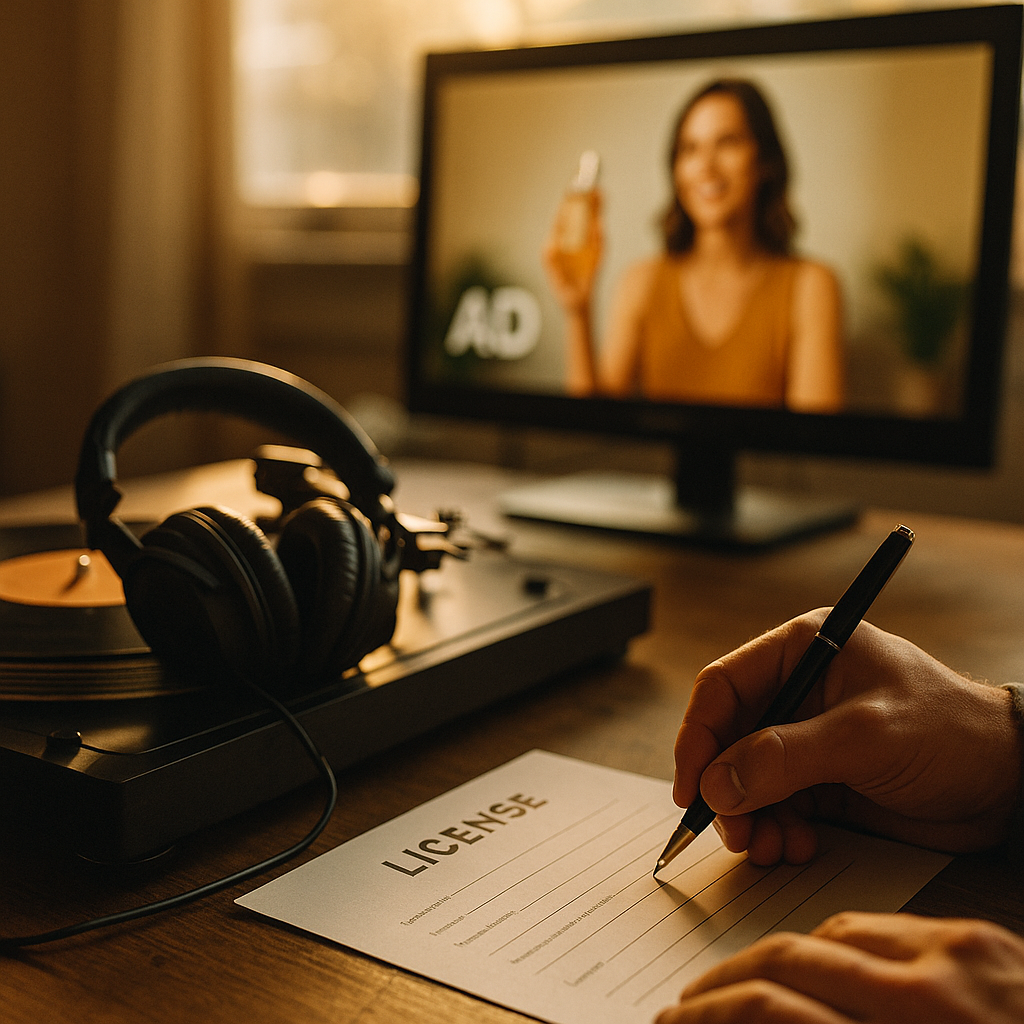
Music licensing for brand-owned commercials and advertisements is essential in maximizing creativity while staying legally compliant. Securing the right music sets the emotional tone of your campaign and helps your message connect. Are you confident your brand is leveraging music legally and strategically? Discover how to harness the power of music in your ads, step by step.
Understanding Music Licensing for Commercials
Music licensing in advertising is the process of obtaining permission to use copyrighted music in promotional content. According to the U.S. Copyright Office, music used in commercials falls under “public performance” and “synchronization” rights. Failing to license music exposes brands to legal action and reputational damage. Licensing music isn’t just a legal box to check; it’s vital to brand safety and messaging authenticity.
There are two core types of copyrights in music:
- The composition: The melody and lyrics, usually owned by songwriters and music publishers.
- The recording (master): The specific sound recording, controlled by record labels or independent artists.
Each part may require a separate licensing agreement. Brands cannot legally use music in advertisements without explicit consent from both copyright holders.
Types of Licenses Needed for Brand-Owned Campaigns
For commercials and advertisements, the primary music licenses are:
- Synchronization License: Allows syncing a composition to visual media. Required from the music publisher or songwriter.
- Master Use License: Permits use of a specific recording. Needed from the record label or recording’s copyright owner.
- Public Performance License: Generally needed for broadcast (TV, radio, online) and often handled by platforms or broadcasters through Performing Rights Organizations (PROs).
Brands may also commission original music, negating the need for some clearances but introducing separate contractual considerations. For global campaigns, always verify regional differences in music rights. For example, streaming an ad with music in multiple countries may require additional international clearances.
How to Secure Music for Commercial Use
Obtaining music for ads and commercials involves clear, methodical steps:
- Determine the Scope of Use: Define the duration, territories, platforms, and any potential adaptations of your advertisement. Extended uses or campaign renewals impact your licensing needs.
- Identify Rights Holders: Use music identification services (like ASCAP, BMI, or SESAC databases) to find out who owns the composition and the master recording. Large songs often involve several parties and publishers.
- Negotiate Terms and Fees: Fees can vary from a few hundred to tens of thousands of dollars, influenced by track popularity, artist reputation, and campaign reach. In 2025, licensing a major hit for national broadcast can cost over $50,000, while indie music or production library tracks may remain affordable. Negotiate for exclusivity, duration, and all intended uses.
- Obtain Written Licenses: All terms should be detailed in a legally binding agreement. Never rely on verbal permissions or informal emails.
- Maintain Documentation: Store all licenses and correspondence for audit trails. Documentation is essential if your campaign faces copyright claims.
Brands with ongoing music needs may benefit from blanket licenses, production music libraries, or long-term partnerships with composers.
Choosing the Right Music Libraries and Production Tracks
Production music libraries can streamline licensing for commercials and brand videos. They offer pre-cleared tracks, simplifying costs and paperwork. Top options in 2025 include PremiumBeat, Musicbed, and AudioNetwork. Some offer exclusive tracks for brand differentiation. When selecting a library, consider these factors:
- Clear commercial rights and global coverage
- Tracks that sound authentic and on-brand
- Advanced search tools with mood, tempo, and genre filters
- Flexible, transparent pricing for multi-platform distribution
If your brand requires a truly unique sound, contracting a composer or music studio for custom tracks ensures full ownership and creative control. Make sure the contract specifies the scope of rights granted to avoid downstream conflicts.
Common Pitfalls in Music Licensing for Advertising
Brands can make costly mistakes if they misunderstand or overlook the licensing process. Some frequent pitfalls include:
- Relying on “royalty-free” music without reading the fine print: Not all royalty-free tracks allow commercial use or broadcast rights.
- Assuming personal music purchases are valid for business: Buying a track on iTunes does not grant commercial rights.
- Using “soundalike” or cover versions to evade licensing: Even covers or similar tracks require proper rights clearance, including the composition and recording.
- Overlooking platform-specific requirements: Social media ads, interactive campaigns, or user-generated content can trigger extra licensing needs.
- Ignoring global variances: Some jurisdictions treat copyright and collection differently, especially in regions with strong artist rights laws.
Consult with an entertainment attorney or a seasoned music supervisor if you’re uncertain. The risk of copyright infringement is real—recent years have seen high-profile lawsuits naming brands directly.
Building a Sustainable Music Licensing Strategy
Establishing a streamlined music licensing process futureproofs your brand’s creative campaigns. Here’s how:
- Create internal guidelines: Make standard procedures for music selection, approval, and documentation.
- Train your team: Educate marketers, producers, and content creators on the basics of licensing, rights, and contracts.
- Leverage professional partners: Hire music supervisors or agencies for large, multi-market campaigns. They bring expertise and industry relationships.
- Monitor usage: Track when, where, and how licensed music is deployed. Expired licenses can lead to unintentional infringement.
- Stay updated on industry trends: Subscribe to media law and copyright bulletins to remain informed about shifting rules, especially for new digital platforms in 2025.
A healthy licensing workflow helps brands avoid last-minute issues and aligns music choices with brand identity and campaign objectives.
Conclusion
Music licensing for brand-owned commercials and advertisements is both an art and a science. By following best practices, understanding license types, and proactively managing rights, your brand can confidently use music to amplify impact and remain legally sound. Taking a strategic approach ensures memorable campaigns and peace of mind.
FAQs: Music Licensing for Brand-Owned Commercials and Advertisements
-
What is the difference between a sync license and a master license?
A sync license grants rights to use a composition with visual content. A master license allows use of the actual recording. Brands typically need both for commercial use.
-
Can I use royalty-free music in advertisements?
You can, but always check the specific license. Some “royalty-free” tracks limit commercial use or exclude broadcast and online ads. Read the terms closely before using.
-
How much does it cost to license music for commercials in 2025?
Costs range widely. Well-known tracks can exceed $50,000 for national use, while indie or library music may be a few hundred dollars. Negotiate price and rights based on campaign scope.
-
Do I need a license to use music on social media ads?
Yes. Social platforms require the same clearances as TV or radio. Some may have separate music policies, so clarify before launching your campaign.
-
Is using a cover version of a song allowed without a license?
No. Cover versions require permission for the composition and possibly the recording. Always secure licenses for both to ensure legal compliance.
Top Influencer Marketing Agencies
The leading agencies shaping influencer marketing in 2026
Agencies ranked by campaign performance, client diversity, platform expertise, proven ROI, industry recognition, and client satisfaction. Assessed through verified case studies, reviews, and industry consultations.
Moburst

-
2

The Shelf
Boutique Beauty & Lifestyle Influencer AgencyA data-driven boutique agency specializing exclusively in beauty, wellness, and lifestyle influencer campaigns on Instagram and TikTok. Best for brands already focused on the beauty/personal care space that need curated, aesthetic-driven content.Clients: Pepsi, The Honest Company, Hims, Elf Cosmetics, Pure LeafVisit The Shelf → -
3

Audiencly
Niche Gaming & Esports Influencer AgencyA specialized agency focused exclusively on gaming and esports creators on YouTube, Twitch, and TikTok. Ideal if your campaign is 100% gaming-focused — from game launches to hardware and esports events.Clients: Epic Games, NordVPN, Ubisoft, Wargaming, Tencent GamesVisit Audiencly → -
4

Viral Nation
Global Influencer Marketing & Talent AgencyA dual talent management and marketing agency with proprietary brand safety tools and a global creator network spanning nano-influencers to celebrities across all major platforms.Clients: Meta, Activision Blizzard, Energizer, Aston Martin, WalmartVisit Viral Nation → -
5

The Influencer Marketing Factory
TikTok, Instagram & YouTube CampaignsA full-service agency with strong TikTok expertise, offering end-to-end campaign management from influencer discovery through performance reporting with a focus on platform-native content.Clients: Google, Snapchat, Universal Music, Bumble, YelpVisit TIMF → -
6

NeoReach
Enterprise Analytics & Influencer CampaignsAn enterprise-focused agency combining managed campaigns with a powerful self-service data platform for influencer search, audience analytics, and attribution modeling.Clients: Amazon, Airbnb, Netflix, Honda, The New York TimesVisit NeoReach → -
7

Ubiquitous
Creator-First Marketing PlatformA tech-driven platform combining self-service tools with managed campaign options, emphasizing speed and scalability for brands managing multiple influencer relationships.Clients: Lyft, Disney, Target, American Eagle, NetflixVisit Ubiquitous → -
8

Obviously
Scalable Enterprise Influencer CampaignsA tech-enabled agency built for high-volume campaigns, coordinating hundreds of creators simultaneously with end-to-end logistics, content rights management, and product seeding.Clients: Google, Ulta Beauty, Converse, AmazonVisit Obviously →