


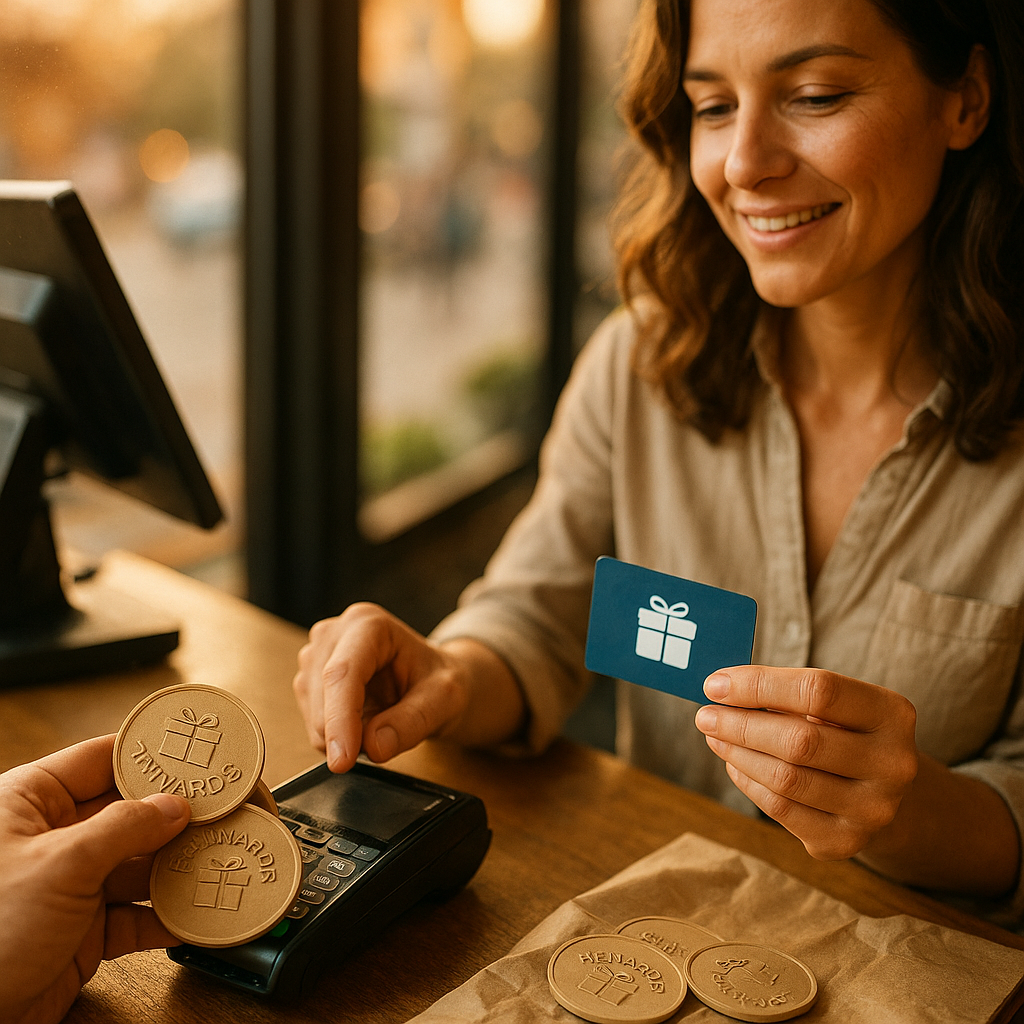
A customer loyalty and rewards program offers substantial benefits, but proving its financial impact can be challenging. With an effective framework for measuring the ROI of a customer loyalty and rewards program, businesses can fine-tune strategies, secure executive buy-in, and maximize value. Let’s explore the key steps and metrics to drive real results for your organization.
Defining Clear Objectives for Loyalty Program ROI
The foundation of any successful loyalty program ROI measurement lies in setting specific, tangible goals. Start by identifying what you want the program to achieve—higher retention, increased purchase frequency, or greater average order value. Clear objectives not only guide ROI calculations but also ensure your team remains focused on outcomes linked to business growth.
- Customer Retention Rate: Are you aiming to keep more customers over a given period?
- Lifetime Value (LTV): Do you want customers to spend more over their relationship with your brand?
- Referral Growth: Is your program designed to incentivize referrals?
Setting measurable objectives makes it easier to track progress and attribute results directly to your loyalty and rewards efforts.
Key Metrics for Program Performance Evaluation
An effective customer loyalty measurement framework depends on selecting the right metrics. Business environments in 2025 are data-rich, making it vital to track metrics that reflect both financial and behavioral impact. The most impactful KPIs will provide both quantitative and qualitative insights.
- Enrollment Rate: Measures the percentage of customers joining your program upon invitation or during purchase. A higher rate signals attractive program value.
- Redemption Rate: Tracks how often customers use their earned rewards—a clear indicator of program engagement and perceived value.
- Customer Retention: Compare retention rates among loyalty members versus non-members.
- Average Transaction Value: Assess whether loyalty members spend more per transaction compared to the general base.
- Frequency of Purchase: Evaluate if the program increases shopping frequency.
- Customer Lifetime Value (CLV): Calculates the projected revenue from a loyalty member during their tenure.
- Net Promoter Score (NPS): Measures satisfaction and the likelihood that members will recommend your brand.
Benchmark these metrics over time and against industry standards to gauge your program’s competitive performance.
Calculating the Financial ROI of Your Loyalty Program
The heart of the ROI assessment is quantifying your financial return relative to costs. A reward program ROI framework should distinguish between direct and indirect benefits, accounting for both incremental revenue and cost savings.
- Revenue Uplift: Subtract the historical average spend of non-members from that of loyalty members to determine incremental sales. Multiply by active members for total uplift.
- Cost of Goods Sold (COGS): Factor in the costs of discounts, rewards, and points issued and redeemed.
- Operational Costs: Include expenses related to technology, administration, marketing, and management of the program.
-
Total ROI Formula:
ROI = (Net Financial Benefit – Total Program Costs) / Total Program Costs x 100
For instance, if your net incremental revenue is $500,000, and your total program costs are $125,000, then ROI = (500,000 – 125,000) / 125,000 x 100 = 300%. This precise approach ensures clarity when reporting to stakeholders in 2025’s results-driven market.
Leveraging Customer Insights for Qualitative Analysis
While financial data is crucial, qualitative customer loyalty program analysis offers deep insight into participant sentiment and brand affinity. This helps optimize the program beyond mere numbers, fostering long-term loyalty. Listen carefully to members, using:
- Customer Feedback: Collect member testimonials and conduct surveys to understand satisfaction and improvement opportunities.
- Behavioral Analysis: Examine how different tiers behave—do higher-tier members engage more often or refer more friends?
- Social Listening: Monitor online platforms for program mentions, complaints, and unsolicited praise.
- Case Studies: Feature success stories that illuminate how your program drives real, transformational results.
Qualitative insights help refine messaging, reward structure, and communication, increasing the emotional and psychological “stickiness” of your program.
Optimizing and Scaling Your Loyalty Program Using ROI Data
With reliable loyalty program success measurement, your business can continuously improve. Adapt your offerings and strategy based on ROI data, then pursue growth with even greater confidence. In 2025, agility is a competitive necessity.
- Pilot and Test: Use A/B testing to compare variations in reward structures, redemption mechanics, and communication channels.
- Segment Your Audience: Personalize rewards and communications to different customer segments based on preferences and purchasing habits.
- Refine Marketing: Adjust messaging and promotions to resonate with members showing lower engagement or lapsed activity.
- Expand Partnerships: Collaborate with complementary brands to broaden the appeal and increase value for members.
- Report and Communicate: Share ROI findings internally to build cross-departmental support and externally to attract new members.
Continual measurement and optimization position your organization to succeed not just today, but as the market evolves in the years ahead.
Technology’s Role in Streamlining Loyalty Program Metrics
Contemporary rewards program evaluation framework strategies leverage powerful digital tools and AI. Automation allows real-time tracking of member activities, segmentation, and spend analytics. Analytics platforms integrate with your CRM and POS systems, pooling data for actionable dashboards. By embracing these technologies, you gain not just accuracy but agility, empowering faster decisions based on current trends and customer needs. Proactive companies in 2025 use predictive analytics to forecast member churn, identify upcoming high-value advocates, and simulate the impact of reward changes before rollout—future-proofing your ROI strategy.
Conclusion: Make Every Loyalty Dollar Count
Measuring the ROI of a customer loyalty and rewards program is both a science and an art. By combining quantitative metrics with qualitative insights and ongoing optimization, businesses unlock sustainable growth and deeper customer connections. Prioritize evidence-based strategy and reap the long-term rewards of a data-driven, customer-centric loyalty program.
FAQs: Measuring Loyalty and Rewards Program ROI in 2025
-
What is a good ROI for a customer loyalty program?
Strong programs typically see ROI between 200% and 400%, but this varies by industry and maturity. Focus on your unique goals and historical baselines for context.
-
How long does it take to see ROI from a loyalty program?
Most brands experience measurable ROI within 6-12 months of launch, provided the program is well-targeted and consistently promoted.
-
What are the most important metrics for loyalty program success?
Retention rates, customer lifetime value, redemption rates, and average transaction value are essential KPIs. Supplement with qualitative feedback for holistic assessment.
-
How can technology improve loyalty program ROI measurement?
Technology enables real-time tracking, segmentation, and predictive analytics—delivering faster, deeper, and more accurate insights to inform optimization.
-
Can small businesses accurately measure loyalty program ROI?
Absolutely—start with simple metrics like repeat purchase rates and average spend, then scale your efforts as the program and available data grow.
Top Influencer Marketing Agencies
The leading agencies shaping influencer marketing in 2026
Agencies ranked by campaign performance, client diversity, platform expertise, proven ROI, industry recognition, and client satisfaction. Assessed through verified case studies, reviews, and industry consultations.
Moburst

-
2

The Shelf
Boutique Beauty & Lifestyle Influencer AgencyA data-driven boutique agency specializing exclusively in beauty, wellness, and lifestyle influencer campaigns on Instagram and TikTok. Best for brands already focused on the beauty/personal care space that need curated, aesthetic-driven content.Clients: Pepsi, The Honest Company, Hims, Elf Cosmetics, Pure LeafVisit The Shelf → -
3

Audiencly
Niche Gaming & Esports Influencer AgencyA specialized agency focused exclusively on gaming and esports creators on YouTube, Twitch, and TikTok. Ideal if your campaign is 100% gaming-focused — from game launches to hardware and esports events.Clients: Epic Games, NordVPN, Ubisoft, Wargaming, Tencent GamesVisit Audiencly → -
4

Viral Nation
Global Influencer Marketing & Talent AgencyA dual talent management and marketing agency with proprietary brand safety tools and a global creator network spanning nano-influencers to celebrities across all major platforms.Clients: Meta, Activision Blizzard, Energizer, Aston Martin, WalmartVisit Viral Nation → -
5

The Influencer Marketing Factory
TikTok, Instagram & YouTube CampaignsA full-service agency with strong TikTok expertise, offering end-to-end campaign management from influencer discovery through performance reporting with a focus on platform-native content.Clients: Google, Snapchat, Universal Music, Bumble, YelpVisit TIMF → -
6

NeoReach
Enterprise Analytics & Influencer CampaignsAn enterprise-focused agency combining managed campaigns with a powerful self-service data platform for influencer search, audience analytics, and attribution modeling.Clients: Amazon, Airbnb, Netflix, Honda, The New York TimesVisit NeoReach → -
7

Ubiquitous
Creator-First Marketing PlatformA tech-driven platform combining self-service tools with managed campaign options, emphasizing speed and scalability for brands managing multiple influencer relationships.Clients: Lyft, Disney, Target, American Eagle, NetflixVisit Ubiquitous → -
8

Obviously
Scalable Enterprise Influencer CampaignsA tech-enabled agency built for high-volume campaigns, coordinating hundreds of creators simultaneously with end-to-end logistics, content rights management, and product seeding.Clients: Google, Ulta Beauty, Converse, AmazonVisit Obviously →