


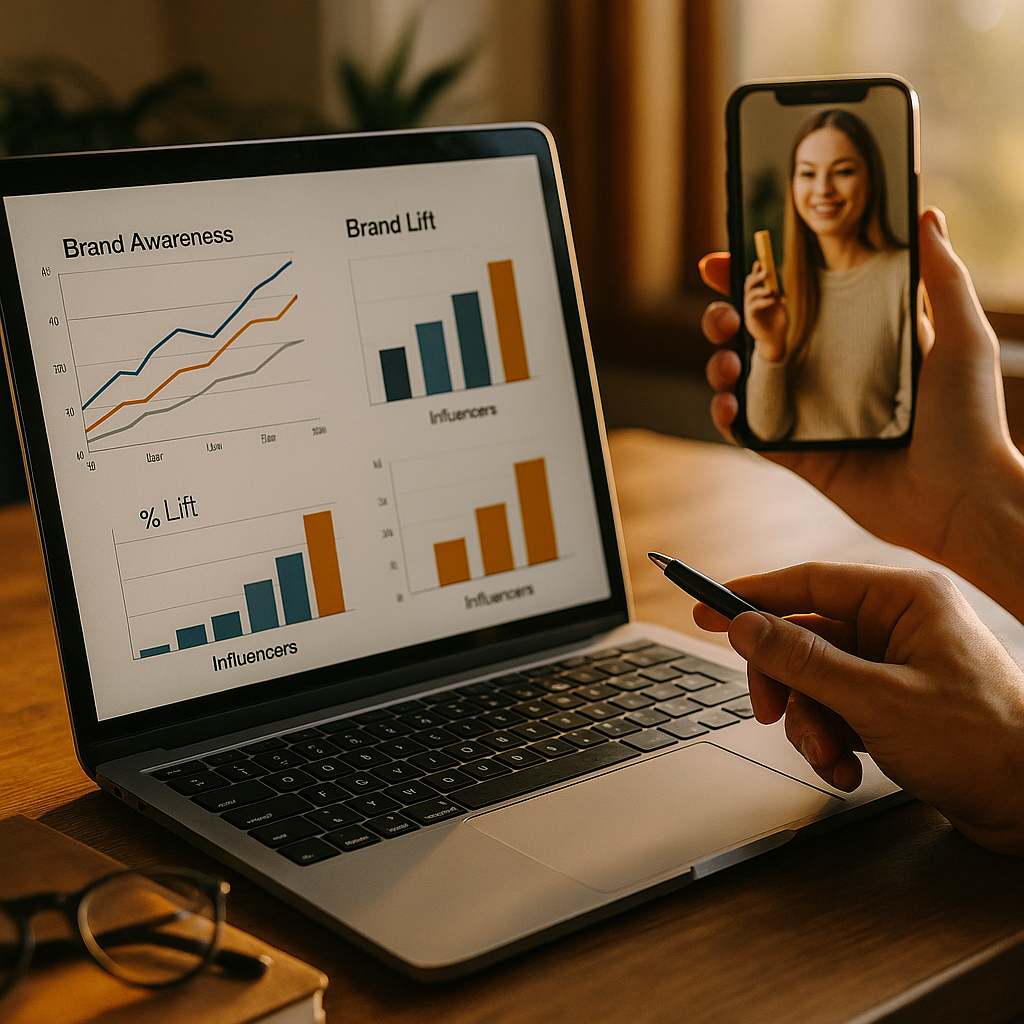
Measuring brand lift through influencer marketing campaigns is vital for brands aiming to track real impact and maximize ROI. Combining influencers’ reach with robust analytics allows marketers to gauge shifts in brand perception and audience engagement. But which metrics matter most, and how do you measure true uplift? Let’s break down effective measurement strategies every brand should use in 2025.
Understanding Brand Lift Metrics in Influencer Marketing
Brand lift reflects a measurable increase in consumer awareness, perception, or intent resulting from a marketing initiative. In influencer marketing, brands can observe shifts in key performance indicators after a campaign. Common brand lift metrics include:
- Brand Awareness: Recognizability and recall measured through surveys or brand-specific search volume.
- Consideration: The degree to which audiences think about your brand when making purchase decisions, tracked via intent surveys or webpage visits.
- Favorability: How positively an audience views your brand compared to competitors, often observed through sentiment analysis.
- Purchase Intent: The likelihood of an audience intending to buy, measured with post-campaign intent questions or conversion rates.
Understanding these metrics helps you map influencer efforts to business outcomes and set benchmarks for future campaigns.
Selecting the Right Influencer Campaign Measurement Tools
Key to measuring influencer brand lift is selecting tools that provide accurate, actionable data. Solutions often include:
- Social Listening Platforms: Analyze changes in brand conversation volume, sentiment, and share of voice post-campaign.
- Survey Technologies: Services like Google Surveys or SurveyMonkey can target exposed vs. control groups to measure shifts in awareness and consideration.
- Attribution Analytics: Advanced platforms link influencer-driven content to website actions and conversions using unique URLs, UTM parameters, or discount codes.
- Branded Search Analysis: Tools such as Google Search Console help assess increases in brand and product keyword searches during and after campaigns.
For maximum credibility, combine quantitative tools with qualitative insights, such as comment analysis and influencer feedback. Ensure your choice respects privacy regulations and transparent data handling—principles central to EEAT (Experience, Expertise, Authoritativeness, and Trustworthiness).
Designing Brand Lift Studies for Influencer Campaigns
A well-structured brand lift study enables data-backed decisions. To execute one for an influencer campaign, follow these steps:
- Define Objectives: Identify the brand perception or awareness shift you’re hoping to achieve.
- Select Exposed and Control Groups: Use influencer audience data and platform targeting to reach similar demographics, with one group unexposed to campaign content for comparison.
- Pre- and Post-Campaign Surveys: Design questions around awareness, favorability, and intent, maintaining consistency for both groups.
- Track Organic Metrics: Supplement survey results with organic metrics such as search trends, direct traffic, or social engagement spikes.
This blended approach isolates the incremental effect of the influencer campaign. Leading influencer platforms now offer built-in brand lift studies, making the process even more accessible for brands in 2025.
Interpreting Results: Turning Brand Lift Data into Insights
Once data is gathered, insightful analysis is essential. Key steps include:
- Compare Against Baselines: Evaluate pre- and post-campaign metrics alongside historical brand performance.
- Assess Incrementality: Ensure observed lifts are not solely due to seasonal or external market effects by using control groups.
- Segment Data: Break down results by demographics, influencer types, platforms, and campaign formats to identify top-performing segments.
- Tie Results to Business Goals: Link improvements in awareness or intent to downstream actions such as web visits, leads, or sales.
Actionable reporting enables marketers to double down on strategies that drive highest ROI and pivot quickly from underperforming tactics.
Optimizing Future Campaigns Based on Brand Lift Measurement
Continuous optimization is fundamental for long-term influencer marketing success. Employ these practices:
- Iterate on Creative and Influencer Selection: Use data to refine messaging and identify influencer profiles that resonate best.
- Invest in Long-term Partnerships: Data increasingly confirms that sustained influencer relationships amplify brand lift over time.
- Test New Channels: If data shows emerging platforms are driving higher lift, allocate future budget to these channels.
- Share Learnings Across Teams: Integrate influencer data with other marketing insights for unified, multichannel brand strategy.
This data-driven optimization ensures your influencer marketing campaigns consistently deliver measurable brand impact.
Conclusion: Maximize Brand Lift Through Data-Driven Influencer Marketing
Measuring brand lift through influencer marketing campaigns transforms influencer partnerships from a creative tactic into a strategic growth driver. By deploying robust tools, structured studies, and insightful analysis, brands empower themselves to achieve—and prove—real business results from every influencer activation.
FAQs: Measuring Brand Lift Through Influencer Marketing Campaigns
-
What is brand lift in influencer marketing?
Brand lift measures the positive change in consumer awareness, perception, or intent after an influencer marketing campaign, showing how audiences now view or act on your brand versus before exposure.
-
How do I measure brand lift from influencer partnerships?
Combine survey-based studies (comparing exposed and control groups) with analytics tools tracking search trends, social engagement, and conversion metrics directly linked to influencer activity.
-
What are the most important metrics for brand lift?
Focus on brand awareness, consideration, favorability, and purchase intent—measured through surveys, social listening, search volume, and direct site behavior after influencer campaigns.
-
How frequently should brand lift studies be conducted?
Ideally, run brand lift studies at the conclusion of each major campaign, and periodically for always-on influencer programs, ensuring insights drive continuous optimization throughout the year.
-
Does influencer marketing really drive brand lift?
Yes. Recent studies in 2025 consistently confirm that influencer campaigns, especially those involving authentic creators, can significantly increase brand awareness, favorability, and even purchase intent.
Top Influencer Marketing Agencies
The leading agencies shaping influencer marketing in 2026
Agencies ranked by campaign performance, client diversity, platform expertise, proven ROI, industry recognition, and client satisfaction. Assessed through verified case studies, reviews, and industry consultations.
Moburst

-
2

The Shelf
Boutique Beauty & Lifestyle Influencer AgencyA data-driven boutique agency specializing exclusively in beauty, wellness, and lifestyle influencer campaigns on Instagram and TikTok. Best for brands already focused on the beauty/personal care space that need curated, aesthetic-driven content.Clients: Pepsi, The Honest Company, Hims, Elf Cosmetics, Pure LeafVisit The Shelf → -
3

Audiencly
Niche Gaming & Esports Influencer AgencyA specialized agency focused exclusively on gaming and esports creators on YouTube, Twitch, and TikTok. Ideal if your campaign is 100% gaming-focused — from game launches to hardware and esports events.Clients: Epic Games, NordVPN, Ubisoft, Wargaming, Tencent GamesVisit Audiencly → -
4

Viral Nation
Global Influencer Marketing & Talent AgencyA dual talent management and marketing agency with proprietary brand safety tools and a global creator network spanning nano-influencers to celebrities across all major platforms.Clients: Meta, Activision Blizzard, Energizer, Aston Martin, WalmartVisit Viral Nation → -
5

The Influencer Marketing Factory
TikTok, Instagram & YouTube CampaignsA full-service agency with strong TikTok expertise, offering end-to-end campaign management from influencer discovery through performance reporting with a focus on platform-native content.Clients: Google, Snapchat, Universal Music, Bumble, YelpVisit TIMF → -
6

NeoReach
Enterprise Analytics & Influencer CampaignsAn enterprise-focused agency combining managed campaigns with a powerful self-service data platform for influencer search, audience analytics, and attribution modeling.Clients: Amazon, Airbnb, Netflix, Honda, The New York TimesVisit NeoReach → -
7

Ubiquitous
Creator-First Marketing PlatformA tech-driven platform combining self-service tools with managed campaign options, emphasizing speed and scalability for brands managing multiple influencer relationships.Clients: Lyft, Disney, Target, American Eagle, NetflixVisit Ubiquitous → -
8

Obviously
Scalable Enterprise Influencer CampaignsA tech-enabled agency built for high-volume campaigns, coordinating hundreds of creators simultaneously with end-to-end logistics, content rights management, and product seeding.Clients: Google, Ulta Beauty, Converse, AmazonVisit Obviously →