


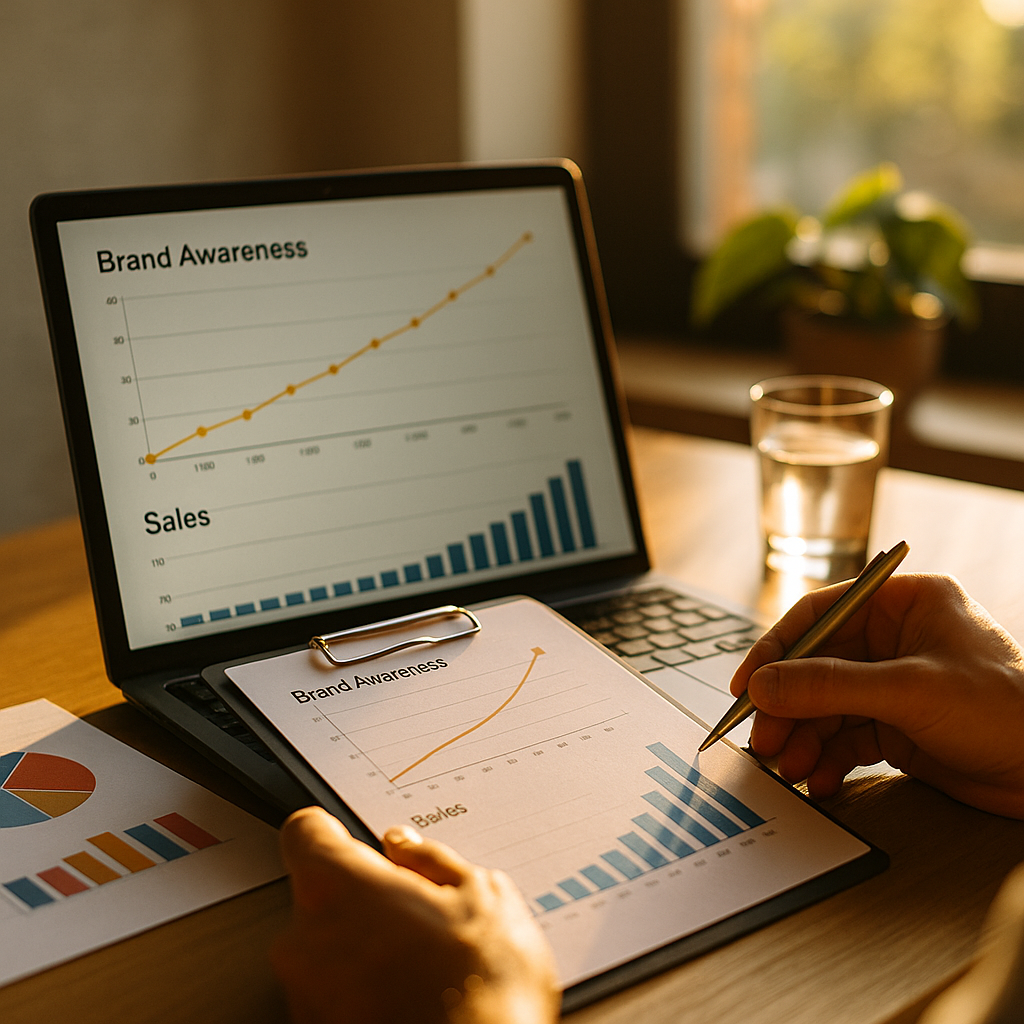
Understanding a framework for measuring the impact of brand awareness on sales is essential for marketers aiming to maximize ROI and allocate resources efficiently. Reliable measurement bridges the gap between branding initiatives and tangible performance outcomes. Explore the techniques and insights needed to assess and amplify your brand’s influence on sales effectively in 2025 and beyond.
Why Measuring Brand Awareness Matters for Sales Attribution
Brand awareness is often considered intangible, yet its influence on purchasing decisions can’t be ignored. According to a 2025 Nielsen study, brands with higher consumer awareness see up to 23% greater sales conversion rates than lesser-known competitors. Accurately measuring this relationship helps marketers:
- Justify branding budgets to stakeholders
- Refine campaign strategies based on proven outcomes
- Identify which channels deliver both recognition and sales uplift
- Pinpoint stages in the customer journey where awareness converts to action
Without a robust measurement framework, marketers risk overinvesting in low-impact efforts or missing major sales opportunities that stem from brand familiarity.
Key Performance Indicators for Brand Awareness and Sales Impact
To build an actionable framework, start with clear KPIs for both brand awareness and sales performance. Some essential metrics include:
- Brand Lift: Survey-based measures of recall, recognition, and favorability before and after campaigns.
- Search Volume Trends: Increases in branded search queries indicate higher consumer interest.
- Direct and Unbranded Traffic: Rising direct website visits and organic traffic often connect to awareness-driven efforts.
- Market Share: Growth signals broader recognition and competitive advantage.
- Sales Attribution Models: Multi-touch, first-touch, and last-touch models reveal how awareness interacts with conversion paths.
- Incremental Sales: Uplift in sales directly attributable to brand campaigns, measured via control groups or regional testing.
Selecting relevant KPIs allows marketers to monitor trends, identify causality, and test which brand-building activities correlate with revenue growth.
Data Collection Strategies for Measuring Impact
Robust measurement requires a blend of qualitative and quantitative data sources, ensuring accuracy and depth of insights. Top data collection methods in 2025 include:
- Brand Health Surveys: Online and in-app surveys assess consumer sentiment, aided by AI-powered text analysis for accuracy.
- Digital Analytics: Tools like Google Analytics 4 track website engagement from awareness channels.
- Social Listening: Monitoring brand mentions, shares, and sentiment across platforms.
- Media Mix Modeling: Statistical analysis that quantifies the effect of different media and channels on sales.
- Geo Experimentation: Isolating test and control regions to measure the sales impact of localized awareness campaigns.
- CRM and Point-of-Sale Data: Integration with digital analytics to link promotions and awareness with actual purchases.
Combining primary and secondary data, including third-party market research, yields a comprehensive view of brand awareness efforts’ real-world impact.
Designing a Framework for Awareness-to-Sales Measurement
An effective framework provides clarity, repeatability, and decision-making power. Follow these key steps to build and implement your system:
- Set Clear Objectives: Define what you want to achieve (increased sales, market entry, product launch awareness, etc.).
- Map the Customer Journey: Identify critical touchpoints where brand awareness can influence future purchase decisions.
- Select Integrated Metrics: Use a mix of leading (awareness, intent) and lagging (sales, loyalty) indicators.
- Attribution Modeling: Apply multi-touch attribution to capture the complex path from awareness to sale, adjusting for new privacy standards and cookie-less tracking in 2025.
- Experiment and Test: Use A/B and regional holdout tests to quantify true incremental effects of awareness campaigns.
- Iterate and Optimize: Routinely analyze data, update models, and share findings with stakeholders for continuous improvement.
Embedding this structure ensures not only that efforts are measured, but also that insights continuously refine your future branding and sales strategies.
Overcoming Attribution Challenges in Brand Measurement
The complex, non-linear customer journey presents major challenges for attribution, especially as customers interact with multiple touchpoints prior to purchase. In 2025, marketers must address:
- Longer Attribution Windows: Brand campaigns often influence sales weeks or months later; extended window analysis is crucial.
- Cross-Device and Offline Effects: Sales may occur in-store or on a different device than the awareness touchpoint.
- Privacy Regulation: New rules restrict user-level tracking, increasing the need for anonymized, aggregated measurement approaches.
- Brand-Driven Halo Effect: Awareness for one product often drives untracked spillover sales in other product categories.
Solutions such as synthetic control groups, advanced analytics platforms, and statistical modeling are increasingly used to overcome these issues, ensuring marketers measure the real, lasting impact of branding initiatives.
Best Practices for Maximizing the Sales Impact of Brand Awareness
Implementing your measurement framework isn’t just about tracking numbers—it’s about proactively boosting revenue outcomes. Consider these expert recommendations for 2025:
- Integrate Departments: Unite brand, performance marketing, and analytics teams for a holistic measurement strategy.
- Set Baselines: Benchmark current awareness and sales before launching new campaigns for an accurate read on incremental lift.
- Personalize Messaging: Use AI-driven segmentation to target messages and creative, increasing resonance and recall.
- Optimize Channel Mix: Allocate spend based on testing results, prioritizing channels that show both short- and long-term impact on sales.
- Continuous Education: Train teams on new analytics technologies, compliance, and evolving best practices to stay ahead in measurement sophistication.
By adopting these practices, companies can turn insights into action, ensuring that brand awareness campaigns don’t just build recognition but also accelerate sales growth.
FAQs: Measuring the Impact of Brand Awareness on Sales
-
How can I link brand awareness campaigns to sales if the customer journey is long?
Deploy longer attribution windows, cohort analysis, and media mix modeling to connect distant awareness activities with eventual purchase behaviors. Continuous data collection helps establish the lag effect between brand exposure and sales conversion.
-
What is an example of a good KPI for brand awareness?
Brand lift, measured via changes in unaided recall or intent-to-purchase survey scores, is a direct indicator of increased awareness that can correlate with future sales.
-
Can social media mentions really drive sales?
Yes. In 2025, AI-driven attribution models show clear sales uplifts from positive spikes in social mentions, especially when sustained over several weeks. Monitoring sentiment is key, as positive conversations have a stronger correlation with purchase intent.
-
How do privacy regulations affect measurement?
Marketers must adapt by using anonymized, aggregated data and synthetic controls rather than relying on individual-level tracking, ensuring compliance while maintaining insight into campaign effectiveness.
-
How often should I revisit my measurement framework?
Quarterly reviews are recommended to keep pace with market changes, technology updates, and internal business goals, ensuring your framework remains accurate, relevant, and actionable.
Measuring the impact of brand awareness on sales is a blend of art and science. With a structured framework, actionable KPIs, and the latest analytics strategies, marketers can confidently demonstrate and optimize how branding drives revenue in today’s evolving landscape.
Top Influencer Marketing Agencies
The leading agencies shaping influencer marketing in 2026
Agencies ranked by campaign performance, client diversity, platform expertise, proven ROI, industry recognition, and client satisfaction. Assessed through verified case studies, reviews, and industry consultations.
Moburst

-
2

The Shelf
Boutique Beauty & Lifestyle Influencer AgencyA data-driven boutique agency specializing exclusively in beauty, wellness, and lifestyle influencer campaigns on Instagram and TikTok. Best for brands already focused on the beauty/personal care space that need curated, aesthetic-driven content.Clients: Pepsi, The Honest Company, Hims, Elf Cosmetics, Pure LeafVisit The Shelf → -
3

Audiencly
Niche Gaming & Esports Influencer AgencyA specialized agency focused exclusively on gaming and esports creators on YouTube, Twitch, and TikTok. Ideal if your campaign is 100% gaming-focused — from game launches to hardware and esports events.Clients: Epic Games, NordVPN, Ubisoft, Wargaming, Tencent GamesVisit Audiencly → -
4

Viral Nation
Global Influencer Marketing & Talent AgencyA dual talent management and marketing agency with proprietary brand safety tools and a global creator network spanning nano-influencers to celebrities across all major platforms.Clients: Meta, Activision Blizzard, Energizer, Aston Martin, WalmartVisit Viral Nation → -
5

The Influencer Marketing Factory
TikTok, Instagram & YouTube CampaignsA full-service agency with strong TikTok expertise, offering end-to-end campaign management from influencer discovery through performance reporting with a focus on platform-native content.Clients: Google, Snapchat, Universal Music, Bumble, YelpVisit TIMF → -
6

NeoReach
Enterprise Analytics & Influencer CampaignsAn enterprise-focused agency combining managed campaigns with a powerful self-service data platform for influencer search, audience analytics, and attribution modeling.Clients: Amazon, Airbnb, Netflix, Honda, The New York TimesVisit NeoReach → -
7

Ubiquitous
Creator-First Marketing PlatformA tech-driven platform combining self-service tools with managed campaign options, emphasizing speed and scalability for brands managing multiple influencer relationships.Clients: Lyft, Disney, Target, American Eagle, NetflixVisit Ubiquitous → -
8

Obviously
Scalable Enterprise Influencer CampaignsA tech-enabled agency built for high-volume campaigns, coordinating hundreds of creators simultaneously with end-to-end logistics, content rights management, and product seeding.Clients: Google, Ulta Beauty, Converse, AmazonVisit Obviously →