


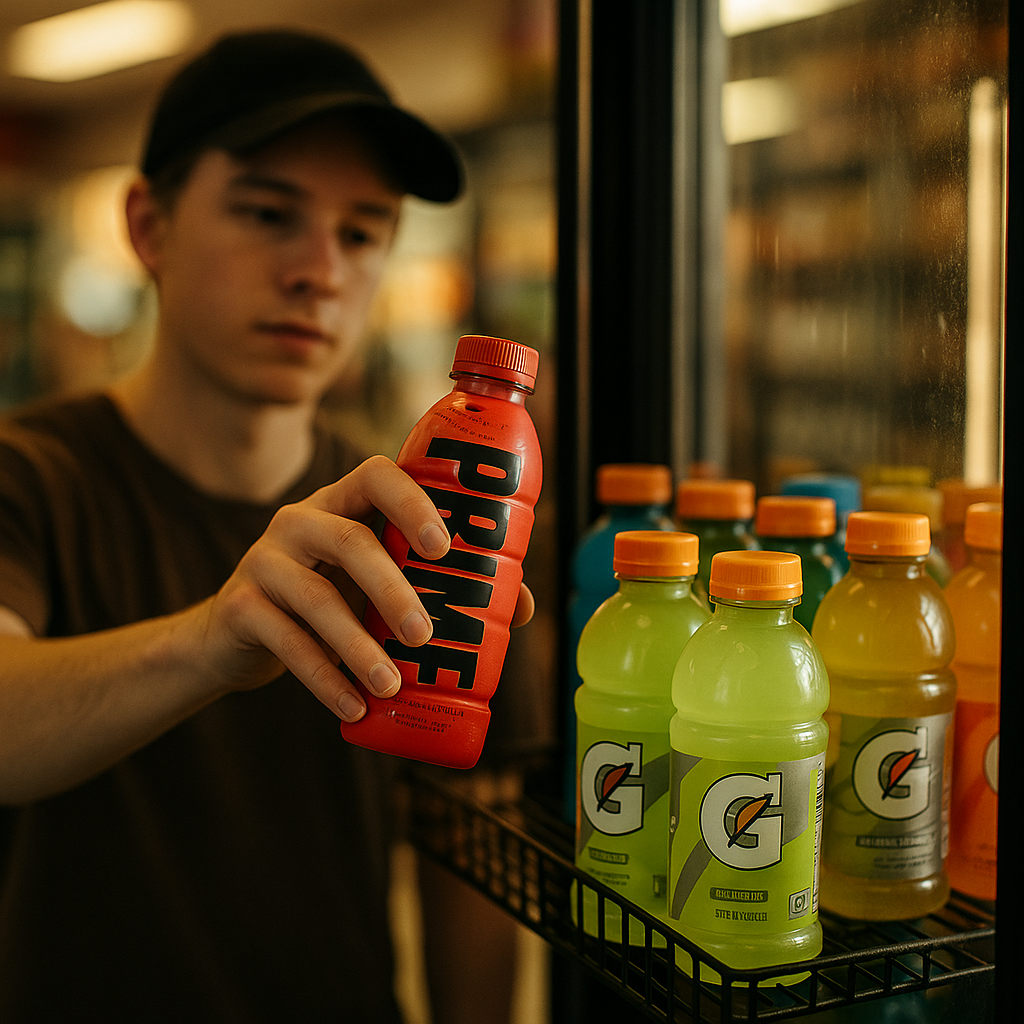
In a category Gatorade has dominated for four decades, a drink launched by two YouTubers now outsells it in convenience store coolers across multiple U.S. markets. The Prime Hydration case study isn’t really about celebrity endorsement. It’s about what happens when creator distribution gets treated like a supply chain problem, not a marketing one.
The Numbers Gatorade Didn’t See Coming
Prime Hydration launched in 2022 backed by Logan Paul and KSI, two creators with a combined social footprint north of 300 million followers across YouTube, Instagram, and TikTok. Within two years, retail trackers reported Prime outselling Gatorade and Powerade in single-store convenience locations during peak drops, despite carrying a fraction of the shelf space and none of Gatorade’s sports marketing budget.
That’s the headline. But headlines don’t explain mechanism. Plenty of celebrity-backed beverages have flopped (remember Bai’s various athlete tie-ins, or the dozen influencer energy drinks that vanished within a year?). What made Prime different wasn’t fame. It was the structural way Paul and KSI’s audiences functioned as a distributed sales force, one that showed up at the exact point of purchase: the convenience store counter.
Prime didn’t win with a bigger ad budget. It won by converting parasocial trust into foot traffic at 150,000+ retail doors, faster than legacy brands could react.
Why Convenience Stores Were the Real Battleground
Gatorade built its empire on sports sponsorships, sideline coolers, and decades of shelf-space negotiation with big-box retailers. That’s a slow-moving, relationship-driven system. Convenience stores operate differently. Shelf placement there is driven heavily by sell-through velocity, not legacy contracts. If a SKU moves fast, distributors reorder fast. If it sits, it’s gone within a quarter.
That’s the exact terrain where creator-driven demand generation outperforms traditional CPG marketing. Logan Paul and KSI didn’t need Prime on ESPN. They needed teenagers walking into 7-Eleven asking for it by name, and creating enough scarcity buzz that stores couldn’t restock fast enough. Early 2022 and 2023 saw viral clips of empty Prime shelves, kids driving between towns hunting bottles, and resellers flipping bottles for 5x retail. That scarcity wasn’t fully manufactured, but it wasn’t discouraged either.
Retail buyers noticed. When a product creates lines and social content organically, buyers reallocate shelf space without needing a slotting fee negotiation. Prime essentially got pulled into stores by demand signals instead of pushed in through traditional trade marketing.
The Creator Network Behind the Curtain
Paul and KSI weren’t just faces on a bottle. Both had existing, monetized content ecosystems: podcasts (Logan Paul’s “Impaulsive”), boxing events (the co-founders fought each other in 2018, building a rivalry-turned-partnership narrative), and long-running YouTube series with built-in audience rituals. Prime launched inside those ecosystems rather than as a bolt-on sponsorship.
That distinction matters for any brand studying this model. Most influencer partnerships rent attention for a campaign window. Prime’s founders owned the distribution channel itself. They controlled posting cadence, content format, and audience relationship long-term, which meant Prime could run always-on organic promotion without paying media rates for every impression.
Beyond the founders, a secondary layer of creators amplified the brand: unboxing videos, flavor ranking content, taste-test challenges, and reaction videos to new drops. Much of this was unpaid, organic fan content, similar to the dynamic covered in zero paid spend creator wins where product scarcity itself becomes the content hook.
Flavor Drops as a Retention Mechanic
Gatorade’s flavor lineup barely changes year to year. Prime treats flavor releases like sneaker drops: limited runs, countdown hype, and creator-led reveal videos timed for maximum FOMO. Ice Pop, Blue Raspberry restocks, and international-market exclusives (like the UK-only flavors) all generated dedicated unboxing cycles.
This drop-culture approach converts convenience store visits into an event. Consumers aren’t grabbing Prime because they’re thirsty after a workout, the original Gatorade use case. They’re grabbing it because a creator posted about a new flavor landing at their local Circle K three hours ago.
What Brand Strategists Should Actually Take From This
It’s tempting to read this case study as “hire famous YouTubers, win.” That’s the wrong lesson, and it’s an expensive mistake to make. Most brands don’t have access to two creators with 300 million combined followers and a built-in rivalry narrative. The transferable insight is smaller and more operational:
- Match creator incentive structure to distribution reality. Prime’s founders had equity, not a one-off endorsement fee. That alignment meant Paul and KSI promoted the brand constantly, not just during a paid flight window.
- Engineer scarcity deliberately, but don’t fake it into a compliance problem. Real supply constraints created real urgency. Brands manufacturing fake scarcity risk running into FTC scrutiny around deceptive marketing claims, something covered in depth in FTC compliance for creator drops.
- Treat convenience and impulse retail as its own channel. Velocity-based reordering rewards products with active social buzz, not just brand equity built over decades.
- Use creator content to trigger physical store visits, not just online conversion. Prime’s unboxing and flavor-hunt content drove foot traffic, a harder metric to fake than view counts.
Brands like Chamberlain Coffee’s nano-creator retail push and Vessi’s demo-driven referral engine show the same principle at smaller scale: creator content that drives someone to a physical shelf is worth more than content that just racks up views.
The Risk Side Nobody Talks About
Prime hasn’t been immune to backlash. Reports questioned caffeine content in Prime Energy (not the hydration line, but the association muddied both), and several U.S. senators sent formal inquiries about marketing the product to children given the founders’ massive teen and pre-teen following. That’s a cautionary note for any brand building a youth-skewing creator strategy: the same audience reach that drives velocity can trigger regulatory attention fast.
Brands studying Prime’s playbook should build compliance review into the creator content pipeline from day one, not retrofit it after a senator’s office calls. The FTC’s endorsement guidelines apply just as much to founder-creators as to paid influencers, and youth-oriented products face extra scrutiny around ingredient transparency and marketing claims.
There’s also a structural fragility worth naming: Prime’s growth has cooled since its peak scarcity years, per multiple retail tracking reports and eMarketer’s coverage of beverage category shifts. Hype-driven demand is powerful but hard to sustain once novelty fades and shelf availability normalizes. Gatorade’s slower, sponsorship-built moat is less exciting but more durable. That’s the tension every founder-led creator brand eventually faces.
Where This Leaves Legacy Beverage Brands
Gatorade isn’t going anywhere; it still commands the larger share of the sports drink category overall by most retail measurement standards. But the convenience store loss is a signal. Legacy CPG brands built distribution moats around retail relationships and category incumbency. Those moats don’t stop a product with an organic, creator-driven demand engine from winning the velocity game store by store.
Expect more legacy brands to respond by either acquiring creator-founded challengers or building parallel creator-led sub-brands, rather than trying to out-influencer the influencers directly. Some, like Sprout Social’s creator marketing research has noted, are instead investing in ambassador programs that mimic the founder-equity model at smaller scale, similar to what’s explored in Whoop’s paid ambassador army strategy.
FAQs
Frequently Asked Questions
How did Prime Hydration outsell Gatorade in convenience stores specifically?
Prime generated organic, creator-driven demand spikes that outpaced Gatorade’s sell-through velocity in individual convenience store locations. Because convenience retail reorders based on how fast a SKU sells rather than long-term contracts, Prime’s viral scarcity moments (empty shelves, resale markups, unboxing content) triggered faster restocking and expanded shelf space in ways Gatorade’s slower, sponsorship-based model couldn’t match store by store.
Is the Logan Paul and KSI model repeatable for other brands?
The scale isn’t repeatable for most brands, but the mechanics are. Founder-level creator equity, drop-culture flavor releases, and content designed to drive physical store visits rather than just impressions are all transferable tactics, even for brands working with nano or micro-creators instead of celebrity YouTubers.
Why does convenience store velocity matter more than big-box retail presence?
Convenience stores reorder based on sell-through speed, which rewards products generating active social buzz. Big-box retail shelf space is often negotiated through longer contracts and trade marketing relationships, making it slower to reflect sudden demand shifts.
What compliance risks come with founder-led creator marketing to younger audiences?
Products marketed through creators with large teen followings face heightened scrutiny over ingredient transparency, caffeine content, and advertising claims. Brands should build FTC-compliant disclosure and review processes into content pipelines proactively rather than reacting to regulatory inquiries after the fact.
Has Prime’s growth been sustainable long-term?
Retail tracking and industry coverage suggest Prime’s hyper-growth phase has cooled as novelty and scarcity effects normalized. This reflects a broader pattern where hype-driven, creator-led launches see rapid early traction but need durable retention mechanics to match legacy brands’ long-term category share.
The takeaway for brand teams isn’t “get a celebrity co-founder.” It’s this: audit your creator partnerships for whether they drive actual foot traffic and reorder velocity, not just impressions, and build the compliance guardrails before the growth curve forces your hand.
Top Influencer Marketing Agencies
The leading agencies shaping influencer marketing in 2026
Agencies ranked by campaign performance, client diversity, platform expertise, proven ROI, industry recognition, and client satisfaction. Assessed through verified case studies, reviews, and industry consultations.
Moburst

-
2

The Shelf
Boutique Beauty & Lifestyle Influencer AgencyA data-driven boutique agency specializing exclusively in beauty, wellness, and lifestyle influencer campaigns on Instagram and TikTok. Best for brands already focused on the beauty/personal care space that need curated, aesthetic-driven content.Clients: Pepsi, The Honest Company, Hims, Elf Cosmetics, Pure LeafVisit The Shelf → -
3

Audiencly
Niche Gaming & Esports Influencer AgencyA specialized agency focused exclusively on gaming and esports creators on YouTube, Twitch, and TikTok. Ideal if your campaign is 100% gaming-focused — from game launches to hardware and esports events.Clients: Epic Games, NordVPN, Ubisoft, Wargaming, Tencent GamesVisit Audiencly → -
4

Viral Nation
Global Influencer Marketing & Talent AgencyA dual talent management and marketing agency with proprietary brand safety tools and a global creator network spanning nano-influencers to celebrities across all major platforms.Clients: Meta, Activision Blizzard, Energizer, Aston Martin, WalmartVisit Viral Nation → -
5

The Influencer Marketing Factory
TikTok, Instagram & YouTube CampaignsA full-service agency with strong TikTok expertise, offering end-to-end campaign management from influencer discovery through performance reporting with a focus on platform-native content.Clients: Google, Snapchat, Universal Music, Bumble, YelpVisit TIMF → -
6

NeoReach
Enterprise Analytics & Influencer CampaignsAn enterprise-focused agency combining managed campaigns with a powerful self-service data platform for influencer search, audience analytics, and attribution modeling.Clients: Amazon, Airbnb, Netflix, Honda, The New York TimesVisit NeoReach → -
7

Ubiquitous
Creator-First Marketing PlatformA tech-driven platform combining self-service tools with managed campaign options, emphasizing speed and scalability for brands managing multiple influencer relationships.Clients: Lyft, Disney, Target, American Eagle, NetflixVisit Ubiquitous → -
8

Obviously
Scalable Enterprise Influencer CampaignsA tech-enabled agency built for high-volume campaigns, coordinating hundreds of creators simultaneously with end-to-end logistics, content rights management, and product seeding.Clients: Google, Ulta Beauty, Converse, AmazonVisit Obviously →