


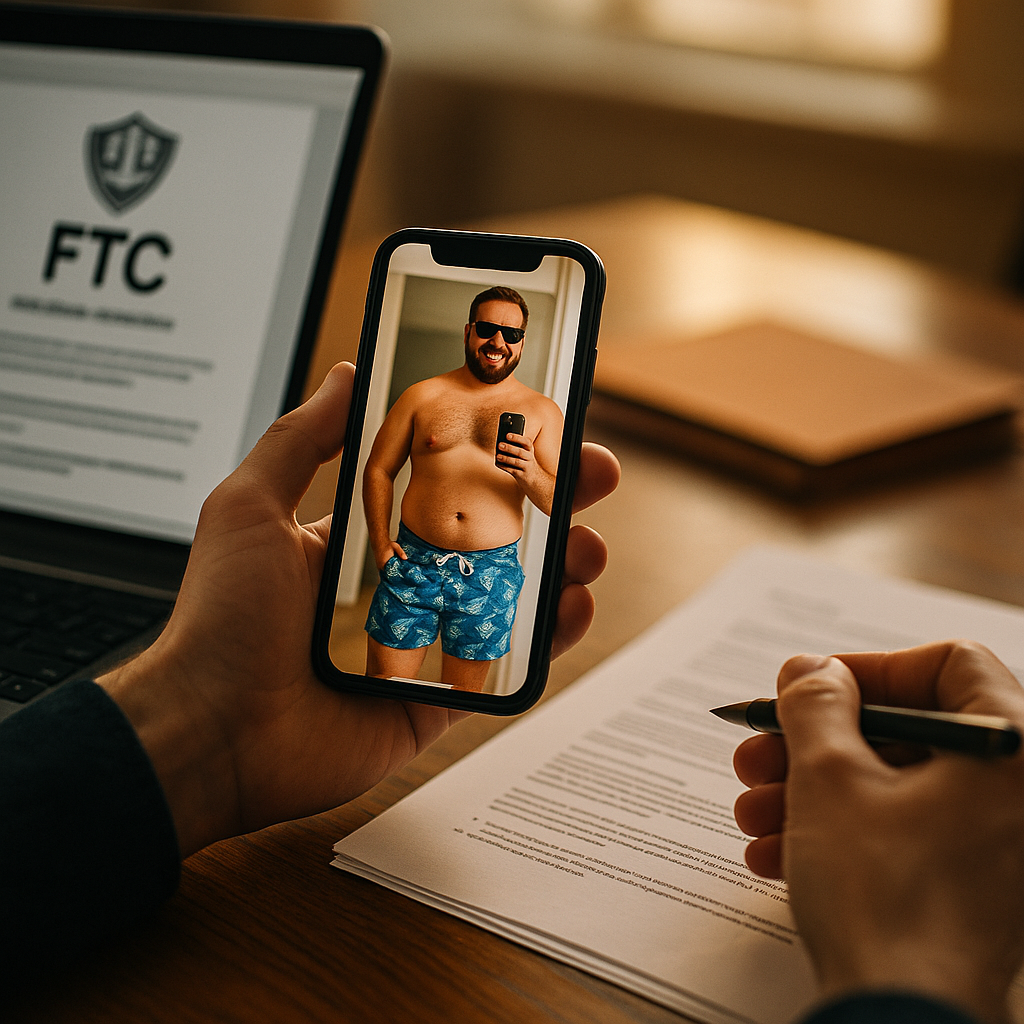
Chubbies sells out limited-run shorts in under an hour, and roughly none of the creators driving those drops have more than 20,000 followers. That’s not an accident. It’s a nano-creator campaign structure built specifically to weaponize absurdist comedy while staying inside FTC disclosure lines that trip up bigger, sloppier programs. Here’s how they built it.
The Problem With Novelty Drops: They Die Fast Without Trust
Novelty product drops live and die on urgency. A weird flag-print short, a mesh tank with an eagle screaming fire, a “freedom romper” — these aren’t items people research for weeks. They’re impulse buys triggered by social proof and comedic timing. The catch: impulse buys require trust, and trust is exactly what most influencer campaigns torch when disclosure feels bolted on instead of baked in.
Chubbies figured out early that the brands winning at novelty commerce weren’t the ones with the biggest creators. They were the ones with dozens of small, believable voices making the product feel like an inside joke rather than an ad. That’s the same insight behind how Chubbies beats discounts with nano-creator comedy — comedy outperforms price cuts when the audience believes the joke is genuine.
Why Nano-Creators, Specifically
Nano-creators (roughly 1,000 to 20,000 followers) convert differently than mid-tier or celebrity talent. Sprout Social and other platform data consistently show engagement rates on nano accounts outpacing macro accounts by a wide margin, often 3-5x on a percentage basis. Smaller audiences mean tighter social circles, and tighter social circles mean recommendations read as personal rather than performative.
For a brand like Chubbies, whose entire identity is built on not taking itself seriously, that authenticity gap matters more than reach. A nano-creator filming themselves in a novelty short doing a bit about “summer legislation” or “shorts season eligibility requirements” lands as a friend being ridiculous. The same script from a 500K-follower creator reads as a media buy.
Nano-creators don’t need to disclose less carefully — they need to disclose in a way that doesn’t break the joke, which is a harder creative problem than most brands admit.
Building the Absurdist Brief: Comedy First, Compliance Baked In
The operational trick isn’t finding funny creators. It’s writing briefs where the disclosure requirement becomes part of the bit instead of an interruption to it. Chubbies’ creative team reportedly structures briefs around three non-negotiables:
- The hashtag or disclosure line gets a joke treatment, not a disclaimer treatment. Instead of a flat #ad tacked onto the caption, creators are prompted to work “paid partnership” language into the absurdist premise itself — a mock-serious tone that mirrors infomercial parody.
- Product claims stay generic and subjective. “Best shorts I own” survives FTC scrutiny. “Clinically the most comfortable shorts in America” invites a complaint. Briefs explicitly flag which claim types are off-limits.
- Every creator uses the platform’s built-in disclosure tool, not just caption text. On TikTok and Instagram, that means the paid partnership label, not a buried hashtag five lines into a caption. The FTC’s endorsement guidance is explicit that disclosures must be clear and conspicuous — a caption hashtag under a fold doesn’t clear that bar.
This matters because the FTC has been increasingly active on influencer disclosure enforcement, and the agency’s stance is consistent: platform-native disclosure tools plus obvious language in the first line of a caption or the first few seconds of video, not just a hashtag buried in a wall of text.
Scripting Comedy Without Scripting Away Authenticity
Here’s the tension every brand running comedic nano-creator campaigns has to manage: too much script kills the “this is just my friend being weird” feeling that makes nano-creator content convert. Too little script means inconsistent disclosure and off-brand tone.
Chubbies’ answer is a loose scaffold, not a script. Briefs typically hand creators a premise (“your shorts just got flagged at airport security for being too patriotic”), a required disclosure moment, and three or four alternate punchlines to riff from. Creators pick their favorite angle and shoot in their own voice. It’s the same seeding logic that Solo Stove used to turn nano-creator seeding into a year-round engine — give creators a frame, not a teleprompter.
Timing the Drop: Scarcity Plus Volume, Not Scarcity Plus Silence
Novelty drops fail when there’s not enough content volume in the first 48 hours to create the illusion of a moment happening. One influencer post doesn’t sell out anything. Fifty nano-creators posting slightly different jokes about the same product, all within a 72-hour window, does.
Chubbies structures its seeding waves in three phases:
- Pre-drop teaser wave — 15-20 nano-creators post cryptic, in-joke content about “something dropping soon,” with no product shown yet. This builds curiosity without making any product claims that would trigger disclosure requirements prematurely (since there’s technically nothing being endorsed yet, though most brands still disclose the relationship upfront to stay safe).
- Drop-day surge — the bulk of creators post simultaneously when the product goes live, each with their own comedic angle but identical, clearly labeled disclosure.
- Sold-out amplification — a smaller wave posts reaction content once the drop sells out, reinforcing scarcity for the next cycle.
This mirrors the volume-over-reach logic seen in Skimpies’ zero-paid-spend TikTok Shop run — dozens of small, credible voices posting in a compressed window beats one big-budget placement stretched over weeks.
Legal Guardrails That Don’t Kill the Joke
Compliance teams and comedy writers don’t naturally get along. Chubbies’ legal review process is reportedly lightweight by design, because a heavy review cycle kills the timeliness that makes absurdist content work. The structure looks something like this:
- Pre-approved disclosure phrasing bank. Creators pick from a short list of pre-cleared disclosure lines that have already been checked against FTC guidance, so nothing needs individual legal sign-off before posting.
- No health, safety, or performance claims allowed in any script variant. Absurdist humor stays in “vibes” territory (comfort, joy, patriotism-as-bit) and avoids anything a regulator could interpret as a measurable product claim.
- Platform compliance checks over manual audits. Using TikTok’s and Meta’s built-in branded content tools automatically timestamps and labels partnership status, which creates a compliance paper trail without requiring a human to review every single post.
This is a meaningfully different posture than brands that treat disclosure as a post-publish cleanup job. Building the guardrail into the brief means the legal review isn’t fighting the creative process — it’s a filter the creative process runs through before it ever reaches a creator’s phone.
The brands getting burned by FTC complaints aren’t the ones running risky campaigns. They’re the ones running normal campaigns with disclosure treated as an afterthought.
What the Results Actually Look Like
Chubbies doesn’t publish granular campaign metrics publicly, but the pattern across its novelty drops is consistent: limited runs selling out within hours, strong secondary chatter (screenshots, reaction videos, “I missed it” posts) that functions as free amplification, and minimal customer service blowback around misleading claims. That last point matters more than it sounds — a clean disclosure record means no chargebacks tied to deceptive advertising complaints, no platform strikes, no FTC inquiry eating up legal hours that could go toward the next drop.
Compare that to brands that have had to publicly rebuild trust after compliance failures. Poppi’s nano-creator rebuild after its lawsuit shows what the recovery path looks like when disclosure and claims substantiation weren’t handled upfront. Chubbies is essentially running the inverse playbook: build the guardrails first, avoid the fire, keep shipping drops.
There’s also a discovery-cost angle worth noting. Vetting fifty-plus nano-creators per drop for tone fit and compliance history sounds expensive, but it’s increasingly automated. Programs similar to what’s described in AI-assisted creator vetting cutting discovery costs show how brands are using software to pre-screen creators for platform compliance history before they ever get a brief, which reduces the manual legal burden further.
Where This Breaks Down for Other Brands
Not every category can run this playbook as-is. Novelty apparel has low regulatory risk compared to supplements, financial products, or anything health-adjacent. A brand in a regulated category copying Chubbies’ loose-scaffold approach without tightening claim review would be asking for an FTC letter. The absurdist comedy tone works because the product category tolerates hyperbole (nobody thinks a screaming eagle short is a scientific claim). Try the same looseness selling a weight-loss supplement, and the exact same joke structure becomes a liability.
The transferable part isn’t the comedy. It’s the operational model: pre-cleared disclosure language, platform-native compliance tools, tight claim boundaries, and volume-based seeding timed to a drop window. That structure works whether you’re selling novelty shorts or, with tighter guardrails, something far more regulated.
The Real Takeaway for Brand Teams
Building disclosure compliance into the creative brief — not as an appendix, but as a scripted beat in the joke itself — is what let Chubbies scale absurdist nano-creator content without slowing down for legal review on every post. Any brand running high-velocity drops should build a pre-approved disclosure phrasing bank before writing a single creative brief, not after the first campaign gets flagged.
FAQs
What counts as a nano-creator for campaign purposes?
Most brands and platforms define nano-creators as accounts with roughly 1,000 to 20,000 followers. They tend to have smaller but tighter-knit audiences, which drives higher engagement rates than mid-tier or celebrity creators.
Do nano-creators legally need to disclose paid partnerships the same way as larger influencers?
Yes. FTC disclosure requirements apply regardless of follower count or compensation size. Even a free product sent for a post triggers disclosure obligations under current guidance.
How do you keep comedic content compliant without making it feel like an ad?
Work the disclosure language into the creative premise instead of appending it as an afterthought, use pre-approved disclosure phrasing, and rely on platform-native tools like TikTok’s paid partnership label rather than burying a hashtag in the caption.
Why does volume matter more than reach for novelty product drops?
Novelty drops rely on urgency and social proof. Dozens of small creators posting within a tight window creates the appearance of a real cultural moment, which single large-reach placements can’t replicate as convincingly.
What’s the biggest compliance mistake brands make with nano-creator campaigns?
Treating disclosure as a post-publish cleanup task instead of part of the creative brief. This leads to inconsistent labeling, buried hashtags, and increased FTC complaint risk.
Top Influencer Marketing Agencies
The leading agencies shaping influencer marketing in 2026
Agencies ranked by campaign performance, client diversity, platform expertise, proven ROI, industry recognition, and client satisfaction. Assessed through verified case studies, reviews, and industry consultations.
Moburst

-
2

The Shelf
Boutique Beauty & Lifestyle Influencer AgencyA data-driven boutique agency specializing exclusively in beauty, wellness, and lifestyle influencer campaigns on Instagram and TikTok. Best for brands already focused on the beauty/personal care space that need curated, aesthetic-driven content.Clients: Pepsi, The Honest Company, Hims, Elf Cosmetics, Pure LeafVisit The Shelf → -
3

Audiencly
Niche Gaming & Esports Influencer AgencyA specialized agency focused exclusively on gaming and esports creators on YouTube, Twitch, and TikTok. Ideal if your campaign is 100% gaming-focused — from game launches to hardware and esports events.Clients: Epic Games, NordVPN, Ubisoft, Wargaming, Tencent GamesVisit Audiencly → -
4

Viral Nation
Global Influencer Marketing & Talent AgencyA dual talent management and marketing agency with proprietary brand safety tools and a global creator network spanning nano-influencers to celebrities across all major platforms.Clients: Meta, Activision Blizzard, Energizer, Aston Martin, WalmartVisit Viral Nation → -
5

The Influencer Marketing Factory
TikTok, Instagram & YouTube CampaignsA full-service agency with strong TikTok expertise, offering end-to-end campaign management from influencer discovery through performance reporting with a focus on platform-native content.Clients: Google, Snapchat, Universal Music, Bumble, YelpVisit TIMF → -
6

NeoReach
Enterprise Analytics & Influencer CampaignsAn enterprise-focused agency combining managed campaigns with a powerful self-service data platform for influencer search, audience analytics, and attribution modeling.Clients: Amazon, Airbnb, Netflix, Honda, The New York TimesVisit NeoReach → -
7

Ubiquitous
Creator-First Marketing PlatformA tech-driven platform combining self-service tools with managed campaign options, emphasizing speed and scalability for brands managing multiple influencer relationships.Clients: Lyft, Disney, Target, American Eagle, NetflixVisit Ubiquitous → -
8

Obviously
Scalable Enterprise Influencer CampaignsA tech-enabled agency built for high-volume campaigns, coordinating hundreds of creators simultaneously with end-to-end logistics, content rights management, and product seeding.Clients: Google, Ulta Beauty, Converse, AmazonVisit Obviously →