


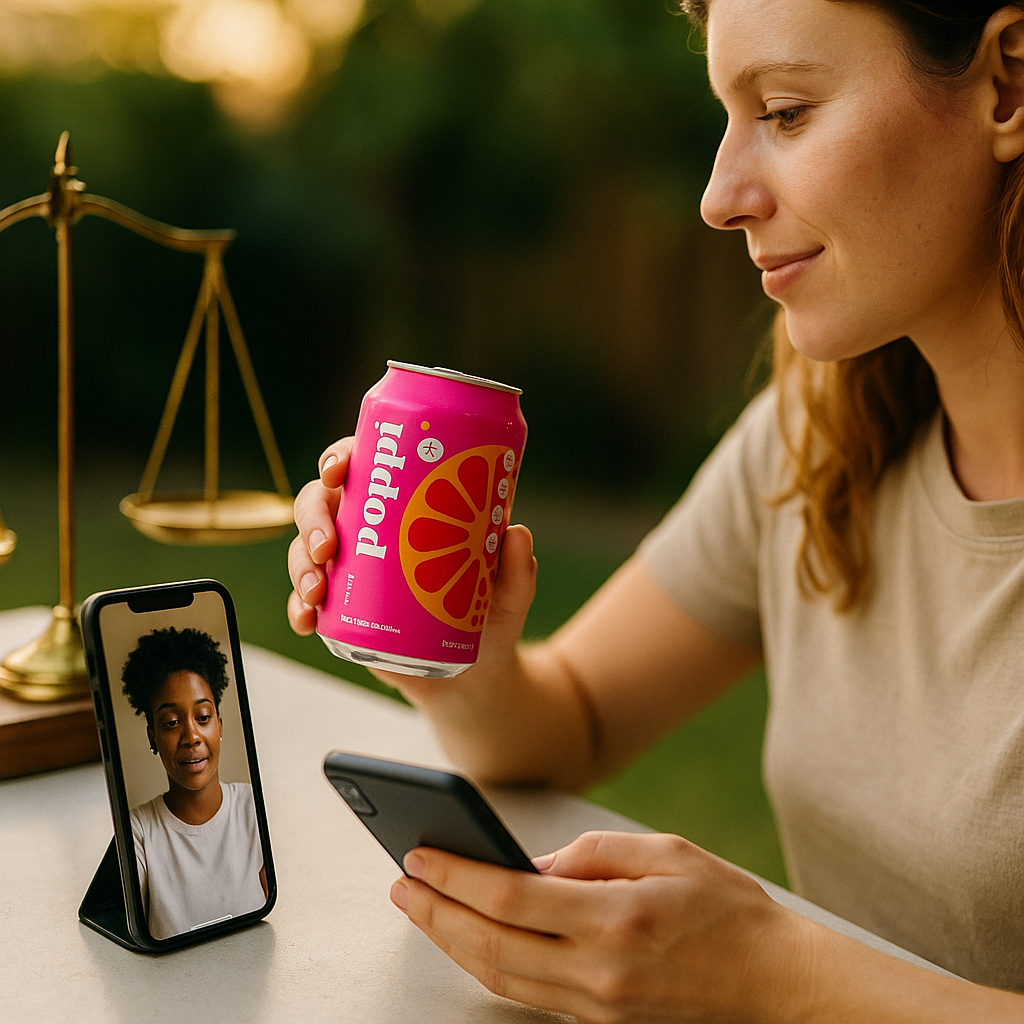
A $8.9 million class-action settlement over gut-health claims should have sunk a soda brand’s credibility overnight. Instead, Poppi turned nano-creator content into its fastest trust-recovery mechanism, and marketers are still unpacking why it worked. If you’re running a brand that’s ever faced a compliance scare, this is the case study to study closely.
The Problem Wasn’t the Lawsuit. It Was the Silence Risk
When Poppi settled its class-action lawsuit over unsubstantiated “gut health” and prebiotic claims, the brand faced a familiar crisis playbook: legal teams wanting silence, comms teams wanting a scripted apology, and a customer base that had built genuine habits around the product. The temptation in most boardrooms is to go quiet, let lawyers handle the messaging, and wait for news cycles to move on.
Poppi did something different. Rather than retreat into corporate statements, the brand leaned into the exact channel that built it in the first place: everyday people filming themselves with the product, unscripted, at home.
That’s not an accident. It’s a calculated bet on a specific truth about post-crisis marketing: audiences don’t trust brands right after a scandal. They trust other people who are still buying the thing.
Trust doesn’t get rebuilt through better copywriting. It gets rebuilt through repeated, low-stakes proof that real people still choose the product.
Why Nano-Creators, Not Celebrity Damage Control
Most brands in crisis mode reach for the biggest names they can afford. Bigger reach feels safer. It isn’t. A celebrity endorsement after a legal settlement reads as paid reputation laundering, and audiences are fluent enough in sponsored content to spot it instantly.
Poppi instead scaled up its existing nano-creator program: people with 1,000 to 20,000 followers, filming in actual kitchens, actual gym bags, actual grocery hauls. No studio lighting. No brand-approved scripts. Just soda in the fridge next to the oat milk.
This mirrors a pattern seen across other consumer brands recovering from trust deficits or breaking into skeptical categories. Chamberlain Coffee’s nano-creator retail push and Liquid Death’s nano-creator strategy both leaned on the same principle: scale of authenticity beats scale of reach when credibility is the currency you’re short on.
The math backs this up. Nano-creators typically post engagement rates between 5% and 8%, compared to under 1% for mega-influencers and celebrities, according to data frequently cited by eMarketer. When the goal is rebuilding believability rather than maximizing impressions, that engagement gap matters more than follower count ever could.
What “Kitchen-Table Content” Actually Means
The phrase sounds soft, almost accidental. It wasn’t. Poppi’s creator briefs (based on patterns visible in the resulting content) appear to have prioritized specific, repeatable settings: home kitchens, car cupholders, office desks, gym bags. No sets. No brand backdrops. The visual grammar signals “this is just what I drink,” not “this is a paid campaign.”
That distinction is everything when your last major headline was a lawsuit about false health claims.
Contrast this with how the brand communicated pre-settlement, when polished founder content and health-claim-forward messaging dominated its feed. The pivot to lo-fi, creator-generated content wasn’t just an aesthetic choice. It was a legal and reputational hedge: nano-creators talking about taste, ritual, and habit sidestep the exact claims that triggered the lawsuit in the first place.
The Compliance Angle Brands Keep Missing
Here’s the part that should matter most to anyone running a compliance-sensitive category: supplements, functional beverages, wellness, fintech, health tech. Poppi’s post-settlement creator content noticeably shifted away from specific health outcome claims (“supports gut health,” “aids digestion”) toward experiential language (“my go-to afternoon drink,” “replaced my Diet Coke habit”).
That’s not subtle. It’s a direct response to what got them sued.
Brand and legal teams working together on creator briefs after a compliance incident should treat this as a template. The FTC’s endorsement guidelines already require that influencer claims be substantiated the same way brand claims are; a class-action settlement is a very expensive reminder of that rule. Nano-creator programs that emphasize taste, routine, and personal preference over efficacy claims are lower-risk by design, not just by luck.
If your creators can’t legally say what your ad copy used to say, that’s not a creative constraint. It’s a compliance signal you should have caught earlier.
This is also where AI-assisted creator vetting tools earn their budget line. Brands recovering from a claims-related incident can’t afford another round of creators freelancing health assertions on camera. Programs like the one detailed in this supplement brand’s AI vetting overhaul show how automated screening for language, not just audience fit, is becoming standard practice in regulated-adjacent categories.
Volume Over Virality
Poppi didn’t need one viral hit. It needed hundreds of small, believable signals stacking up in people’s feeds over months. That’s a fundamentally different KPI structure than most influencer campaigns run on.
Where a typical campaign optimizes for reach and a single breakout moment, trust-rebuilding campaigns optimize for frequency and distribution across many small, credible sources. One nano-creator video won’t move a skeptical customer. Fifteen of them, from fifteen different kitchens, over six weeks, might.
This is the same logic behind Solo Stove’s year-round nano-creator seeding engine and Ryobi’s nano-creator channel strategy, both of which prioritize sustained creator volume over one-off campaign spikes. The difference with Poppi is the stakes: this wasn’t about driving incremental sales, it was about proving the brand hadn’t lied to its customers.
Marketing teams tracking this kind of recovery campaign should watch sentiment metrics as closely as sales metrics. Sprout Social and similar social listening platforms allow brands to track share-of-voice sentiment shifts week over week, which is a far more honest signal of trust recovery than short-term revenue bounce-back.
Did It Actually Work?
Poppi’s retail distribution held steady through the settlement period, and the brand’s social engagement numbers on nano-creator content reportedly outpaced its pre-settlement branded posts. That’s the real tell. When user-generated and creator-driven content starts outperforming brand-owned content during a crisis window, it means the audience trusts the messenger more than the microphone.
It’s worth being honest about the limits here too: nano-creator content didn’t erase the lawsuit or the settlement terms. It didn’t stop critics from citing the case as a cautionary tale about wellness marketing overreach. What it did was give loyal customers and lurkers alike a reason to keep the can in their fridge.
The Bigger Lesson for Brand and Agency Teams
Most crisis communications training still assumes the fix is a statement. A press release, a founder video, a carefully worded apology. Poppi’s approach suggests the fix is often distributed proof, not centralized messaging.
If your brand ever faces a claims-related backlash, regulatory inquiry, or class-action settlement, the instinct to control the narrative through owned channels is understandable but often counterproductive. Owned channels are exactly where skepticism is highest. Third-party, low-production, high-frequency content from people who look like your actual customer base carries credibility that no press release can buy.
That said, this only works if the underlying product still delivers what people actually want from it, separate from the disputed claims. Poppi’s prebiotic soda still tastes good and still fits into people’s daily routines. Nano-creator content amplifies existing trust; it doesn’t manufacture trust from nothing. Brands hoping to use this playbook without a genuinely satisfying product underneath it will find the tactic falls flat fast.
For teams building or rebuilding creator programs in sensitive categories, a few operational takeaways stand out:
- Shift creator briefs away from efficacy claims toward experiential, habit-based language, especially post-incident.
- Prioritize creator volume and frequency over single high-reach placements when the goal is trust repair.
- Build legal review into creator content approval, not just brand content approval.
- Track sentiment and share-of-voice, not just sales, as the primary success metric during recovery windows.
- Treat kitchen-table, lo-fi production value as a strategic choice, not a budget compromise.
The category-wide implication is bigger than one soda brand. As functional beverages, supplements, and wellness tech face growing regulatory scrutiny, more brands will find themselves needing a trust-recovery playbook. Nano-creator content, done with tighter compliance guardrails than before, is emerging as the fastest and cheapest lever available.
Next step: If your brand operates in a claims-sensitive category, audit your current creator briefs this week for language that mirrors your product marketing claims too closely. That gap is where your next legal exposure — or your next trust-rebuilding opportunity — actually lives.
FAQs
What is kitchen-table nano-creator content?
It refers to unscripted, low-production content from creators with roughly 1,000 to 20,000 followers, typically filmed in everyday settings like home kitchens rather than studios. The style signals authenticity over polish, which matters most when a brand is trying to rebuild credibility after a scandal or compliance issue.
Why did Poppi shift to nano-creators after its settlement instead of using bigger influencers?
Nano-creators generally have higher engagement rates and are perceived as more trustworthy because their content reads as personal opinion rather than paid endorsement. After a health-claims lawsuit, that perceived independence was more valuable to Poppi than the reach a celebrity partnership would offer.
How does nano-creator content reduce legal or compliance risk?
When creator briefs emphasize taste, routine, and personal experience instead of specific health or efficacy claims, brands reduce the risk of creators making unsubstantiated statements that could trigger FTC scrutiny or further legal action. This is especially important for supplement, wellness, and functional beverage brands operating under close regulatory attention.
What metrics should brands track during a trust-recovery campaign?
Sentiment analysis and share-of-voice trends tend to be more reliable indicators of trust recovery than short-term sales figures. Brands should monitor whether creator-generated content is outperforming owned brand content, which signals the audience trusts third-party voices more than brand messaging during the recovery window.
Can nano-creator content alone fix a damaged brand reputation?
No. It amplifies existing product trust rather than creating it from scratch. The approach works best when the underlying product still satisfies customers independent of the disputed claims; without that foundation, creator content will not sustainably repair reputation.
FAQPage Schema
Top Influencer Marketing Agencies
The leading agencies shaping influencer marketing in 2026
Agencies ranked by campaign performance, client diversity, platform expertise, proven ROI, industry recognition, and client satisfaction. Assessed through verified case studies, reviews, and industry consultations.
Moburst

-
2

The Shelf
Boutique Beauty & Lifestyle Influencer AgencyA data-driven boutique agency specializing exclusively in beauty, wellness, and lifestyle influencer campaigns on Instagram and TikTok. Best for brands already focused on the beauty/personal care space that need curated, aesthetic-driven content.Clients: Pepsi, The Honest Company, Hims, Elf Cosmetics, Pure LeafVisit The Shelf → -
3

Audiencly
Niche Gaming & Esports Influencer AgencyA specialized agency focused exclusively on gaming and esports creators on YouTube, Twitch, and TikTok. Ideal if your campaign is 100% gaming-focused — from game launches to hardware and esports events.Clients: Epic Games, NordVPN, Ubisoft, Wargaming, Tencent GamesVisit Audiencly → -
4

Viral Nation
Global Influencer Marketing & Talent AgencyA dual talent management and marketing agency with proprietary brand safety tools and a global creator network spanning nano-influencers to celebrities across all major platforms.Clients: Meta, Activision Blizzard, Energizer, Aston Martin, WalmartVisit Viral Nation → -
5

The Influencer Marketing Factory
TikTok, Instagram & YouTube CampaignsA full-service agency with strong TikTok expertise, offering end-to-end campaign management from influencer discovery through performance reporting with a focus on platform-native content.Clients: Google, Snapchat, Universal Music, Bumble, YelpVisit TIMF → -
6

NeoReach
Enterprise Analytics & Influencer CampaignsAn enterprise-focused agency combining managed campaigns with a powerful self-service data platform for influencer search, audience analytics, and attribution modeling.Clients: Amazon, Airbnb, Netflix, Honda, The New York TimesVisit NeoReach → -
7

Ubiquitous
Creator-First Marketing PlatformA tech-driven platform combining self-service tools with managed campaign options, emphasizing speed and scalability for brands managing multiple influencer relationships.Clients: Lyft, Disney, Target, American Eagle, NetflixVisit Ubiquitous → -
8

Obviously
Scalable Enterprise Influencer CampaignsA tech-enabled agency built for high-volume campaigns, coordinating hundreds of creators simultaneously with end-to-end logistics, content rights management, and product seeding.Clients: Google, Ulta Beauty, Converse, AmazonVisit Obviously →