


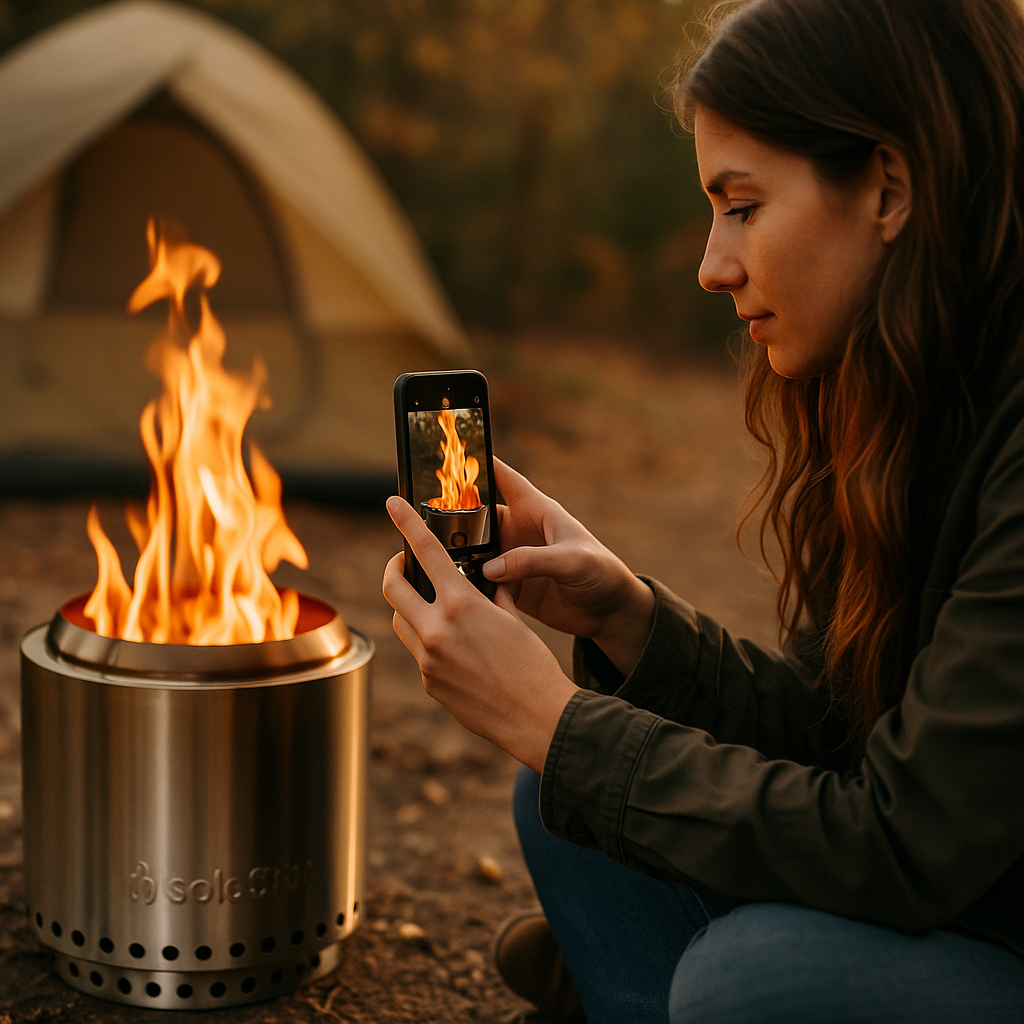
One smokeless fire pit demo. Zero paid media. A sales curve that now spikes every fall like clockwork. If you think nano-creator seeding is just a low-budget consolation prize for brands that can’t afford celebrity talent, Solo Stove’s multi-season run should change your mind.
Most fire pit brands treat influencer marketing as a seasonal on-off switch: spend heavy in September and October, go dark the rest of the year. Solo Stove did something smarter. It built a nano-creator system that compounds, generating fresh demand content in every quarter, not just backyard season.
The Problem With Seasonal Product Marketing
Outdoor living products have a brutal demand curve. Fire pits, patio heaters, string lights — sales cluster around a six-to-eight week window before the weather turns. Brands typically respond by dumping budget into paid social right before peak season, hoping short-term reach converts into cart adds. It works, sort of. But it resets to zero every year.
Solo Stove’s leadership team recognized this trap early. A single viral demo video — showing the smokeless design in action, flames without the eye-watering smoke everyone expects from a backyard fire — proved there was an evergreen hook buried in the product itself. The smokeless mechanism isn’t a seasonal feature. It’s a permanent point of differentiation that works just as well in a February product comparison video as it does in an October bonfire clip.
That insight reframed the entire strategy. Instead of chasing seasonal spikes, Solo Stove built infrastructure to generate proof-of-product content year-round, using ordinary customers rather than professional talent.
A single smokeless demo clip isn’t a campaign asset — it’s a template. Solo Stove treated it as the seed for hundreds of near-identical, creator-specific variations released across four seasons.
From One Demo to a Repeatable Content Formula
Here’s the part most brands miss: virality isn’t the goal, replicability is. Solo Stove didn’t try to manufacture another viral hit. It reverse-engineered what made the first demo work, then handed that formula to a wide bench of nano-creators (typically 1,000 to 15,000 followers) who could each produce their own version.
The formula was simple and format-agnostic:
- Show the “smoke test” — light the fire, capture the moment friends expect smoke and get none.
- Frame it in a real backyard, patio, or campsite, not a studio.
- Let the reaction — the surprised laugh, the “wait, that’s it?” — carry the emotional beat.
- Keep captions short, native to platform, and free of scripted brand language.
Nano-creators received product in exchange for content rights, not flat cash fees in most cases. That’s a meaningfully different economics model than paying a mid-tier influencer $5,000 for a single post. Solo Stove could seed hundreds of creators for the cost of a handful of macro-influencer contracts, and because the format was proven, hit rates on usable content stayed high.
This is the same operating logic covered in our earlier breakdown of how Solo Stove turned nano-creator seeding into a year-round engine — volume and consistency beat one-off virality almost every time.
Why Nano-Creators Outperformed Bigger Names Here
Brand teams often default to reach as the primary selection filter. Bigger audience, bigger impact — or so the logic goes. Solo Stove’s data suggested otherwise for this category.
Fire pits are a considered purchase in the $200-$900 range. Buyers want proof it actually works before committing, not aspirational lifestyle imagery. Nano-creators, precisely because their audiences are smaller and closer, deliver something macro talent structurally can’t: perceived objectivity. When a creator with 4,000 followers posts an unscripted reaction to a smokeless fire pit, their audience reads it as a genuine test, not an ad. HubSpot’s research on trust in marketing has repeatedly found peer recommendations outperform branded content on credibility, and fire pits are exactly the kind of tactile, skepticism-inducing product where that gap matters most.
There’s also a compounding distribution effect. One nano-creator post might reach 3,000 people. But when 300 nano-creators each post their own version, the aggregate reach rivals — or exceeds — a single macro deal, while producing hundreds of unique creative assets Solo Stove could repurpose across paid social, email, and product pages.
This mirrors patterns seen in other durable-goods categories. Ryobi’s nano-creator seeding program and YETI’s ad-free cooler strategy both lean on the same principle: tactile, demo-able products convert better through perceived-authentic third-party proof than through polished brand advertising.
Turning One Season Into Four
The real innovation wasn’t the seeding model — plenty of brands do nano-seeding. It was extending the content engine into off-season use cases that kept the smokeless hook relevant when nobody’s thinking about backyard fires.
Solo Stove’s content calendar diversified around occasion rather than weather:
- Spring: patio setup and outdoor entertaining prep content, positioning the fire pit as part of a broader outdoor refresh.
- Summer: camping and travel-adjacent use cases, tapping smaller portable product lines.
- Fall: the traditional peak — bonfire nights, tailgates, holiday gatherings.
- Winter: cold-weather outdoor living, patio heaters, gifting content around the holidays.
Each season got its own creator brief but reused the same underlying proof point: no smoke, no excuses. That consistency mattered. Audiences saw a coherent brand story instead of four disconnected campaigns, and Solo Stove’s internal teams could track which seasonal variant of the demo format performed best without changing the measurement framework each quarter.
This kind of format-first, occasion-flexible thinking shows up across other seeding-led brands too — Liquid Death’s nano-creator approach similarly reuses a core creative hook (shock value over a beverage category nobody expects excitement from) across wildly different content contexts.
What the Numbers Actually Suggest
Solo Stove doesn’t publish granular creator-program ROI, and any brand claiming exact attribution from organic social content should be treated with skepticism — multi-touch attribution across owned, earned, and paid channels remains genuinely hard, even with modern MMM tools. But directionally, the signals are strong.
The category itself is growing. Statista’s outdoor living market data shows continued expansion in North American backyard and outdoor product spend, and Solo Stove has consistently outpaced generic category growth during peak seasons since the smokeless demo format took off. eMarketer’s influencer marketing spend forecasts also point to nano and micro tiers capturing a growing share of brand budgets specifically because CPMs on macro talent have climbed while performance on nano content has held steady or improved.
For brand teams building the budget case internally, the argument isn’t “nano-creators are trendy.” It’s a unit economics argument: lower cost per asset, higher perceived trust, and content that has a longer usable shelf life because it isn’t tied to a single celebrity’s brand risk or contract window.
The real ROI story isn’t reach — it’s asset velocity. Hundreds of creators generating hundreds of demo variations gives Solo Stove a content library deep enough to fuel paid social, email, and PDP pages without a single new production shoot.
Operational Lessons for Brand and Agency Teams
A few things worth stealing for your own program:
- Identify the repeatable proof moment. Every product has one demonstrable, camera-friendly moment that proves the core claim. Find it before you find creators.
- Brief for format, not script. Give creators the beat structure (setup, tension, payoff) and let them fill in tone and delivery. Overscripted briefs kill the authenticity that makes nano content work.
- Build a seeding cadence tied to occasions, not just seasons. Backyard products have obvious peak windows, but adjacent use cases (travel, gifting, home refresh) extend relevance year-round.
- Treat creator content as a media asset library, not just organic reach. Repurposing across paid and owned channels multiplies the value of every seeded unit.
- Track content velocity alongside engagement. How fast can you get from seeding to usable asset? That speed determines how responsive your program can be to trend shifts or new product launches.
For teams weighing whether this model transfers outside outdoor living, look at how Stanley’s tumbler seeding strategy and Duluth Trading’s workwear program applied nearly identical mechanics to completely different product categories, both landing on the same core truth: a strong, demo-able proof point plus creator volume beats reach-first influencer strategy almost every time.
Frequently Asked Questions
What made Solo Stove’s nano-creator strategy different from typical influencer seeding programs?
Solo Stove built its program around a single, repeatable proof point — the smokeless demo — and extended it across seasons and occasions rather than treating it as a one-time campaign. That gave the brand a consistent creative format it could scale across hundreds of nano-creators year-round.
Why did Solo Stove favor nano-creators over larger influencers?
Nano-creators produce content that reads as objective testing rather than paid promotion, which matters for a considered purchase like a fire pit. They’re also significantly cheaper per asset, letting Solo Stove seed at volume and generate far more usable creative than a handful of macro-influencer deals would produce.
How does a seasonal product sustain influencer content year-round?
By reframing the core product benefit around occasions instead of weather. Solo Stove tied its smokeless hook to spring patio prep, summer camping, fall bonfires, and winter gifting, keeping the same proof point relevant across all four seasons.
Can this nano-creator model work for other product categories?
Yes, provided the product has a clear, demonstrable claim that translates well on camera. Brands like YETI, Ryobi, and Duluth Trading have applied similar seeding logic to coolers, power tools, and workwear with comparable results.
What’s the biggest risk in scaling a nano-creator seeding program?
Inconsistent briefing. Without a clear format (not script) for creators to follow, content quality and message consistency degrade quickly at scale, undermining the trust advantage that makes nano-creator content work in the first place.
Frequently Asked Questions
What made Solo Stove’s nano-creator strategy different from typical influencer seeding programs?
Solo Stove built its program around a single, repeatable proof point — the smokeless demo — and extended it across seasons and occasions rather than treating it as a one-time campaign. That gave the brand a consistent creative format it could scale across hundreds of nano-creators year-round.
Why did Solo Stove favor nano-creators over larger influencers?
Nano-creators produce content that reads as objective testing rather than paid promotion, which matters for a considered purchase like a fire pit. They’re also significantly cheaper per asset, letting Solo Stove seed at volume and generate far more usable creative than a handful of macro-influencer deals would produce.
How does a seasonal product sustain influencer content year-round?
By reframing the core product benefit around occasions instead of weather. Solo Stove tied its smokeless hook to spring patio prep, summer camping, fall bonfires, and winter gifting, keeping the same proof point relevant across all four seasons.
Can this nano-creator model work for other product categories?
Yes, provided the product has a clear, demonstrable claim that translates well on camera. Brands like YETI, Ryobi, and Duluth Trading have applied similar seeding logic to coolers, power tools, and workwear with comparable results.
What’s the biggest risk in scaling a nano-creator seeding program?
Inconsistent briefing. Without a clear format (not script) for creators to follow, content quality and message consistency degrade quickly at scale, undermining the trust advantage that makes nano-creator content work in the first place.
The takeaway for brand teams: stop chasing one more viral hit and start building the format that made the first one work. Find your product’s single demonstrable proof point, brief nano-creators on structure instead of scripts, and map that proof point to occasions across every season, not just your peak window.
Top Influencer Marketing Agencies
The leading agencies shaping influencer marketing in 2026
Agencies ranked by campaign performance, client diversity, platform expertise, proven ROI, industry recognition, and client satisfaction. Assessed through verified case studies, reviews, and industry consultations.
Moburst

-
2

The Shelf
Boutique Beauty & Lifestyle Influencer AgencyA data-driven boutique agency specializing exclusively in beauty, wellness, and lifestyle influencer campaigns on Instagram and TikTok. Best for brands already focused on the beauty/personal care space that need curated, aesthetic-driven content.Clients: Pepsi, The Honest Company, Hims, Elf Cosmetics, Pure LeafVisit The Shelf → -
3

Audiencly
Niche Gaming & Esports Influencer AgencyA specialized agency focused exclusively on gaming and esports creators on YouTube, Twitch, and TikTok. Ideal if your campaign is 100% gaming-focused — from game launches to hardware and esports events.Clients: Epic Games, NordVPN, Ubisoft, Wargaming, Tencent GamesVisit Audiencly → -
4

Viral Nation
Global Influencer Marketing & Talent AgencyA dual talent management and marketing agency with proprietary brand safety tools and a global creator network spanning nano-influencers to celebrities across all major platforms.Clients: Meta, Activision Blizzard, Energizer, Aston Martin, WalmartVisit Viral Nation → -
5

The Influencer Marketing Factory
TikTok, Instagram & YouTube CampaignsA full-service agency with strong TikTok expertise, offering end-to-end campaign management from influencer discovery through performance reporting with a focus on platform-native content.Clients: Google, Snapchat, Universal Music, Bumble, YelpVisit TIMF → -
6

NeoReach
Enterprise Analytics & Influencer CampaignsAn enterprise-focused agency combining managed campaigns with a powerful self-service data platform for influencer search, audience analytics, and attribution modeling.Clients: Amazon, Airbnb, Netflix, Honda, The New York TimesVisit NeoReach → -
7

Ubiquitous
Creator-First Marketing PlatformA tech-driven platform combining self-service tools with managed campaign options, emphasizing speed and scalability for brands managing multiple influencer relationships.Clients: Lyft, Disney, Target, American Eagle, NetflixVisit Ubiquitous → -
8

Obviously
Scalable Enterprise Influencer CampaignsA tech-enabled agency built for high-volume campaigns, coordinating hundreds of creators simultaneously with end-to-end logistics, content rights management, and product seeding.Clients: Google, Ulta Beauty, Converse, AmazonVisit Obviously →