


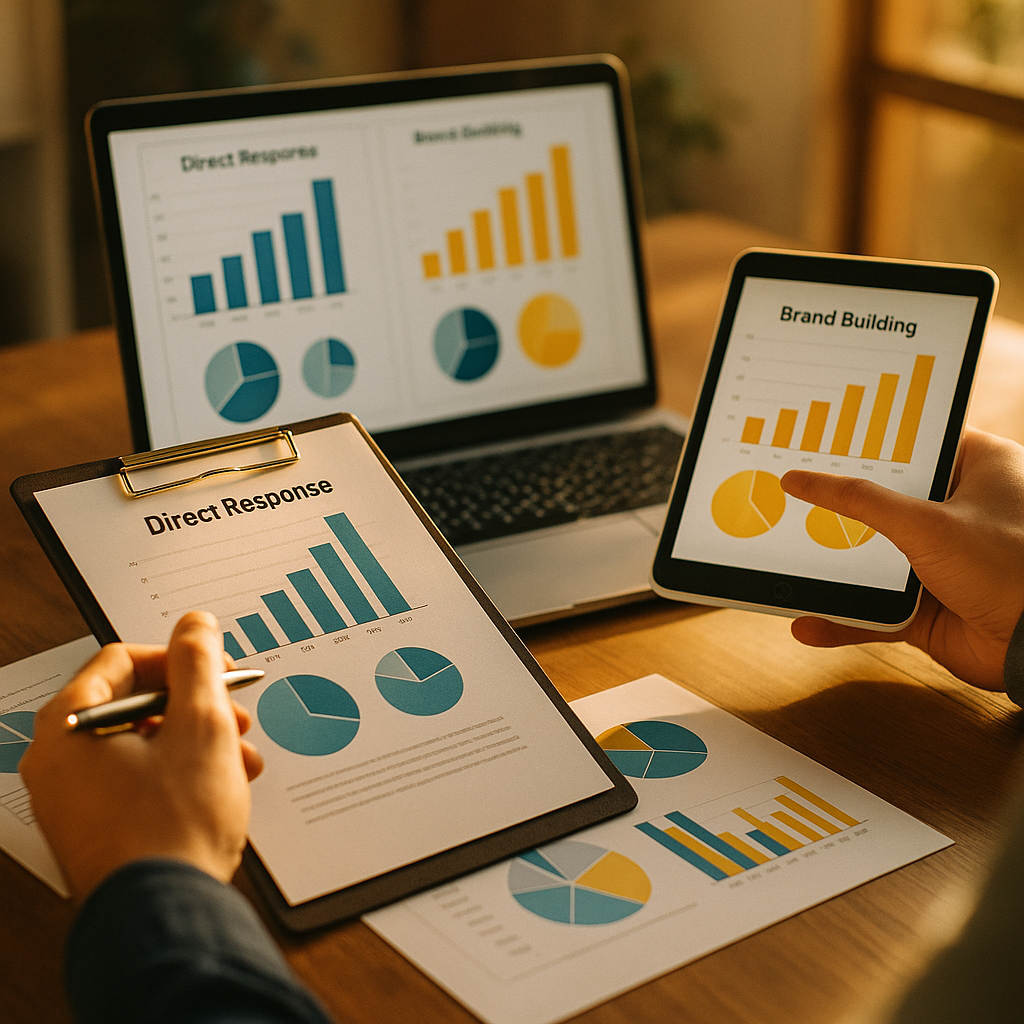
The primary keyword for this article is measuring the direct response vs. brand building impact of a campaign. Brands and agencies alike wrestle with quantifying their marketing effectiveness. Balancing direct response with brand-building objectives can be difficult, but with the right framework, you can unlock deeper insights and optimize your marketing investments. Are you tapping the full potential of your campaigns?
Understanding the Difference: Direct Response and Brand Building
To master measuring the direct response vs. brand building impact of a campaign, it’s essential to clarify these two marketing objectives. Direct response marketing is focused on driving immediate actions—think purchases, form fills, or downloads. In contrast, brand building aims to improve long-term perceptions, recall, and preference, laying the groundwork for future conversion.
Direct response campaigns often use measurable calls-to-action, such as “buy now” or “sign up today,” making short-term success more visible. Brand-building campaigns invest in storytelling, emotional resonance, and recall, which result in metrics like awareness, consideration, and favorability. Successful campaigns often blend both, and measuring their respective impacts is crucial for optimizing your marketing spend and performance.
Core Metrics for Campaign Effectiveness Evaluation
Applying the right campaign effectiveness evaluation metrics ensures that your marketing mix supports both immediate sales and long-term equity. For direct response, prioritize metrics tied to short-term outcomes:
- Click-through rates (CTR): Measures how many people engage with your ad.
- Conversion rates: Tracks actions like purchases or sign-ups.
- Cost per acquisition (CPA): Calculates the investment required to secure a customer.
- Return on Ad Spend (ROAS): Directly links ad expenditure to revenue.
For brand building, focus on:
- Brand awareness: Assessed via reach and recall surveys.
- Brand consideration: Measures intent to purchase or recommend.
- Brand equity: Includes Net Promoter Score (NPS) and overall customer sentiment.
- Share of voice: Tracks visibility versus competitors across channels.
Combining these data streams provides a multidimensional view of impact, ensuring no aspect of effectiveness is overlooked.
Building an Integrated Measurement Framework
To ensure robust integrated campaign measurement, marketers need a framework that captures both direct and brand-focused outcomes. This involves creating clear campaign objectives, mapping relevant metrics, and establishing tracking protocols from the outset.
- Define Objectives: Specify whether the campaign’s aim is response, brand lift, or both.
- Align Metrics: Tie each objective to quantifiable KPIs, as outlined above.
- Baseline Before Launch: Use pre-campaign studies to set benchmarks for awareness, consideration, and existing conversion rates.
- Multi-Touch Attribution: Track consumer interactions across touchpoints, using analytics to determine influence on both immediate and long-term goals.
- Incrementality Testing: Implement A/B or geo-holdout tests to isolate the true effect of campaign elements, distinguishing between direct response and brand lift.
- Continuous Feedback Loop: Routinely measure, analyze, and refine based on learnings for future campaigns.
Such a holistic approach empowers marketers to optimize budgets dynamically between direct and brand investments.
Best Practices for Marketing Attribution Analysis
Rigorous marketing attribution analysis is critical for accurately understanding campaign impact. While last-click attribution is tempting, it misses much of the brand-building journey. In 2025, best practices include:
- Adopt Multi-Touch Attribution (MTA): Evaluate every touchpoint in the consumer journey, not just the final click.
- Leverage Data from Multiple Sources: Integrate sales data, survey results, web analytics, and social listening for a comprehensive view.
- Control for External Factors: Use time-based analysis and market controls to factor out seasonality and other influences.
- Utilize Machine Learning Models: Modern attribution tools can assign value to complex brand uplifts as well as direct outcomes.
- Conduct Brand Lift Studies: Directly measure changes in attitudes, awareness, and purchase intent with exposed vs. unexposed groups.
The result: a clear map of how both immediate and longer-term forces contribute to campaign ROI, enabling confident, data-driven marketing strategy.
Leveraging Insights for Strategic Marketing Optimization
Once your measurement framework is delivering robust data, turn those insights into action for strategic marketing optimization. Here’s how to integrate findings for maximum impact:
- Optimize Media Allocation: Shift budget between lower-funnel (conversion-driven) and upper-funnel (awareness-driven) activities based on real impact.
- Inform Creative Strategy: Use response and brand lift data to refine messaging, visuals, and calls to action.
- Enhance Customer Experience: Identify where the journey loses or activates people; focus on high-performing touchpoints.
- Forecast Long-term Value: Blend direct and brand-related metrics to predict customer lifetime value and guide future investments.
- Drive Continuous Improvement: Make measurement an ongoing, iterative process embedded in every campaign briefing and review.
This structured, evidence-led approach ensures your campaigns consistently deliver on both short-term and long-term business goals.
The Role of Organizational Collaboration in Campaign Measurement
Successful campaign measurement requires buy-in across all marketing functions. Siloed teams risk focusing too narrowly on either direct results or brand metrics, missing the interplay that drives true value. Cross-functional collaboration—between data analysts, brand managers, media planners, and creative teams—ensures all aspects of campaign performance are considered.
Embed measurement routines in campaign planning, use shared dashboards, and make findings transparent across departments. Involve leadership to champion the dual importance of immediate ROI and brand health, so that every stakeholder is invested in a balanced measurement framework.
Conclusion
Measuring the direct response vs. brand building impact of a campaign is essential for data-driven marketing success in 2025. Adopting an integrated, evidence-based framework will help you balance short-term gains with long-term growth, ensuring your campaigns deliver outsized value for your brand. Start measuring smarter—and outpace your competition.
FAQs on Measuring Direct Response and Brand Building Impact
-
What is the primary difference between direct response and brand-building campaigns?
Direct response focuses on immediate actions like sales or lead generation, while brand-building aims to improve awareness, perception, and customer loyalty over time.
-
Can a campaign achieve both direct response and brand-building objectives?
Yes, many successful campaigns drive immediate results while building long-term brand equity. Measurement frameworks should capture both outcomes.
-
What are the best tools for campaign effectiveness evaluation in 2025?
Leading marketers use integrated analytics platforms, advanced attribution modeling tools, customer surveys, and business intelligence dashboards to measure both direct and brand impacts.
-
How often should campaign measurement and reporting occur?
Measurement should be ongoing, with frequent pulse checks during campaigns and comprehensive reviews post-campaign, to continuously optimize performance.
-
What role does organizational collaboration play in campaign measurement?
Collaboration ensures all perspectives—analytics, creative, brand, and media—are aligned, making it possible to measure and maximize both direct and brand-building outcomes.
Top Influencer Marketing Agencies
The leading agencies shaping influencer marketing in 2026
Agencies ranked by campaign performance, client diversity, platform expertise, proven ROI, industry recognition, and client satisfaction. Assessed through verified case studies, reviews, and industry consultations.
Moburst

-
2

The Shelf
Boutique Beauty & Lifestyle Influencer AgencyA data-driven boutique agency specializing exclusively in beauty, wellness, and lifestyle influencer campaigns on Instagram and TikTok. Best for brands already focused on the beauty/personal care space that need curated, aesthetic-driven content.Clients: Pepsi, The Honest Company, Hims, Elf Cosmetics, Pure LeafVisit The Shelf → -
3

Audiencly
Niche Gaming & Esports Influencer AgencyA specialized agency focused exclusively on gaming and esports creators on YouTube, Twitch, and TikTok. Ideal if your campaign is 100% gaming-focused — from game launches to hardware and esports events.Clients: Epic Games, NordVPN, Ubisoft, Wargaming, Tencent GamesVisit Audiencly → -
4

Viral Nation
Global Influencer Marketing & Talent AgencyA dual talent management and marketing agency with proprietary brand safety tools and a global creator network spanning nano-influencers to celebrities across all major platforms.Clients: Meta, Activision Blizzard, Energizer, Aston Martin, WalmartVisit Viral Nation → -
5

The Influencer Marketing Factory
TikTok, Instagram & YouTube CampaignsA full-service agency with strong TikTok expertise, offering end-to-end campaign management from influencer discovery through performance reporting with a focus on platform-native content.Clients: Google, Snapchat, Universal Music, Bumble, YelpVisit TIMF → -
6

NeoReach
Enterprise Analytics & Influencer CampaignsAn enterprise-focused agency combining managed campaigns with a powerful self-service data platform for influencer search, audience analytics, and attribution modeling.Clients: Amazon, Airbnb, Netflix, Honda, The New York TimesVisit NeoReach → -
7

Ubiquitous
Creator-First Marketing PlatformA tech-driven platform combining self-service tools with managed campaign options, emphasizing speed and scalability for brands managing multiple influencer relationships.Clients: Lyft, Disney, Target, American Eagle, NetflixVisit Ubiquitous → -
8

Obviously
Scalable Enterprise Influencer CampaignsA tech-enabled agency built for high-volume campaigns, coordinating hundreds of creators simultaneously with end-to-end logistics, content rights management, and product seeding.Clients: Google, Ulta Beauty, Converse, AmazonVisit Obviously →