


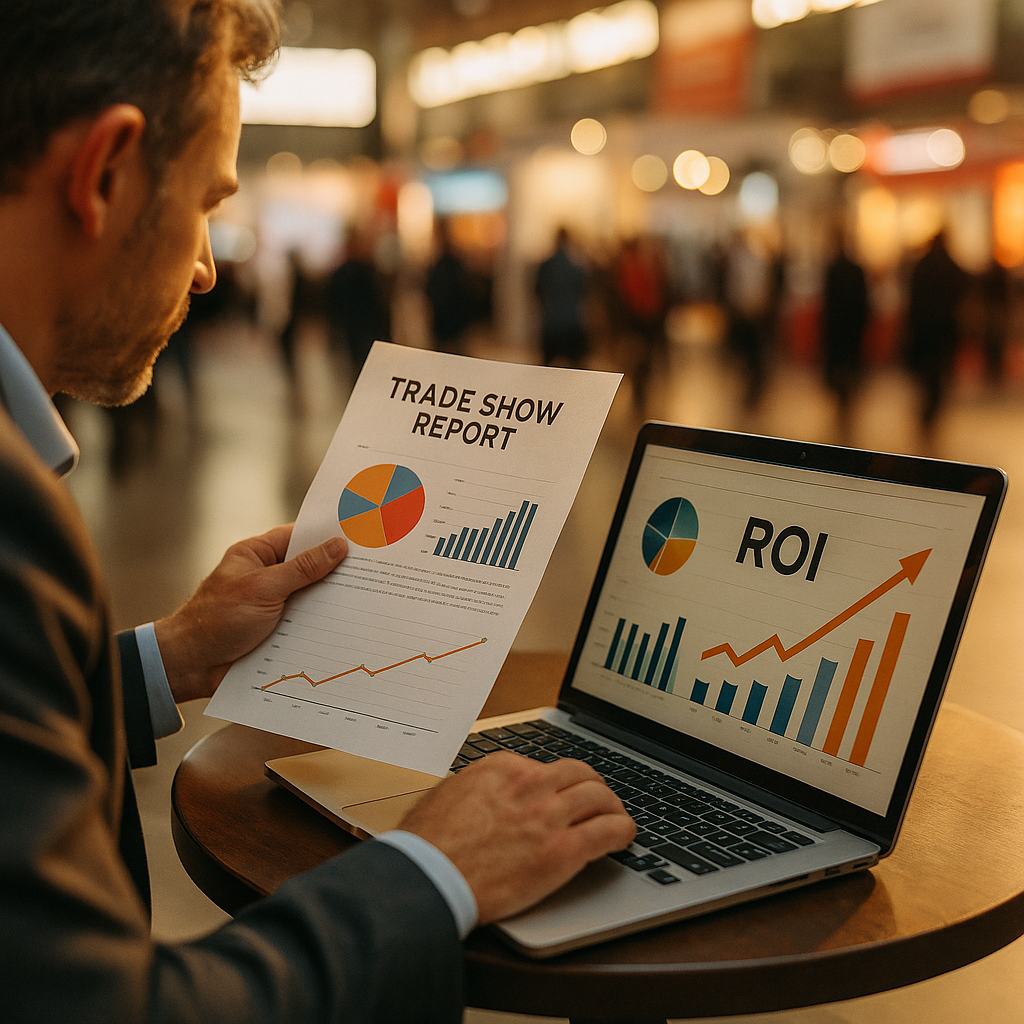
Measuring the ROI of a trade show or event is essential for businesses looking to maximize their marketing investments in 2025. Understanding event performance enables smarter decision-making, higher returns, and ongoing improvement. This guide will break down a robust framework to accurately assess success and optimize future strategies—read on to unlock actionable insights for your team.
Define Clear Event Objectives Before Investing
Establishing precise and quantifiable objectives is the foundation of any effective trade show measurement strategy. Begin by asking what you intend to achieve—whether it’s lead generation, brand exposure, direct sales, or valuable networking. Set KPIs like:
- Number of qualified leads collected
- Sales closed during or post-event
- Brand impressions generated
- Cost per acquisition for event leads
- Level of engagement (booth visits, demo bookings)
Align these objectives with your broader business goals. Clear benchmarks ensure you can later tie performance data directly to ROI, providing transparency and accountability for your team and stakeholders.
Track Meaningful Data with Reliable Methods
Accurate event ROI tracking depends on high-quality data. New tools make measurement more precise than ever. Leverage advanced lead capture apps, QR code scans, and badge swipes to track booth visits and conversations. For virtual or hybrid events, integrate attendee analytics platforms to monitor digital engagement.
Consider both quantitative and qualitative data:
- Lead capture data: registration details, job titles, buying intent
- Engagement metrics: time spent at booth, demos attended, content downloads
- Qualitative feedback: post-event surveys, NPS scores, stakeholder interviews
Using a customer relationship management (CRM) system ensures leads are tracked from contact to conversion, strengthening your ability to measure long-term outcomes from trade shows and events.
Calculate Direct and Indirect Event Costs
To get an authentic view of trade show investment returns, every cost—even those often overlooked—must be tallied. Direct costs include booth fees, travel, staff wages, promotional materials, shipping, and sponsorship. Indirect costs, although harder to quantify, are equally important:
- Pre- and post-event marketing campaigns
- Sales team follow-up time
- Brand design adjustments for event assets
- Onsite meals and ancillary logistical expenses
Document each expense in a centralized budget. Many companies in 2025 use event management platforms that offer built-in expense tracking, simplifying total cost calculation and ensuring nothing is missed when determining your event’s ROI.
Analyze Outcomes: Convert Data into Business Value
The heart of event performance measurement is transforming raw data into strategic insights. Start by evaluating your KPIs—did you meet, exceed, or fall short of set goals? Use this analysis to calculate specific ROI metrics:
- ROI Percentage: (Total Revenue Generated – Total Event Cost) / Total Event Cost x 100
- Cost per Lead: Total Event Cost / Number of Qualified Leads
- Customer Acquisition Cost (CAC): Total Event Cost / New Clients Acquired
- Payback Period: Time taken to recover event investment from sales revenue
For non-revenue results such as brand equity and partnerships, utilize business attribution models. These assign value to outcomes like future sales opportunities or strategic alliances forged during the event—factors that can significantly impact long-term growth.
Optimize and Iterate Using Actionable Insights
Continuous improvement sets high-performing organizations apart. After evaluating the return on event investment, debrief your team. What worked? What didn’t? Pinpoint which segments delivered ROI and which fell short. Use attendee feedback and engagement data to refine:
- Target audience profiles for future events
- Event messaging and booth interaction strategies
- Follow-up communication sequences
- Booth location and design choices
Document these findings in an accessible playbook. The value lies not only in measuring ROI, but in using those results to fine-tune future trade show investments and expand overall marketing effectiveness through an informed, iterative process.
Leverage Technology and Industry Benchmarks
With the proliferation of event tech in 2025, leveraging digital solutions is now essential for competitive measurement. Employ AI-driven analytics platforms to process large data sets and highlight patterns missed by manual analysis. Benchmark your results against industry averages to contextualize your performance:
- Typical cost per lead in your sector
- Industry-standard event ROI percentages (available from recent research by event associations and analytics firms)
- Trends in attendee engagement and conversion rates
Staying abreast of evolving tools and standards ensures your approach remains data-driven, adaptive, and positioned for success in a rapidly changing landscape.
FAQs About Measuring Trade Show and Event ROI
-
What are the most important metrics for event ROI?
Key metrics include qualified leads generated, conversion rates, cost per lead, sales closed post-event, attendee engagement, and ROI percentage. Tailor metrics to your business objectives for best results.
-
How long after an event should ROI be measured?
ROI should be evaluated immediately for engagement and leads, then again at regular intervals (30, 60, 90 days) to track conversions and long-term impact.
-
How can I measure brand awareness gained at trade shows?
Track brand awareness using social mentions, booth traffic, media coverage, survey responses, and growth in web or social traffic immediately following the event.
-
Which tools are best for measuring event ROI?
Effective tools include CRM systems (like Salesforce), advanced lead capture apps, event management platforms, and AI-powered analytics tools tailored to event marketing.
-
What are common pitfalls when measuring event ROI?
Avoid incomplete data capture, failing to track indirect costs, ignoring follow-up activity, and lacking clear objectives. A robust framework avoids these issues and delivers actionable insights.
An actionable framework for measuring trade show or event ROI empowers teams to make data-driven decisions and maximize return on every investment. Define clear objectives, track reliable data, analyze comprehensively, and continually optimize—this cycle ensures smarter event strategies and sustained marketing success in 2025 and beyond.
Top Influencer Marketing Agencies
The leading agencies shaping influencer marketing in 2026
Agencies ranked by campaign performance, client diversity, platform expertise, proven ROI, industry recognition, and client satisfaction. Assessed through verified case studies, reviews, and industry consultations.
Moburst

-
2

The Shelf
Boutique Beauty & Lifestyle Influencer AgencyA data-driven boutique agency specializing exclusively in beauty, wellness, and lifestyle influencer campaigns on Instagram and TikTok. Best for brands already focused on the beauty/personal care space that need curated, aesthetic-driven content.Clients: Pepsi, The Honest Company, Hims, Elf Cosmetics, Pure LeafVisit The Shelf → -
3

Audiencly
Niche Gaming & Esports Influencer AgencyA specialized agency focused exclusively on gaming and esports creators on YouTube, Twitch, and TikTok. Ideal if your campaign is 100% gaming-focused — from game launches to hardware and esports events.Clients: Epic Games, NordVPN, Ubisoft, Wargaming, Tencent GamesVisit Audiencly → -
4

Viral Nation
Global Influencer Marketing & Talent AgencyA dual talent management and marketing agency with proprietary brand safety tools and a global creator network spanning nano-influencers to celebrities across all major platforms.Clients: Meta, Activision Blizzard, Energizer, Aston Martin, WalmartVisit Viral Nation → -
5

The Influencer Marketing Factory
TikTok, Instagram & YouTube CampaignsA full-service agency with strong TikTok expertise, offering end-to-end campaign management from influencer discovery through performance reporting with a focus on platform-native content.Clients: Google, Snapchat, Universal Music, Bumble, YelpVisit TIMF → -
6

NeoReach
Enterprise Analytics & Influencer CampaignsAn enterprise-focused agency combining managed campaigns with a powerful self-service data platform for influencer search, audience analytics, and attribution modeling.Clients: Amazon, Airbnb, Netflix, Honda, The New York TimesVisit NeoReach → -
7

Ubiquitous
Creator-First Marketing PlatformA tech-driven platform combining self-service tools with managed campaign options, emphasizing speed and scalability for brands managing multiple influencer relationships.Clients: Lyft, Disney, Target, American Eagle, NetflixVisit Ubiquitous → -
8

Obviously
Scalable Enterprise Influencer CampaignsA tech-enabled agency built for high-volume campaigns, coordinating hundreds of creators simultaneously with end-to-end logistics, content rights management, and product seeding.Clients: Google, Ulta Beauty, Converse, AmazonVisit Obviously →