


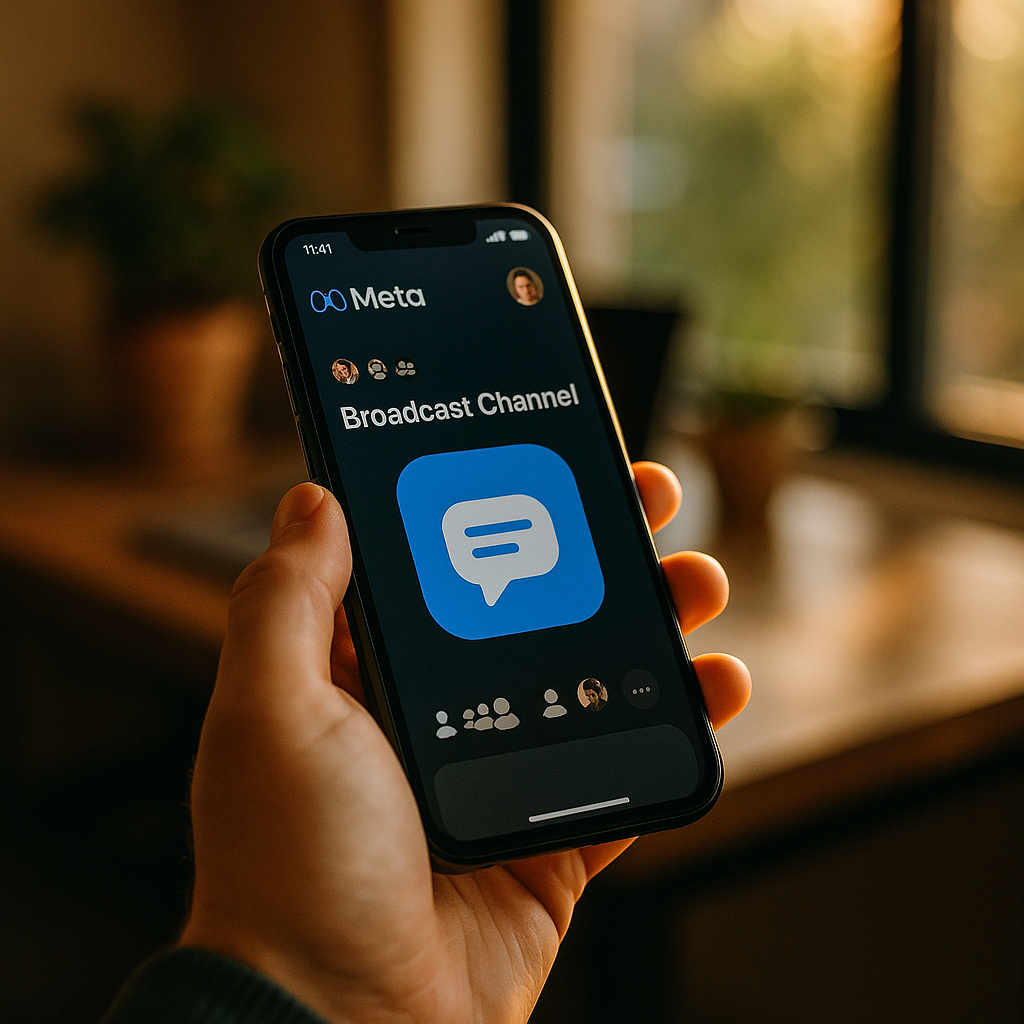
In 2025, brands and creators want faster, more reliable ways to reach audiences without fighting algorithm swings. A Playbook for Leveraging Broadcast Channels on Meta Platforms gives you a practical system to build opt-in reach, publish high-signal updates, and drive measurable actions across Instagram and Facebook. You’ll learn what to post, how to grow, and how to measure success—before your competitors standardize it.
Broadcast channels strategy: what they are and why they matter
Broadcast channels on Meta platforms are one-to-many messaging spaces where an account shares updates and subscribers receive them in a dedicated thread. Think of them as a “publisher lane” inside the app: you post, subscribers consume, and interaction happens through lightweight feedback tools (such as reactions, polls, Q&A prompts, or limited responses depending on the feature set in your region).
This matters because it solves two persistent problems: reach uncertainty and attention fragmentation. A subscriber chooses to join your channel, which makes each message more intention-based than a feed impression. It also consolidates your most important updates in a place people can return to, rather than hoping they catch a Story or reel at the right moment.
Use broadcast channels when you need:
- Fast distribution of timely updates (launches, restocks, schedule changes).
- High-signal community touchpoints (weekly insights, behind-the-scenes, priority links).
- Lower-friction engagement via polls and prompts that guide what you publish next.
They do not replace your feed content. They amplify it by giving your most engaged followers a direct line to the updates that matter.
Meta Platforms setup: launch a channel with the right foundations
Before you invite anyone, set the channel up to support clear expectations and measurable outcomes. The most common mistake is treating a channel like an unstructured group chat. Instead, position it as a dependable newsletter-style stream inside Meta.
1) Define the channel promise in one sentence
Write a simple statement you can repeat everywhere: “Join for weekly playbooks, early drops, and subscriber-only Q&A.” This becomes your north star for what you post and what you decline to post.
2) Pick a channel name that communicates value
A strong name is specific and skimmable. Examples:
- Studio Drops + Tutorials (for a creator)
- Weekly Deals + Restocks (for commerce)
- Product Updates + Roadmap (for SaaS)
3) Establish boundaries and cadence
Subscribers join for clarity, not noise. Set a posting rhythm you can sustain:
- Minimum viable cadence: 2–3 posts per week.
- High-velocity cadence: daily during launches or events, then return to baseline.
Also define what the channel is not (for example: “Not for customer support—use DMs or help center”). This reduces frustration and helps your team manage workload.
4) Align your channel with audience intent
If your Instagram audience follows for entertainment but your business goal is conversions, translate entertainment into action: share “the story behind the drop,” then a clear link, then a poll to guide the next release. Keep each post single-purpose.
Instagram broadcast channels: content formats that drive retention
Retention comes from consistency and usefulness. Broadcast channels perform best when each message is either actionable, exclusive, or time-sensitive. Build your content around repeatable formats so you never wonder what to post.
High-performing content pillars
- Subscriber-first access: early links, waitlist codes, limited restock alerts.
- Behind-the-scenes: decision breakdowns, prototypes, location scouting, team workflows.
- Mini lessons: one tactic, one example, one next step.
- Poll-led programming: let subscribers vote on the next tutorial, product color, or topic.
- Proof: quick case studies, screenshots of outcomes, before/after, testimonials (with permission).
A simple weekly publishing template
- Monday: one insight + one question (“What are you stuck on this week?”)
- Wednesday: poll (“Pick next week’s topic: A, B, or C”)
- Friday: action post (resource link, drop info, event reminder)
Write messages like a product manager, not a poet
Channel posts should be scannable. Use short paragraphs, lead with the value, and include a clear call to action when appropriate. If you include a link, explain what happens after the click so subscribers feel safe acting quickly.
Answer the follow-up before it becomes friction
When you announce something, preempt the obvious questions inside the same post or the next one: who it’s for, the price range, the deadline, how to get help, and what to do if someone missed it. This reduces repetitive DMs and protects your team’s time.
Facebook and Instagram marketing: growth tactics to build subscribers fast
Your channel will not grow on hope. You need clear entry points and repeated invitations. Treat the channel like a subscription product: every touchpoint should explain the benefit and provide a frictionless way to join.
1) Use “reason-based” invites, not generic ones
“Join my channel” is vague. Replace it with value:
- Join for restock alerts and first-access links.
- Join for weekly templates you can copy.
- Join for behind-the-scenes updates during the build.
2) Add channel CTAs to your strongest surfaces
- Instagram Stories: a recurring slide each week (“Channel-only drop details”).
- Reels: pin a comment inviting viewers to join for the checklist/resource.
- Profile: mention the channel benefit in your bio text where possible.
- Facebook Page: post periodic “channel highlights” that tease what subscribers get.
3) Run launches as “channel moments”
For launches, create a simple sequence:
- Tease: “Details go to the channel tomorrow.”
- Deliver: share the first-access link and the exact window.
- Extend: follow up with FAQs and a recap for late joiners.
4) Collaborate with aligned creators or partners
Partner swaps work when the audience overlap is real. Co-create one high-value asset (a checklist, mini training, or drop bundle) and direct both audiences to your respective channels for the follow-up. Keep it ethical: be transparent about what subscribers will receive and how often you’ll post.
5) Use scarcity carefully and honestly
Time-bound perks (like a 48-hour early link) can drive joins, but only if you deliver. Overusing urgency erodes trust and increases unsubscribes.
Community engagement: governance, trust, and brand safety
EEAT in a broadcast channel looks like: clear expertise, transparent intent, and reliable delivery. Trust is your real growth engine because subscribers can leave instantly if the channel becomes spammy or unclear.
Set a lightweight governance policy
- Posting standards: no clickbait, no bait-and-switch, no excessive repetition.
- Support boundaries: define the support path (help center, email, DM) and typical response time.
- Privacy and permissions: never share user submissions or testimonials without explicit consent.
Establish credibility signals
Show your work. If you share advice, add a quick “why this works” and when it won’t. If you share results, provide context (audience size, timeframe, constraints) to avoid misleading readers. If you recommend tools or affiliates, disclose the relationship plainly.
Plan for consistency across a team
If multiple people post, create a one-page style guide:
- Voice: direct, helpful, no hype.
- Formatting: short lead line, one key point, one CTA.
- Approval: who can post and who reviews launch-sensitive messages.
Handle mistakes in-channel
If you share the wrong link or timing, correct it quickly and clearly. A short correction post preserves trust better than quietly editing your plan elsewhere and hoping no one noticed.
Analytics and ROI: measure performance and optimize your channel
You do not need perfect attribution to run a successful channel, but you do need a measurement plan. Start with what you can measure inside Meta, then add simple external tracking for business outcomes.
Key metrics to track weekly
- Subscriber growth: net new subscribers and spikes tied to specific promotions.
- Message reach/views: are subscribers actually seeing posts?
- Poll participation: a strong proxy for relevance and retention.
- Clicks: tracked via UTM parameters or a dedicated link.
- Unsubscribes: watch for patterns after certain types of posts.
Set up simple tracking that survives platform changes
- UTMs: use consistent naming (source=meta, medium=broadcast, campaign=launch-name).
- Dedicated landing pages: one page per offer makes performance easier to interpret.
- Coupon codes: for commerce, channel-specific codes can clarify ROI.
Optimization loop (repeat every two weeks)
- Audit: identify your top 3 posts by reach/clicks and bottom 3 by unsubscribes or low engagement.
- Diagnose: was the value clear in the first line? Was the CTA specific? Was the frequency too high?
- Adjust: refine one variable at a time (cadence, post length, timing, offer clarity).
- Re-test: publish the improved version and compare outcomes.
What good looks like
A healthy channel shows steady subscriber growth, consistent message views, and predictable action on your core offers. If views are high but clicks are low, your CTA or landing page is the bottleneck. If unsubscribes spike, your targeting or expectations are misaligned—tighten your channel promise and reduce low-value posts.
FAQs: broadcast channels on Meta platforms
Are broadcast channels better than email newsletters?
They are different. Broadcast channels offer fast, in-app distribution and high visibility for timely updates. Email is stronger for long-form content, ownership, and portability. Many teams use channels for rapid alerts and email for deeper education and lifecycle messaging.
How often should I post in a broadcast channel?
Start with 2–3 posts per week and increase during launches. If you post daily, make sure each message is clearly valuable or time-sensitive. Consistency beats volume.
What should I avoid posting?
Avoid repetitive sales blasts, vague “big news soon” updates, and anything that belongs in customer support. Also avoid sharing unverified claims or results without context, which can damage trust.
How do I get people to join without sounding pushy?
Offer a specific benefit and a predictable cadence. Invite at moments of peak interest (after a high-performing reel, during a launch, or after delivering a useful tip) and explain what subscribers will receive next.
Can I monetize a broadcast channel directly?
Direct monetization options vary by region and account type. Most creators and brands monetize indirectly by using the channel to drive sales, bookings, event attendance, sponsorship value, or premium community upgrades.
How do I prove ROI if tracking is imperfect?
Use a combination of UTMs, channel-specific landing pages, and unique codes. Compare channel-driven performance against baseline weeks and track leading indicators like clicks and poll participation that correlate with conversions.
Broadcast channels give you an opt-in distribution layer inside Meta that rewards clarity, consistency, and trust. Build a clear promise, publish repeatable formats, and create strong invitations at your highest-traffic touchpoints. Measure weekly with simple tracking, then refine what you post based on subscriber behavior. Treat the channel like a product, and it becomes a reliable growth engine.