


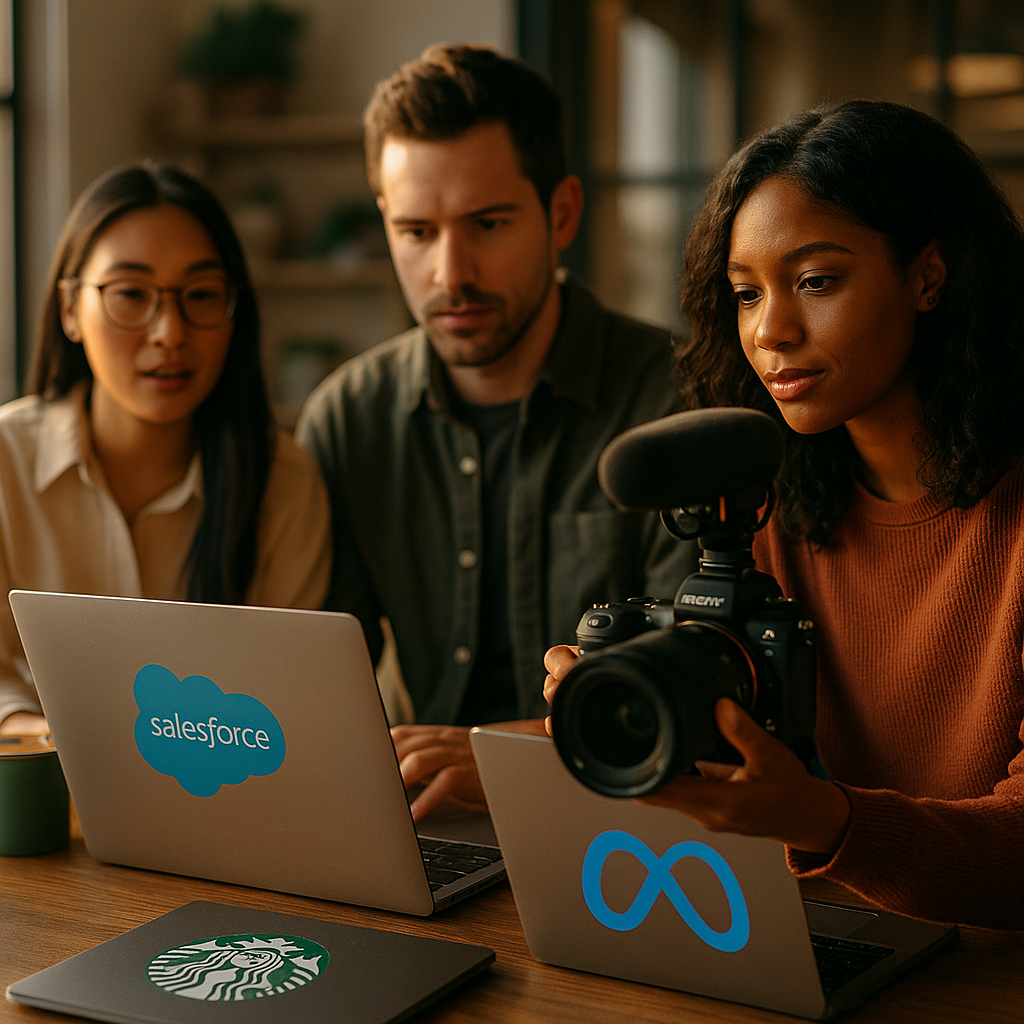
Three companies with almost nothing in common, a social platform, an enterprise software giant, and a coffee retailer, are all doing the same thing right now: building out dedicated creator partnership teams. When Meta, Salesforce, and Starbucks converge on identical org charts, that’s not coincidence. It’s a signal. The creator partnership team is becoming as standard as a paid media desk, and brands still routing influencer work through agencies or a single overworked coordinator are already behind.
The Hiring Pattern Nobody Can Ignore
Job boards don’t lie. Over the past two quarters, listings for titles like “creator partnerships lead,” “influencer relations manager,” and “creator economy strategist” have surged across sectors that historically outsourced this work entirely. Meta is staffing internal teams to manage its own creator ecosystem incentives. Salesforce, a B2B software company that once considered influencer marketing irrelevant to enterprise sales, now has headcount dedicated to creator collaborations tied to product launches and Trailblazer community amplification. Starbucks is building teams to manage relationships with lifestyle and food creators at a scale that used to require three agency partners.
This mirrors a trend we covered when we looked at how Meta, Salesforce and Starbucks started bidding on overlapping creator pools. The competition for talent is intensifying, but the deeper story is structural. Companies aren’t just spending more on creators. They’re deciding creator relationships are important enough to own, manage, and staff internally rather than rent through an agency retainer.
When a B2B software company and a coffee retailer build the same org chart function within months of each other, the signal isn’t industry specific. It’s that creator partnerships have become core infrastructure, not a seasonal campaign line item.
Why Now? The Budget and Control Math
Influencer marketing budgets have grown faster than the teams meant to manage them, a gap we detailed in our piece on budgets outgrowing teams. For years, brands solved that gap by throwing more money at agencies. That approach is losing favor for three reasons.
- Data ownership. Agencies control the relationship data, the performance metrics, and often the creator contact itself. Brands bringing this in house get first-party visibility into what’s actually driving conversion, echoing the shift we reported in brands bringing acquisition in house.
- Cost efficiency. Agency markups on creator fees routinely run 20 to 30 percent. At scale, that’s real money that internal teams can redirect into either more creator deals or better creator compensation, which improves retention.
- Speed and compliance. Internal teams can move faster on approvals and enforce disclosure standards without a middleman. That matters more each quarter as the FTC continues to scrutinize undisclosed sponsorships.
None of this means agencies disappear. It means their role narrows to specialized functions, like niche vetting or contract negotiation, while the ongoing relationship management moves in house. We saw this exact dynamic play out in electronics, where several brands ditched agency retainers specifically to cut costs and own data.
What These Teams Actually Do (It’s Not Just Outreach)
Calling these “influencer teams” undersells the job. The creator partnership function at companies like Salesforce and Starbucks now spans contract negotiation, FTC disclosure compliance, performance analytics, content rights management, and long-term relationship cultivation. It’s closer to a hybrid of talent management, procurement, and brand marketing than the scrappy outreach function influencer marketing used to be.
This expansion tracks with a broader trend of new job titles signaling a shift toward acquisition-focused creator work, something we unpacked in new job titles reveal influencer shift. Titles like “creator partnerships lead” increasingly report into growth or revenue teams, not just brand marketing. That reporting line matters. It means creator spend is being judged on acquisition and retention metrics, not just reach and engagement.
It also mirrors what happened with executive creator strategy roles climbing into the C-suite. When a function gets its own senior leadership and dedicated headcount, that’s the organization declaring the function permanent, not experimental.
The Risk Side Brands Keep Underestimating
Here’s the uncomfortable part. Building an internal creator team doesn’t automatically fix the operational mess most brands have been running on spreadsheets and Slack threads. If anything, scaling internal ownership without proper infrastructure multiplies the risk.
We’ve written before about how creator program spreadsheets expose brands to compliance risk. That risk doesn’t shrink just because you hired three new people to manage creator relationships. In fact, more internal hands touching contracts, payments, and disclosure requirements without a centralized system tends to increase error rates, not decrease them.
Consider the data point that should worry every brand leader building out these teams: mishandled consumer data is already driving customers away, with research showing that 42 percent of shoppers quit brands after a data mishandling incident. Creator partnership programs collect enormous amounts of personal and financial data, from payment details to content usage rights to audience demographics. A hiring wave without a parallel investment in systems and training is a liability wave in disguise.
Hiring a creator partnerships team without fixing the underlying operational infrastructure just moves the compliance risk from the agency’s spreadsheet to yours.
Salesforce’s B2B Angle Is the Real Surprise
Meta building creator infrastructure makes intuitive sense. Starbucks courting lifestyle creators is a natural extension of its existing brand marketing. But Salesforce staffing a creator partnerships function is the detail that should make every B2B marketer pay attention.
B2B has historically treated influencer marketing as a consumer tactic that doesn’t translate to enterprise sales cycles. That assumption is eroding fast. LinkedIn creators, niche SaaS reviewers, and industry analysts with engaged followings are increasingly part of enterprise buying journeys, particularly in the awareness and consideration stages. LinkedIn’s own business resources have leaned into creator-driven content as a growth lever for exactly this reason. If Salesforce is staffing internally for this function, expect other enterprise software vendors to follow within a few quarters.
This also connects to how brands are consolidating spend on specific channels for measurable return. We’ve tracked similar consolidation in consumer categories, like the shift toward YouTube Shorts for ROI. Expect B2B to develop its own version of that consolidation, likely centered on LinkedIn and niche vertical platforms rather than TikTok or Instagram.
How Should Brands Respond to This Shift?
If you’re a mid-market brand watching Meta, Salesforce, and Starbucks build these teams, the temptation is to assume this only applies to companies with nine-figure marketing budgets. That’s a mistake. The underlying lesson scales down: creator relationships managed internally, with proper systems, consistently outperform relationships managed through rotating agency contacts who don’t know your brand voice or your compliance requirements.
Start with an honest audit of your current setup. Are your creator contracts, payment records, and disclosure documentation centralized, or scattered across email and spreadsheets? Similar to the pattern in agency roll-ups forcing brands to rethink vetting, consolidation at the top of the market tends to force smaller players to formalize their own processes just to stay competitive on speed and compliance.
Second, don’t hire faster than you can operationalize. A creator partnerships hire without a contract management system, a clear disclosure protocol, and defined performance metrics is just adding a person to the same chaos. Tools like HubSpot and dedicated influencer relationship platforms exist specifically to prevent the spreadsheet sprawl that’s currently a liability across the industry.
Third, benchmark your creator spend against category peers. Research from firms like eMarketer and Statista continues to show influencer marketing budgets climbing as a share of total marketing spend. If competitors are staffing internal teams and you’re still routing everything through a single agency contact, you’re operating at a structural disadvantage in speed, cost, and data ownership.
What This Means for Creators Themselves
It’s worth pausing on the creator side of this equation. When brands build internal partnership teams, the relationship dynamic shifts. Creators dealing with a dedicated brand employee rather than a rotating agency account manager tend to report better communication, clearer contracts, and faster payment cycles. That’s good for retention on both sides.
It also raises the bar for creator professionalism. Brands staffing internal teams expect creators to operate like professional partners, not casual collaborators. Expect more scrutiny on media kits, audience authenticity, and contract literacy. We’ve noted before that a deal structure literacy gap costs brands leverage in negotiations. That gap cuts both ways. Creators who understand deal structures, usage rights, and exclusivity clauses will have an edge as internal teams become the norm rather than the exception.
Next Step
Treat this hiring wave as your deadline, not just an industry curiosity: audit your creator program’s contracts, payment workflows, and disclosure compliance now, because the brands staffing internal teams today will out-negotiate, out-speed, and out-comply everyone still running influencer relationships through email threads within a year.
Frequently Asked Questions
Why are Meta, Salesforce, and Starbucks hiring dedicated creator partnership teams?
These companies are moving creator relationship management in house to gain better data ownership, cut agency markup costs, speed up approvals, and maintain tighter control over disclosure compliance and brand messaging.
Does this hiring trend apply only to large enterprises?
No. While Meta, Salesforce, and Starbucks have the resources to build large teams, the underlying strategy, centralizing creator relationships and reducing reliance on rotating agency contacts, applies to brands of any size looking to improve ROI and reduce compliance risk.
What risks come with bringing creator partnerships in house?
Without proper systems for contract management, payment tracking, and disclosure documentation, internal teams can actually increase compliance risk rather than reduce it. Hiring staff without operational infrastructure just relocates the same spreadsheet-driven chaos that agencies previously managed.
Are agencies becoming obsolete because of this shift?
Not entirely. Agencies are likely to specialize further in areas like niche creator vetting, contract negotiation support, or campaign strategy, while ongoing relationship management and day-to-day communication move to internal teams.
Why is Salesforce’s involvement in creator marketing notable?
Salesforce represents B2B software, a sector that historically treated influencer marketing as a consumer-only tactic. Its investment in internal creator partnership staffing signals that B2B buying journeys increasingly involve creator-driven content, particularly on platforms like LinkedIn.
Top Influencer Marketing Agencies
The leading agencies shaping influencer marketing in 2026
Agencies ranked by campaign performance, client diversity, platform expertise, proven ROI, industry recognition, and client satisfaction. Assessed through verified case studies, reviews, and industry consultations.
Moburst

-
2

The Shelf
Boutique Beauty & Lifestyle Influencer AgencyA data-driven boutique agency specializing exclusively in beauty, wellness, and lifestyle influencer campaigns on Instagram and TikTok. Best for brands already focused on the beauty/personal care space that need curated, aesthetic-driven content.Clients: Pepsi, The Honest Company, Hims, Elf Cosmetics, Pure LeafVisit The Shelf → -
3

Audiencly
Niche Gaming & Esports Influencer AgencyA specialized agency focused exclusively on gaming and esports creators on YouTube, Twitch, and TikTok. Ideal if your campaign is 100% gaming-focused — from game launches to hardware and esports events.Clients: Epic Games, NordVPN, Ubisoft, Wargaming, Tencent GamesVisit Audiencly → -
4

Viral Nation
Global Influencer Marketing & Talent AgencyA dual talent management and marketing agency with proprietary brand safety tools and a global creator network spanning nano-influencers to celebrities across all major platforms.Clients: Meta, Activision Blizzard, Energizer, Aston Martin, WalmartVisit Viral Nation → -
5

The Influencer Marketing Factory
TikTok, Instagram & YouTube CampaignsA full-service agency with strong TikTok expertise, offering end-to-end campaign management from influencer discovery through performance reporting with a focus on platform-native content.Clients: Google, Snapchat, Universal Music, Bumble, YelpVisit TIMF → -
6

NeoReach
Enterprise Analytics & Influencer CampaignsAn enterprise-focused agency combining managed campaigns with a powerful self-service data platform for influencer search, audience analytics, and attribution modeling.Clients: Amazon, Airbnb, Netflix, Honda, The New York TimesVisit NeoReach → -
7

Ubiquitous
Creator-First Marketing PlatformA tech-driven platform combining self-service tools with managed campaign options, emphasizing speed and scalability for brands managing multiple influencer relationships.Clients: Lyft, Disney, Target, American Eagle, NetflixVisit Ubiquitous → -
8

Obviously
Scalable Enterprise Influencer CampaignsA tech-enabled agency built for high-volume campaigns, coordinating hundreds of creators simultaneously with end-to-end logistics, content rights management, and product seeding.Clients: Google, Ulta Beauty, Converse, AmazonVisit Obviously →