


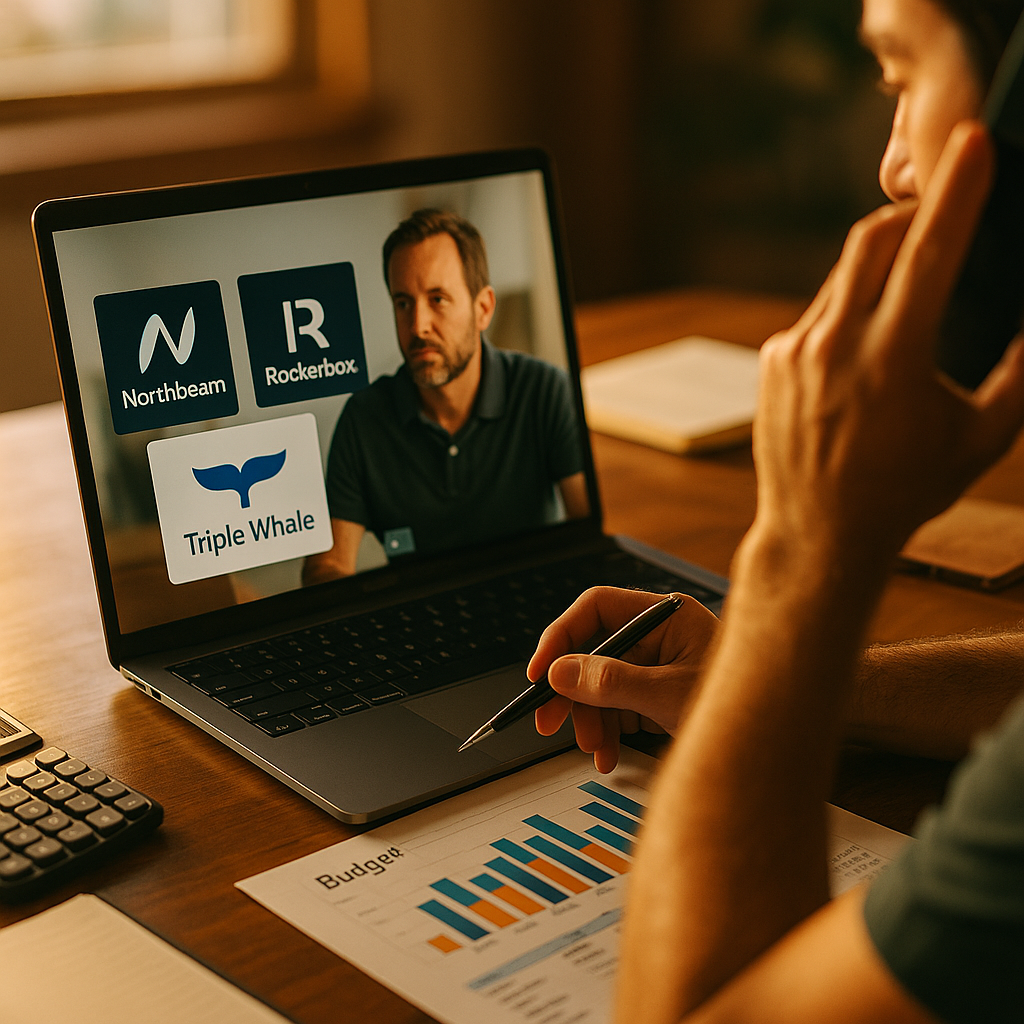
Marketing mix models take weeks to update. Your CFO wants an answer by Friday. That gap is exactly why AI attribution platforms like Northbeam, Rockerbox, and Triple Whale have become the default tiebreaker in live budget conversations, where a wrong read on channel performance can burn six figures in a single quarter. Roughly 68% of marketers say they still struggle to prove multi touch ROI accurately, according to eMarketer research on measurement gaps. So which platform actually holds up when the room goes quiet and someone asks “where’s the money working”?
Why This Comparison Matters More Than a Feature Chart
Most vendor comparisons list integrations and call it a day. That’s not useful when you’re staring at a spend reallocation decision with a VP breathing down your neck. The real question isn’t “what does the platform do,” it’s “can I trust this number enough to move budget right now, in this meeting, without a follow up analysis.” Northbeam, Rockerbox, and Triple Whale all promise that speed. They deliver it differently, and the differences show up hardest under pressure.
Live budget calls expose weaknesses that a sales demo never will. A model that looks clean in a quarterly business review can fall apart when someone asks it to explain a sudden CAC spike in real time. That’s the lens this comparison uses: not feature parity, but decision readiness.
Northbeam: Built for Granular, Fast Reallocation
Northbeam leans hard into probabilistic modeling with a heavy dose of machine learning, and it shows in how quickly the dashboard responds to spend shifts. Media buyers running paid social and paid search in parallel tend to favor it because it breaks performance down to the ad set level almost instantly. If your budget call is granular (should we move $40,000 from a Meta campaign to a YouTube pre roll test this afternoon), Northbeam gives you an answer fast.
The tradeoff is transparency. Northbeam’s modeling logic is somewhat of a black box, and finance teams that want to audit the “why” behind a number sometimes push back. That’s a real risk when a CFO wants a defensible methodology, not just a confident dashboard.
The platform that wins your budget call isn’t the one with the prettiest dashboard, it’s the one whose methodology survives a follow up question from finance.
Rockerbox: The Compliance First Option
Rockerbox was built with a heavier emphasis on data governance and incrementality testing, which makes it the pick for brands operating in regulated categories or anywhere legal wants visibility into how identity gets stitched together. It plays well with server side tracking setups and tends to be more transparent about its modeling assumptions than Northbeam.
The cost is speed. Rockerbox’s incrementality testing framework is rigorous, but rigorous usually means slower. If your budget call needs an answer in the next twenty minutes, Rockerbox’s methodology sometimes feels like it’s built for a different meeting cadence, one closer to a monthly review than a live reallocation. That’s not a flaw, it’s a design choice, but it matters when you’re the one holding the mic.
Triple Whale: E-commerce Speed, Narrower Scope
Triple Whale built its reputation on Shopify native e-commerce brands, and its interface reflects that focus: fast, visual, and built for founders who want a single number to anchor a decision. For DTC brands running influencer and paid social side by side, Triple Whale’s blended view of creative performance and spend is genuinely useful in a pinch.
Where it gets thinner is complexity. Multi channel B2B funnels, longer sales cycles, or programs with heavy offline touchpoints tend to outgrow Triple Whale’s modeling assumptions. It’s an excellent tool for a fast growing DTC brand. It’s a weaker fit for an enterprise team juggling a dozen attribution sources.
Matching the Platform to the Meeting
Here’s the practical framework worth using before your next budget call:
- Fast, granular reallocation across paid media: Northbeam tends to win on speed and depth of ad set level detail.
- Compliance heavy environments with legal oversight: Rockerbox’s transparency and incrementality testing carry more weight with auditors and finance leads.
- DTC brands on Shopify needing a single source of truth fast: Triple Whale’s simplicity is a feature, not a limitation, at that scale.
None of these platforms are wrong choices. They’re built for different rooms. The mistake most teams make is picking a platform based on brand reputation rather than matching it to the actual cadence and stakes of their budget conversations. For a deeper breakdown of how these three stack up on integration depth and pricing tiers, this attribution platform comparison is worth reading before you sign a contract.
The Data Quality Problem Nobody Wants to Talk About
Here’s an uncomfortable truth: none of these tools fix bad input data. If your event taxonomy is inconsistent across platforms, or your consent signals aren’t feeding the model correctly, you’ll get a confident wrong answer instead of an uncertain right one. Attribution platforms are only as good as the pipes feeding them.
Teams that skip the plumbing work usually end up recalibrating models mid quarter, which is worse than not having attribution software at all because it erodes trust in the numbers right when leadership needs to believe them. Before evaluating vendors, it’s worth auditing your own event taxonomy and making sure your creator data pipelines aren’t leaking or duplicating touchpoints upstream of the model.
Consent and identity resolution matter here too. Cookie deprecation and platform level privacy changes mean these attribution tools increasingly rely on modeled data rather than deterministic tracking. If your consent management setup isn’t feeding clean signals, per guidance from the FTC on data practices, your attribution outputs inherit that noise. Teams building out consent infrastructure should look closely at how platforms like those covered in this consent for attribution comparison feed data into the modeling layer before blaming Northbeam, Rockerbox, or Triple Whale for a bad number.
Budget Calls Are Political, Not Just Analytical
This is the part vendor sales decks never mention. A budget call is rarely a pure math exercise, it’s a negotiation between departments with different incentives. Paid media wants credit for the sale. Influencer marketing wants credit for the discovery moment. Brand wants credit for the lift. Whichever platform’s default attribution model happens to favor your channel is the one your counterpart in another department will immediately distrust.
Smart teams get ahead of this by agreeing on the attribution logic before the money is on the table, not during the meeting. That means picking a platform (or a blended model across two) and getting sign off from every stakeholder on how credit gets assigned, weeks before the quarterly reallocation conversation happens. Waiting until the live call to relitigate methodology is how good platforms get blamed for bad politics.
It’s also worth noting that TikTok Shop and live commerce have introduced new attribution wrinkles that none of these three platforms handle identically. If a meaningful share of your revenue runs through live shopping events, check how each vendor treats that data before assuming your dashboard reflects reality. This TikTok Shop attribution breakdown covers where the gaps tend to show up. Google’s own Google Ads support documentation on conversion modeling is also a useful baseline for understanding how modeled versus observed data diverges across platforms.
What to Actually Do Before Your Next Call
Run a thirty day parallel test if you can. Feed the same spend data into two platforms and compare the reallocation recommendations. Where they agree, you’ve got confidence. Where they diverge by more than 15 or 20%, that’s your signal to dig into methodology before trusting either number in front of leadership.
Also, build a one page methodology cheat sheet for whichever platform you choose. When someone in the budget meeting asks “how does this model handle view through conversions,” you want an answer ready, not a promise to follow up later. That single document does more for your credibility than any dashboard screenshot.
Frequently Asked Questions
FAQs
Which AI attribution platform is best for fast paced budget reallocation?
Northbeam generally performs best for fast, granular reallocation decisions because its machine learning models update quickly at the ad set level, which suits teams making frequent live spend calls.
Is Rockerbox better for compliance heavy industries?
Yes. Rockerbox’s emphasis on transparent modeling and incrementality testing makes it a stronger fit for regulated industries or organizations where legal and finance teams need to audit the methodology behind attribution numbers.
Can Triple Whale handle complex, multi channel attribution?
Triple Whale is optimized for Shopify native e-commerce brands and performs well for straightforward DTC funnels, but it tends to be a weaker fit for enterprise teams with long sales cycles or heavy offline touchpoints.
Do these platforms replace marketing mix modeling?
No. AI attribution platforms are built for faster, more tactical decisions, while marketing mix modeling remains better suited for long term strategic planning and validating channel level assumptions over longer time horizons.
What’s the biggest mistake brands make when choosing between these tools?
Picking a platform based on brand reputation rather than matching it to the actual cadence and complexity of internal budget conversations, and failing to fix upstream data quality issues before evaluating vendors.
The next time budget season rolls around, don’t ask which platform is “best.” Ask which one matches the speed, scrutiny, and politics of the specific meeting you’re walking into, and make sure your data pipeline can back up whatever number ends up on the screen.
Top Influencer Marketing Agencies
The leading agencies shaping influencer marketing in 2026
Agencies ranked by campaign performance, client diversity, platform expertise, proven ROI, industry recognition, and client satisfaction. Assessed through verified case studies, reviews, and industry consultations.
Moburst

-
2

The Shelf
Boutique Beauty & Lifestyle Influencer AgencyA data-driven boutique agency specializing exclusively in beauty, wellness, and lifestyle influencer campaigns on Instagram and TikTok. Best for brands already focused on the beauty/personal care space that need curated, aesthetic-driven content.Clients: Pepsi, The Honest Company, Hims, Elf Cosmetics, Pure LeafVisit The Shelf → -
3

Audiencly
Niche Gaming & Esports Influencer AgencyA specialized agency focused exclusively on gaming and esports creators on YouTube, Twitch, and TikTok. Ideal if your campaign is 100% gaming-focused — from game launches to hardware and esports events.Clients: Epic Games, NordVPN, Ubisoft, Wargaming, Tencent GamesVisit Audiencly → -
4

Viral Nation
Global Influencer Marketing & Talent AgencyA dual talent management and marketing agency with proprietary brand safety tools and a global creator network spanning nano-influencers to celebrities across all major platforms.Clients: Meta, Activision Blizzard, Energizer, Aston Martin, WalmartVisit Viral Nation → -
5

The Influencer Marketing Factory
TikTok, Instagram & YouTube CampaignsA full-service agency with strong TikTok expertise, offering end-to-end campaign management from influencer discovery through performance reporting with a focus on platform-native content.Clients: Google, Snapchat, Universal Music, Bumble, YelpVisit TIMF → -
6

NeoReach
Enterprise Analytics & Influencer CampaignsAn enterprise-focused agency combining managed campaigns with a powerful self-service data platform for influencer search, audience analytics, and attribution modeling.Clients: Amazon, Airbnb, Netflix, Honda, The New York TimesVisit NeoReach → -
7

Ubiquitous
Creator-First Marketing PlatformA tech-driven platform combining self-service tools with managed campaign options, emphasizing speed and scalability for brands managing multiple influencer relationships.Clients: Lyft, Disney, Target, American Eagle, NetflixVisit Ubiquitous → -
8

Obviously
Scalable Enterprise Influencer CampaignsA tech-enabled agency built for high-volume campaigns, coordinating hundreds of creators simultaneously with end-to-end logistics, content rights management, and product seeding.Clients: Google, Ulta Beauty, Converse, AmazonVisit Obviously →