


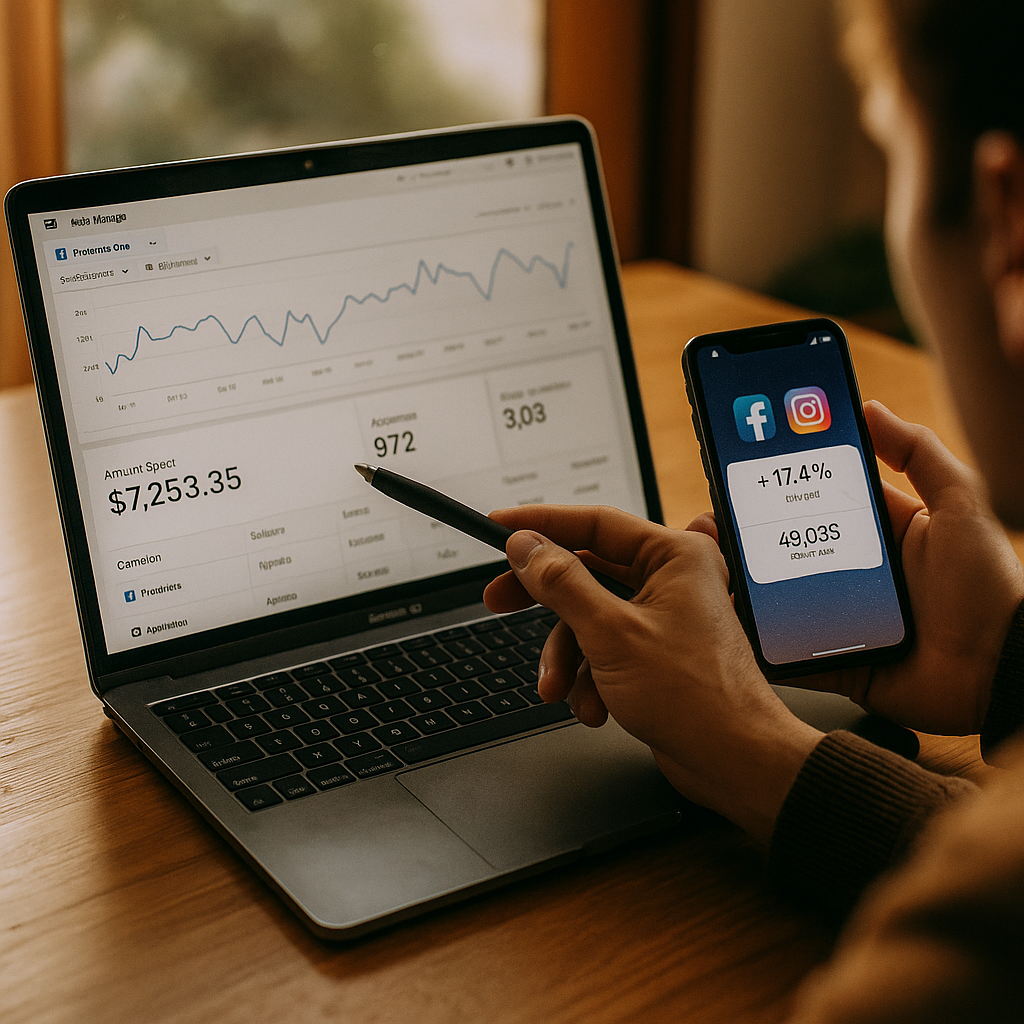
Here’s the uncomfortable truth most creator agencies won’t say out loud: TikTok drives the buzz, but Facebook and Instagram still win the budget meetings. Marketers surveyed across North America and Europe continue to rank Meta’s platforms highest for reported influencer marketing ROI, even as attention metrics favor short-form video elsewhere. Why does a “legacy” platform keep beating the shiny new ones on the one number that actually matters to a CFO?
The answer isn’t nostalgia. It’s measurement infrastructure, and it’s reshaping how brands allocate 2026 budgets.
The Attribution Gap Nobody Talks About
TikTok and YouTube generate more impressions per dollar in most campaign recaps. That part isn’t in dispute. But impressions aren’t revenue, and brand teams have gotten tired of translating vanity metrics into board-ready numbers.
Meta’s advantage comes down to closed-loop attribution. Instagram Shopping, Facebook Pixel, and Conversions API give brands a direct line from ad exposure to purchase, inside a single ecosystem they already control. TikTok’s Shop infrastructure has improved considerably, but it’s still catching up on first-party data depth, and YouTube’s attribution remains split across Google Ads, Analytics, and whatever UTM discipline a brand’s media team actually enforces. When attribution is messy, reported ROI looks weaker, regardless of actual performance. That’s a measurement problem dressed up as a platform performance problem, and it’s exactly the dynamic our earlier analysis on measurement gaps versus channel decline flagged months before this became consensus.
Brands aren’t choosing Facebook and Instagram because the content performs better. They’re choosing them because the reporting is defensible in front of finance.
Is This Really About Platform Maturity?
Partly, yes. Meta has spent over a decade building advertiser tooling: Business Manager, Advantage+ campaigns, detailed audience overlap reporting. That maturity translates into reported ROI that survives scrutiny. Influencer platform ROI claims crumble under CFO scrutiny for a reason: most dashboards weren’t built to answer “what did we actually get for this spend,” they were built to answer “did engagement go up.” Meta’s ad stack, for all its complaints about rising CPMs, answers the first question more reliably.
Compare that to TikTok, where creative velocity is the whole value proposition. Content fatigues fast, campaigns need constant refresh, and creator ad fatigue hitting around day 36 means media teams are optimizing for engagement decay instead of long-term attribution modeling. That’s a legitimate operational cost that doesn’t always show up cleanly in ROI reports, but it absolutely shows up in the time-to-manage column on a media plan.
YouTube’s Long Game Doesn’t Fit Quarterly Reporting
YouTube influencer content tends to have a longer tail. A well-placed product integration in a creator’s video can keep driving traffic for months, sometimes years. That’s genuinely valuable, but it’s murder on quarterly ROI reporting. Finance teams want clean attribution windows: 7-day, 14-day, 30-day click or view. YouTube’s evergreen content breaks that model because the payoff doesn’t arrive on schedule.
This isn’t a knock on YouTube’s actual effectiveness. It’s a structural mismatch between how the platform’s content behaves and how most brand reporting cycles are built. Agencies that try to force YouTube into a 30-day attribution box end up underselling the channel, which ironically reinforces the perception that Facebook and Instagram perform better, when really they’re just easier to measure on the timeline finance demands.
Budget Allocation Is Following the Reporting, Not the Reach
Here’s where it gets interesting for anyone managing a 2026 media plan. Brands increasingly allocate spend based on reportable confidence rather than raw reach or engagement potential. If a channel gives a marketer a clean story to tell a CFO, it gets funded, even if a competing channel technically reaches more of the target demo.
This shows up in budget data across the industry. European influencer budgets jumping to a 175K median didn’t come with a proportional shift toward TikTok-first allocation. Instead, a meaningful share of that increase routed through Instagram-based creator partnerships paired with Meta’s paid amplification tools, specifically because performance marketing teams could model expected return before the campaign launched, not just after.
It also explains why micro creators cutting CPM has become such a dominant budget story. Smaller creator partnerships on Instagram are cheap, trackable, and iterative. Brands can run five micro-influencer tests in the time it takes to produce one polished YouTube integration, and each of those tests produces attribution data that slots neatly into existing Meta reporting dashboards.
Reach Metrics Are Losing Credibility Anyway
There’s a broader shift happening that makes this whole conversation make more sense. Brand scorecards are moving away from reach as the primary success metric. Reach no longer predicting sales means platforms that win on raw audience size, which has traditionally favored TikTok and YouTube, lose some of their natural advantage in budget conversations.
When reach stops being the scoreboard, attribution quality becomes the deciding factor. And attribution quality is exactly where Meta has invested the most engineering effort over the past several years. It’s not that TikTok content doesn’t convert. It’s that TikTok’s conversion story is harder to prove cleanly inside a standard marketing mix model, especially when a brand is also running TikTok’s own advertising platform alongside organic creator content and trying to untangle which drove what.
What This Means for Risk-Averse Brand Teams
For mid-to-senior marketers managing compliance, budget approval chains, and board reporting, the calculus is straightforward even if it’s not satisfying. Platforms that make your job easier to defend get more budget, regardless of whether they’re objectively the best creative environment for your audience.
This creates a real risk, though: optimizing for reportability instead of actual audience behavior. A brand chasing Gen Z needs to be on TikTok, full stop, because that’s where the audience lives and where audience behavior data from platforms like Sprout Social consistently shows engagement concentrating. Underinvesting there because the attribution story is messier is a strategic error dressed up as fiscal discipline.
The smarter move is building better measurement for TikTok and YouTube rather than defaulting to Meta because it’s easier. That means investing in server-side tracking, UTM discipline at scale, and marketing mix modeling that doesn’t rely solely on platform-native attribution. Brands doing this well are treating creator content less like a campaign line item and more like owned media infrastructure, a shift that parallels how UGC production studios are replacing solo creators at scale precisely because studio output is easier to brief, track, and reuse across channels.
The Compliance Angle Nobody Mentions
There’s a quieter factor too. Meta’s ad library and disclosure tools make FTC compliance documentation simpler to produce when regulators or internal legal teams come asking. Platforms with less mature disclosure tooling put more manual burden on brand and agency teams, and that operational friction factors into which channel gets the bigger budget line, even if nobody puts it in the official rationale. Brands that have already formalized this, treating creators as accountable vendors rather than informal partners, as covered in UGC creators going pro, tend to have an easier time producing clean compliance records regardless of platform, which reduces this gap but doesn’t eliminate it. For brands wanting a refresher on disclosure obligations directly from the source, the FTC’s endorsement guidance remains the baseline every legal team should keep bookmarked.
Next Step for Brand Teams
Stop treating “ROI by platform” as a fixed ranking and start treating it as a measurement maturity audit. Before shifting budget toward Facebook and Instagram because the numbers look cleaner, invest in equivalent attribution infrastructure for TikTok and YouTube first, then compare performance on a level playing field.
Frequently Asked Questions
Why do Facebook and Instagram report higher ROI than TikTok and YouTube?
Meta’s advertising ecosystem offers more mature, closed-loop attribution tools, including the Conversions API and Instagram Shopping, which make it easier for brands to connect ad spend directly to purchases. TikTok and YouTube have strong engagement but less consolidated first-party measurement, which weakens reported ROI even when actual performance is comparable.
Does higher reported ROI mean Facebook and Instagram are better platforms for influencer marketing?
Not necessarily. Reported ROI reflects measurement confidence as much as actual performance. Brands targeting younger demographics often see stronger raw engagement on TikTok, but struggle to prove it cleanly in standard attribution windows, which can understate the channel’s true value.
Should brands shift budget away from TikTok and YouTube based on ROI reports alone?
No. Doing so risks underinvesting in platforms where target audiences are most active. A better approach is improving measurement infrastructure for those channels, such as server-side tracking and marketing mix modeling, before reallocating spend based on attribution gaps alone.
How does reach data factor into this ROI gap?
Reach is losing credibility as a standalone success metric because it no longer reliably predicts sales. This shift disadvantages platforms that traditionally won on audience size and reach, while favoring platforms with stronger conversion attribution, which currently benefits Meta’s ecosystem.
What should brand teams do to get more accurate cross-platform ROI comparisons?
Invest in consistent UTM tagging, server-side conversion tracking, and independent marketing mix modeling rather than relying solely on platform-native reporting. This levels the comparison between Meta’s mature attribution tools and the less consolidated measurement environments on TikTok and YouTube.
Top Influencer Marketing Agencies
The leading agencies shaping influencer marketing in 2026
Agencies ranked by campaign performance, client diversity, platform expertise, proven ROI, industry recognition, and client satisfaction. Assessed through verified case studies, reviews, and industry consultations.
Moburst

-
2

The Shelf
Boutique Beauty & Lifestyle Influencer AgencyA data-driven boutique agency specializing exclusively in beauty, wellness, and lifestyle influencer campaigns on Instagram and TikTok. Best for brands already focused on the beauty/personal care space that need curated, aesthetic-driven content.Clients: Pepsi, The Honest Company, Hims, Elf Cosmetics, Pure LeafVisit The Shelf → -
3

Audiencly
Niche Gaming & Esports Influencer AgencyA specialized agency focused exclusively on gaming and esports creators on YouTube, Twitch, and TikTok. Ideal if your campaign is 100% gaming-focused — from game launches to hardware and esports events.Clients: Epic Games, NordVPN, Ubisoft, Wargaming, Tencent GamesVisit Audiencly → -
4

Viral Nation
Global Influencer Marketing & Talent AgencyA dual talent management and marketing agency with proprietary brand safety tools and a global creator network spanning nano-influencers to celebrities across all major platforms.Clients: Meta, Activision Blizzard, Energizer, Aston Martin, WalmartVisit Viral Nation → -
5

The Influencer Marketing Factory
TikTok, Instagram & YouTube CampaignsA full-service agency with strong TikTok expertise, offering end-to-end campaign management from influencer discovery through performance reporting with a focus on platform-native content.Clients: Google, Snapchat, Universal Music, Bumble, YelpVisit TIMF → -
6

NeoReach
Enterprise Analytics & Influencer CampaignsAn enterprise-focused agency combining managed campaigns with a powerful self-service data platform for influencer search, audience analytics, and attribution modeling.Clients: Amazon, Airbnb, Netflix, Honda, The New York TimesVisit NeoReach → -
7

Ubiquitous
Creator-First Marketing PlatformA tech-driven platform combining self-service tools with managed campaign options, emphasizing speed and scalability for brands managing multiple influencer relationships.Clients: Lyft, Disney, Target, American Eagle, NetflixVisit Ubiquitous → -
8

Obviously
Scalable Enterprise Influencer CampaignsA tech-enabled agency built for high-volume campaigns, coordinating hundreds of creators simultaneously with end-to-end logistics, content rights management, and product seeding.Clients: Google, Ulta Beauty, Converse, AmazonVisit Obviously →