


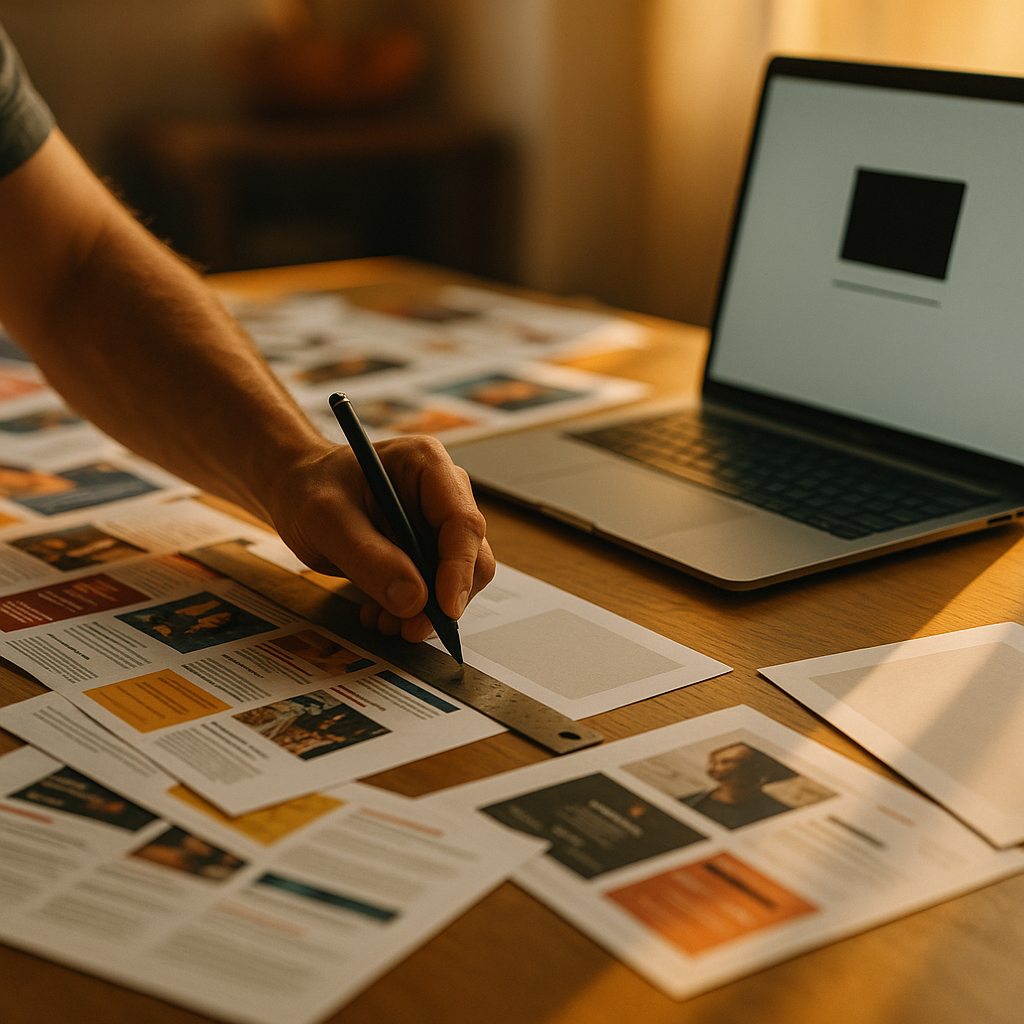
In 2025, audiences scroll through endless videos, alerts, and ads, yet their attention is not infinite. The Power Of Minimalist Design In A World Of High-Stimulus Content is not a trend; it is a practical response to cognitive overload and shrinking decision time. Minimalism helps people find meaning quickly, trust what they see, and act with confidence—so what makes it work so consistently?
Minimalist design principles that cut through noise
Minimalist design is not “less for the sake of less.” It is intentional reduction: removing elements that do not serve a user goal, so the remaining elements become clearer and more persuasive. In high-stimulus environments—feeds, streaming platforms, crowded search results—clarity becomes a competitive advantage.
Core minimalist design principles include:
- Purposeful hierarchy: one primary message, supported by a small number of secondary cues.
- Generous spacing: white space (or negative space) that improves scanning and reduces perceived clutter.
- Restrained typography: limited typefaces and consistent sizes to signal structure instantly.
- Limited color palette: fewer hues, used with intent (especially for calls to action and status states).
- Fewer components, better components: fewer buttons, banners, and widgets—each designed to perform.
Readers often ask whether minimalism means a “cold” or “empty” experience. It does not. Minimalist interfaces can feel warm and premium when you add human-centered microcopy, accessible contrast, and imagery that supports the story instead of competing with it. The goal is not austerity; it is signal over noise.
Attention economy and cognitive load: why minimalism wins
High-stimulus content pushes users into rapid triage: “Is this relevant? Is it safe? What do I do next?” Minimalist design performs well because it reduces cognitive load—the mental effort required to understand and choose. When a layout presents too many competing elements, users spend more energy parsing the interface than evaluating the offer.
In 2025, attention is expensive for both users and brands. Minimalist design supports attention in three practical ways:
- Faster comprehension: fewer elements to decode means users understand the value proposition in seconds.
- Lower decision friction: a smaller set of choices makes the next step more obvious.
- Reduced error rates: clean layouts improve form completion and help users avoid mis-clicks.
If you’re wondering how to apply this to content-heavy pages (pricing, feature comparisons, long-form articles), the answer is progressive disclosure. Put the essentials first—headline, primary benefit, proof, and action—then allow deeper exploration with expandable sections, tabs, or clearly labeled links. Users who need detail can get it without overwhelming everyone else.
Minimalism also strengthens brand trust in overstimulating environments. When an interface feels controlled and predictable, it signals competence. That matters when users must decide quickly whether to engage, subscribe, or buy.
Visual hierarchy and whitespace: the mechanics of clarity
Minimalist outcomes come from specific mechanics, especially visual hierarchy and whitespace. Visual hierarchy answers “What matters most?” Whitespace gives the answer room to be noticed.
Here is a practical checklist you can apply to almost any page:
- One clear primary action: choose a single main CTA and make it visually dominant.
- Headline-first scanning: ensure the headline communicates the core value without relying on a supporting paragraph.
- Consistent alignment: grid discipline improves readability and makes interfaces feel calmer.
- Intentional contrast: use contrast to direct attention, not to decorate. Reserve the strongest contrast for key actions or key proof.
- Breathing room around proof: testimonials, ratings, and guarantees need space to register as credible.
Whitespace is often misunderstood as “wasted space.” In practice, it is a performance tool. It improves comprehension, strengthens perceived quality, and helps users differentiate primary content from secondary information. If you need to keep more information visible (common in B2B), you can still be minimalist by using structured density: compact components, consistent spacing, and clear grouping rather than visual chaos.
Another common follow-up: “Can minimalist design still be expressive?” Yes. Expression comes from choices, not volume. A minimalist brand can feel bold through a distinctive type scale, a signature accent color, or a recognizable illustration style—applied consistently.
Minimalist web design for UX: conversion, trust, and accessibility
Minimalist web design improves UX when it aligns with user intent and reduces friction across the journey: discovery, evaluation, and action. For conversion-focused pages, minimalism works because it clarifies the offer and narrows attention to the next step.
To earn trust and meet modern expectations, minimalist UX must also meet accessibility and usability standards. In 2025, helpful content is inseparable from inclusive design. Practical priorities include:
- Readable typography: legible sizes, adequate line height, and predictable heading structure.
- Accessible color contrast: ensure text and interactive elements remain readable for low-vision users.
- Keyboard and screen-reader support: clean structure, clear focus states, and descriptive labels.
- Clear error handling: forms should explain issues plainly and show how to fix them.
Minimalism also supports mobile-first realities. With limited screen space, every element must justify itself. A minimalist layout reduces the need for pinching, zooming, and excessive scrolling to find basic information.
From an EEAT perspective, minimalist design helps you present expertise and trust signals without shouting. Instead of stacking badges and claims, prioritize verifiable proof in a clean order: what you do, who it is for, evidence (case results, reputable client logos where permitted, methodology), and a direct next step. When proof is easy to find and easy to read, it works harder.
Brand identity in minimalist design: premium feel without sameness
A frequent concern is that minimalist design makes everything look identical. That happens when teams copy surface-level minimalism—neutral palettes, generic sans-serif fonts, stock layouts—without a distinctive system underneath. Strong minimalist brands rely on identity signals that are subtle but consistent.
Ways to build a recognizable minimalist identity:
- Own a typographic voice: a specific type family, a unique scale, and consistent emphasis rules.
- Use a disciplined color strategy: one accent color can become a signature if used consistently in key moments.
- Create a repeatable component system: buttons, cards, and navigation patterns that feel “yours.”
- Choose imagery with a clear rationale: real product visuals, authentic photography, or a coherent illustration style.
- Write minimalist copy: short, concrete language that respects user time.
Minimalism pairs well with premium positioning because it conveys control and reduces perceived risk. However, premium does not mean vague. If you remove explanatory text, you must replace it with clearer labeling, better microcopy, or a smarter information architecture. Minimalist design succeeds when it is more understandable, not merely more empty.
If your brand relies on energy and personality—music, sports, creator tools—you can still go minimalist by simplifying structure while keeping expressive moments where they matter: hero imagery, a single bold statement, or motion used sparingly to guide attention (not to entertain).
How to implement minimalist design: audit, test, and measure
Minimalism is easiest to adopt when you treat it as a measurable optimization process. Start with outcomes: what users must understand, what they must trust, and what they must do. Then design backward.
A simple implementation plan:
- Run a stimulus audit: list every element on key pages (headers, banners, pop-ups, icons, animations). Mark what supports the primary user goal and what does not.
- Define the primary path: identify the main journey for your highest-value audience segment and remove competing distractions.
- Rebuild hierarchy: rewrite the headline for clarity, reorder sections by decision logic (value → proof → details → action), and reduce redundant content.
- Standardize components: limit button styles, spacing rules, and type scales to a consistent system.
- Test with real tasks: ask users to find pricing, compare options, or complete a form while you observe friction points.
- Measure impact: track bounce rate, scroll depth, time to first action, form completion, and support tickets related to confusion.
Readers often ask what to remove first. Start with the elements that create the most cognitive interruptions: auto-playing media, competing CTAs, excessive badges, repetitive sections, and decorative icons that don’t add meaning. Keep anything that directly answers purchase questions: pricing clarity, specs, compatibility, guarantees, and contact options.
Minimalism can also improve perceived performance. Fewer heavy assets and fewer complex interactions often lead to faster loads and smoother mobile experiences—both of which influence satisfaction and business outcomes. If you want to validate the change, A/B test a simplified page against the existing version and focus on task success, not just clicks.
FAQs about minimalist design in high-stimulus environments
-
Is minimalist design only for luxury brands?
No. Minimalism works for any brand that needs fast comprehension and low friction. SaaS, healthcare, education, and e-commerce often benefit because users need clarity and trust more than extra decoration.
-
Does minimalist design hurt SEO because there is less content?
Not when done correctly. SEO benefits from clear structure, helpful copy, and strong internal linking. Minimalism should remove redundant or distracting elements, not remove information users need. Use concise but complete explanations, clear headings, and scannable lists.
-
How do I keep a minimalist site from feeling boring?
Use a distinctive type scale, intentional imagery, and a consistent accent color. Add personality through precise language and small, purposeful interactions. Avoid adding noise; add identity.
-
What is the biggest mistake teams make when “going minimalist”?
They remove context. Minimalist design must still answer user questions: what it is, who it’s for, how it works, what it costs, and why it’s trustworthy. Reduce visual clutter, not understanding.
-
Can minimalist design improve conversions?
Often, yes—because it strengthens hierarchy and reduces distractions. The right approach is to test: simplify one key page, measure task success and completion rates, then expand the system across the journey.
-
How do I balance minimalism with accessibility?
Prioritize readable typography, strong contrast, clear focus states, descriptive labels, and predictable navigation. Minimalist visuals should never reduce usability for keyboard users or screen-reader users.
Minimalism succeeds in 2025 because it respects attention, reduces cognitive strain, and makes decisions easier. When you design with fewer, stronger signals—clear hierarchy, purposeful whitespace, and accessible interactions—you create experiences people can understand quickly and trust. The takeaway is simple: remove what competes with the user’s goal, then strengthen what remains.
Top Influencer Marketing Agencies
The leading agencies shaping influencer marketing in 2026
Agencies ranked by campaign performance, client diversity, platform expertise, proven ROI, industry recognition, and client satisfaction. Assessed through verified case studies, reviews, and industry consultations.
Moburst

-
2

The Shelf
Boutique Beauty & Lifestyle Influencer AgencyA data-driven boutique agency specializing exclusively in beauty, wellness, and lifestyle influencer campaigns on Instagram and TikTok. Best for brands already focused on the beauty/personal care space that need curated, aesthetic-driven content.Clients: Pepsi, The Honest Company, Hims, Elf Cosmetics, Pure LeafVisit The Shelf → -
3

Audiencly
Niche Gaming & Esports Influencer AgencyA specialized agency focused exclusively on gaming and esports creators on YouTube, Twitch, and TikTok. Ideal if your campaign is 100% gaming-focused — from game launches to hardware and esports events.Clients: Epic Games, NordVPN, Ubisoft, Wargaming, Tencent GamesVisit Audiencly → -
4

Viral Nation
Global Influencer Marketing & Talent AgencyA dual talent management and marketing agency with proprietary brand safety tools and a global creator network spanning nano-influencers to celebrities across all major platforms.Clients: Meta, Activision Blizzard, Energizer, Aston Martin, WalmartVisit Viral Nation → -
5

The Influencer Marketing Factory
TikTok, Instagram & YouTube CampaignsA full-service agency with strong TikTok expertise, offering end-to-end campaign management from influencer discovery through performance reporting with a focus on platform-native content.Clients: Google, Snapchat, Universal Music, Bumble, YelpVisit TIMF → -
6

NeoReach
Enterprise Analytics & Influencer CampaignsAn enterprise-focused agency combining managed campaigns with a powerful self-service data platform for influencer search, audience analytics, and attribution modeling.Clients: Amazon, Airbnb, Netflix, Honda, The New York TimesVisit NeoReach → -
7

Ubiquitous
Creator-First Marketing PlatformA tech-driven platform combining self-service tools with managed campaign options, emphasizing speed and scalability for brands managing multiple influencer relationships.Clients: Lyft, Disney, Target, American Eagle, NetflixVisit Ubiquitous → -
8

Obviously
Scalable Enterprise Influencer CampaignsA tech-enabled agency built for high-volume campaigns, coordinating hundreds of creators simultaneously with end-to-end logistics, content rights management, and product seeding.Clients: Google, Ulta Beauty, Converse, AmazonVisit Obviously →