


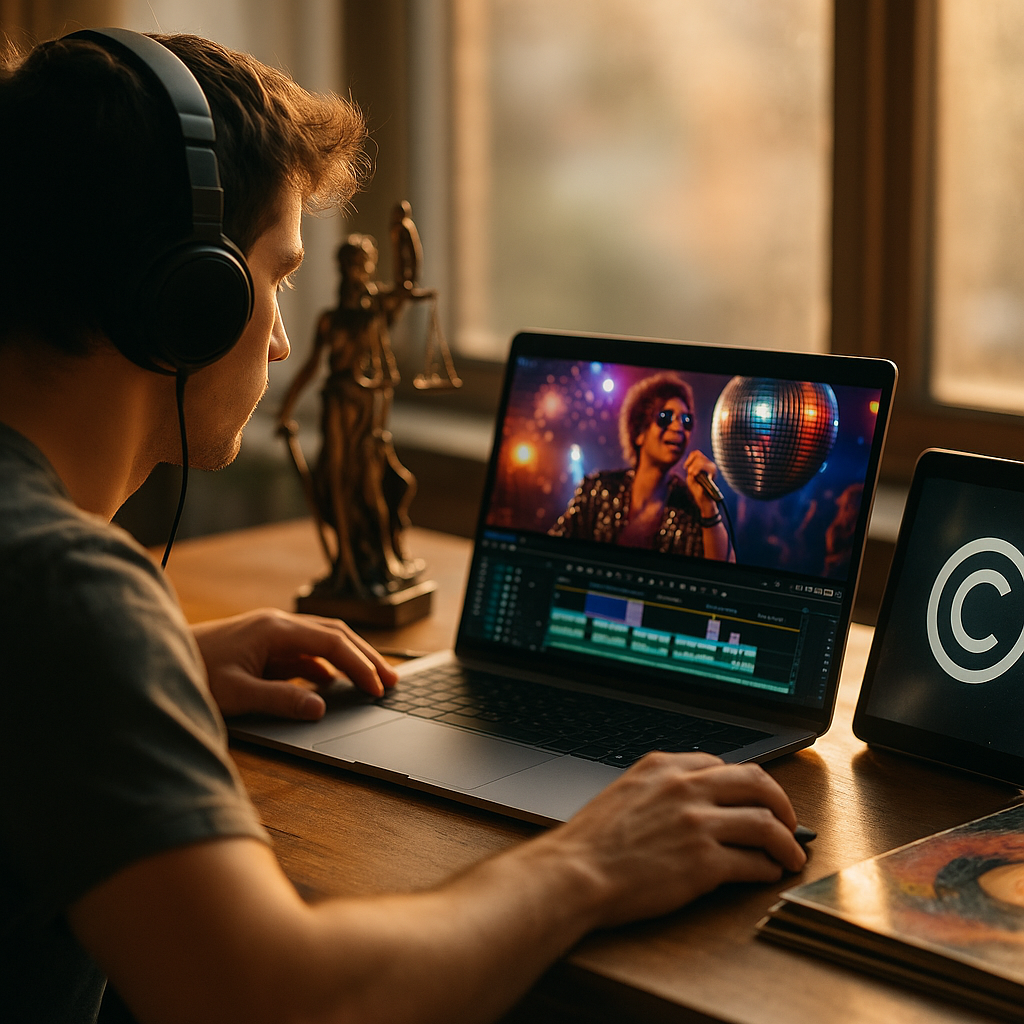
In 2025, creators remix everything: clips, memes, audio, and AI-assisted edits that spread in minutes. But virality doesn’t erase ownership, and platforms enforce rules fast. Digital copyright law shapes what you can sample, transform, monetize, or repost without takedowns or lawsuits. This guide explains the practical rules, risks, and safer workflows—so your next remix travels far without getting blocked at the source.
Understanding remix culture copyright basics
Viral remix culture thrives on recontextualizing existing works—songs, film scenes, livestream moments, news footage, and even game assets—into new formats like mashups, duets, reaction videos, and meme templates. Copyright law, however, starts from a simple premise: the original creator (or rights holder) controls certain uses of their work.
As a practical matter, most online remix conflicts revolve around four protected elements:
- Audio recordings (the “master” recording) and musical compositions (the song itself). These are often owned by different parties.
- Video footage (including short clips) and audiovisual works (films, shows, ads, social content).
- Images (photos, illustrations, screenshots, thumbnails, and many “meme” images).
- Text and scripts (including long captions, articles, and dialogue excerpts).
Copyright also protects derivative works. That matters because a remix is frequently a derivative work: it builds on an existing work by editing, sampling, syncing, or layering it into something new. The fact that your remix is original in parts does not automatically clear the borrowed parts.
Creators usually ask: “It’s only 10 seconds—does that make it legal?” There is no universal “seconds rule.” Rights holders and platforms may act on very short uses, especially for audio. Instead of counting seconds, focus on: what you used, why you used it, how recognizable it is, and whether you’re competing with the original.
Also separate copyright from publicity and privacy. A remix can be copyright-safe but still risky if it uses someone’s likeness, voice, or personal data in a misleading or commercial way.
Fair use and transformative use in remixes
In the United States, fair use can allow limited use of copyrighted material without permission. In other regions, similar concepts exist but may be narrower (often called “fair dealing” or specific exceptions). Viral creators often rely on the idea of transformative use: adding new meaning, context, or message rather than merely republishing.
Fair use analysis is fact-specific, but you can evaluate your remix using the four common factors:
- Purpose and character: Are you commenting, criticizing, teaching, parodying, or reporting? Did you add substantial new expression? Commercial use can weigh against you, but it isn’t automatically disqualifying.
- Nature of the copyrighted work: Using factual material is often easier to justify than using highly creative works like music and film scenes.
- Amount and substantiality: Using only what you need supports fair use. Copying the “heart” of a song or the most iconic scene can undermine it even if short.
- Effect on the market: If your remix substitutes for the original or harms licensing opportunities, your position weakens.
To strengthen a transformative argument, build your remix around your contribution:
- Make the borrowed content a reference point, not the main attraction.
- Add clear commentary, analysis, or narrative context (spoken, on-screen text, or structure).
- Use only the segments necessary to make your point.
- Avoid uploading “clean” clips that viewers could treat as a replacement.
Parody is often safer than “satire,” because parody targets the original work itself. Reaction videos can qualify when they include meaningful commentary, editing choices, and pacing that changes the viewer’s experience. A silent “watch-along” with minimal additions is far harder to defend.
One more reality: even if a remix is legally defensible, platforms may still remove it under their policies or automated systems. That means you need both a legal strategy and a platform strategy.
DMCA takedowns and platform enforcement realities
Most viral remixes live or die by platform enforcement. In many countries, platforms follow notice-and-takedown frameworks; in the United States, the DMCA process is central. Rights holders can send takedown notices, and platforms typically remove content quickly to maintain legal protections.
Key points creators should understand:
- Automated detection is aggressive: Fingerprinting tools can match audio/video even after pitch shifts, cropping, or speed changes. “Editing it a little” is not a clearance method.
- Strikes and repeat-infringer policies: Multiple claims can lead to channel restrictions or termination, even if you believe you are right.
- Disputes and counter-notices carry risk: If you submit a formal counter-notice, you may need to provide legal identifying information and accept potential escalation.
- Monetization can be diverted: Some platforms allow claims that redirect ad revenue to rights holders rather than remove the content.
If you receive a takedown, respond with a calm, evidence-based approach:
- Identify the claimed work (master recording vs composition; footage vs broadcast).
- Review your use against the platform’s rules and your fair use rationale.
- Gather documentation (licenses, permissions, proof of public domain, timestamps, project files showing your edits).
- Decide on a path: remove, replace the segment, mute audio, use platform tools to trim, or dispute.
Consider your audience and business goals. If you depend on consistent publishing, a long legal battle may not be the right move even when you have a strong argument. Many creators keep two edits: a “platform-safe” version and a “full commentary” version for venues where it’s permitted and practical.
Music licensing for samples, mashups, and short clips
Music causes more remix friction than almost any other media because two separate copyrights can apply:
- Sound recording (master): usually controlled by a label or distributor.
- Musical composition (publishing): controlled by songwriters and publishers.
If you use an original recording, you often need permission for both. If you re-record the song yourself, you may avoid the master rights but still need composition rights—and you may still run into platform rules about recognizable melodies.
Creators also ask: “What about using a platform’s music library?” That can be a good solution, but read the terms. Many platform libraries grant rights only for use on that platform, sometimes only for personal accounts, and often restrict ads, branded content, or cross-posting. If you export and upload the same video elsewhere, you can trigger claims.
Safer paths for music-heavy remixes include:
- License cleared tracks from reputable libraries that explicitly cover social posting and monetization.
- Get written permission from rights holders (keep emails, agreements, and scope details).
- Use original music or commission custom stems you can legally remix and publish.
- Use public domain compositions with care: the composition may be free to use, but a specific modern recording is usually still protected.
If your concept relies on sampling a charting song, assume clearance will be complex and potentially expensive. A smart workaround is to remix structure and ideas rather than copying the audio: create an original track that references the vibe, tempo, or genre cues without reproducing the melody or identifiable recording.
For branded collaborations, be stricter. Brands often require warranties that your content won’t infringe rights. If you can’t confidently prove your rights, don’t promise exclusivity or “fully cleared” status.
AI-generated remixes and rights of publicity concerns
AI tools accelerate remix production: voice cloning, style transfer, generative video, and automated sampling. These workflows add new legal and ethical layers. Even if you never copy a file directly, you can still create risk through outputs that replicate protected expression or misuse a person’s identity.
In practice, you should evaluate AI remixes across three zones:
- Training and tool terms: Many services set limits on commercial use, model training, or use of celebrity voices. Violating terms can create account and monetization problems even before legal questions arise.
- Copyright similarity: If output is substantially similar to a protected work, it may still infringe. “The AI made it” is not a shield.
- Right of publicity and deception: Cloning a recognizable voice or face can trigger claims even if the underlying script is original—especially when used to sell, sponsor, or mislead.
To reduce risk while staying creative:
- Avoid celebrity voice clones unless you have clear permission.
- Label synthetic content when context could confuse viewers about authenticity.
- Use licensed datasets or your own materials for training when possible.
- Keep prompts and generation logs as part of your documentation trail.
Also consider reputational harm. Remix culture runs on trust, and audiences can turn quickly when they feel tricked. Transparent production notes and clear credits can protect both your channel and your relationships with collaborators.
Creator compliance checklist and best practices for 2025
Creators who publish consistently need a repeatable process. The goal is not “zero risk”—it’s informed risk aligned with your brand, platform, and monetization plan.
Use this pre-publish checklist:
- Inventory what you used: list every third-party audio, clip, image, font, and plugin that materially appears.
- Confirm rights status: original, licensed, public domain, or exception-based (like fair use). If it’s “I found it on TikTok,” treat it as unlicensed.
- Document your rationale: a short note explaining why each borrowed element is necessary, how you transformed it, and how it avoids substituting for the original.
- Use only what you need: trim aggressively; avoid long uninterrupted segments of someone else’s work.
- Add real transformation: commentary, analysis, comparison, critique, or parody that viewers can clearly identify.
- Check platform rules: music library limits, branded content policies, and what triggers automatic blocking.
- Prepare a fallback: alternate audio, replaceable clip segments, and captions that keep the story intact if you must edit post-claim.
For EEAT-quality content operations, treat rights management like a professional workflow:
- Expertise: maintain a simple internal playbook and update it as platform tools change.
- Experience: track what gets claimed and which edits reduce flags over time.
- Authoritativeness: when in doubt, consult an IP attorney for recurring formats or high-revenue content; one review can prevent repeated losses.
- Trust: credit sources when appropriate, link to originals where permitted, and avoid misleading audiences about ownership.
If you run a team, assign ownership: one person reviews rights before publishing, and another handles claims. Fast, consistent handling reduces downtime and keeps your channel stable.
FAQs
Is it legal to remix a viral clip if I give credit?
Credit is respectful but it does not replace permission or a valid legal exception. A remix can still infringe even with attribution. Use credit as a trust-building practice, not as a legal defense.
How much of a song can I use without copyright issues?
There is no guaranteed “safe” length. Even very short, recognizable portions can trigger claims or takedowns. If you can’t license the music, use platform-cleared tracks, original compositions, or edit so the borrowed portion is minimal and clearly part of commentary or critique.
Do reaction videos count as fair use?
They can. Stronger reaction videos add substantial commentary, analysis, pacing changes, and selective clipping. Weaker ones play long stretches with limited added value, which increases risk.
What should I do if I receive a DMCA takedown?
Verify what was claimed, review your rights or fair use rationale, and decide whether to remove, edit, or dispute. Only file a counter-notice if you understand the legal implications and are prepared for possible escalation.
Can I use public domain content freely in remixes?
Often yes, but confirm that the specific version you used is also public domain. A public domain composition can still have modern copyrighted recordings, restorations, or edits.
Are AI voice clones allowed in remixes?
They can create serious right-of-publicity and deception risks, especially for commercial use. Unless you have explicit permission, avoid cloning recognizable voices or clearly label and transform the content with non-misleading context.
Digital remix culture rewards speed, but sustainable creators build rights awareness into their workflow. Digital copyright law still applies even when a sound or clip feels “everywhere,” and platforms can enforce claims instantly. If you focus on genuine transformation, limit what you borrow, document permissions, and plan fallbacks, you can publish boldly while protecting your channel, revenue, and reputation.
Top Influencer Marketing Agencies
The leading agencies shaping influencer marketing in 2026
Agencies ranked by campaign performance, client diversity, platform expertise, proven ROI, industry recognition, and client satisfaction. Assessed through verified case studies, reviews, and industry consultations.
Moburst

-
2

The Shelf
Boutique Beauty & Lifestyle Influencer AgencyA data-driven boutique agency specializing exclusively in beauty, wellness, and lifestyle influencer campaigns on Instagram and TikTok. Best for brands already focused on the beauty/personal care space that need curated, aesthetic-driven content.Clients: Pepsi, The Honest Company, Hims, Elf Cosmetics, Pure LeafVisit The Shelf → -
3

Audiencly
Niche Gaming & Esports Influencer AgencyA specialized agency focused exclusively on gaming and esports creators on YouTube, Twitch, and TikTok. Ideal if your campaign is 100% gaming-focused — from game launches to hardware and esports events.Clients: Epic Games, NordVPN, Ubisoft, Wargaming, Tencent GamesVisit Audiencly → -
4

Viral Nation
Global Influencer Marketing & Talent AgencyA dual talent management and marketing agency with proprietary brand safety tools and a global creator network spanning nano-influencers to celebrities across all major platforms.Clients: Meta, Activision Blizzard, Energizer, Aston Martin, WalmartVisit Viral Nation → -
5

The Influencer Marketing Factory
TikTok, Instagram & YouTube CampaignsA full-service agency with strong TikTok expertise, offering end-to-end campaign management from influencer discovery through performance reporting with a focus on platform-native content.Clients: Google, Snapchat, Universal Music, Bumble, YelpVisit TIMF → -
6

NeoReach
Enterprise Analytics & Influencer CampaignsAn enterprise-focused agency combining managed campaigns with a powerful self-service data platform for influencer search, audience analytics, and attribution modeling.Clients: Amazon, Airbnb, Netflix, Honda, The New York TimesVisit NeoReach → -
7

Ubiquitous
Creator-First Marketing PlatformA tech-driven platform combining self-service tools with managed campaign options, emphasizing speed and scalability for brands managing multiple influencer relationships.Clients: Lyft, Disney, Target, American Eagle, NetflixVisit Ubiquitous → -
8

Obviously
Scalable Enterprise Influencer CampaignsA tech-enabled agency built for high-volume campaigns, coordinating hundreds of creators simultaneously with end-to-end logistics, content rights management, and product seeding.Clients: Google, Ulta Beauty, Converse, AmazonVisit Obviously →