


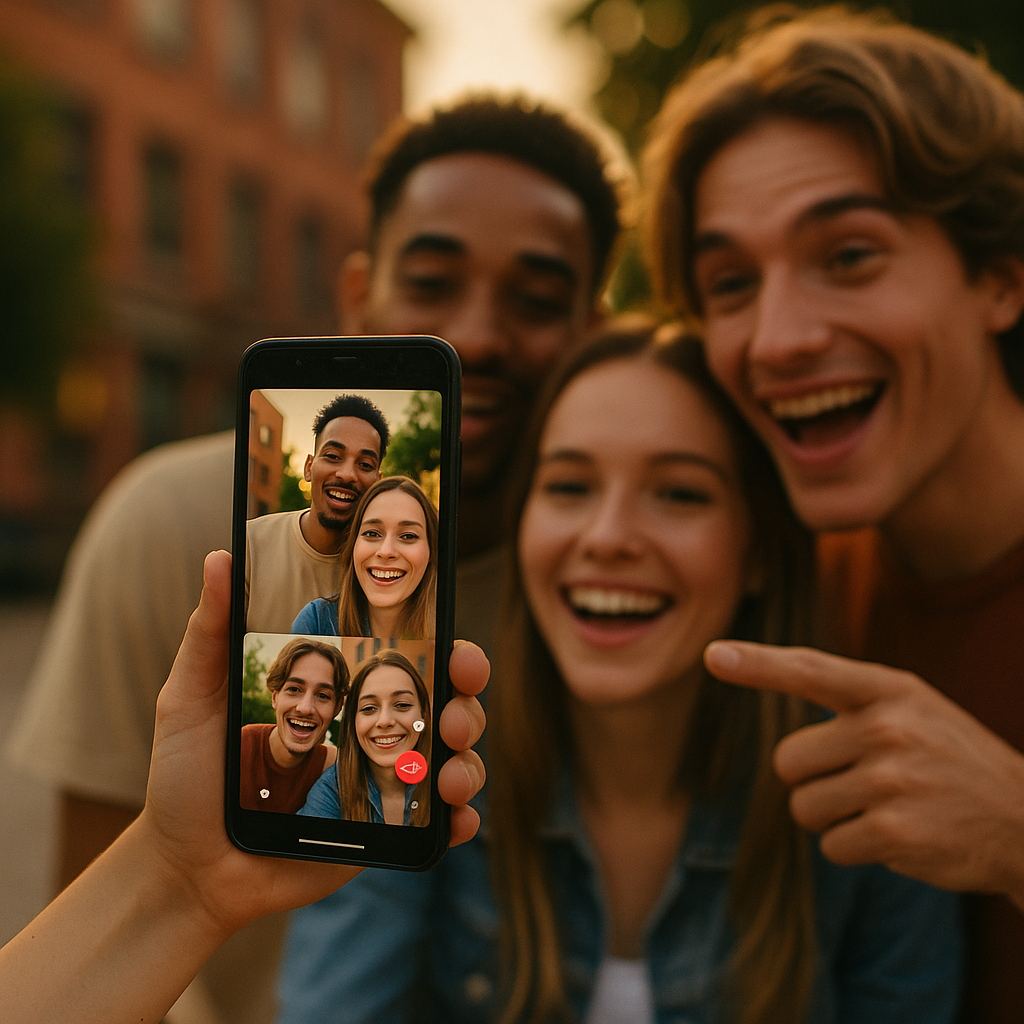
One creator posting a launch video gets you a few thousand views and a polite comment section. Ten creators duetting the same drop, from ten different angles, in the same 48-hour window? That’s an algorithmic pile-on brands can’t buy with media spend alone. The multi-creator duet drop has quietly become one of the sharpest coordinated-launch formats available to brand teams, and most marketing calendars still aren’t built to use it properly.
This isn’t influencer seeding with extra steps. It’s a choreographed release where multiple creators duet, stitch, or react to a single source video (usually the brand’s or a lead creator’s) within a tight window, creating a wave of interconnected content that platforms reward with cross-pollinated distribution.
What a Duet Drop Actually Looks Like
Picture a skincare brand launching a new serum. Instead of ten separate unboxing videos scattered across two weeks, the brand seeds one anchor video, maybe a founder explaining the formulation, or a split-screen demo, and briefs ten to twenty creators to duet it within a 24 to 72 hour window. Each creator reacts, adds their own take, or extends the demo with their skin type, their routine, their skepticism. TikTok and Instagram both surface duets and stitches to the original audience and to new discovery feeds, so the anchor video keeps getting fresh exposure every time someone duets it.
The mechanic is simple. The payoff is compounding. Each duet acts as a distribution node, and because the platform’s recommendation engine treats duet chains as engagement signals, a well-seeded drop can snowball well past what any single sponsored post would achieve.
A coordinated duet wave doesn’t just multiply impressions, it multiplies trust signals: the same claim, validated by a dozen different voices, in the same 48 hours.
Why This Format Solves a Real Launch Problem
Product launches usually suffer from one of two failure modes: either the content trickles out over weeks and momentum never builds, or every creator posts on the same day but in total isolation, so the algorithm treats each post as an unrelated one-off. Duet drops fix both. The synchronized timing creates a concentrated spike that’s hard for the algorithm to ignore, and the duet mechanic explicitly links every post back to a shared source, so the platform understands these aren’t disconnected mentions, they’re a conversation.
There’s also a credibility angle brand teams underrate. A single sponsored post reads as an ad. A chain of creators independently reacting to the same product, each with their own skepticism, their own audience, their own style, reads like organic consensus. That’s the same psychological lever behind comparison versus videos, where seeing multiple credible sources land on the same conclusion does more for purchase confidence than any single testimonial.
Building the Brief Without Losing Creative Control
The hardest part of running a duet drop isn’t recruitment, it’s briefing enough structure to keep messaging consistent without flattening every creator into the same script. Get this wrong and you end up with twenty videos that all sound like they were written by the same overworked copywriter, which defeats the entire purpose.
- Anchor asset first. Nail the source video before anything else. It needs a clear hook in the first three seconds, because every duet inherits that hook’s energy (or lack of it).
- One required beat, everything else open. Ask each creator to hit a single mandatory element (a specific claim, a CTA, a hashtag) and leave tone, framing, and personal opinion entirely up to them.
- Staggered but tight timing. Coordinate a posting window, not a single minute. A 48 hour spread still reads as “coordinated” to the algorithm while giving creators flexibility around their own posting cadence.
- Disclosure built in. Every participating creator needs clear #ad or #partner disclosure per FTC guidance, regardless of whether they’re duetting a brand asset or another creator’s post.
Teams that already use UGC briefs with tracking fields have an advantage here, because the same tagging discipline that feeds CRM attribution also makes it possible to trace which duet actually drove the conversion spike, instead of guessing after the fact.
Casting: Mixing Tiers Matters More Than Total Reach
Brands love to chase follower count, but duet drops actually work better with a deliberately mixed roster. A single mega-creator anchor video paired with fifteen to twenty micro and mid-tier creators duetting it tends to outperform a roster of equally-sized accounts, because the size gap creates a natural narrative: “this big name posted it, and now everyone’s reacting.”
Micro-creators bring something mega-creators can’t: their audiences trust them because they seem accessible, unpolished, un-sponsored (even when they’re clearly sponsored). That’s the same dynamic driving the rise of split screen duet reviews, where the visible juxtaposition of two creators, or a creator and a product demo, does more heavy lifting for purchase trust than a polished single-camera ad ever could.
Casting a duet drop like a media buy (biggest reach wins) misses the point. Casting it like a jury (diverse, credible, independently arriving at the same verdict) is what actually moves purchase intent.
Measuring a Format That Doesn’t Fit Standard Dashboards
Most influencer platforms report per-post metrics beautifully and coordinated-wave metrics badly. If you’re only looking at individual view counts, you’re missing the point of the format entirely. What you actually want to track:
- Duet chain depth: how many creators duetted the duets, not just the original anchor.
- Time-to-peak: how quickly the wave hit its engagement ceiling, which tells you whether your posting window was too loose or too tight next time.
- Branded search lift: a spike in branded search volume during and immediately after the window is often a cleaner signal than aggregate views, and it’s directly visible in search trend data or your own analytics stack.
- Cross-platform bleed: did the TikTok wave generate screenshots and reposts on Instagram or X? That secondary spread is often where the real incremental reach lives.
For attribution, this format pairs well with structured video scripting that keeps a trackable CTA consistent across every version. If your team hasn’t standardized that yet, the approach outlined in short form video scripts built to track revenue is a solid starting template to adapt for a duet-specific brief.
Common Ways Duet Drops Fall Apart
Timing slippage kills more duet drops than bad creative does. If a third of your roster posts on day one and the rest trickle in over two weeks, you’ve lost the compounding effect entirely and just produced a slow drip of disconnected content. Set a hard window and build in a modest incentive (a bonus, an early-access perk, whatever fits your budget) for on-time posting.
The second failure mode is over-scripting. Brand teams nervous about message control sometimes write near-identical talking points for every creator, and the result looks suspiciously synchronized to viewers, which erodes exactly the organic-consensus effect the format is supposed to create. Give creators a mandatory beat and get out of the way for the rest.
Third: forgetting the anchor needs to be genuinely good on its own. If the source video is weak, every duet inherits that weakness, and no amount of downstream creator talent fixes a flat hook. Treat the anchor with the same rigor you’d apply to a founder-led video or hero ad, because functionally that’s what it is.
Finally, don’t skip platform-specific formatting checks. A duet built for TikTok’s vertical feed won’t automatically translate if you’re planning to repurpose the wave for connected TV or YouTube placements later; run it through a proper vertical to horizontal reformatting checklist before pushing it into paid media. Platforms like TikTok Ads Manager and Meta Business Suite both offer boosting tools that work best when the creative is already optimized per placement.
Budgeting for a Wave, Not a Post
Pricing a duet drop like a normal batch of sponsored posts undervalues the coordination itself. You’re not just paying for content, you’re paying creators to hit a shared window, follow a shared beat, and accept less individual creative freedom than a standard brief. Budget accordingly: a modest coordination premium, plus a bonus tied to on-time posting, usually costs less than the media spend you’d need to manufacture the same reach through paid alone.
According to industry benchmarking from firms like eMarketer, coordinated creator campaigns consistently outperform single-post sponsorships on cost-per-engagement, largely because the compounding distribution effect does work that would otherwise require additional ad spend to replicate.
Next Step
Pick your next launch, no matter how small, and run a scaled-down duet drop with five to eight creators before committing budget to a twenty-person wave. Nail the anchor, set a 48-hour window, define one mandatory beat, and measure duet chain depth alongside branded search lift. That test tells you more about whether this format fits your brand than any case study ever will.
Frequently Asked Questions
What is a multi-creator duet drop?
It’s a coordinated product launch tactic where multiple creators duet, stitch, or react to a single anchor video within a tight posting window, creating a concentrated wave of interlinked content around one launch moment.
How many creators do I need for a duet drop to work?
There’s no strict minimum, but most brands see meaningful compounding starting around eight to ten creators. Smaller tests with five to eight creators are a reasonable way to validate the format before scaling.
Which platforms support duet drops best?
TikTok’s native duet and stitch features make it the strongest fit, though Instagram Reels remix and collaborative posts can replicate a similar effect. Timing coordination matters more than the specific platform mechanic.
Do all creators need to disclose the partnership even if they’re just duetting?
Yes. Any creator receiving compensation, free product, or other consideration must disclose the partnership per FTC guidelines, regardless of whether their post is an original video or a duet of another asset.
How do I measure success beyond individual view counts?
Track duet chain depth, time-to-peak engagement, branded search lift, and cross-platform bleed (screenshots or reposts on other platforms). These wave-level metrics capture the compounding effect that per-post dashboards miss.
How is a duet drop different from a standard influencer seeding campaign?
Standard seeding sends product to creators who post independently on their own timeline. A duet drop coordinates timing and requires creators to visibly link their content back to a shared anchor, creating an algorithmically recognized wave instead of scattered mentions.
FAQs
What is a multi-creator duet drop?
It’s a coordinated product launch tactic where multiple creators duet, stitch, or react to a single anchor video within a tight posting window, creating a concentrated wave of interlinked content around one launch moment.
How many creators do I need for a duet drop to work?
There’s no strict minimum, but most brands see meaningful compounding starting around eight to ten creators. Smaller tests with five to eight creators are a reasonable way to validate the format before scaling.
Which platforms support duet drops best?
TikTok’s native duet and stitch features make it the strongest fit, though Instagram Reels remix and collaborative posts can replicate a similar effect. Timing coordination matters more than the specific platform mechanic.
Do all creators need to disclose the partnership even if they’re just duetting?
Yes. Any creator receiving compensation, free product, or other consideration must disclose the partnership per FTC guidelines, regardless of whether their post is an original video or a duet of another asset.
How do I measure success beyond individual view counts?
Track duet chain depth, time-to-peak engagement, branded search lift, and cross-platform bleed (screenshots or reposts on other platforms). These wave-level metrics capture the compounding effect that per-post dashboards miss.
How is a duet drop different from a standard influencer seeding campaign?
Standard seeding sends product to creators who post independently on their own timeline. A duet drop coordinates timing and requires creators to visibly link their content back to a shared anchor, creating an algorithmically recognized wave instead of scattered mentions.
Top Influencer Marketing Agencies
The leading agencies shaping influencer marketing in 2026
Agencies ranked by campaign performance, client diversity, platform expertise, proven ROI, industry recognition, and client satisfaction. Assessed through verified case studies, reviews, and industry consultations.
Moburst

-
2

The Shelf
Boutique Beauty & Lifestyle Influencer AgencyA data-driven boutique agency specializing exclusively in beauty, wellness, and lifestyle influencer campaigns on Instagram and TikTok. Best for brands already focused on the beauty/personal care space that need curated, aesthetic-driven content.Clients: Pepsi, The Honest Company, Hims, Elf Cosmetics, Pure LeafVisit The Shelf → -
3

Audiencly
Niche Gaming & Esports Influencer AgencyA specialized agency focused exclusively on gaming and esports creators on YouTube, Twitch, and TikTok. Ideal if your campaign is 100% gaming-focused — from game launches to hardware and esports events.Clients: Epic Games, NordVPN, Ubisoft, Wargaming, Tencent GamesVisit Audiencly → -
4

Viral Nation
Global Influencer Marketing & Talent AgencyA dual talent management and marketing agency with proprietary brand safety tools and a global creator network spanning nano-influencers to celebrities across all major platforms.Clients: Meta, Activision Blizzard, Energizer, Aston Martin, WalmartVisit Viral Nation → -
5

The Influencer Marketing Factory
TikTok, Instagram & YouTube CampaignsA full-service agency with strong TikTok expertise, offering end-to-end campaign management from influencer discovery through performance reporting with a focus on platform-native content.Clients: Google, Snapchat, Universal Music, Bumble, YelpVisit TIMF → -
6

NeoReach
Enterprise Analytics & Influencer CampaignsAn enterprise-focused agency combining managed campaigns with a powerful self-service data platform for influencer search, audience analytics, and attribution modeling.Clients: Amazon, Airbnb, Netflix, Honda, The New York TimesVisit NeoReach → -
7

Ubiquitous
Creator-First Marketing PlatformA tech-driven platform combining self-service tools with managed campaign options, emphasizing speed and scalability for brands managing multiple influencer relationships.Clients: Lyft, Disney, Target, American Eagle, NetflixVisit Ubiquitous → -
8

Obviously
Scalable Enterprise Influencer CampaignsA tech-enabled agency built for high-volume campaigns, coordinating hundreds of creators simultaneously with end-to-end logistics, content rights management, and product seeding.Clients: Google, Ulta Beauty, Converse, AmazonVisit Obviously →