


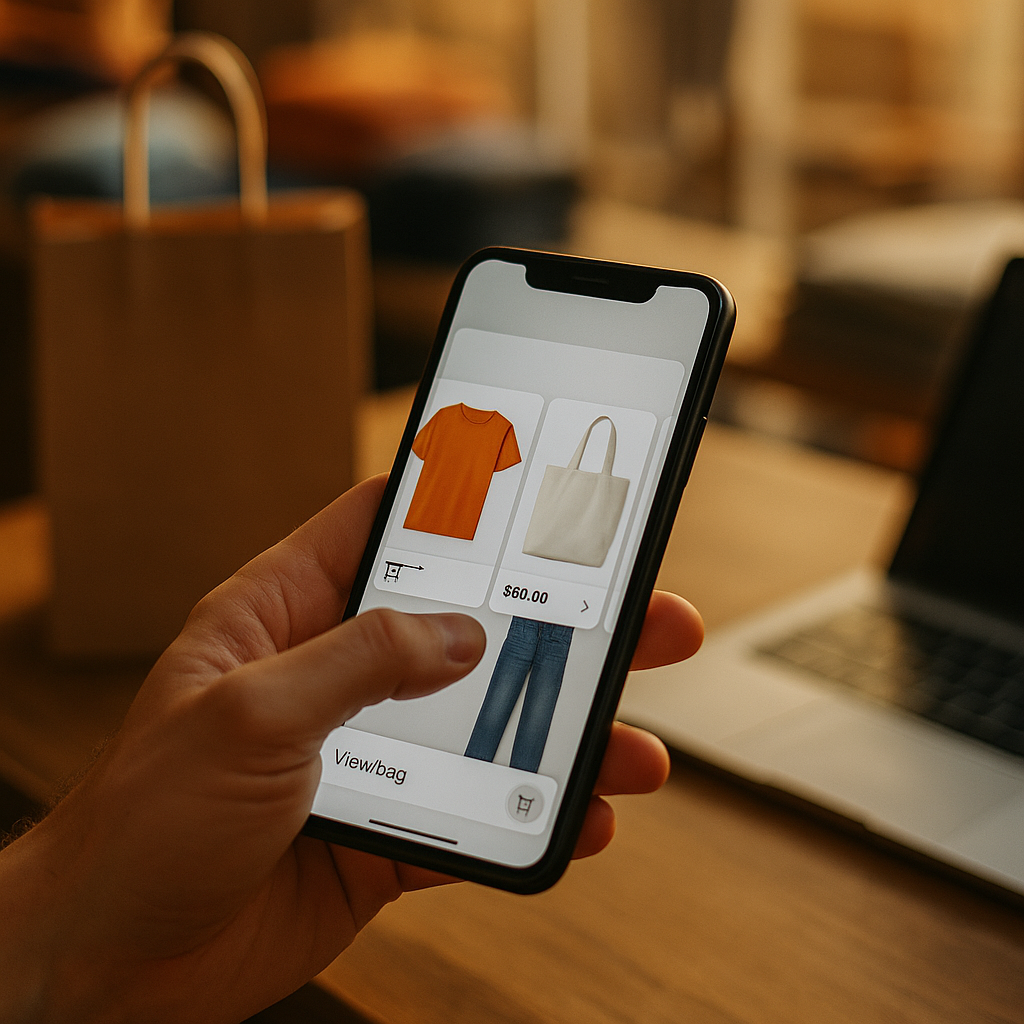
Meta reports that carousel ad formats can drive up to 30 to 50 percent lower cost per conversion than single-image ads in certain retail verticals. That gap alone should make any brand rethink its creative mix. A shoppable carousel ad is not just a prettier way to show off five product angles, it is a conversion machine disguised as a swipeable gallery, and most brands are still using it like a digital catalog instead of a sales funnel.
What Makes a Carousel “Shoppable” (And Why That Distinction Matters)
A standard carousel ad shows multiple images or videos in a single unit. A shoppable one links each card to a specific product page, price point, or checkout flow, often with dynamic overlays pulling from a live product catalog. That difference sounds small. It is not.
The shoppable version turns passive browsing into an active purchase path. Every card becomes its own micro landing page. Every swipe is a decision point. When a shopper taps card three because the color caught their eye, they should land on that exact SKU, not a generic homepage that forces them to hunt.
Treat each carousel card as an independent conversion opportunity, not a slide in a slideshow. Cards that link to mismatched or generic landing pages lose 20 to 40 percent of potential click-through value, according to internal benchmarks shared across major agency case studies.
The Anatomy of a High-Converting Shoppable Carousel
Structure beats aesthetics here. A carousel with gorgeous photography and no strategic sequencing will underperform a scrappier one built with intent. Here’s what the winning formula usually includes:
- Hook card first. The opening slide needs to stop the scroll in under one second. Lead with the boldest visual, the biggest discount, or the most surprising use case.
- Progressive proof. Cards two through four should build credibility: different angles, in-context usage, a size chart, a before-and-after.
- Social proof card. A review snippet, UGC clip, or star rating overlay dramatically increases trust mid-scroll.
- Clear CTA close. The final card should carry urgency (limited stock, bundle pricing) and a direct “Shop Now” action.
- Consistent pricing visibility. Show price on every card, not just the last one. Shoppers abandon carousels when they have to guess cost.
Brands running Meta’s dynamic product ads inside carousel format have leaned into automated feeds to keep this structure fresh at scale. Check Meta’s business advertising resources for current specs on catalog syncing and card limits.
Platform Differences You Can’t Ignore
Not every platform treats carousels the same, and copying a Meta-native carousel straight onto TikTok Shop is a rookie mistake.
Meta (Facebook and Instagram): Supports up to 10 cards per carousel, each with its own headline, description, and link. Best for retargeting warm audiences who already know the brand, since the format rewards familiarity over cold discovery.
TikTok: Carousel ads here lean more visual and less text-heavy. TikTok’s algorithm favors native-feeling content, so overly polished product shots underperform compared to UGC-style stills. Pairing this format with static photo UGC techniques often outperforms studio photography.
Pinterest: Shoppable carousels thrive here because users arrive with purchase intent already baked in. This is arguably the highest-converting environment for the format, since Pinterest users are searching, not just scrolling.
Amazon and retail media networks: Carousel-style sponsored brand ads exist but with stricter creative guidelines. Less room for storytelling, more emphasis on price and rating visibility.
Briefing Creators for Shoppable Carousel Content
If you’re sourcing carousel content from creators rather than in-house production, the brief needs to be tighter than a typical UGC ask. Vague briefs produce carousels that look nice but don’t sell.
Specify the card count, the order of information, and what each card needs to accomplish. Don’t just ask for “five product photos.” Ask for a hook shot, two lifestyle context shots, one detail/texture shot, and one CTA-ready closing image with room for text overlay.
This mirrors the same discipline used in UGC briefs with tracking fields, where structured inputs feed directly into measurable outputs. Carousel ads deserve the same rigor. A loose brief here costs you both creative quality and attribution clarity.
Also worth borrowing: the sequencing logic from multi-angle demo reels. That shot-list discipline, showing a product from every functional angle, translates almost directly into carousel card planning and helps reduce post-purchase returns because shoppers know exactly what they’re buying.
Measuring What Actually Matters
Click-through rate is the vanity metric everyone chases. It’s the wrong one to obsess over in isolation.
Track card-level engagement instead. Most ad platforms let you see which specific carousel card gets the most swipes and clicks. If card four (the social proof slide) is outperforming your hero shot on card one, that’s a signal to restructure the entire sequence, not just optimize copy.
Watch these metrics in combination:
- Swipe-through rate (how far into the carousel users get before dropping off)
- Card-specific click-to-cart rate
- Cost per add-to-cart, broken down by card position
- Post-click bounce rate on the linked product page
According to data cited by eMarketer’s social commerce research, shoppable formats with clear per-card attribution outperform generic link-in-bio strategies by a wide margin, largely because friction between discovery and purchase drops to near zero.
For brands running influencer-sourced carousel content, pulling data into a CRM matters just as much as the creative itself. If your short form video scripts already tie into revenue tracking, extend that same infrastructure to carousel campaigns so you’re comparing formats apples-to-apples.
Common Mistakes That Tank Conversion
Let’s be blunt: most shoppable carousels fail for the same handful of reasons, and none of them are mysterious.
Too many cards, no narrative. Ten cards of unrelated product shots isn’t a story, it’s clutter. Cap it at five to seven unless you’re running a true multi-product bundle campaign.
Broken or mismatched links. This sounds basic, but QA failures here are shockingly common. Every card link should be tested before launch, every single time.
Ignoring mobile thumb behavior. Most carousel engagement happens on mobile with one-handed swiping. Text that’s readable on desktop preview often gets cropped or missed on a phone screen.
No urgency mechanism. Shoppable carousels without scarcity cues (low stock, limited-time pricing) convert at noticeably lower rates than those with a clear reason to act now.
A carousel that requires more than three seconds of thinking per card has already lost the sale. Simplicity and sequencing beat volume and polish, every time.
There’s also a compliance layer worth mentioning. If any cards feature creator content or paid partnerships, disclosure rules still apply even inside a shoppable format. Review the FTC’s endorsement guidelines to make sure sponsored carousel cards are properly labeled, especially when they blend organic-style UGC with paid product links.
Where This Format Fits in a Broader Content Strategy
Shoppable carousels shouldn’t live in isolation. They perform best as the conversion layer sitting underneath awareness content generated elsewhere, whether that’s comparison versus videos driving consideration or split screen duet reviews building trust earlier in the funnel.
Think of it as a layered system: top-of-funnel video builds awareness and trust, mid-funnel content addresses objections, and the shoppable carousel closes the loop with a frictionless path to checkout. Brands treating carousel ads as a standalone tactic rather than a funnel stage tend to see diminishing returns after the initial novelty wears off.
Tools like TikTok’s ad manager and Meta’s catalog manager both support dynamic carousel automation now, which means the operational lift of maintaining these campaigns has dropped considerably compared to a few years ago. Use that efficiency gain to test more sequencing variations, not to reduce the strategic thought behind each one.
Next Step
Pull your last three carousel campaigns and check card-level drop-off data before you brief another one. If swipe-through collapses after card two, the fix isn’t more cards, it’s a better hook and a tighter sequence.
FAQs
What is a shoppable carousel ad?
It’s a multi-card ad format where each card links directly to a specific product page or checkout flow, rather than a single generic landing page, letting shoppers move from discovery to purchase within one continuous swipe experience.
How many cards should a shoppable carousel include?
Most high-performing campaigns use five to seven cards. More than ten tends to dilute focus and increase drop-off, unless the campaign is specifically built around bundle or multi-product storytelling.
Which platform performs best for shoppable carousel ads?
Pinterest often sees the highest intent-driven conversion because users arrive already searching with purchase intent. Meta works well for retargeting warm audiences, while TikTok favors native, UGC-style carousel content over polished studio photography.
Do shoppable carousel ads require FTC disclosure?
Yes, if any cards feature creator or influencer content tied to a paid partnership, standard endorsement disclosure rules still apply, even within an automated or dynamic carousel format.
What metrics matter most for shoppable carousels?
Card-level swipe-through rate, click-to-cart rate by card position, and cost per add-to-cart matter more than overall click-through rate, since they reveal exactly where in the sequence shoppers lose interest.
FAQs
What is a shoppable carousel ad?
It’s a multi-card ad format where each card links directly to a specific product page or checkout flow, rather than a single generic landing page, letting shoppers move from discovery to purchase within one continuous swipe experience.
How many cards should a shoppable carousel include?
Most high-performing campaigns use five to seven cards. More than ten tends to dilute focus and increase drop-off, unless the campaign is specifically built around bundle or multi-product storytelling.
Which platform performs best for shoppable carousel ads?
Pinterest often sees the highest intent-driven conversion because users arrive already searching with purchase intent. Meta works well for retargeting warm audiences, while TikTok favors native, UGC-style carousel content over polished studio photography.
Do shoppable carousel ads require FTC disclosure?
Yes, if any cards feature creator or influencer content tied to a paid partnership, standard endorsement disclosure rules still apply, even within an automated or dynamic carousel format.
What metrics matter most for shoppable carousels?
Card-level swipe-through rate, click-to-cart rate by card position, and cost per add-to-cart matter more than overall click-through rate, since they reveal exactly where in the sequence shoppers lose interest.
Top Influencer Marketing Agencies
The leading agencies shaping influencer marketing in 2026
Agencies ranked by campaign performance, client diversity, platform expertise, proven ROI, industry recognition, and client satisfaction. Assessed through verified case studies, reviews, and industry consultations.
Moburst

-
2

The Shelf
Boutique Beauty & Lifestyle Influencer AgencyA data-driven boutique agency specializing exclusively in beauty, wellness, and lifestyle influencer campaigns on Instagram and TikTok. Best for brands already focused on the beauty/personal care space that need curated, aesthetic-driven content.Clients: Pepsi, The Honest Company, Hims, Elf Cosmetics, Pure LeafVisit The Shelf → -
3

Audiencly
Niche Gaming & Esports Influencer AgencyA specialized agency focused exclusively on gaming and esports creators on YouTube, Twitch, and TikTok. Ideal if your campaign is 100% gaming-focused — from game launches to hardware and esports events.Clients: Epic Games, NordVPN, Ubisoft, Wargaming, Tencent GamesVisit Audiencly → -
4

Viral Nation
Global Influencer Marketing & Talent AgencyA dual talent management and marketing agency with proprietary brand safety tools and a global creator network spanning nano-influencers to celebrities across all major platforms.Clients: Meta, Activision Blizzard, Energizer, Aston Martin, WalmartVisit Viral Nation → -
5

The Influencer Marketing Factory
TikTok, Instagram & YouTube CampaignsA full-service agency with strong TikTok expertise, offering end-to-end campaign management from influencer discovery through performance reporting with a focus on platform-native content.Clients: Google, Snapchat, Universal Music, Bumble, YelpVisit TIMF → -
6

NeoReach
Enterprise Analytics & Influencer CampaignsAn enterprise-focused agency combining managed campaigns with a powerful self-service data platform for influencer search, audience analytics, and attribution modeling.Clients: Amazon, Airbnb, Netflix, Honda, The New York TimesVisit NeoReach → -
7

Ubiquitous
Creator-First Marketing PlatformA tech-driven platform combining self-service tools with managed campaign options, emphasizing speed and scalability for brands managing multiple influencer relationships.Clients: Lyft, Disney, Target, American Eagle, NetflixVisit Ubiquitous → -
8

Obviously
Scalable Enterprise Influencer CampaignsA tech-enabled agency built for high-volume campaigns, coordinating hundreds of creators simultaneously with end-to-end logistics, content rights management, and product seeding.Clients: Google, Ulta Beauty, Converse, AmazonVisit Obviously →