


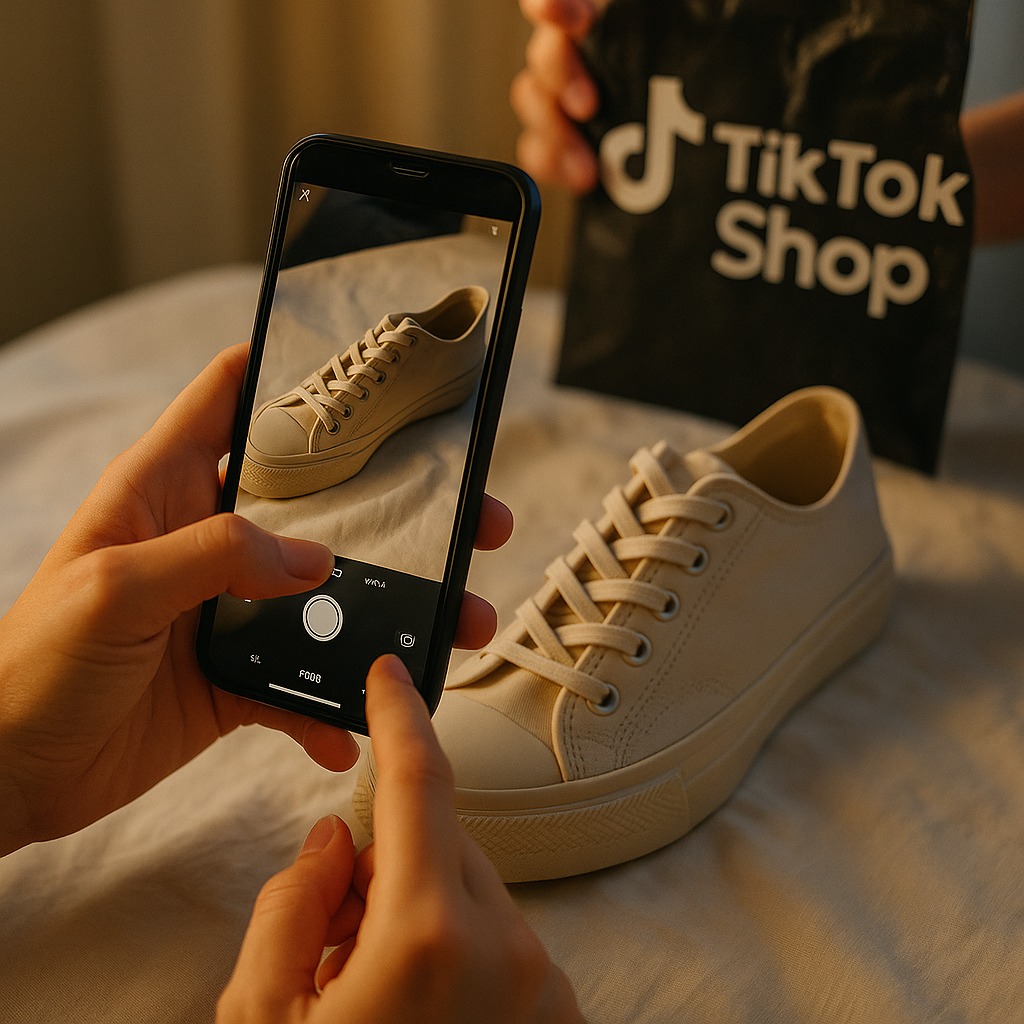
78% of TikTok Shop’s ad inventory is video, yet some of the highest-converting product pages in the feed are built on static photos. That’s not a typo. Photography-first campaigns are quietly outperforming polished video content for entire product categories, and most brands haven’t noticed because they’re too busy chasing the next viral video format. If your team is burning budget on video production while ignoring static UGC, you’re leaving conversion rate on the table.
Wait, Doesn’t TikTok Shop Run on Video?
TikTok built its reputation on video. The algorithm rewards watch time, completion rate, and sound-on engagement. So it seems backwards to argue that static images deserve a bigger slice of your TikTok Shop budget.
But TikTok Shop isn’t just the For You feed. It’s also a product catalog, a set of shoppable posts, and a live shopping surface where buyers are actively comparing options before they tap “buy now.” In that shopping mindset, a clear, well-lit photo of a product often does the job faster than a 30-second video that requires patience the shopper doesn’t have.
Think about how you shop on Amazon. You don’t wait for a video to load before deciding if a couch fits your living room. You scan images: the front angle, the fabric close-up, the size reference next to a person. TikTok Shop buyers, especially in the consideration phase, behave the same way.
Static UGC photos on TikTok Shop product pages have shown higher add-to-cart rates than video-only listings for categories like beauty, home goods, and apparel accessories, according to seller data shared across TikTok Shop creator communities.
The Real Reason Static Wins: Speed and Scan Behavior
Shoppers on TikTok Shop toggle between two modes. There’s discovery mode, where they’re scrolling for entertainment and video wins because it holds attention. Then there’s shopping mode, where they’ve clicked into a product page with intent already formed. Speed matters more than storytelling at that point.
A photo loads instantly. A video buffers, even for a second, and that second is enough friction to lose a purchase decision. Multiply that friction across thousands of product page visits and you start to see why photo-first listings convert better for bottom-funnel traffic.
There’s also a trust signal at play. A grid of five to eight authentic photos, showing the product in different lighting, different angles, on different body types or in different rooms, reads as more credible than a single scripted video. It feels like proof, not performance. Buyers have gotten skeptical of overly produced video ads. A slightly imperfect photo, the kind a real customer would take, still carries weight that a polished video sometimes can’t buy.
This is the same principle behind why multi angle demo reels reduce return rates in video: more visual reference points mean fewer surprises when the box arrives. Static photography just achieves it with a fraction of the production cost.
Where Photography-First Actually Outperforms
Not every product category benefits equally. Here’s where the data consistently favors static UGC over video:
- Beauty and skincare: before-and-after photo sets convert well because buyers want to compare texture, shade, and finish, not watch someone’s morning routine.
- Home and decor: room context shots (a lamp on a nightstand, a rug under a coffee table) help buyers visualize scale faster than video pans.
- Apparel accessories: jewelry, bags, and small goods benefit from macro detail shots that a phone camera video simply can’t hold steady enough to capture.
- Supplements and wellness: label clarity and ingredient close-ups build trust quickly, which matters given how compliance-sensitive this category is.
Categories that still lean video-first: anything requiring demonstration of motion or mechanism (fitness gear, kitchen gadgets, tech accessories). If the product’s value proposition is “watch how it works,” video still wins. But if the value proposition is “see exactly what you’re getting,” photography closes faster.
Building a Photography-First UGC Pipeline
Shifting budget toward static content doesn’t mean abandoning your creator roster. It means rebriefing them. Most creators are trained to think in video terms, hooks, pacing, trending audio. Photography requires a different brief entirely.
Here’s what a strong static UGC brief includes:
- Lighting requirements: natural light preferred, no harsh flash, consistent white balance across the set.
- Angle checklist: front, 45-degree, macro detail, in-use or in-context, scale reference.
- Minimum photo count: five to eight images per SKU to fill out a full product gallery.
- Authenticity markers: real rooms, real skin, real packaging in hand, not studio backdrops that scream “stock photo.”
- Usage rights language: clear terms for whitelisting the photos into paid social and product listings.
This is where a lot of brands stumble. They treat photo UGC as an afterthought bolted onto a video shoot, instead of briefing it as its own deliverable. If you’re already refining briefs to avoid rework, the same discipline that powers partnership ads approval workflows for video applies here: specificity upfront saves rounds of revision later.
Cost Efficiency Nobody Talks About
Video production, even the scrappy, iPhone-shot kind, requires editing time, sound design consideration, and multiple takes to nail delivery. Photography is faster to shoot, faster to review, and faster to greenlight. A creator can deliver a full photo set in the time it takes to film one usable video clip.
That efficiency compounds at scale. If you’re running a program with 50 or 100 creators, photography-first campaigns cut turnaround time significantly, which matters when you’re trying to refresh product listings ahead of a seasonal push or a TikTok Shop campaign event.
Brands running high-volume creator programs report that static content typically ships two to three times faster than video from the same creator pool, freeing budget for paid amplification instead of production overhead.
There’s a compliance upside too. Photos are easier to review for brand safety, claims accuracy, and FTC disclosure compliance than video, where a throwaway comment mid-clip can create liability. If your legal team has ever flagged a video for an offhand health claim, you know how much easier that review gets with static images and caption text you can edit before publishing. The FTC’s endorsement guidelines still apply to photo content, but the review surface is smaller and faster to audit.
Doesn’t This Contradict the “Video Is King” Narrative?
Not exactly. Video still dominates top-of-funnel discovery on TikTok’s main feed. Nobody’s arguing you should stop investing in video entirely. The point is that TikTok Shop specifically, as a shopping surface layered on top of a social feed, behaves more like an e-commerce catalog once a buyer clicks through. And e-commerce catalogs have always rewarded clear photography over cinematic storytelling.
Amazon figured this out over a decade ago. Shopify merchants have known it for years. TikTok Shop is just the newest venue applying the same shopper psychology, dressed up in a social wrapper. Brands that treat TikTok Shop purely as a video platform are missing the hybrid nature of the surface.
This mirrors a pattern we’ve seen elsewhere in creator content strategy. Silent-first editing exists because most video gets watched without sound. Photography-first campaigns exist because most shopping decisions get made without patience for a 15-second load-and-watch cycle. Both are adaptations to how people actually consume content, not how brands wish they would.
What This Means for Your Creator Briefs Going Forward
If you’re managing a TikTok Shop creator program, audit your current asset mix. Pull conversion data by product page and check whether photo-heavy listings are outperforming video-heavy ones in your specific catalog. The category patterns above are directional, not universal, and your own first-party data will tell you more than any industry benchmark.
From there, rebrief a portion of your creator roster to deliver photo sets alongside video. You don’t need to choose one over the other. You need to stop assuming video is the default and start assigning format based on what the product and funnel stage actually require. Tools like HubSpot’s content reporting or your TikTok Shop seller dashboard can help you track which format is doing the heavier lifting per SKU.
It’s also worth checking how your creators are billing for photo versus video deliverables. Some will underprice photo sets because they assume video carries more value. That’s an opportunity to negotiate better rates for a format that might convert better and cost less to produce, a rare win-win in influencer budgeting. For broader context on how platforms are shifting creative expectations, Sprout Social’s platform research and TikTok’s own ads resources are worth monitoring quarterly.
Frequently Asked Questions
FAQs
Is static UGC actually better than video on TikTok Shop, or just cheaper?
It’s both, depending on the category. For products where visual clarity matters more than demonstration (beauty, home decor, accessories), static photos convert as well as or better than video while costing less to produce. For products that require showing motion or mechanism, video still performs better.
How many photos should a creator submit per product?
Most effective photo sets include five to eight images: a front shot, a 45-degree angle, a macro detail shot, an in-context or in-use shot, and a scale reference. Fewer than five tends to leave gaps that hurt buyer confidence.
Do I need a different contract for photo UGC versus video UGC?
You need different usage rights language at minimum. Photo whitelisting terms should specify whether images can be used in product listings, paid social, or both, since photo content often gets reused across more surfaces than a single video clip.
Will TikTok’s algorithm penalize a product page for having mostly static images?
No. TikTok Shop product pages are evaluated on conversion signals like click-through and add-to-cart rate, not on format mix. The algorithm cares whether shoppers act, not whether the content is a photo or a video.
How do I measure whether photography-first is working for my brand?
Compare add-to-cart and conversion rates across product listings with different photo-to-video ratios. Track this by SKU over at least four to six weeks to account for seasonality and creator variance before making a permanent budget shift.
FAQs
Is static UGC actually better than video on TikTok Shop, or just cheaper?
It’s both, depending on the category. For products where visual clarity matters more than demonstration (beauty, home decor, accessories), static photos convert as well as or better than video while costing less to produce. For products that require showing motion or mechanism, video still performs better.
How many photos should a creator submit per product?
Most effective photo sets include five to eight images: a front shot, a 45-degree angle, a macro detail shot, an in-context or in-use shot, and a scale reference. Fewer than five tends to leave gaps that hurt buyer confidence.
Do I need a different contract for photo UGC versus video UGC?
You need different usage rights language at minimum. Photo whitelisting terms should specify whether images can be used in product listings, paid social, or both, since photo content often gets reused across more surfaces than a single video clip.
Will TikTok’s algorithm penalize a product page for having mostly static images?
No. TikTok Shop product pages are evaluated on conversion signals like click-through and add-to-cart rate, not on format mix. The algorithm cares whether shoppers act, not whether the content is a photo or a video.
How do I measure whether photography-first is working for my brand?
Compare add-to-cart and conversion rates across product listings with different photo-to-video ratios. Track this by SKU over at least four to six weeks to account for seasonality and creator variance before making a permanent budget shift.
Next step: pull your last 90 days of TikTok Shop conversion data by SKU, sort by photo-to-video ratio, and rebrief your top three underperforming listings with a dedicated static photo shoot before your next campaign cycle.
Top Influencer Marketing Agencies
The leading agencies shaping influencer marketing in 2026
Agencies ranked by campaign performance, client diversity, platform expertise, proven ROI, industry recognition, and client satisfaction. Assessed through verified case studies, reviews, and industry consultations.
Moburst

-
2

The Shelf
Boutique Beauty & Lifestyle Influencer AgencyA data-driven boutique agency specializing exclusively in beauty, wellness, and lifestyle influencer campaigns on Instagram and TikTok. Best for brands already focused on the beauty/personal care space that need curated, aesthetic-driven content.Clients: Pepsi, The Honest Company, Hims, Elf Cosmetics, Pure LeafVisit The Shelf → -
3

Audiencly
Niche Gaming & Esports Influencer AgencyA specialized agency focused exclusively on gaming and esports creators on YouTube, Twitch, and TikTok. Ideal if your campaign is 100% gaming-focused — from game launches to hardware and esports events.Clients: Epic Games, NordVPN, Ubisoft, Wargaming, Tencent GamesVisit Audiencly → -
4

Viral Nation
Global Influencer Marketing & Talent AgencyA dual talent management and marketing agency with proprietary brand safety tools and a global creator network spanning nano-influencers to celebrities across all major platforms.Clients: Meta, Activision Blizzard, Energizer, Aston Martin, WalmartVisit Viral Nation → -
5

The Influencer Marketing Factory
TikTok, Instagram & YouTube CampaignsA full-service agency with strong TikTok expertise, offering end-to-end campaign management from influencer discovery through performance reporting with a focus on platform-native content.Clients: Google, Snapchat, Universal Music, Bumble, YelpVisit TIMF → -
6

NeoReach
Enterprise Analytics & Influencer CampaignsAn enterprise-focused agency combining managed campaigns with a powerful self-service data platform for influencer search, audience analytics, and attribution modeling.Clients: Amazon, Airbnb, Netflix, Honda, The New York TimesVisit NeoReach → -
7

Ubiquitous
Creator-First Marketing PlatformA tech-driven platform combining self-service tools with managed campaign options, emphasizing speed and scalability for brands managing multiple influencer relationships.Clients: Lyft, Disney, Target, American Eagle, NetflixVisit Ubiquitous → -
8

Obviously
Scalable Enterprise Influencer CampaignsA tech-enabled agency built for high-volume campaigns, coordinating hundreds of creators simultaneously with end-to-end logistics, content rights management, and product seeding.Clients: Google, Ulta Beauty, Converse, AmazonVisit Obviously →