


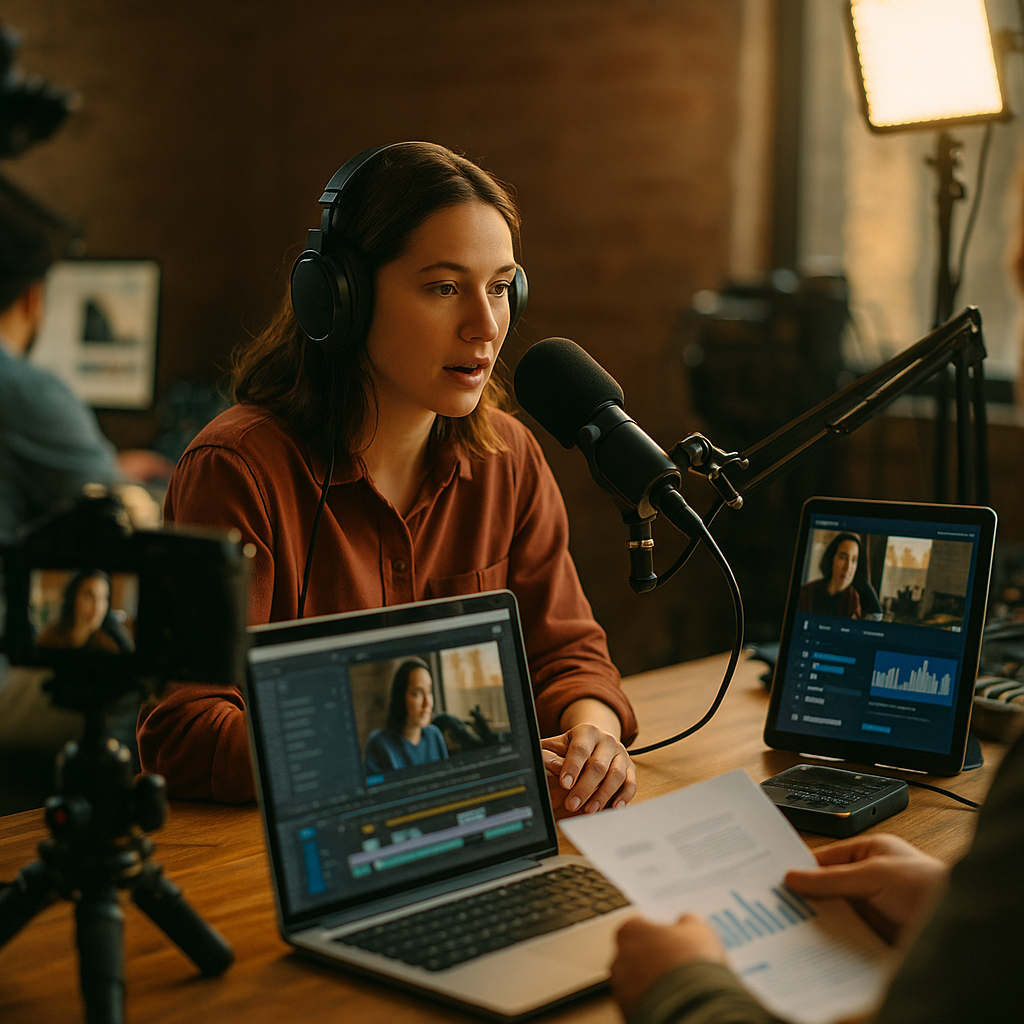
78% of marketers now say short form video delivers the highest ROI of any content format, yet most brand teams still staff as if one editor can handle TikTok cuts, YouTube documentaries, and a live shopping stream in the same afternoon. That math doesn’t work. Multi format content teams need distinct staffing logic for each production style, or you end up with burned out generalists and mediocre output across the board.
The brands winning right now aren’t the ones with the biggest headcount. They’re the ones who matched role design to format demands instead of hiring “content people” and hoping for the best.
Why One Team Can’t Serve Three Formats Well
Short form, long form, and live production aren’t variations on the same skill. They’re different disciplines with different pacing, different tools, and different failure modes. A short form editor lives in Premiere or CapCut chasing hooks and retention curves. A long form producer thinks in narrative arcs and pre production research. A live producer manages real time chaos where there’s no edit bay to fix a bad take.
Staffing all three under one “content team” umbrella usually means the loudest format wins the attention. Short form’s constant publishing cadence eats the calendar, long form gets deprioritized until it’s rushed, and live gets bolted on as an afterthought with whoever’s free that day. Sound familiar?
Treating short form, long form, and live as interchangeable work for the same generalist is the single fastest way to flatten output quality across all three.
This isn’t a hypothetical problem. Teams that scaled fast during the creator economy boom are now the ones quietly restructuring, because the org chart they built for a five person team doesn’t hold at fifty campaigns a quarter. If you’re at that inflection point, it’s worth reading how creator team growth stages map to hiring decisions before you add another generalist role.
Structuring the Short Form Pod
Short form is a volume game. Success here is measured in output velocity and hook testing, not polish. The right structure is a tight pod: one editor, one hook writer or strategist, and a rotating creator liaison who manages briefs and approvals.
- Editor: Owns turnaround speed. Should be fluent in native platform editing tools, not just traditional NLEs.
- Hook strategist: Writes and tests opening lines, works from performance data rather than gut instinct.
- Liaison: Manages creator relationships and brief distribution, especially for nano and micro creator portfolios where volume is high and margins are thin.
Ratio matters more than title here. A single short form pod can realistically support 15 to 25 active creator relationships before quality drops. Push past that and you’re either slowing turnaround or approving weaker cuts just to keep pace.
One thing that trips up finance teams: short form pods look “overstaffed” on paper relative to output volume per person, but the alternative (a lone generalist trying to hit daily publishing cadence) burns out in a quarter. Use guardrail briefs to give creators enough creative latitude that your internal team isn’t micromanaging every cut.
Long Form Needs Producers, Not Just Editors
Long form content, think YouTube documentaries, branded podcasts, or extended case study videos, runs on a completely different clock. Where short form measures success in days, long form measures it in weeks. That changes the staffing math entirely.
A functional long form unit needs a producer who owns pre production (research, outlines, talent booking), a director or shooter for capture, and a dedicated editor who isn’t also expected to churn out five TikToks that same week. Trying to share editors across short and long form formats is one of the most common structural mistakes brands make. The context switching alone tanks productivity, and the editorial instincts required are almost opposite: short form rewards fast cuts and pattern interrupts, long form rewards patience and narrative build.
If your long form output is inconsistent or perpetually late, the fix usually isn’t more editors. It’s a dedicated producer role that owns the calendar and protects pre production time from getting cannibalized by “urgent” short form requests.
Live Production: The Format Everyone Underinvests In
Live shopping, live streams, and real time creator collaborations are growing fast, particularly as platforms like TikTok Shop and Amazon Live push commerce into the live format. But live is the format most brands understaff, because it doesn’t feel like “content” until it’s happening, and by then it’s too late to add resources.
A live production unit needs, at minimum, a technical director who manages the stream itself (switching, audio, connectivity), a moderator who handles real time comments and compliance flags, and a producer who runs the run of show and keeps talent on script and on time. Skipping any one of these roles is how live events end up with dead air, missed FTC disclosure moments, or a creator going off brand message with no one to redirect them.
Live is the only format with zero edit safety net. Understaffing it doesn’t just lower quality, it creates real compliance and brand safety exposure in real time.
Because live moments often involve paid partnerships and real time claims, this is also where your creator governance committee should have visibility into the run of show before it airs, not after. Review the FTC’s endorsement guidance with your legal team so your live moderator knows exactly what disclosure language needs to appear on screen in real time.
Shared Services vs Dedicated Pods: What Actually Scales
There’s a persistent debate about whether to build shared services (one pool of editors serving all formats) or dedicated pods (separate teams per format). The honest answer is it depends on volume.
Below a certain campaign volume, roughly under 10 active creator programs a month, dedicated pods are overkill. A lean shared services model with clear format specialization within a small team works fine. Above that threshold, dedicated pods almost always win on quality and speed, even though they cost more in headcount.
Where this gets complicated is agency partnerships. If you’re weighing whether to build these pods internally or lean on an agency of record, the math shifts based on cost per managed dollar, not just raw headcount comparisons. Some brands run short form in house for speed and outsource long form production to a specialized studio, since long form work benefits from deeper production infrastructure. Compare that against a straight studio versus agency retainer model to see which actually reduces cost per asset at your volume.
Whatever model you choose, budget allocation across formats needs its own logic too. Splitting spend evenly across short, long, and live rarely reflects where the ROI actually lands. A hybrid asset budgeting approach that weights spend by format performance tends to outperform flat splits.
Reporting Lines and Who Owns What
Structural clarity fails without clear ownership. Who signs off on a live stream script? Who approves a long form rough cut before it goes to legal? These aren’t rhetorical questions, they’re the actual gaps that cause delays.
The cleanest model gives each format lead direct reporting to a content operations manager, who then rolls up reporting to whoever owns the creator program budget. That keeps format specialists focused on execution while someone above them handles cross format resourcing conflicts, like when a live event and a long form shoot both need the same producer on the same week.
Executive visibility matters too. If your leadership team can’t see format level performance separately, they’ll keep asking why “content” costs so much without understanding that live production infrastructure and short form volume production have entirely different cost structures. Building this into your board level reporting templates gives finance the format breakdown they need to stop asking blunt headcount questions.
For deeper data on how creator content spend is shifting across formats, eMarketer’s creator economy research and Sprout Social’s platform benchmarks are useful references when building your own staffing business case.
Frequently Asked Questions
FAQ Visible Section
How many people do you need to run a multi format content team?
It depends on volume, but a workable baseline is three to five people per format at moderate campaign volume: a two to three person short form pod, a two person long form unit (producer plus editor), and a three person live crew (technical director, moderator, producer). Below that, expect quality tradeoffs or slower turnaround.
Should short form and long form editors ever be interchangeable?
Generally no. The pacing, tools, and creative instincts differ enough that cross training helps in emergencies, but making it a permanent shared role tends to lower output quality in both formats.
What’s the biggest staffing mistake brands make with live production?
Understaffing it because it doesn’t look like a “content” cost until the stream is already running. Live needs a dedicated moderator and technical director at minimum, not a repurposed social media manager doing three jobs at once.
Is it better to outsource one format and keep others in house?
Many brands do exactly this, often keeping short form in house for speed while outsourcing long form to a production studio with deeper equipment and editing infrastructure. The right split depends on your cost per managed dollar and how often each format runs.
How does team structure change as creator program volume grows?
Early stage programs usually run shared services with a small generalist team. As volume grows past roughly ten active creator programs a month, dedicated pods per format typically become more cost effective and produce higher quality output.
Next step: Audit your current team against these three format buckets this week. If one person is covering more than one format’s core role, that’s your first restructuring priority, not your last.
Top Influencer Marketing Agencies
The leading agencies shaping influencer marketing in 2026
Agencies ranked by campaign performance, client diversity, platform expertise, proven ROI, industry recognition, and client satisfaction. Assessed through verified case studies, reviews, and industry consultations.
Moburst

-
2

The Shelf
Boutique Beauty & Lifestyle Influencer AgencyA data-driven boutique agency specializing exclusively in beauty, wellness, and lifestyle influencer campaigns on Instagram and TikTok. Best for brands already focused on the beauty/personal care space that need curated, aesthetic-driven content.Clients: Pepsi, The Honest Company, Hims, Elf Cosmetics, Pure LeafVisit The Shelf → -
3

Audiencly
Niche Gaming & Esports Influencer AgencyA specialized agency focused exclusively on gaming and esports creators on YouTube, Twitch, and TikTok. Ideal if your campaign is 100% gaming-focused — from game launches to hardware and esports events.Clients: Epic Games, NordVPN, Ubisoft, Wargaming, Tencent GamesVisit Audiencly → -
4

Viral Nation
Global Influencer Marketing & Talent AgencyA dual talent management and marketing agency with proprietary brand safety tools and a global creator network spanning nano-influencers to celebrities across all major platforms.Clients: Meta, Activision Blizzard, Energizer, Aston Martin, WalmartVisit Viral Nation → -
5

The Influencer Marketing Factory
TikTok, Instagram & YouTube CampaignsA full-service agency with strong TikTok expertise, offering end-to-end campaign management from influencer discovery through performance reporting with a focus on platform-native content.Clients: Google, Snapchat, Universal Music, Bumble, YelpVisit TIMF → -
6

NeoReach
Enterprise Analytics & Influencer CampaignsAn enterprise-focused agency combining managed campaigns with a powerful self-service data platform for influencer search, audience analytics, and attribution modeling.Clients: Amazon, Airbnb, Netflix, Honda, The New York TimesVisit NeoReach → -
7

Ubiquitous
Creator-First Marketing PlatformA tech-driven platform combining self-service tools with managed campaign options, emphasizing speed and scalability for brands managing multiple influencer relationships.Clients: Lyft, Disney, Target, American Eagle, NetflixVisit Ubiquitous → -
8

Obviously
Scalable Enterprise Influencer CampaignsA tech-enabled agency built for high-volume campaigns, coordinating hundreds of creators simultaneously with end-to-end logistics, content rights management, and product seeding.Clients: Google, Ulta Beauty, Converse, AmazonVisit Obviously →