


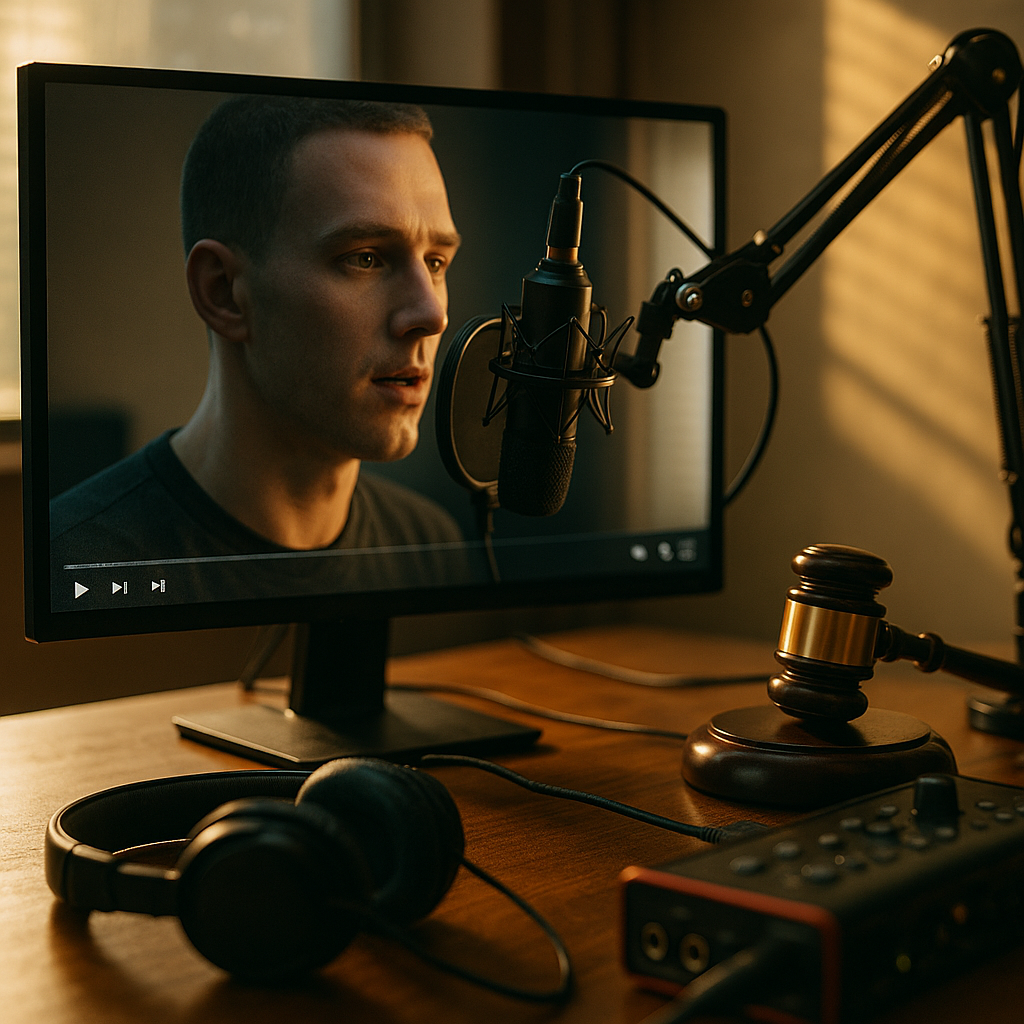
Navigating The Legalities Of Synthetic Voiceovers In Global Advertising is now a practical requirement for brands running multilingual campaigns at speed. AI-generated narration can cut costs and accelerate localization, but it can also trigger disputes over consent, copyright, privacy, and deceptive marketing. In 2025, regulators and platforms scrutinize voice cloning more closely than ever—so how do you stay compliant while still moving fast?
Global advertising compliance: mapping the regulatory landscape
Global advertising compliance starts with a simple reality: there is no single worldwide rulebook for synthetic voiceovers. The same ad can be lawful in one market and risky in another because the underlying legal theories differ—consumer protection, privacy, intellectual property, labor/performer rights, and even election or deepfake rules may apply. Your legal review should begin by classifying the voiceover into one of three buckets, because the compliance approach changes for each:
- Text-to-speech (non-identifiable voice): A “generic” synthetic voice that does not imitate a real person.
- Voice cloning (identifiable individual): A synthetic voice designed to sound like a specific person, living or deceased.
- Hybrid production: A human performance used to train or “style” a model, then used to generate new lines, languages, or revisions.
From there, build a jurisdiction checklist tied to media placement. Ads distributed globally through one platform still count as local advertising in many countries, which means local consumer laws, privacy rules, and talent-rights doctrines can apply where the audience is targeted. This is why “we produced it in one country” rarely ends the inquiry. A practical approach is to adopt a highest-common-denominator policy for high-risk uses (especially voice cloning), then tailor disclosures and consents market-by-market for top spend regions.
Many enforcement actions in advertising focus on how the message is presented—misleading endorsements, false implications of affiliation, or unclear sponsorship—even when the underlying content is otherwise lawful. Treat synthetic audio as a claim amplifier: if the voice sounds like a known figure or a trusted role (doctor, government official, celebrity), regulators and platforms may view it as more likely to mislead.
Synthetic voiceover laws: consent, publicity rights, and identity misuse
Synthetic voiceover laws often hinge on whether the output is linked to a real person. If it is, the central question becomes consent: did you have permission to use that person’s voice (or voice likeness) for this purpose, in this territory, for this duration, and in this media context?
In many jurisdictions, a person’s voice can be protected as an aspect of identity through publicity/personality rights, unfair competition, passing off, or similar doctrines. Even where “voice” is not explicitly listed in statute, courts and regulators frequently treat it as identity-linked when the imitation is recognizable. That matters because a global ad can generate liability even if you never used the person’s name or image.
For advertisers, the safest operational rule is:
- If the voice is recognizable as a real individual, get express, written consent that covers: the specific synthetic process, the scope of use (channels, territories, languages), the term, exclusivity (if any), and whether derivatives/updates are allowed.
- Avoid “soundalikes” intended to evoke a known person without licensing. “Not naming them” does not reliably reduce risk.
- For deceased individuals, treat it as an estate-rights problem plus a reputational-risk problem. Confirm whether post-mortem publicity rights apply in the target markets and obtain rights from authorized representatives where needed.
Advertisers also need to consider consumer perception. If your synthetic voice could reasonably be taken as a real spokesperson, a brand partner, or a platform narrator, you may trigger misrepresentation claims even without a direct identity-rights violation. This is especially relevant in finance, healthcare, and regulated products where “authoritative” narration can be construed as an implied endorsement.
Answering the follow-up question brands usually ask—“What if we trained the model on publicly available audio?”—public availability is not the same as permission. You still need the right to use the voice as an identity attribute, and you may also need rights related to the underlying recordings and data processing.
AI voice licensing: contracts, usage rights, and performer protections
AI voice licensing is where good intentions become enforceable obligations. Your contracts should reflect the technical reality that synthetic voiceovers are often reused, iterated, localized, and repurposed across campaigns. If you do not lock down rights up front, you can end up paying twice—once to create the voice and again to fix a rights gap after launch.
For brand counsel, procurement, and agencies, strong licensing packages typically include:
- Clear grant of rights to use the voice output in specified media, territories, and durations, including paid social and programmatic.
- Rights to create derivatives (new scripts, edits, translations, different reads), and whether approvals are required.
- Model training and data use terms: whether the performer’s recordings can train a model, whether training is limited to one brand, and whether the vendor can reuse the model for other clients.
- Exclusivity and category conflicts: prevent the same synthetic voice from appearing for competitors if brand distinctiveness matters.
- Compensation structure: buyout vs. residual-like payments tied to media spend, territory, or term; include renewal pricing to avoid renegotiation under pressure.
- Moral rights, reputational clauses, and content restrictions: define prohibited uses (politics, adult content, sensitive topics) to reduce conflict and litigation risk.
- Indemnities and warranties: who stands behind clearance of training data, voice rights, and IP; include audit rights for high-risk campaigns.
When working with voice actors, you should also respect industry norms around performer control and reuse, even if local law is silent. That is part of EEAT in practice: you build trust with talent and reduce the likelihood of public disputes that can derail a campaign. If you rely on a vendor’s “royalty-free AI voice,” ask for evidence that the voice was created and licensed ethically and that the vendor has permission for commercial advertising use in your target markets.
A common follow-up question is: “Do we need a separate license for each language version?” If localization is done by generating synthetic speech from the same voice model, the safe answer is yes—your agreement should explicitly authorize multilingual outputs and dialect variants, because they can alter how the voice is perceived and used.
Voice cloning regulations: privacy, biometrics, and data governance
Voice cloning regulations increasingly intersect with privacy and biometric governance. A voiceprint can be treated as biometric data in some contexts, especially when it is used to identify or authenticate a person. Even when your ad does not attempt authentication, your production pipeline may still process voice data in ways that trigger data-protection duties.
To stay compliant, treat synthetic voice production like a data-processing project, not just a creative task:
- Establish a lawful basis for collecting and processing source audio (typically explicit consent for identifiable voice cloning).
- Minimize data: collect only the recordings needed to produce the deliverables; avoid building “extra” datasets without purpose.
- Secure storage and access controls: limit who can download raw audio, model files, and prompts; log access for accountability.
- Define retention and deletion: specify when raw audio and trained models will be deleted or archived; ensure vendors can execute deletion.
- Cross-border transfer controls: if recordings or models move across regions, ensure contracts and safeguards cover international transfers.
- Vendor due diligence: verify whether subcontractors are used for training or inference and whether they can claim rights to outputs.
Brands also ask: “Is it safer to use a fully synthetic ‘non-human’ voice?” Often, yes, because it reduces identity-rights and biometric concerns. But it does not eliminate risk. You still need to avoid deceptive presentation, confirm vendor IP and data rights, and ensure the voice does not accidentally resemble a protected persona in a way that creates a “soundalike” dispute.
For campaigns involving children, sensitive audiences, or regulated products, apply stricter guardrails. Even if local rules differ, a conservative stance—clear consent, limited processing, transparent disclosures—reduces both legal and reputational exposure.
Advertising disclosure rules: avoiding deception with synthetic narration
Advertising disclosure rules matter because synthetic narration can change how an audience interprets authenticity, endorsement, or authority. The legal risk is not only “who owns the voice,” but also whether the ad misleads consumers about who is speaking and why. If a synthetic voice implies a real spokesperson, a customer testimonial, or an expert opinion, you may need disclosures to avoid deception.
Build disclosure decisions around consumer expectations and the role the voice plays in persuasion:
- If the voice is presented as a real person (or could reasonably be perceived that way), add a clear statement such as “voiceover generated using AI” or “synthetic voice.” Place it where viewers will notice, not buried in legal text.
- If the script contains endorsements or testimonials, ensure the endorsement is real, substantiated, and authorized. A synthetic voice should not fabricate a “customer” experience.
- If the voice imitates an accent, profession, or authority figure, confirm the creative does not misrepresent credentials or imply official affiliation.
- For influencer or partner ads, align AI voice disclosures with existing sponsorship and “paid partnership” requirements on each platform.
Disclosures are not a universal shield. If you clone a recognizable voice without permission, a small on-screen note will not cure the underlying rights violation. But when the voice is properly licensed or non-identifiable, disclosures can reduce consumer protection risk and improve trust—especially in markets where audiences are sensitive to deepfakes.
Operationally, standardize disclosure language across channels, then adapt it to format constraints (short-form video, audio-only streaming, out-of-home). For audio-only, consider a brief spoken disclosure at the end or in the description metadata when feasible. Your legal team should also confirm whether specific categories (financial services, health claims) require additional substantiation or disclaimers independent of the synthetic voice issue.
Risk management for synthetic voiceovers: a practical compliance workflow
Risk management for synthetic voiceovers works best when it is built into production rather than bolted on after launch. The goal is to prevent emergencies: takedown requests, talent disputes, platform enforcement, or regulator inquiries that force you to pause media spend mid-flight.
Use this workflow to keep global campaigns moving:
- 1) Classify the voice type (generic TTS, cloned identifiable voice, or hybrid) and assign a risk level.
- 2) Document provenance: who created the voice, what data was used, and what rights were obtained; store this in a campaign “rights packet.”
- 3) Contract before creation: ensure licenses cover training, derivatives, languages, territories, and reuse; confirm deletion and security obligations.
- 4) Run a “misleadingness” review: does the voice imply a real spokesperson, an expert, or official affiliation? Add disclosures or revise creative.
- 5) Clear platform policies: major ad platforms may require labeling for manipulated or synthetic media, particularly in sensitive contexts. Ensure your assets and metadata comply.
- 6) Localize responsibly: review translations so the synthetic delivery does not create new claims, prohibited comparative statements, or culturally sensitive misrepresentations.
- 7) Monitor and respond: track social feedback and inbound rights complaints; keep a fast takedown-and-replace plan for voice assets.
Brands typically want to know what “good evidence” looks like if a dispute arises. Keep: executed consent forms, talent agreements, vendor warranties, model-use limitations, training-data confirmations, scripts, final audio files, disclosure screenshots, and a log of where and when ads ran. This is practical EEAT: you can show exactly how you operated responsibly, not just claim that you did.
FAQs about synthetic voiceovers in global advertising
Do I need permission to use an AI voice that sounds like a celebrity?
Yes. If the voice is recognizable as a specific person, you should treat it as identity use and obtain express written permission (or a proper license from authorized representatives). Avoid “soundalikes” intended to evoke the celebrity without licensing, even if you do not use the name or image.
Are “royalty-free” AI voices automatically safe for ads worldwide?
No. “Royalty-free” usually describes pricing, not global legal clearance. Confirm the vendor has rights to the underlying recordings, that commercial advertising use is permitted in your target markets, and that you have contractual protection if claims arise.
Do we have to disclose that the voiceover is synthetic?
Often it is wise, and in some contexts it may be required by platform rules or consumer-protection expectations—especially if the voice could be mistaken for a real person or implies an endorsement. Disclosures do not fix missing consent for an identifiable cloned voice.
Can we train a voice model on publicly available podcasts or interviews?
That is high risk. Public availability does not equal permission to clone a voice for advertising. You may also face issues related to the recording’s rights holders and privacy or biometric rules depending on how the data is processed.
What contract terms matter most when hiring a synthetic voice vendor?
Focus on scope (media, territory, term), derivatives and multilingual rights, training and reuse limitations, exclusivity options, deletion/retention, security, warranties about data rights, and indemnities. Also confirm who owns the output audio and whether you can reuse it in future campaigns.
How do we reduce risk when running one campaign across multiple countries?
Adopt a conservative baseline: avoid identifiable voice cloning without explicit consent, standardize disclosures for synthetic narration when appropriate, run a localized consumer-protection review for key markets, and maintain a complete rights packet for each asset.
In 2025, synthetic voice can scale global campaigns, but only if you manage identity rights, licensing, privacy, and disclosure with the same rigor you apply to claims and endorsements. Treat voice as both a creative asset and a regulated signal of authenticity. Get explicit consent for recognizable voices, contract for training and reuse, document provenance, and disclose when needed. Done well, speed and compliance can coexist.