


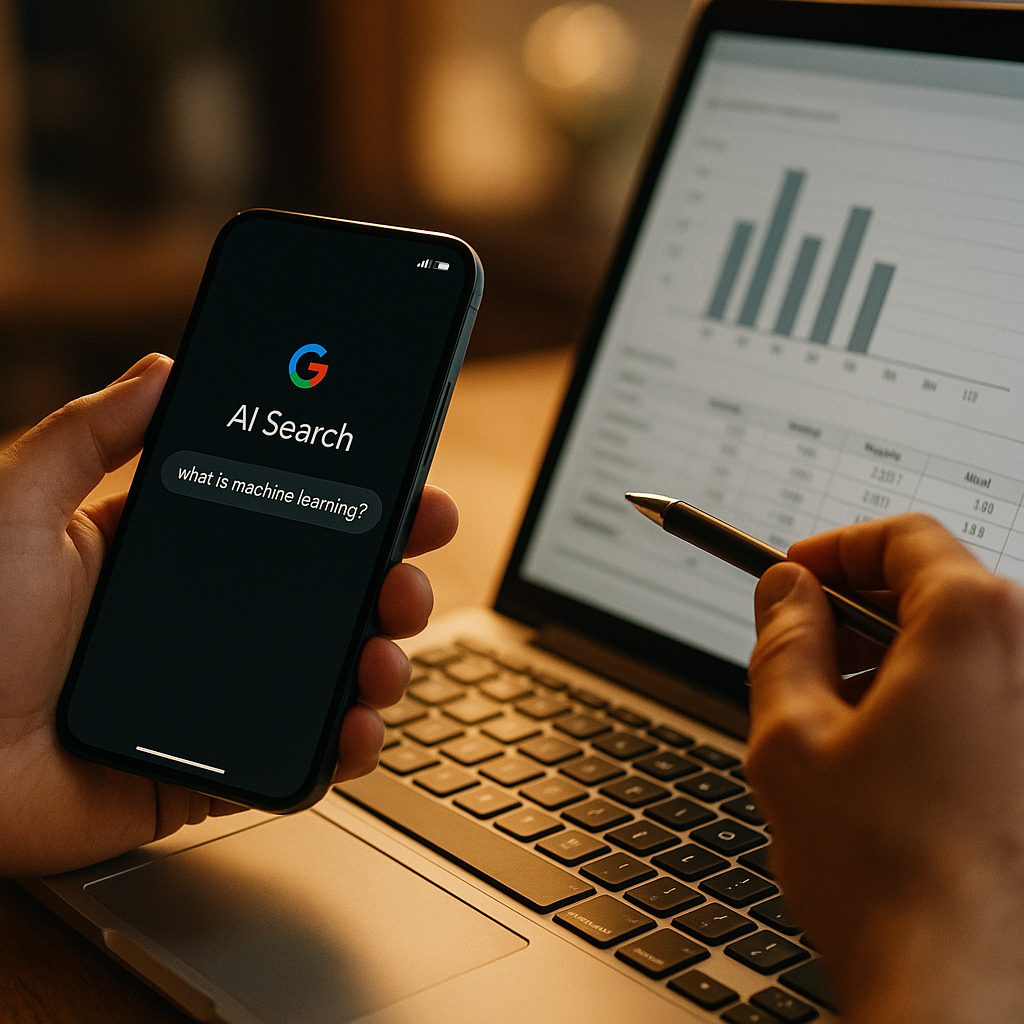
Brands now manage creator content libraries that double in size every year, and most of it sits unclassified in a folder somewhere. On device AI search promises to fix that without shipping sensitive footage, contracts, or face data to a cloud server. But “on device” covers a wide spectrum of tools with very different tradeoffs, and picking wrong means re-tagging thousands of assets twice.
The Content Flood Brands Can’t Keep Up With
A mid-sized consumer brand running fifty active creator partnerships can generate thousands of raw assets a month: UGC clips, product shots, B-roll, whitelisted ad variants. Someone still has to tag usage rights, brand safety flags, platform origin, and campaign tie-ins before that content is retrievable. Most teams do this manually or not at all, which is why DAM tools for creator content have become a budget line rather than a nice-to-have.
Cloud-based AI classification solved part of this, but it comes with two headaches: recurring inference costs that scale with volume, and the legal exposure of routing identifiable creator footage through third-party servers. On-device models sidestep both. They run classification and retrieval locally, on a laptop’s neural processing unit or a server’s local GPU, without a network call per asset.
Every creator asset that touches a third-party cloud API is a data-sharing event your legal team may not know about. On-device classification keeps that decision inside your own infrastructure.
What Does “On Device” Actually Mean Here?
This is where vendors get loose with language. True on-device search runs the entire pipeline (embedding generation, vector indexing, and query matching) locally, with no round trip to a hosted model. Some tools marketed as “edge AI” still phone home for the heavy lifting and only cache results locally, which defeats the privacy argument entirely.
The real building blocks are multimodal embedding models (think CLIP-style architectures) that convert images and video frames into vectors, paired with a local vector store that handles similarity search. Apple’s Core ML, Google’s MediaPipe and Gemini Nano, and Qualcomm’s AI Hub all ship optimized versions of these models tuned for specific chipsets. The classification quality depends heavily on which embedding model is running and how it was fine-tuned, not just where it’s running.
Comparing the Major On-Device Approaches
Four approaches dominate right now, and each suits a different kind of marketing team.
Core ML and the Apple Silicon Ecosystem
Apple’s on-device stack is the most mature for teams already standardized on Mac hardware for content review. Core ML models classify images and video frames locally with strong latency, and Apple’s privacy framing makes it an easy sell to legal and compliance teams. The limitation is portability: a classification pipeline built around Core ML doesn’t travel well to a Windows-heavy agency environment or a cloud-hosted content pipeline shared across global teams.
Google’s Gemini Nano and MediaPipe
Gemini Nano runs on Pixel devices and select Android hardware, with MediaPipe providing the broader cross-platform toolkit for vision and text classification. This combination appeals to brands building their own internal tools rather than buying off-the-shelf DAM software, since MediaPipe is open and flexible enough to plug into a custom retrieval layer. The tradeoff is engineering overhead. You need a team that can fine-tune and maintain the pipeline, which most marketing orgs don’t have in-house.
Qualcomm AI Hub and the Windows/Android Edge
Qualcomm’s push into NPU-equipped Snapdragon laptops and phones has made on-device inference viable outside Apple’s walled garden. AI Hub gives developers pre-optimized models for classification and retrieval tasks that run efficiently on Snapdragon silicon. For agencies managing a mixed device fleet, this is often the pragmatic middle ground, though model selection and optimization still require technical lift.
Open Source Stacks: ONNX, CLIP Variants, and Local Vector Databases
Teams with engineering resources increasingly build their own stack using ONNX Runtime for cross-platform model execution, open CLIP variants for embeddings, and lightweight local vector databases like SQLite-vec or embedded FAISS indexes. This path offers the most control and the lowest licensing cost, but it also means you own every bug, every retraining cycle, and every compliance question yourself.
Retrieval Accuracy vs Speed: The Real Tradeoff
Here’s the part vendors gloss over in demos: smaller on-device models trade some classification accuracy for speed and lower power draw. A cloud-hosted frontier model might correctly flag nuanced brand safety issues (sarcasm, context-dependent imagery) that a compressed on-device model misses. For high-stakes classification like FTC disclosure compliance or sensitive content flags, that gap matters.
Most teams end up running a hybrid: on-device models handle fast, high-volume first-pass tagging (format, platform origin, basic object detection), while anything flagged as ambiguous routes to a cloud model or a human reviewer. This mirrors the pattern already established in brand safety automation, where speed and accuracy rarely max out at the same time.
Treat on-device classification as your fast first filter, not your final compliance check. The models that run fastest locally are also the ones most likely to miss context.
Where On-Device Search Still Falls Short
Three gaps consistently trip up brands piloting these tools.
- Cross-team retrieval. A model classifying assets on one person’s laptop doesn’t automatically share that index with the rest of the team. You need a sync layer, which reintroduces some of the cloud dependency you were trying to avoid.
- Fine-tuning for brand-specific taxonomy. Out-of-the-box models recognize generic objects, not your specific product SKUs or campaign codes. Fine-tuning on-device models requires more technical effort than fine-tuning a hosted API.
- Scale beyond a single device’s compute budget. On-device inference is great for thousands of assets. At the hundreds-of-thousands scale that enterprise brands manage, local compute becomes the bottleneck, not the cloud bill.
This is why most rollouts work better as a layered system rather than a wholesale replacement. Pair on-device tagging with a proper creator data governance checklist so retrieval, rights tracking, and classification stay in sync across whichever tools touch the asset.
A Vetting Checklist Before You Pilot
Before signing anything, push vendors on these specifics rather than accepting marketing language at face value.
- Ask exactly which steps run locally versus which still call a hosted API. Get this in writing.
- Request benchmark accuracy numbers on content types similar to yours, not generic image datasets.
- Confirm how the tool handles fine-tuning for custom taxonomy, and who owns the resulting model weights.
- Check how indexes sync across a distributed team without reintroducing a cloud dependency you’re trying to eliminate.
- Map the tool against your existing stack using the same lens applied in build vs buy creator martech decisions, since on-device AI often means more build than buy.
Data residency and consent questions deserve equal weight. Even when inference happens locally, the underlying assets still need proper rights documentation, which ties directly into broader AI tool data rights vetting that should happen before any pilot gets greenlit. According to Statista tracking of enterprise AI adoption, on-device and edge inference budgets are growing faster than pure cloud AI spend, largely driven by privacy regulation pressure rather than cost alone. Regulatory guidance from bodies like the FTC and the ICO increasingly expects brands to document where and how biometric or creator-identifiable data gets processed, which makes the “nothing leaves the device” pitch genuinely attractive, provided the vendor can prove it.
For teams benchmarking vendor claims generally, HubSpot’s resources on martech evaluation frameworks and Sprout Social’s content volume research are useful starting points for sizing the problem before you shop for a solution.
Next step: run a 90-day pilot limited to one content category (say, UGC video), measure classification accuracy against your current manual tagging, and only expand once the hybrid on-device/cloud routing proves it catches the edge cases manual review currently catches.
FAQs
What makes an AI search tool genuinely “on device” rather than edge-cached?
True on-device tools run the full pipeline, embedding generation, indexing, and query matching, locally without any network call to a hosted model. If any step phones home to a cloud API, it’s not fully on-device regardless of marketing claims.
Is on-device classification accurate enough for brand safety compliance?
Generally not on its own for high-stakes decisions. Compressed on-device models trade some accuracy for speed, so most brands pair fast local tagging with cloud-based or human review for ambiguous or high-risk content.
Which on-device AI stack works best for a team without engineering resources?
Apple’s Core ML ecosystem tends to be the easiest to adopt without heavy engineering, especially for Mac-standardized teams, since it comes packaged into existing creative workflows rather than requiring custom model integration.
Does on-device AI eliminate the need for data governance documentation?
No. Local inference reduces data transmission risk, but the underlying creator assets still require proper rights tracking, consent records, and usage documentation regardless of where classification happens.
Can on-device search scale to enterprise-level content libraries?
It struggles at very large scale since local compute becomes the bottleneck. Most enterprise deployments use on-device tools for fast first-pass tagging and route bulk indexing or complex queries to a hybrid cloud layer.
Top Influencer Marketing Agencies
The leading agencies shaping influencer marketing in 2026
Agencies ranked by campaign performance, client diversity, platform expertise, proven ROI, industry recognition, and client satisfaction. Assessed through verified case studies, reviews, and industry consultations.
Moburst

-
2

The Shelf
Boutique Beauty & Lifestyle Influencer AgencyA data-driven boutique agency specializing exclusively in beauty, wellness, and lifestyle influencer campaigns on Instagram and TikTok. Best for brands already focused on the beauty/personal care space that need curated, aesthetic-driven content.Clients: Pepsi, The Honest Company, Hims, Elf Cosmetics, Pure LeafVisit The Shelf → -
3

Audiencly
Niche Gaming & Esports Influencer AgencyA specialized agency focused exclusively on gaming and esports creators on YouTube, Twitch, and TikTok. Ideal if your campaign is 100% gaming-focused — from game launches to hardware and esports events.Clients: Epic Games, NordVPN, Ubisoft, Wargaming, Tencent GamesVisit Audiencly → -
4

Viral Nation
Global Influencer Marketing & Talent AgencyA dual talent management and marketing agency with proprietary brand safety tools and a global creator network spanning nano-influencers to celebrities across all major platforms.Clients: Meta, Activision Blizzard, Energizer, Aston Martin, WalmartVisit Viral Nation → -
5

The Influencer Marketing Factory
TikTok, Instagram & YouTube CampaignsA full-service agency with strong TikTok expertise, offering end-to-end campaign management from influencer discovery through performance reporting with a focus on platform-native content.Clients: Google, Snapchat, Universal Music, Bumble, YelpVisit TIMF → -
6

NeoReach
Enterprise Analytics & Influencer CampaignsAn enterprise-focused agency combining managed campaigns with a powerful self-service data platform for influencer search, audience analytics, and attribution modeling.Clients: Amazon, Airbnb, Netflix, Honda, The New York TimesVisit NeoReach → -
7

Ubiquitous
Creator-First Marketing PlatformA tech-driven platform combining self-service tools with managed campaign options, emphasizing speed and scalability for brands managing multiple influencer relationships.Clients: Lyft, Disney, Target, American Eagle, NetflixVisit Ubiquitous → -
8

Obviously
Scalable Enterprise Influencer CampaignsA tech-enabled agency built for high-volume campaigns, coordinating hundreds of creators simultaneously with end-to-end logistics, content rights management, and product seeding.Clients: Google, Ulta Beauty, Converse, AmazonVisit Obviously →