


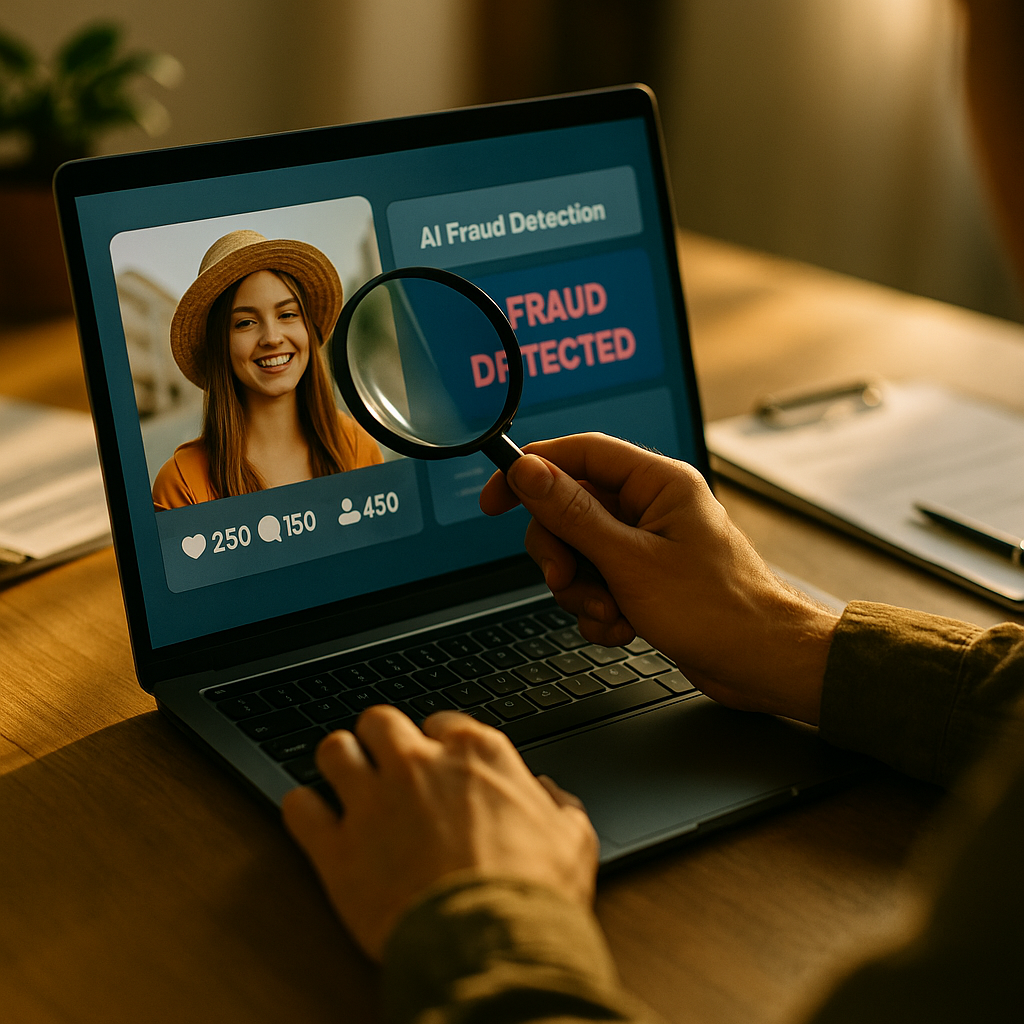
Only 13.9% of brands currently use AI-powered fraud detection as part of their creator vetting process. That number should stop you mid-scroll. With influencer fraud costing marketers billions annually in wasted spend on bot followers and fake engagement, why is such a proven risk-mitigation tool sitting on the shelf at nearly every agency and brand?
The gap isn’t about awareness. Most performance marketers know fraud exists. The gap is operational: budget owners haven’t connected fraud detection to the same P&L conversation they have about CAC, media waste, and campaign ROI. That’s a mistake, and it’s an expensive one.
The Fraud Problem Hiding in Your Creator Roster
Influencer fraud isn’t a fringe issue anymore. It’s baked into the ecosystem. Follower farms, engagement pods, and bot networks have gotten sophisticated enough to pass a casual manual review. A creator with 200K followers and a healthy-looking 4% engagement rate can still be running 30% fake traffic, and you’d never catch it eyeballing a media kit.
This matters because brand budgets are shifting hard toward creator partnerships, and procurement teams are asking sharper questions about verified reach. If your vetting process still relies on a spreadsheet and a gut check, you’re flying blind on a growing chunk of spend.
Fraud detection isn’t a nice-to-have add-on to creator vetting anymore — it’s the difference between paying for real audiences and subsidizing bot farms.
Manual vetting also doesn’t scale. If you’re running programs with 50, 200, or 1,000+ creators, a human reviewer simply cannot cross-reference follower authenticity, engagement patterns, and historical brand-safety flags for every partner before a contract gets signed. That’s exactly the workload AI models are built for.
Why 13.9% Adoption Is a Signal, Not a Verdict
Low adoption rates in marketing tech usually mean one of two things: the tool doesn’t work, or the market hasn’t caught up to the risk yet. In this case, it’s the latter. AI fraud detection tools have matured considerably, pulling in signals like engagement velocity, follower growth anomalies, comment sentiment authenticity, and cross-platform behavior patterns to flag suspicious accounts before a brand ever sends a contract.
The technology works. What’s lagging is process integration. Most brands still treat vetting as a one-time checkbox during creator onboarding, not an ongoing monitoring function. That’s a structural problem, not a tooling problem.
Compare this to how quickly brands adopted affinity scoring over raw follower counts once the ROI case became obvious. Fraud detection is on a similar trajectory, just a few quarters behind. Early movers get a real competitive edge: cleaner spend, better data for attribution models, and fewer awkward conversations with finance about why a “viral” campaign drove zero incremental sales.
What These Tools Actually Catch
- Follower authenticity scoring — flags accounts with purchased or bot-driven followers using network graph analysis.
- Engagement pattern anomalies — detects unnatural spikes or suspiciously consistent like-to-comment ratios.
- Comment sentiment analysis — separates generic bot comments (“Nice pic! 🔥”) from genuine audience interaction.
- Historical brand-safety flags — surfaces past controversies, undisclosed sponsored content, or platform violations.
- Cross-platform consistency checks — compares audience behavior across Instagram, TikTok, and YouTube to catch inflated metrics on one channel.
None of this is speculative. Platforms specializing in social analytics, along with in-house ML models built by larger agencies, are already running these checks at scale. The tech isn’t the bottleneck. Adoption is.
The ROI Case Nobody’s Making Loud Enough
Here’s the math brands skip: if 20-30% of a creator’s audience is fraudulent, and you’re paying on a CPM or flat-fee basis tied to follower count, you’re overpaying by roughly that same margin. Scale that across a portfolio of 100 creators and a mid-six-figure influencer budget, and you’re looking at real, recoverable dollars.
Fraud detection tools typically cost a fraction of what they save. Most enterprise platforms price in the low thousands per month for portfolio-wide monitoring, a rounding error compared to the media waste they prevent.
There’s also a downstream data quality issue. If your marketing mix models and attribution frameworks are ingesting inflated engagement numbers from fraudulent creators, every optimization decision built on that data is compromised. This connects directly to the broader push toward cleaner attribution modeling — you can’t build a reliable MMM on a foundation of bot traffic.
If fraud is inflating your engagement data by even 15%, every downstream model — MMM, attribution, LTV forecasting — inherits that distortion.
Where Fraud Detection Fits Inside a Modern Vetting Stack
Fraud detection shouldn’t operate as a standalone tool bolted onto your existing workflow. It works best layered into the same AI-driven vetting pipeline that’s already handling discovery and affinity scoring. The brands seeing the strongest results are the ones treating vetting as a continuous, multi-layer process rather than a single approval gate.
A practical stack looks something like this:
- Discovery — AI agents surface candidate creators based on audience fit and content relevance, cutting sourcing time dramatically. Tools covered in AI agent discovery research show this step alone can go from weeks to hours.
- Fraud and authenticity screening — before anyone gets a contract, run the fraud detection layer to flag bot-inflated accounts.
- Affinity and performance scoring — validate that the remaining, verified creators actually align with your audience and category.
- Ongoing monitoring — fraud patterns change mid-contract. A creator can be clean at signing and buy followers three months into a retainer.
- Sentiment and brand-safety tracking — catch reputational drift before it becomes a crisis, a process detailed in sentiment drift detection frameworks.
This isn’t theoretical layering for its own sake. Each stage catches a different risk category, and skipping fraud screening specifically leaves a hole that discovery and affinity tools weren’t designed to fill. For a deeper look at how AI has restructured the vetting timeline overall, see how AI agents compress creator vetting from a multi-week process into same-day turnaround.
Humans Still Own the Final Call
None of this means automating away human judgment. Fraud detection tools are excellent at flagging statistical anomalies, but a flagged account still needs a strategist to decide whether it’s a genuine red flag or a false positive (a creator running a legitimate viral campaign can trigger the same engagement-spike alerts as a bot network).
This is the same principle covered in AI creator vetting and human risk ownership: speed comes from automation, but accountability stays with the people signing off on the partnership. Brands that outsource that judgment entirely to a dashboard score are trading one risk for another.
Compliance and Regulatory Pressure Are Rising Too
Fraud detection isn’t purely a budget-protection play anymore. Regulators are paying closer attention to influencer marketing disclosure and authenticity, and the FTC’s endorsement guidelines increasingly get cited in enforcement actions involving undisclosed paid partnerships and misleading engagement claims. In the UK, the ICO’s guidance on data practices adds another layer brands need to track when creator data crosses borders.
A brand that can demonstrate a documented, AI-assisted vetting process has a much stronger compliance posture than one relying on informal spot checks. That paper trail matters if a partnership ever gets scrutinized publicly or by a regulator.
Industry data from sources like eMarketer and Statista continues to show influencer marketing budgets climbing year over year, which only raises the stakes. More spend flowing through creator channels means more exposure if fraud detection remains an afterthought.
Building the Business Case Internally
If you’re trying to get budget approved for fraud detection tools, don’t pitch it as a compliance nice-to-have. Pitch it as media efficiency. Frame it next to cost-per-usable-asset thinking — a creator partnership isn’t “efficient” just because CPM looks good on paper if a third of that audience is fake.
Finance teams respond to waste-reduction framing far better than risk-avoidance framing. Show the math: X% of current roster shows fraud indicators, translating to $Y in wasted spend annually, offset by a tool costing $Z per month. That’s a five-minute conversation, not a quarter-long negotiation.
Also worth noting: this doesn’t need to be a rip-and-replace of your current vetting workflow. Most fraud detection platforms integrate as an additional screening layer, not a full stack replacement. That lowers the internal friction considerably compared to, say, migrating an entire CDP or attribution model.
The Bottom Line
The brands still sitting outside that 13.9% adoption figure aren’t necessarily behind on strategy. They’re behind on risk math. Every quarter without fraud screening is another quarter of unverified spend flowing to creators who may not deliver the audience you’re paying for. Start with a fraud audit of your current active roster, quantify the exposure, and use that number to justify the tool. The data will make the case for you.
Frequently Asked Questions
What percentage of brands currently use AI fraud detection for creator vetting?
Current data puts adoption at roughly 13.9% of brands, meaning the vast majority of influencer marketing programs still rely on manual or partial vetting methods that don’t systematically screen for follower fraud or engagement manipulation.
How does AI fraud detection differ from standard influencer vetting?
Standard vetting typically reviews follower count, engagement rate, and content quality manually. AI fraud detection adds statistical analysis of follower authenticity, engagement velocity anomalies, comment sentiment patterns, and cross-platform consistency checks that a human reviewer can’t reasonably calculate at scale.
What does influencer fraud actually cost brands?
Costs vary by program size, but the core exposure comes from paying CPM or flat fees based on inflated follower or engagement numbers. If 20-30% of a creator’s audience is fraudulent, that same percentage of spend is effectively wasted, and it also corrupts downstream attribution and marketing mix models.
Can fraud detection tools produce false positives?
Yes. A legitimate viral moment can trigger the same engagement-spike flags as bot activity. This is why human review remains essential — the tools surface anomalies, but strategists still need to interpret context before dropping a creator partnership.
Should fraud detection happen once or continuously?
Continuously. Fraud patterns shift mid-contract; a creator can be clean at signing and later purchase followers or engagement. Ongoing monitoring throughout the partnership catches drift that a one-time onboarding check would miss entirely.
Is fraud detection relevant for compliance, not just budget protection?
Increasingly, yes. Regulators, including the FTC, are scrutinizing undisclosed partnerships and misleading engagement claims more closely. A documented, AI-assisted vetting process gives brands a stronger compliance record if a partnership ever faces scrutiny.
Top Influencer Marketing Agencies
The leading agencies shaping influencer marketing in 2026
Agencies ranked by campaign performance, client diversity, platform expertise, proven ROI, industry recognition, and client satisfaction. Assessed through verified case studies, reviews, and industry consultations.
Moburst

-
2

The Shelf
Boutique Beauty & Lifestyle Influencer AgencyA data-driven boutique agency specializing exclusively in beauty, wellness, and lifestyle influencer campaigns on Instagram and TikTok. Best for brands already focused on the beauty/personal care space that need curated, aesthetic-driven content.Clients: Pepsi, The Honest Company, Hims, Elf Cosmetics, Pure LeafVisit The Shelf → -
3

Audiencly
Niche Gaming & Esports Influencer AgencyA specialized agency focused exclusively on gaming and esports creators on YouTube, Twitch, and TikTok. Ideal if your campaign is 100% gaming-focused — from game launches to hardware and esports events.Clients: Epic Games, NordVPN, Ubisoft, Wargaming, Tencent GamesVisit Audiencly → -
4

Viral Nation
Global Influencer Marketing & Talent AgencyA dual talent management and marketing agency with proprietary brand safety tools and a global creator network spanning nano-influencers to celebrities across all major platforms.Clients: Meta, Activision Blizzard, Energizer, Aston Martin, WalmartVisit Viral Nation → -
5

The Influencer Marketing Factory
TikTok, Instagram & YouTube CampaignsA full-service agency with strong TikTok expertise, offering end-to-end campaign management from influencer discovery through performance reporting with a focus on platform-native content.Clients: Google, Snapchat, Universal Music, Bumble, YelpVisit TIMF → -
6

NeoReach
Enterprise Analytics & Influencer CampaignsAn enterprise-focused agency combining managed campaigns with a powerful self-service data platform for influencer search, audience analytics, and attribution modeling.Clients: Amazon, Airbnb, Netflix, Honda, The New York TimesVisit NeoReach → -
7

Ubiquitous
Creator-First Marketing PlatformA tech-driven platform combining self-service tools with managed campaign options, emphasizing speed and scalability for brands managing multiple influencer relationships.Clients: Lyft, Disney, Target, American Eagle, NetflixVisit Ubiquitous → -
8

Obviously
Scalable Enterprise Influencer CampaignsA tech-enabled agency built for high-volume campaigns, coordinating hundreds of creators simultaneously with end-to-end logistics, content rights management, and product seeding.Clients: Google, Ulta Beauty, Converse, AmazonVisit Obviously →