


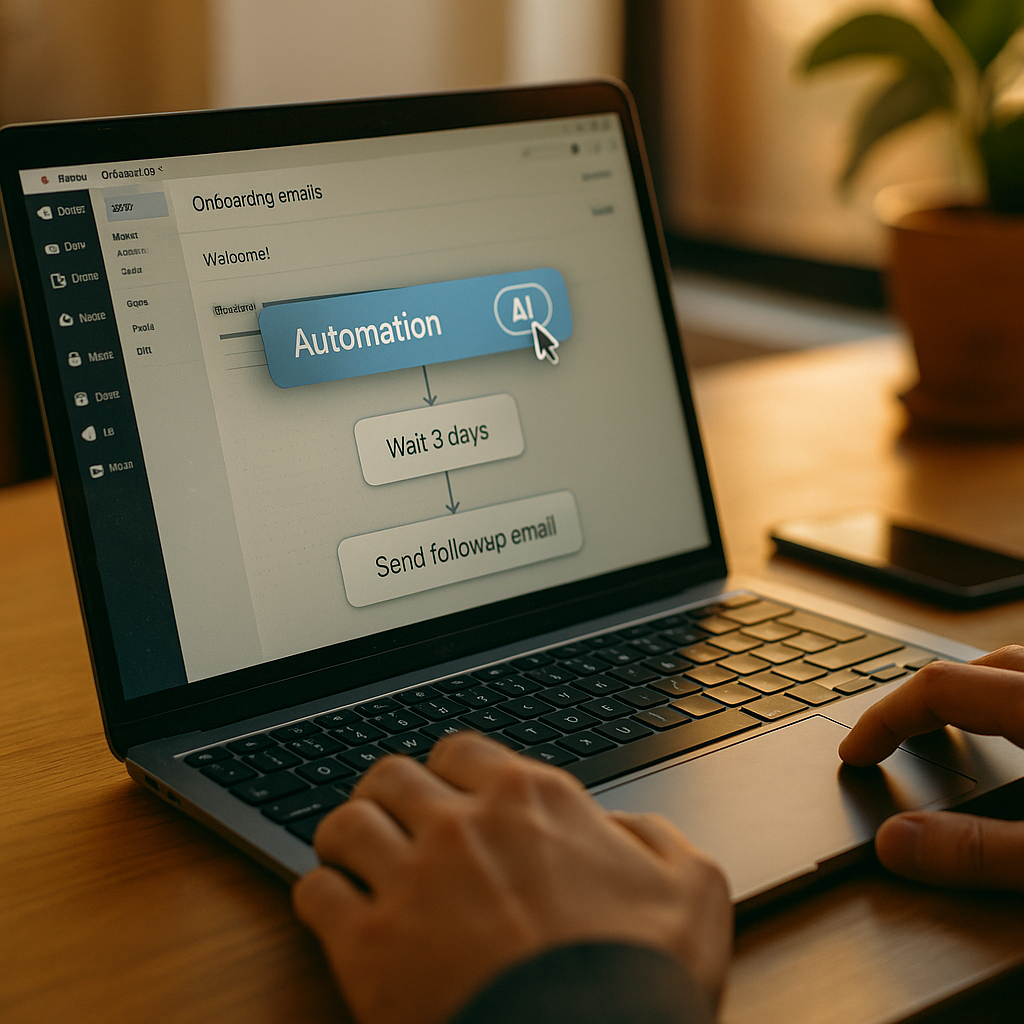
Using AI to analyze and optimize your customer onboarding emails and sequences can revolutionize the way businesses welcome new users. By harnessing automation and intelligent insights, you can increase customer engagement, speed up activation, and boost retention rates. How can today’s businesses implement AI-driven improvements and stay ahead in a competitive market? Let’s explore actionable strategies and expert guidance.
How AI-Powered Analytics Transforms Customer Onboarding Emails
AI-powered analytics put vast datasets to work, revealing detailed patterns in how customers interact with your onboarding emails. By going well beyond traditional open and click rates, AI examines micro-behaviors and sentiment, providing a nuanced portrait of customer experience.
- Heatmapping user engagement: Machine learning algorithms track how users navigate emails, pinpointing which sections garner attention versus those overlooked.
- Predictive modeling: AI forecasts which onboarding sequence variations will lead to higher activation or longer-term retention, helping you focus resources where they matter most.
- Personalization at scale: Automated insights enable the dynamic adjustment of content, timing, and messaging for specific persona segments, vastly improving relevance.
According to a 2025 SaaS benchmark report, businesses leveraging AI for onboarding see an average of 36% higher email engagement rates compared to those using manual analysis alone. This data-driven approach lays the foundation for continuous improvement.
Email Content Optimization with AI-Driven Recommendations
Effective email content is critical during the onboarding journey. AI assists in refining subject lines, body copy, CTAs (calls-to-action), and even visual layout for maximum impact.
- Natural Language Processing (NLP): AI tools use NLP to gauge sentiment and detect emotional triggers in your messaging, flagging areas where copy can be more inspiring or concise.
- A/B Testing Automation: Machine learning rapidly evaluates hundreds of email variations simultaneously, surfacing top performers and learning from underperformers to iterate fast.
- Image and format selection: AI analyzes which visuals boost retention. It can automatically swap images or alter layouts for specific devices and audiences.
These capabilities help you reach the right users with the right message at the right moment, minimizing friction during critical early stages of the user journey.
Leveraging AI for Behavioral Segmentation and Triggered Sequences
One-size-fits-all onboarding is outdated. AI-driven segmentation means your emails and sequences respond to real-time user signals. By grouping customers according to initial behavior, purchase intent, or lifecycle phase, businesses can deliver hyper-targeted educational content or support.
- Behavior-based triggers: If a user hasn’t completed a key setup step, AI-driven campaigns can prompt them with timely, personal nudges or relevant tutorials.
- Adaptive sequencing: Sequences dynamically change for users who engage quickly versus those who need extra motivation.
- Reducing churn risk: AI identifies customers at risk of disengagement and triggers reactivation or support-oriented messaging automatically.
This tailored approach, supported by real-world behavioral data, increases the likelihood of users seeing value early—ultimately driving loyalty and retention.
AI and Personalization in Email Onboarding Journeys
Personalization is a game-changer in customer onboarding, and AI makes it manageable at enterprise scale. Instead of relying on manual segmentation, AI synthesizes hundreds of data points—from signup source and usage frequency to support requests and demographic info—to craft unique sequences for each user.
- Dynamic recommendations: Automated systems suggest the next-best action for every individual, such as feature tours, webinars, or resource downloads.
- Custom onboarding tracks: AI assigns users to different “tracks” based on persona, industry, company size, or other attributes, delivering highly relevant touchpoints.
- Continuous learning: Advanced models refine personalization rules over time, adapting to shifting customer needs or new market segments.
Email recipients report a 50% higher satisfaction rate when they receive onboarding experiences that feel uniquely tailored, according to a 2025 Forrester survey.
Measuring Success: Metrics and Continuous Improvement Powered by AI
No optimization process is complete without clear measurement and agile improvement. AI enables granular tracking of key performance indicators (KPIs) for onboarding emails and sequences, including:
- Activation rate
- Time-to-value
- Email engagement score (combining opens, clicks, and actions)
- Onboarding completion rates
- Retention and expansion metrics
AI doesn’t just report on these metrics—it explains causality, visualizes trends, and recommends actionable experiments for improvement, closing the feedback loop. For customer success teams in 2025, this means faster iteration cycles, continuous uplift in results, and a strong competitive advantage.
Best Practices for Implementing AI in Onboarding Email Optimization
To maximize business outcomes and maintain customer trust, organizations must follow proven best practices in deploying AI for onboarding optimization:
- Prioritize data privacy: Use only consented, anonymized data. Stay compliant with regulations and be transparent about your use of AI with users.
- Start simple: Begin with one onboarding sequence or segment; measure results before expanding your AI initiatives.
- Empower teams: Train your marketing, product, and support staff on using AI tools, and foster a culture of experimentation.
- Monitor and audit: Regularly review AI recommendations for alignment with brand guidelines and customer needs.
- Choose the right tools: Select AI platforms with strong support, proven results, and integrations with your existing martech stack.
These steps ensure both ethical AI use and sustained growth from your investment.
FAQs: Using AI to Optimize Customer Onboarding Emails
-
How does AI improve customer onboarding email performance?
AI enhances performance by delivering data-driven insights, optimizing content for each segment, triggering emails based on real-time actions, and continuously testing variations for better user engagement and conversions.
-
Can AI personalization make onboarding spammy?
When used thoughtfully and anchored in user consent, AI personalization improves relevance and timing, resulting in a better experience—not spam. Regularly audit campaigns to ensure value for your audience.
-
Is it difficult to integrate AI with my current email platform?
Most modern email marketing and CRM platforms support AI integrations through APIs and native plugins. Select tools that are compatible with your stack and offer robust onboarding support.
-
How much involvement do human marketers need after AI is implemented?
Human oversight remains critical. Marketers interpret AI-generated insights, maintain brand voice, and set strategic goals. AI augments but doesn’t replace expert judgment.
-
What risks should I watch for in AI-driven onboarding?
Risks include overfitting (messages too narrowly tailored), privacy violations, and impersonal automation. Regular audits, ongoing team training, and transparent use mitigate these risks.
AI is transforming the way businesses analyze and optimize customer onboarding emails and sequences. By combining intelligent automation with human expertise, you can boost activation, retention, and customer satisfaction—unlocking tremendous value for your organization in 2025 and beyond.
Top Influencer Marketing Agencies
The leading agencies shaping influencer marketing in 2026
Agencies ranked by campaign performance, client diversity, platform expertise, proven ROI, industry recognition, and client satisfaction. Assessed through verified case studies, reviews, and industry consultations.
Moburst

-
2

The Shelf
Boutique Beauty & Lifestyle Influencer AgencyA data-driven boutique agency specializing exclusively in beauty, wellness, and lifestyle influencer campaigns on Instagram and TikTok. Best for brands already focused on the beauty/personal care space that need curated, aesthetic-driven content.Clients: Pepsi, The Honest Company, Hims, Elf Cosmetics, Pure LeafVisit The Shelf → -
3

Audiencly
Niche Gaming & Esports Influencer AgencyA specialized agency focused exclusively on gaming and esports creators on YouTube, Twitch, and TikTok. Ideal if your campaign is 100% gaming-focused — from game launches to hardware and esports events.Clients: Epic Games, NordVPN, Ubisoft, Wargaming, Tencent GamesVisit Audiencly → -
4

Viral Nation
Global Influencer Marketing & Talent AgencyA dual talent management and marketing agency with proprietary brand safety tools and a global creator network spanning nano-influencers to celebrities across all major platforms.Clients: Meta, Activision Blizzard, Energizer, Aston Martin, WalmartVisit Viral Nation → -
5

The Influencer Marketing Factory
TikTok, Instagram & YouTube CampaignsA full-service agency with strong TikTok expertise, offering end-to-end campaign management from influencer discovery through performance reporting with a focus on platform-native content.Clients: Google, Snapchat, Universal Music, Bumble, YelpVisit TIMF → -
6

NeoReach
Enterprise Analytics & Influencer CampaignsAn enterprise-focused agency combining managed campaigns with a powerful self-service data platform for influencer search, audience analytics, and attribution modeling.Clients: Amazon, Airbnb, Netflix, Honda, The New York TimesVisit NeoReach → -
7

Ubiquitous
Creator-First Marketing PlatformA tech-driven platform combining self-service tools with managed campaign options, emphasizing speed and scalability for brands managing multiple influencer relationships.Clients: Lyft, Disney, Target, American Eagle, NetflixVisit Ubiquitous → -
8

Obviously
Scalable Enterprise Influencer CampaignsA tech-enabled agency built for high-volume campaigns, coordinating hundreds of creators simultaneously with end-to-end logistics, content rights management, and product seeding.Clients: Google, Ulta Beauty, Converse, AmazonVisit Obviously →