


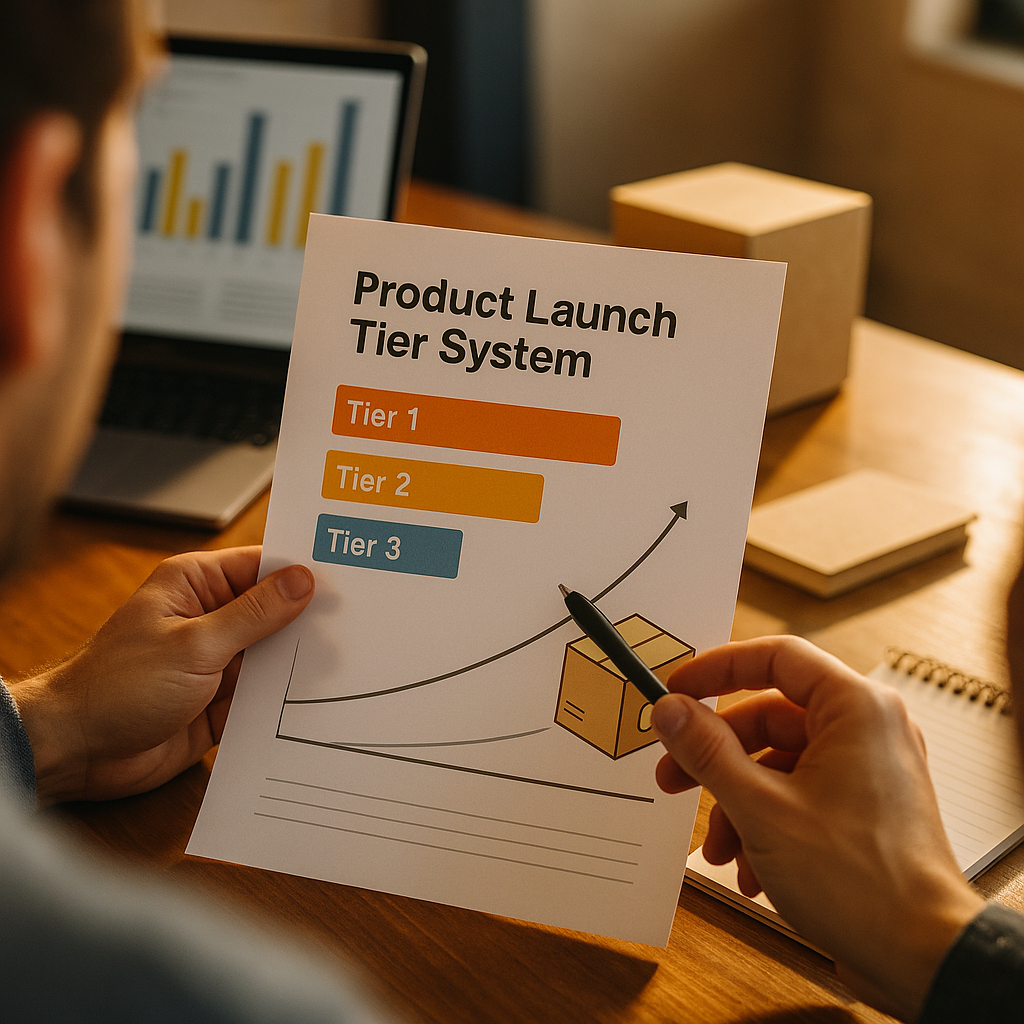
Building a structured approach for product launch success starts with understanding how to develop a product marketing launch tier system. By categorizing launches by impact and needs, teams boost efficiency, resource allocation, and customer excitement. In this article, discover actionable steps to build and optimize tiered launch strategies that elevate your go-to-market results.
Understanding the Basics: What is a Product Marketing Launch Tier System?
A product marketing launch tier system is a strategic framework for classifying product launches based on their scope, impact, and resource requirements. This tiered approach helps companies differentiate between small feature updates and major product overhauls, ensuring that each launch receives the right level of attention and resources. In 2025’s competitive landscape, adopting such a system is essential for operational efficiency, customer engagement, and revenue growth.
This system typically categorizes launches into three or four tiers, such as:
- Tier 1: Major new product launches or market expansions
- Tier 2: Significant feature releases or new integrations
- Tier 3: Minor enhancements, bug fixes, or regional rollouts
Understanding these classifications sets the stage for a consistent and repeatable launch process, helping cross-functional teams manage priorities and expectations across the organization.
Strategic Planning: Key Steps in Launch Tier Development
Effective launch planning begins with mapping business goals to launch activities. Here’s a step-by-step approach to developing your launch tier system:
- Define Business Objectives: Clarify what success looks like for each launch—whether it’s market share growth, revenue targets, or customer adoption.
- Audit Past Launches: Analyze historical product launches to identify common patterns, pain points, and outcomes. This data-driven assessment provides context for tier criteria.
- Create Tier Criteria: Establish clear, quantifiable parameters for each tier. Consider factors like target audience, affected users, revenue potential, and required resources.
- Document Processes: Develop a playbook outlining actions, stakeholders, and timelines for each tier. Visual tools such as flowcharts or checklists keep teams aligned.
- Gather Cross-Functional Input: Involve product, engineering, sales, and customer support to ensure all perspectives are reflected in your system.
By following these steps, companies create a blueprint that can be tailored and scaled as product lines evolve. This structured planning supports collaboration and minimizes missed steps during execution.
Best Practices for Tiered Product Launch Execution
After establishing tiers, the focus shifts to launch execution. Best-in-class organizations leverage structured communication and targeted tactics for each tier:
-
Tier 1 Launches:
- Develop multi-channel campaigns with early customer engagement and beta testing.
- Involve executive leadership and prepare public relations, influencer outreach, and analyst briefings.
- Create tailored enablement content for each audience segment.
-
Tier 2 Launches:
- Deploy focused marketing and customer education initiatives.
- Time announcements around industry events or key milestones to maximize impact.
- Conduct targeted internal training to ensure support readiness.
-
Tier 3 Launches:
- Use in-app notifications or email updates for concise communication.
- Automate messaging using customer journey mapping tools.
- Issue updated documentation or quick reference guides as needed.
Customize calendaring and KPIs per tier. Assign clear owners, use project management platforms like Jira or Asana, and conduct recurring check-ins to drive accountability throughout the process.
Aligning Stakeholders: Communication and Collaboration Essentials
Launching products efficiently requires stakeholder alignment at every tier. Miscommunication can lead to delays, customer confusion, or lost opportunities. Here’s how to foster collaboration:
- Build a Launch Committee: Assemble a cross-functional team representing marketing, product, sales, customer success, legal, and executive leadership.
- Host Tier-Specific Kickoff Meetings: Tailor communication style, agendas, and invite lists based on the tier’s profile and objectives.
- Centralize Documentation: Use a launch portal or shared workspace for version-controlled documentation, messaging templates, and timelines.
- Enable Real-Time Updates: Leverage chat platforms and transparent scorecards to provide visibility and track milestone progress.
Regularly measure coordination effectiveness via surveys or post-mortems. Action feedback to continually enhance your launch tier system’s collaboration culture.
Continuous Improvement: Measuring Impact and Refining Your System
Building a successful tiered launch framework is an ongoing process. To foster continuous improvement in 2025, focus on feedback loops and quantitative measurement:
- Set Tier-Specific KPIs: Define success metrics relevant to each tier, such as adoption rates, NPS (Net Promoter Score), ARR (Annual Recurring Revenue) impact, or lead generation volume.
- Conduct Launch Retrospectives: After each launch, convene stakeholders to review results and identify improvement opportunities.
- Survey Customers and Sales Teams: Gather perspectives from your audience and frontline staff to refine messaging and tactics for future launches.
- Revisit Tier Definitions: Evaluate and adjust criteria as your business, products, or market evolves.
Continuous learning and agility are critical as customer expectations and digital marketing trends evolve. Revisiting your tier system quarterly or biannually ensures launches remain impactful and relevant in a fast-moving environment.
Common Pitfalls to Avoid When Implementing a Launch Tier System
Even with the right intentions, organizations can stumble during tiered launch implementation. Be mindful of these common mistakes:
- Overcomplicating Tiers: Too many tiers or vague criteria confuse teams and slow execution. Aim for clarity and simplicity.
- Underestimating Lower-Tier Launches: Minor updates can impact customer experience; communicate them thoughtfully to avoid negative surprises.
- Neglecting Change Management: Introducing new processes requires buy-in, clear training, and time for adaptation.
- Ignoring Data Analysis: Failing to track relevant metrics prevents learning and improvement. Always measure what matters.
By staying vigilant, teams can maximize the value of their launch tier framework and avoid setbacks that undermine strategic objectives.
FAQs: Building a Product Marketing Launch Tier System
-
What is the main benefit of a launch tier system?
It ensures efficient use of resources, streamlines communications, and tailors go-to-market plans to the business impact of each launch. -
How often should I review my launch tier criteria?
Revisit your system at least twice a year or after major organizational or market changes. -
Can smaller businesses benefit from tiered launches?
Yes. Companies of all sizes gain clarity and alignment by right-sizing their launch activities to the release’s impact and audience. -
What tools can help manage a tiered launch system?
Project management platforms (e.g., Asana, Trello), shared documentation (Google Drive), and communication tools (Slack, Teams) all support streamlined collaboration. -
How should I handle integrations or partnership launches?
Assign them to a tier based on their market impact and required resources, and coordinate messaging with partners for maximum reach and consistency.
A well-designed product marketing launch tier system in 2025 empowers organizations to scale launches effectively, match efforts to impact, and foster innovation. By acting on the guidelines above, your team will orchestrate successful launches with clarity, agility, and measurable results.
Top Influencer Marketing Agencies
The leading agencies shaping influencer marketing in 2026
Agencies ranked by campaign performance, client diversity, platform expertise, proven ROI, industry recognition, and client satisfaction. Assessed through verified case studies, reviews, and industry consultations.
Moburst

-
2

The Shelf
Boutique Beauty & Lifestyle Influencer AgencyA data-driven boutique agency specializing exclusively in beauty, wellness, and lifestyle influencer campaigns on Instagram and TikTok. Best for brands already focused on the beauty/personal care space that need curated, aesthetic-driven content.Clients: Pepsi, The Honest Company, Hims, Elf Cosmetics, Pure LeafVisit The Shelf → -
3

Audiencly
Niche Gaming & Esports Influencer AgencyA specialized agency focused exclusively on gaming and esports creators on YouTube, Twitch, and TikTok. Ideal if your campaign is 100% gaming-focused — from game launches to hardware and esports events.Clients: Epic Games, NordVPN, Ubisoft, Wargaming, Tencent GamesVisit Audiencly → -
4

Viral Nation
Global Influencer Marketing & Talent AgencyA dual talent management and marketing agency with proprietary brand safety tools and a global creator network spanning nano-influencers to celebrities across all major platforms.Clients: Meta, Activision Blizzard, Energizer, Aston Martin, WalmartVisit Viral Nation → -
5

The Influencer Marketing Factory
TikTok, Instagram & YouTube CampaignsA full-service agency with strong TikTok expertise, offering end-to-end campaign management from influencer discovery through performance reporting with a focus on platform-native content.Clients: Google, Snapchat, Universal Music, Bumble, YelpVisit TIMF → -
6

NeoReach
Enterprise Analytics & Influencer CampaignsAn enterprise-focused agency combining managed campaigns with a powerful self-service data platform for influencer search, audience analytics, and attribution modeling.Clients: Amazon, Airbnb, Netflix, Honda, The New York TimesVisit NeoReach → -
7

Ubiquitous
Creator-First Marketing PlatformA tech-driven platform combining self-service tools with managed campaign options, emphasizing speed and scalability for brands managing multiple influencer relationships.Clients: Lyft, Disney, Target, American Eagle, NetflixVisit Ubiquitous → -
8

Obviously
Scalable Enterprise Influencer CampaignsA tech-enabled agency built for high-volume campaigns, coordinating hundreds of creators simultaneously with end-to-end logistics, content rights management, and product seeding.Clients: Google, Ulta Beauty, Converse, AmazonVisit Obviously →