


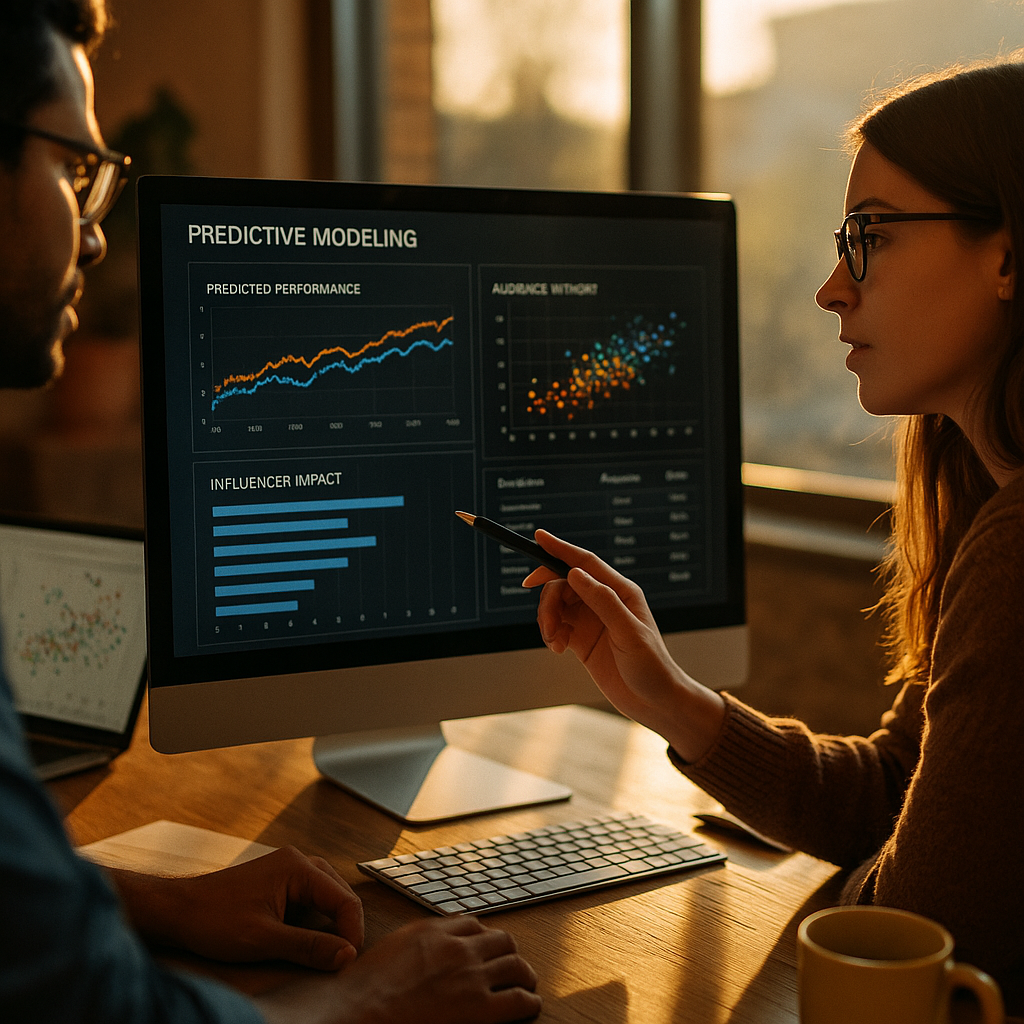
Predictive modeling for influencer content performance is transforming influencer marketing strategies in 2025. By leveraging data-driven insights, marketers can forecast content results, optimize campaigns, and maximize ROI. This dynamic approach minimizes guesswork and embraces science. Are you ready to uncover how predictive modeling is reshaping influencer collaborations and results?
Understanding Predictive Modeling in Influencer Marketing
Predictive modeling uses mathematical algorithms and machine learning to sift through historical data, identify patterns, and forecast future results. In influencer marketing, this translates into analyzing past influencer posts, audience engagement, and conversion data to predict which content will perform best. Marketers can use these insights to select partners, timing, and content types that yield optimal engagement and sales.
According to industry experts at Influencer Marketing Hub, over 70% of leading brands now use some form of predictive analytics to guide their influencer campaigns. Their goal: reduce wasted ad spend and focus efforts on partnerships most likely to generate meaningful business outcomes.
Key Data Points for Content Performance Prediction
Successful predictive models for influencer content performance rely on diverse and relevant datasets. Understanding which factors influence results can help you refine your strategy. The most impactful data points typically include:
- Historical engagement metrics: Likes, comments, shares, and views from previous posts.
- Audience demographics: Age, gender, location, and interests.
- Posting times: Day and hour that maximize reach and interaction.
- Content format: Video, static image, carousel, or Stories.
- Influencer sentiment analysis: Emotional tone in captions and comments.
- Platform algorithms: How platforms prioritize and distribute content.
By aggregating and analyzing these variables, predictive models offer actionable, real-time recommendations designed to fine-tune influencer partnerships for greater returns.
How Predictive Analytics Enhances Campaign Strategy
Integrating predictive analytics into influencer strategies provides more than just improved targeting; it transforms the way marketers plan and execute campaigns. Here’s how predictive modeling for influencer campaign optimization is revolutionizing the process:
- Enhanced influencer selection: Algorithms score candidates not only on follower count but their audience quality and historical conversion rates, highlighting the individuals most aligned with brand goals.
- Dynamic content planning: Predictive tools recommend content types and posting schedules tailored to different audience segments, amplifying reach and engagement.
- Real-time adjustment: As campaign data streams in, models adapt and suggest changes on the fly, such as shifting budget to high-performing influencers or pausing underperforming posts.
This data-centric approach leads to more precise marketing, reducing trial and error while improving overall influencer ROI.
Best Practices for Building Accurate Predictive Models
To extract reliable forecasts from influencer content prediction tools, brands must invest in robust data practices and collaboration. Consider these best practices when building or selecting a predictive modeling solution:
- Comprehensive data collection: Gather both quantitative (engagement rates) and qualitative (sentiment, context) data from multiple social platforms.
- Transparent model training: Ensure models are trained with regularly updated data for accuracy, including the latest algorithm changes from platforms like Instagram and TikTok.
- Continuous learning: Allow your predictive models to evolve, learning from new influencer campaigns as consumer preferences shift.
- Compliance and privacy: Respect all data privacy regulations. Partner with influencers who are transparent about data use, and anonymize sensitive audience data where appropriate.
- Cross-department collaboration: Align marketing, analytics, and influencer relations teams to interpret model outputs correctly and act on the insights effectively.
These practices distinguish credible, effective influencer content performance modeling from surface-level analytics.
Case Studies: Brands Leveraging Predictive Modeling in 2025
Innovative brands in 2025 are leveraging influencer content performance analysis to secure measurable advantages. For example, a global beauty brand utilized a predictive analytics platform to parse years of campaign data. By applying machine learning, the company identified rising influencers with high conversion potential, tailored messages for audience micro-segments, and achieved a 32% uplift in engagement within a single campaign quarter.
Another case in the tech retail sector involved segmenting creator audiences to test several content themes. Using predictive tools, the brand discovered that educational reels outperformed lifestyle posts among their Gen Z following. As a result, they pivoted campaign messaging and saw a double-digit increase in sales attributed to influencer-driven content.
These stories underscore the real-world value of predictive modeling as brands future-proof their influencer strategies in a competitive digital landscape.
Future Trends: The Next Evolution of Predictive Modeling
As influencer content prediction technology evolves, several emerging trends are set to shape how brands derive value:
- AI-powered video analysis: Deeper evaluation of on-screen elements, facial expressions, and branding cues within influencer videos will fine-tune predictions.
- Voice and sentiment AI: Automated analysis of influencer voice, tone, and emotional resonance will become mainstream for text, image, and video posts.
- Real-time campaign orchestration: Platforms will enable marketers to adjust influencer content and spend in real-time, improving agility and campaign efficiency.
- First-party data integration: Brands will increasingly blend influencer analytics with internal CRM, loyalty, and sales data for a 360-degree view of performance.
Brands that invest early in these innovations will maintain a decisive edge in the dynamic 2025 influencer landscape.
FAQs: Predictive Modeling for Influencer Content Performance
-
What is predictive modeling in influencer marketing?
Predictive modeling in influencer marketing utilizes data-driven algorithms to analyze historical content performance and predict future campaign outcomes, helping brands make informed decisions on influencer selection and strategy.
-
How can brands start using predictive analytics for influencer campaigns?
Brands can begin by centralizing campaign data, partnering with analytics technology providers, and training internal teams to interpret and act on predictive insights.
-
Are there privacy concerns with predictive modeling?
Yes, it is essential to comply with current data privacy laws, anonymize user data where possible, and ensure influencers and brands are transparent about data collection and usage.
-
Which platforms support advanced predictive analytics in 2025?
Most leading social platforms, such as Instagram, TikTok, and YouTube, now offer APIs and partner analytics tools that facilitate advanced influencer campaign forecasting and measurement.
-
Does predictive modeling replace human expertise?
No. Predictive modeling enhances but does not replace the need for creative direction and experienced human judgment in influencer marketing strategy.
Predictive modeling for influencer content performance empowers brands to elevate their influencer strategies with precision, accountability, and real-time adaptability. By integrating robust data insights and best practices, marketers can unlock stronger results and confidently navigate the ever-evolving world of influencer marketing in 2025.
Top Influencer Marketing Agencies
The leading agencies shaping influencer marketing in 2026
Agencies ranked by campaign performance, client diversity, platform expertise, proven ROI, industry recognition, and client satisfaction. Assessed through verified case studies, reviews, and industry consultations.
Moburst

-
2

The Shelf
Boutique Beauty & Lifestyle Influencer AgencyA data-driven boutique agency specializing exclusively in beauty, wellness, and lifestyle influencer campaigns on Instagram and TikTok. Best for brands already focused on the beauty/personal care space that need curated, aesthetic-driven content.Clients: Pepsi, The Honest Company, Hims, Elf Cosmetics, Pure LeafVisit The Shelf → -
3

Audiencly
Niche Gaming & Esports Influencer AgencyA specialized agency focused exclusively on gaming and esports creators on YouTube, Twitch, and TikTok. Ideal if your campaign is 100% gaming-focused — from game launches to hardware and esports events.Clients: Epic Games, NordVPN, Ubisoft, Wargaming, Tencent GamesVisit Audiencly → -
4

Viral Nation
Global Influencer Marketing & Talent AgencyA dual talent management and marketing agency with proprietary brand safety tools and a global creator network spanning nano-influencers to celebrities across all major platforms.Clients: Meta, Activision Blizzard, Energizer, Aston Martin, WalmartVisit Viral Nation → -
5

The Influencer Marketing Factory
TikTok, Instagram & YouTube CampaignsA full-service agency with strong TikTok expertise, offering end-to-end campaign management from influencer discovery through performance reporting with a focus on platform-native content.Clients: Google, Snapchat, Universal Music, Bumble, YelpVisit TIMF → -
6

NeoReach
Enterprise Analytics & Influencer CampaignsAn enterprise-focused agency combining managed campaigns with a powerful self-service data platform for influencer search, audience analytics, and attribution modeling.Clients: Amazon, Airbnb, Netflix, Honda, The New York TimesVisit NeoReach → -
7

Ubiquitous
Creator-First Marketing PlatformA tech-driven platform combining self-service tools with managed campaign options, emphasizing speed and scalability for brands managing multiple influencer relationships.Clients: Lyft, Disney, Target, American Eagle, NetflixVisit Ubiquitous → -
8

Obviously
Scalable Enterprise Influencer CampaignsA tech-enabled agency built for high-volume campaigns, coordinating hundreds of creators simultaneously with end-to-end logistics, content rights management, and product seeding.Clients: Google, Ulta Beauty, Converse, AmazonVisit Obviously →