


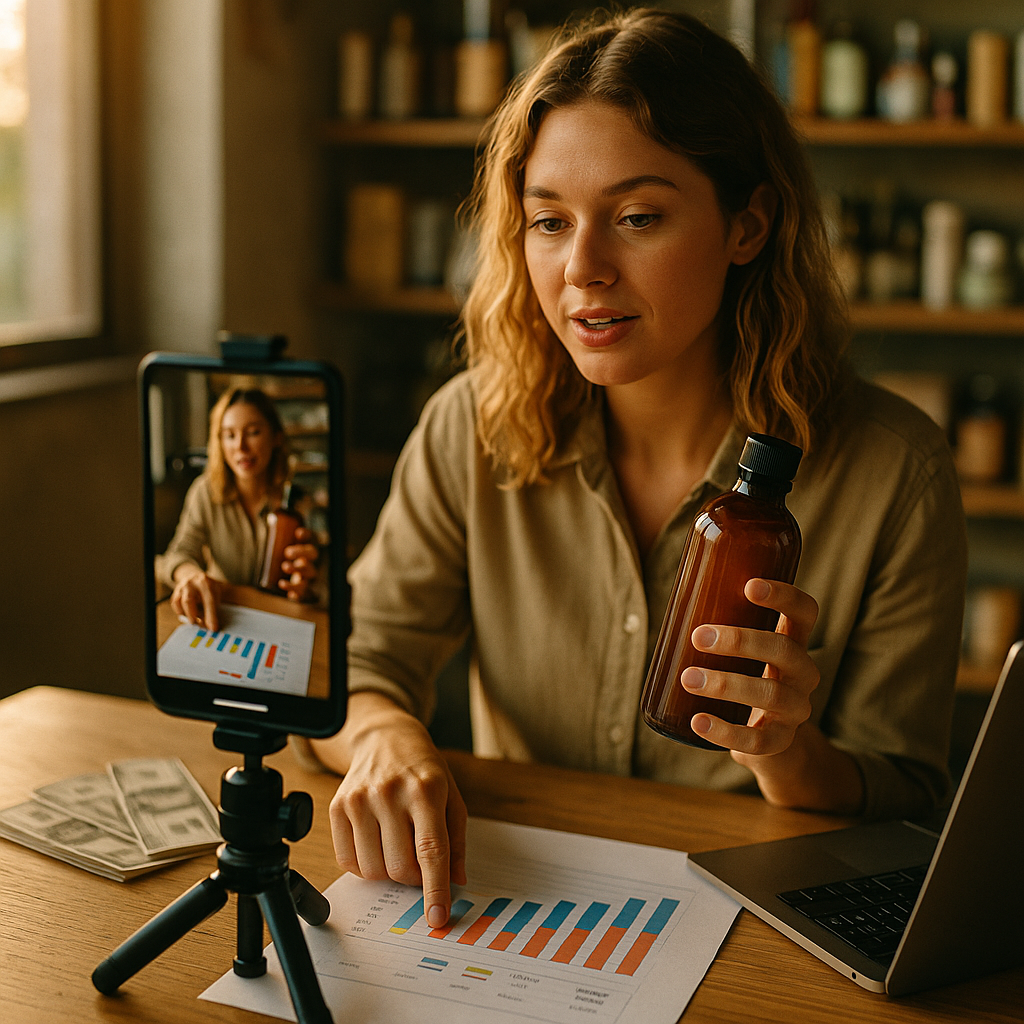
63% of marketers still can’t tie influencer spend directly to revenue, according to recent industry surveys, yet budgets keep growing. Predictive targeting is closing that gap by routing dollars only toward creators whose past performance shows up in actual bookings and sales, not just impressions. The era of paying for reach and hoping it converts is ending.
The Vanity Metric Hangover Is Finally Ending
For years, influencer budgets got allocated based on follower counts, engagement rates, and vague “brand lift” studies that nobody could really audit. It worked, sort of, when the whole category was young and everyone was figuring things out together. It doesn’t work anymore.
Brands now have access to closed-loop data: point-of-sale integrations, affiliate link tracking, booking platform APIs, CRM matchbacks. That data exposes a hard truth. Most creators generate mediocre conversion regardless of their follower size. A handful generate outsized, repeatable revenue. Predictive targeting models exist to find that handful faster and reallocate spend toward them before a campaign burns through its budget on guesswork.
This isn’t a minor optimization tweak. It’s a structural shift in how influencer marketing gets budgeted, and it’s happening at the same time post-cookie attribution models are forcing brands to rethink how they even measure creator-driven sales in the first place.
What Predictive Targeting Actually Means Here
Predictive targeting, in this context, is not audience lookalike modeling for paid social. It’s a machine learning layer sitting on top of your creator roster and campaign history, scoring each creator (or even each piece of content) on the probability it will drive a booking, a purchase, or a qualified lead.
The model ingests historical conversion data, seasonality, category performance, audience overlap, and increasingly, real-time booking or transaction feeds from travel platforms, e-commerce backends, or subscription tools. It then outputs a spend allocation recommendation, often refreshed weekly or even daily. Some vendors call this “performance-weighted allocation.” Others just call it AI budget optimization. The mechanics are similar: rank creators by provable outcome, not proxy metric, then shift the next dollar toward whoever is winning.
The shift is from “who has the audience” to “who has proven, repeatable purchase intent behind their content” — and the difference between those two questions is where most wasted influencer budget hides.
Booking Data as the New Proof Point
Travel, hospitality, events, and ticketing brands have led this shift because their conversion signal is unusually clean. A booking either happened or it didn’t. There’s a date, a price, a channel.
That clarity is exactly why predictive models perform so well in these verticals. A hotel brand running fifty creator partnerships can now see, within days, which five drove actual reservations versus which forty-five drove likes. Feed that data back into the model, and the next campaign cycle automatically weights budget toward the five. Run this over three or four cycles and you get a self-reinforcing loop: better data in, better allocation out, better ROI reported up the chain.
This is the same logic that’s reshaping how AI format recommendations decide ad placement more broadly across paid media. Influencer budgets are simply catching up to a discipline that programmatic advertising adopted years ago.
Why Sales Data Beats Engagement Every Time
Engagement rate tells you people liked a video. It does not tell you they bought anything. Marketers have known this for a while, but the tooling to act on it has lagged.
Now it hasn’t. Shopify integrations, affiliate networks like ShareASale and Impact, and first-party CRM matchbacks let brands trace a purchase back to a specific creator, specific post, and specific timestamp. When that data feeds a predictive model, the model stops rewarding creators for reach and starts rewarding them for revenue per dollar spent.
Consider a mid-size DTC skincare brand running twenty micro-influencer deals a month. Engagement-based ranking might put a creator with 400K followers and a 6% engagement rate at the top. But sales data might show that creator drives $2 in revenue per $100 spent, while a creator with 60K followers and 2% engagement drives $340. Which one gets next month’s budget? Under the old system, probably the first. Under a predictive, sales-fed system, it’s obviously the second.
This is not a hypothetical. eMarketer has repeatedly flagged the disconnect between engagement metrics and purchase intent as one of the biggest blind spots in influencer measurement, and brands that close it tend to see immediate efficiency gains in the double digits.
How the Models Actually Get Built
Most predictive targeting systems in this space aren’t exotic. They’re gradient-boosted models or simpler regression frameworks trained on a brand’s own historical campaign data, sometimes supplemented with third-party creator performance benchmarks from platforms like CreatorIQ, Traackr, or Grin.
Inputs typically include:
- Historical conversion rate by creator, category, and content format
- Booking or purchase recency and frequency from the brand’s own transaction data
- Audience composition signals (demographics, geo, purchase intent proxies)
- Seasonal and promotional context (a travel creator’s January performance won’t predict July)
- Content type performance (Reels vs. long-form YouTube vs. TikTok Shop live)
The output isn’t a single “best creator” — it’s a probability-weighted spend curve. Budget gets distributed across a portfolio, with more going to higher-confidence bets and a smaller test allocation reserved for emerging creators the model hasn’t scored yet. That test allocation matters. Without it, models calcify around last quarter’s winners and miss new talent entirely.
Governance matters here too. Brands running these systems at scale are increasingly setting explicit rules for when a human needs to step in and override the model’s recommendation, similar to the human override thresholds now standard in programmatic media buying governance.
The Risk Nobody Talks About Enough
Optimizing purely for provable past performance has a blind spot: it can quietly narrow your creator roster down to a handful of “safe” performers and starve everyone else, including people who might have broken out with a bit more investment.
There’s also a compliance angle. As these models get more sophisticated, they start touching territory the FTC cares about, particularly around disclosure consistency and whether performance claims made to brands by creators (or their agencies) are actually substantiated. If a model is reallocating six figures based on a creator’s self-reported conversion numbers, someone needs to be auditing those numbers independently.
Data provenance is the underrated risk. Where did the sales data actually come from? Is it first-party, verified, and clean, or is it a creator’s own dashboard screenshot? This mirrors concerns raised in how to vet AI vendors on training data provenance — the same due diligence applies here. Garbage data in still means garbage allocation out, just with more confidence attached to the garbage.
Building the Stack: What Brands Actually Need
Standing up a predictive targeting system isn’t just buying a tool off the shelf, though several platforms (Traackr, CreatorIQ, Later Influence) now offer performance-scoring modules that get you most of the way there. The real work is in the data plumbing.
You need:
- A clean, consistent attribution method across all creator partnerships, whether that’s UTM-tagged links, unique promo codes, or platform-native shopping tags
- A feedback loop that pushes actual sales or booking data back into the scoring model on a regular cadence, not quarterly, ideally weekly
- Clear spend caps and override rules so the model can’t run away with budget based on a short-term anomaly
- A reserved test-and-learn allocation, typically 10-20% of budget, for creators outside the current top-performer set
This is very similar in spirit to the evaluation criteria brands use when vetting AI marketing automation decision engines for paid media. The underlying question is the same: does this system make defensible, auditable decisions, or is it a black box that happens to sound confident?
Brand safety and disclosure compliance still sit on top of all of this. A creator can be a phenomenal sales driver and still create legal exposure if their content isn’t properly labeled, especially as platforms tighten AI-content disclosure rules. Worth reviewing alongside your allocation strategy: the compliance considerations in TikTok’s C2PA rollout guidance for brand teams.
What Good Looks Like in Practice
Brands doing this well share a few habits. They treat the predictive model as a decision-support tool, not an autopilot. They review allocation shifts monthly with a human who understands category nuance the algorithm might miss (a creator going through a controversy, a seasonal spike that’s about to reverse). They keep test budgets funded even when the top performers look unbeatable, because today’s top five were yesterday’s untested unknowns.
And they report on this differently to leadership. Instead of “reach and engagement,” the dashboard shows cost per booking, revenue per creator dollar, and predicted-versus-actual conversion variance. That’s a much easier conversation to have with a CFO.
Sprout Social’s research on marketing measurement consistently shows finance leaders trust revenue-tied metrics far more than engagement metrics when approving budget increases. Predictive targeting, done right, gives marketing teams exactly that kind of evidence.
The Takeaway
Predictive targeting won’t replace judgment, but it will replace guesswork. Start by auditing whether your current creator scoring relies on engagement or actual bookings and sales, because that single distinction now determines whether next quarter’s budget gets spent well or wasted.
FAQs
What is predictive targeting in influencer marketing?
Predictive targeting uses machine learning models to score creators based on their likelihood of driving a measurable outcome, such as a booking or sale, using historical performance and real-time transaction data, then recommends how budget should be allocated across the roster.
How is this different from engagement-based influencer selection?
Engagement-based selection ranks creators by likes, comments, and shares. Predictive targeting ranks creators by provable revenue outcomes, like bookings or purchases, which often produces very different rankings than engagement alone.
What data do brands need to run predictive targeting effectively?
Clean attribution data is essential, including UTM-tagged links, unique promo codes, affiliate tracking, or platform-native shopping tags, plus a consistent feedback loop that pushes sales or booking data back into the model regularly.
Does predictive targeting eliminate the need for human oversight?
No. Most successful implementations keep humans in the loop for override decisions, especially around emerging creators, anomalies, or seasonal shifts the model hasn’t been trained to recognize.
Is predictive targeting only useful for large brands with big budgets?
No. Mid-size and smaller brands often benefit more quickly since they can act on allocation shifts faster, and many creator platforms now offer built-in scoring modules that don’t require custom model-building.
What’s the biggest risk with predictive targeting models?
The biggest risks are data provenance (relying on unverified, self-reported creator performance data) and over-narrowing the roster toward “safe” past performers, which can starve new creator discovery over time.
FAQs
Top Influencer Marketing Agencies
The leading agencies shaping influencer marketing in 2026
Agencies ranked by campaign performance, client diversity, platform expertise, proven ROI, industry recognition, and client satisfaction. Assessed through verified case studies, reviews, and industry consultations.
Moburst

-
2

The Shelf
Boutique Beauty & Lifestyle Influencer AgencyA data-driven boutique agency specializing exclusively in beauty, wellness, and lifestyle influencer campaigns on Instagram and TikTok. Best for brands already focused on the beauty/personal care space that need curated, aesthetic-driven content.Clients: Pepsi, The Honest Company, Hims, Elf Cosmetics, Pure LeafVisit The Shelf → -
3

Audiencly
Niche Gaming & Esports Influencer AgencyA specialized agency focused exclusively on gaming and esports creators on YouTube, Twitch, and TikTok. Ideal if your campaign is 100% gaming-focused — from game launches to hardware and esports events.Clients: Epic Games, NordVPN, Ubisoft, Wargaming, Tencent GamesVisit Audiencly → -
4

Viral Nation
Global Influencer Marketing & Talent AgencyA dual talent management and marketing agency with proprietary brand safety tools and a global creator network spanning nano-influencers to celebrities across all major platforms.Clients: Meta, Activision Blizzard, Energizer, Aston Martin, WalmartVisit Viral Nation → -
5

The Influencer Marketing Factory
TikTok, Instagram & YouTube CampaignsA full-service agency with strong TikTok expertise, offering end-to-end campaign management from influencer discovery through performance reporting with a focus on platform-native content.Clients: Google, Snapchat, Universal Music, Bumble, YelpVisit TIMF → -
6

NeoReach
Enterprise Analytics & Influencer CampaignsAn enterprise-focused agency combining managed campaigns with a powerful self-service data platform for influencer search, audience analytics, and attribution modeling.Clients: Amazon, Airbnb, Netflix, Honda, The New York TimesVisit NeoReach → -
7

Ubiquitous
Creator-First Marketing PlatformA tech-driven platform combining self-service tools with managed campaign options, emphasizing speed and scalability for brands managing multiple influencer relationships.Clients: Lyft, Disney, Target, American Eagle, NetflixVisit Ubiquitous → -
8

Obviously
Scalable Enterprise Influencer CampaignsA tech-enabled agency built for high-volume campaigns, coordinating hundreds of creators simultaneously with end-to-end logistics, content rights management, and product seeding.Clients: Google, Ulta Beauty, Converse, AmazonVisit Obviously →