


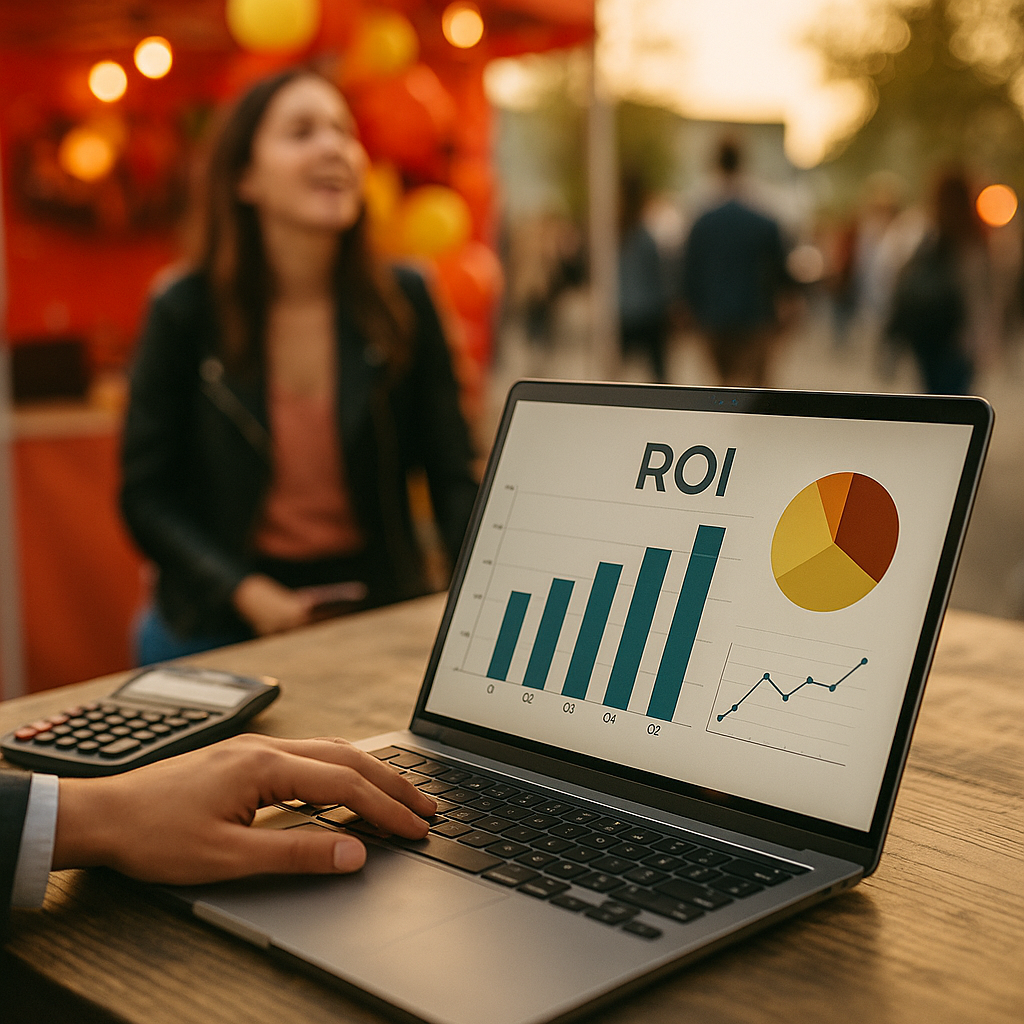
Measuring the ROI of an experiential marketing program is crucial as brands aim to justify investments and refine future strategies. Proper ROI measurement can transform experiential efforts from speculative spending into clear growth drivers. But where do you start? Discover a comprehensive framework to quantify success, optimize campaigns, and impress stakeholders with data-backed results.
Defining Success Metrics in Experiential Marketing Initiatives
To effectively measure experiential marketing ROI, you must clarify what “success” looks like for your unique campaign. Experiential campaigns often target objectives beyond immediate sales, such as brand awareness, engagement, or customer loyalty. Establish key performance indicators (KPIs) tailored to campaign goals. Examples of critical KPIs for experiential activations include:
- Event attendance: The number of unique visitors or participants engaged.
- Lead acquisition: Contacts gathered through registration, sign-ups, or in-person interactions.
- Brand sentiment: Changes in audience perception measured by social listening or post-event surveys.
- Social media reach: Impressions, shares, and user-generated content tied directly to the event.
- Sales impact: Short-term and long-term sales lift among attendees or influenced audiences.
Commit to collecting both qualitative and quantitative data, ensuring they align with your brand’s strategic objectives. Precise KPIs enable clear, actionable reporting and help secure future investment in experiential programs.
Data Collection Methods for Event Marketing Analytics
Accurate data collection is essential for robust experiential marketing analytics. Begin by integrating both digital and physical tracking tools into your campaign. These may include:
- RFID or NFC badges: Track attendee movement, dwell time, and engagement at event zones.
- QR codes: Provide instant interaction measurement when scanned for content or offers.
- Touchpoint tracking: Use digital forms, social hashtags, and branded check-ins to capture engagement online and offline.
- Surveys and feedback forms: Gather post-event insights to gauge brand impact and participant satisfaction.
- Integrated CRM systems: Associate event interactions directly with customer profiles for ongoing analysis.
Centralize data across tools for a unified view of participant journeys. In 2025, privacy-compliant data practices are paramount—ensure GDPR, CCPA, and other standards are rigorously followed to build trust and safeguard valuable insights.
Attribution Models for Experiential Campaign Evaluation
Determining the true value of experiential marketing requires selecting the right attribution models. Unlike traditional advertising, experiential activations often drive delayed or indirect responses. Approaches include:
- First-touch attribution: Attributes outcomes to the first event interaction—useful for lead generation campaigns.
- Last-touch attribution: Credits the final interaction before a conversion, suitable for short purchase cycles.
- Multi-touch attribution: Distributes value across several campaign touchpoints, reflecting complex buyer journeys.
- Incrementality testing: Compares outcomes between exposed and control groups to isolate the campaign’s true effect.
For robust accuracy, blend multiple attribution models. For example, a brand might compare pre- and post-event sales data, track redemption of event-exclusive offers, and monitor changes in customer engagement across the funnel. By triangulating impact via several sources, the ROI calculation of experiential events becomes more defensible and transparent.
Calculating and Communicating the Return on Investment
A comprehensive experiential event performance analysis moves beyond counting impressions to fully monetizing the value delivered. The classic ROI formula applies:
- ROI = (Net Profit from Campaign − Campaign Costs) / Campaign Costs × 100%
Yet, the inputs must include both direct and indirect contributions. Consider all relevant factors:
- Incremental revenue: New sales attributed to experiential engagements (via promo codes, CRM, or post-event surveys).
- Cost savings: Customer acquisition cost reduction or boost in lifetime value among event participants.
- Earned media value: Total value of organic publicity, social mentions, and press coverage generated by the event.
Present findings using dashboards or scorecards tailored to executive and stakeholder needs. Quantify qualitative results where possible—such as assigning value to social engagement using industry benchmarks. Provide transparent context on methodologies and limitations to foster trust and drive smarter decisions for future programs.
Continuous Optimization Using Experiential Campaign ROI Insights
Once you’ve measured ROI, the final step is to apply those learnings through experiential marketing success measurement best practices. Use findings to:
- Identify high-performing tactics: Scale or replicate elements with proven impact, like specific activities or influencer collaborations.
- Refine target audiences: Focus future efforts on audience segments demonstrating strongest engagement or conversion.
- Enhance creative elements: Adapt immersive experiences based on direct participant feedback and behavioral data.
- Benchmark over time: Track repeated campaigns to uncover performance trends and areas for incremental improvement.
- Foster cross-team learning: Share data and outcomes with other marketing and sales divisions to unify strategy and messaging.
ROI measurement isn’t one-and-done; it’s a feedback loop that ensures each activation grows smarter and more effective while maximizing marketing spend.
Conclusion: Turning Experiential Marketing into Profitable Business Growth
Measuring the ROI of an experiential marketing program demands clear success metrics, sophisticated data capture, and careful attribution. By following this step-by-step framework, marketers can validate and improve their experiential investments—ensuring every event delivers measurable value, deepens customer relationships, and fuels future brand growth.
FAQs: Measuring the ROI of Experiential Marketing Programs
- What is experiential marketing ROI?
It refers to the measurable value, typically financial, that a brand gains from experiential marketing campaigns compared to the resources invested in them. - How do I track leads from an experiential event?
Track leads through registration forms, badge scans, app signups, unique promo codes, and CRM integration, ensuring accurate attribution to the event. - Which attribution model is best for experiential marketing?
Multi-touch attribution is usually best, as it reflects the multiple steps and channels that influence conversion from experiential touchpoints. - Can I measure non-monetary ROI like brand awareness?
Yes, use pre- and post-event surveys, social listening tools, and sentiment analysis to quantify changes in brand awareness and affinity. - How often should I analyze experiential campaign ROI?
Analyze after each campaign and track trends over time for ongoing optimization and benchmarking.
Top Influencer Marketing Agencies
The leading agencies shaping influencer marketing in 2026
Agencies ranked by campaign performance, client diversity, platform expertise, proven ROI, industry recognition, and client satisfaction. Assessed through verified case studies, reviews, and industry consultations.
Moburst

-
2

The Shelf
Boutique Beauty & Lifestyle Influencer AgencyA data-driven boutique agency specializing exclusively in beauty, wellness, and lifestyle influencer campaigns on Instagram and TikTok. Best for brands already focused on the beauty/personal care space that need curated, aesthetic-driven content.Clients: Pepsi, The Honest Company, Hims, Elf Cosmetics, Pure LeafVisit The Shelf → -
3

Audiencly
Niche Gaming & Esports Influencer AgencyA specialized agency focused exclusively on gaming and esports creators on YouTube, Twitch, and TikTok. Ideal if your campaign is 100% gaming-focused — from game launches to hardware and esports events.Clients: Epic Games, NordVPN, Ubisoft, Wargaming, Tencent GamesVisit Audiencly → -
4

Viral Nation
Global Influencer Marketing & Talent AgencyA dual talent management and marketing agency with proprietary brand safety tools and a global creator network spanning nano-influencers to celebrities across all major platforms.Clients: Meta, Activision Blizzard, Energizer, Aston Martin, WalmartVisit Viral Nation → -
5

The Influencer Marketing Factory
TikTok, Instagram & YouTube CampaignsA full-service agency with strong TikTok expertise, offering end-to-end campaign management from influencer discovery through performance reporting with a focus on platform-native content.Clients: Google, Snapchat, Universal Music, Bumble, YelpVisit TIMF → -
6

NeoReach
Enterprise Analytics & Influencer CampaignsAn enterprise-focused agency combining managed campaigns with a powerful self-service data platform for influencer search, audience analytics, and attribution modeling.Clients: Amazon, Airbnb, Netflix, Honda, The New York TimesVisit NeoReach → -
7

Ubiquitous
Creator-First Marketing PlatformA tech-driven platform combining self-service tools with managed campaign options, emphasizing speed and scalability for brands managing multiple influencer relationships.Clients: Lyft, Disney, Target, American Eagle, NetflixVisit Ubiquitous → -
8

Obviously
Scalable Enterprise Influencer CampaignsA tech-enabled agency built for high-volume campaigns, coordinating hundreds of creators simultaneously with end-to-end logistics, content rights management, and product seeding.Clients: Google, Ulta Beauty, Converse, AmazonVisit Obviously →