


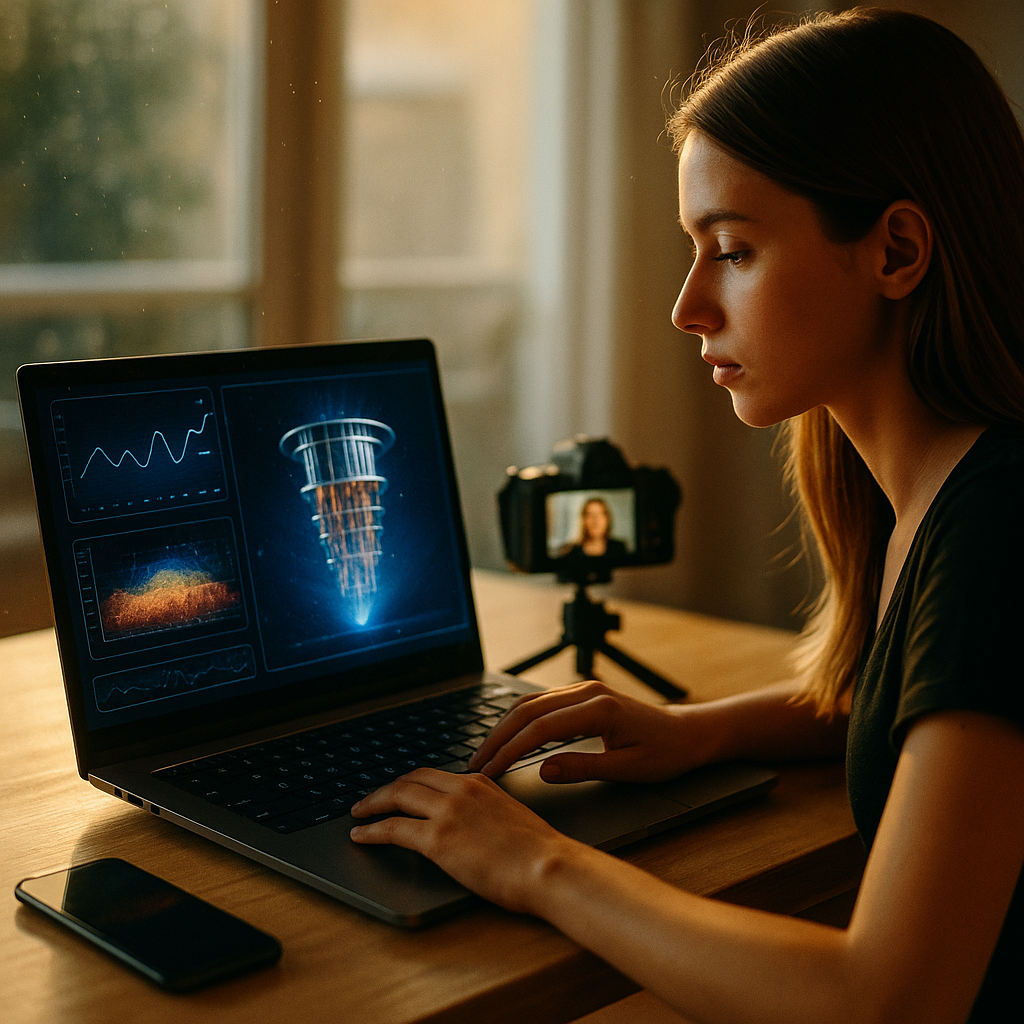
Quantum computing’s potential impact on influencer data analysis is on the brink of redefining digital marketing strategies in 2025. As influencer partnerships become more data-driven, quantum technology promises exponential improvements in data processing and insights. But how might this next-gen computing power truly change the way marketers leverage influencer analytics?
Understanding Quantum Computing in Data Analytics
Quantum computing is a revolutionary leap beyond traditional computing, harnessing the principles of quantum mechanics to perform complex calculations at unimaginable speeds. Unlike classical computers that process bits as 0s or 1s, quantum computers utilize qubits capable of representing multiple states simultaneously through superposition and entanglement. This core capability dramatically enhances data processing capacity and problem-solving efficiency.
For data analytics, this means vast datasets—once limited by classical computational power—can be sifted, analyzed, and modeled in a fraction of the time. As brands track influencer performance across platforms like Instagram, TikTok, and YouTube, quantum technology’s real-time analytics and modeling potential could soon unlock nuanced trends previously buried in sheer volume.
Recent research from Cambridge Quantum (2025) suggests that early adoption in financial services has already slashed computation times for complex portfolio modeling by 70%. The implication is clear: as quantum algorithms mature, influencer analytics platforms are next in line for this unprecedented leap.
The Current Challenges in Influencer Data Analysis
Contemporary influencer data analysis presents unique obstacles. Marketers must integrate vast, varied datasets—engagement rates, follower demographics, sentiment analysis, and conversion metrics—from multiple social platforms. Traditional analytics tools often struggle to synthesize and contextualize this high-dimensional data in ways that yield actionable predictions and insights.
- Volume: Billions of daily engagements and posts generate overwhelming amounts of data.
- Variety: Data comes in numerous formats, from videos to comments to live-stream metrics.
- Velocity: Social conversations and trends shift minute by minute, requiring near-instant analysis.
- Veracity: Sorting genuine versus inauthentic engagement, such as bots or paid comments, remains a persistent issue.
With traditional solutions, marketers often wait hours, even days, for comprehensive insights, risking reactive rather than proactive campaign decisions. Quantum computing’s potential to process high-dimensional, real-time influencer data promises to remove these bottlenecks entirely.
Quantum-Powered Enhancements to Influencer Insights
Quantum computing brings new depth to influencer data analysis through its capacity for pattern recognition and predictive modeling. By leveraging quantum machine learning (QML), platforms can detect subtle patterns within noise-heavy influencer datasets, separating meaningful audience shifts from random fluctuations.
The technology’s strengths suit use cases such as:
- Micro-segmentation: Identify ultra-specific audience clusters, increasing campaign targeting efficiency.
- Advanced sentiment analysis: Quantum algorithms can better interpret human language nuances across massive text datasets, improving sentiment scoring.
- Fraud detection: Quantum anomaly detection can flag suspicious behavior, helping brands avoid influencer fraud.
- Predictive influence mapping: Anticipate which creators are most likely to drive campaign success based on multisource historical data.
A 2025 pilot by SocialMap, a leading influencer analytics startup, adopted IBM’s quantum cloud service and reported 4x faster identification of engagement spikes compared to its classical analytics engine. Quantum’s advantage is not only speed: it delivers insights that would otherwise remain hidden, enabling marketers to optimize partnerships and budget in real time.
Strategic Advantages for Brands and Marketers
In the hyper-competitive landscape of 2025, brands leveraging quantum-powered influencer analysis gain a measurable edge. With enhanced data granularity and speed, marketing teams are empowered to:
- Optimize campaign timing: Rapid analysis of social pulse data allows brands to activate influencer campaigns at peak engagement windows.
- Personalize at scale: Micro-targeted recommendations enable tailoring campaigns to niche audience groups within influencers’ followings.
- Mitigate risk: Quantum-driven anomaly detection minimizes the risk of viral backlash or association with fraudulent influencers.
- Maximize ROI: By predicting which influencer partnerships deliver real sales, brands can refine allocation of marketing budgets for maximum impact.
According to a report by the Digital Marketing Institute (2025), brands that employed quantum analytics in pilot projects experienced a 35% improvement in influencer campaign ROI within six months—highlighting quantum’s value beyond theory.
Barriers to Adoption and Ethical Considerations
While the benefits are profound, several obstacles challenge quantum computing’s full-scale adoption in influencer data analysis. Barriers include:
- Cost and accessibility: Quantum hardware remains expensive and often cloud-based, requiring significant investment and partnerships.
- Technical expertise: There’s a steep learning curve around quantum programming and integrating QML models with legacy analytic platforms.
- Data privacy: Quantum speed increases the risk of unauthorized personal data analysis if robust governance isn’t in place.
Ethically, as brands attain near-instant, granular consumer insights, transparency and consent become paramount. Regulatory frameworks—like the Global Data Ethics Accord introduced in 2025—now require explicit opt-ins for quantum-enhanced behavioral profiling. Marketers must balance power with responsibility, ensuring quantum analytics respect user privacy while delivering business value.
The Future of Influencer Analytics: Predictions and Industry Readiness
Industry experts forecast that by the close of 2025, over 25% of large digital marketing firms will have piloted quantum computing solutions in influencer analytics. With quantum cloud availability growing and enterprise toolkits becoming more accessible, early adopters are already reaping benefits.
Marketers ready to embrace quantum-powered insights should:
- Partner with leading analytics platforms offering quantum integration.
- Upskill teams in quantum machine learning and data ethics.
- Develop clear privacy disclosures regarding quantum-driven data processing.
- Evaluate initial use cases (such as real-time sentiment analysis) where quantum delivers clear value.
The quantum era demands adaptability; those preparing now will shape the standards and best practices for influencer analysis in the coming decade.
Conclusion
Quantum computing’s potential to revolutionize influencer data analysis is quickly shifting from promise to reality in 2025. Brands adopting this technology are already gaining richer insights and greater ROI. For marketers, the clear takeaway is to stay agile—those who adapt early to quantum analytics will lead in the evolving world of digital influence.
FAQs: Quantum Computing’s Role in Influencer Data Analysis
- What exactly is quantum computing?
Quantum computing uses subatomic particle principles to process vast amounts of information rapidly, easily surpassing classical computers for complex problems. - How does quantum computing improve influencer data analysis?
It enables real-time, deeper insights from massive datasets, improving pattern recognition, sentiment analysis, and campaign ROI predictions. - Is quantum computing accessible to all brands in 2025?
Many quantum services are now available through cloud platforms and partner analytics providers, though large-scale direct access may still require significant investment. - What ethical concerns arise with quantum-powered analytics?
Primary concerns include user privacy, consent, and potential misuse of highly detailed behavioral data. Transparent data practices are now mandated by new regulations. - How can marketers start using quantum-driven influencer analytics?
Partner with providers that have integrated quantum computing, ensure teams receive training, and focus on high-impact use cases like real-time trend detection and advanced segmentation.
Top Influencer Marketing Agencies
The leading agencies shaping influencer marketing in 2026
Agencies ranked by campaign performance, client diversity, platform expertise, proven ROI, industry recognition, and client satisfaction. Assessed through verified case studies, reviews, and industry consultations.
Moburst

-
2

The Shelf
Boutique Beauty & Lifestyle Influencer AgencyA data-driven boutique agency specializing exclusively in beauty, wellness, and lifestyle influencer campaigns on Instagram and TikTok. Best for brands already focused on the beauty/personal care space that need curated, aesthetic-driven content.Clients: Pepsi, The Honest Company, Hims, Elf Cosmetics, Pure LeafVisit The Shelf → -
3

Audiencly
Niche Gaming & Esports Influencer AgencyA specialized agency focused exclusively on gaming and esports creators on YouTube, Twitch, and TikTok. Ideal if your campaign is 100% gaming-focused — from game launches to hardware and esports events.Clients: Epic Games, NordVPN, Ubisoft, Wargaming, Tencent GamesVisit Audiencly → -
4

Viral Nation
Global Influencer Marketing & Talent AgencyA dual talent management and marketing agency with proprietary brand safety tools and a global creator network spanning nano-influencers to celebrities across all major platforms.Clients: Meta, Activision Blizzard, Energizer, Aston Martin, WalmartVisit Viral Nation → -
5

The Influencer Marketing Factory
TikTok, Instagram & YouTube CampaignsA full-service agency with strong TikTok expertise, offering end-to-end campaign management from influencer discovery through performance reporting with a focus on platform-native content.Clients: Google, Snapchat, Universal Music, Bumble, YelpVisit TIMF → -
6

NeoReach
Enterprise Analytics & Influencer CampaignsAn enterprise-focused agency combining managed campaigns with a powerful self-service data platform for influencer search, audience analytics, and attribution modeling.Clients: Amazon, Airbnb, Netflix, Honda, The New York TimesVisit NeoReach → -
7

Ubiquitous
Creator-First Marketing PlatformA tech-driven platform combining self-service tools with managed campaign options, emphasizing speed and scalability for brands managing multiple influencer relationships.Clients: Lyft, Disney, Target, American Eagle, NetflixVisit Ubiquitous → -
8

Obviously
Scalable Enterprise Influencer CampaignsA tech-enabled agency built for high-volume campaigns, coordinating hundreds of creators simultaneously with end-to-end logistics, content rights management, and product seeding.Clients: Google, Ulta Beauty, Converse, AmazonVisit Obviously →