


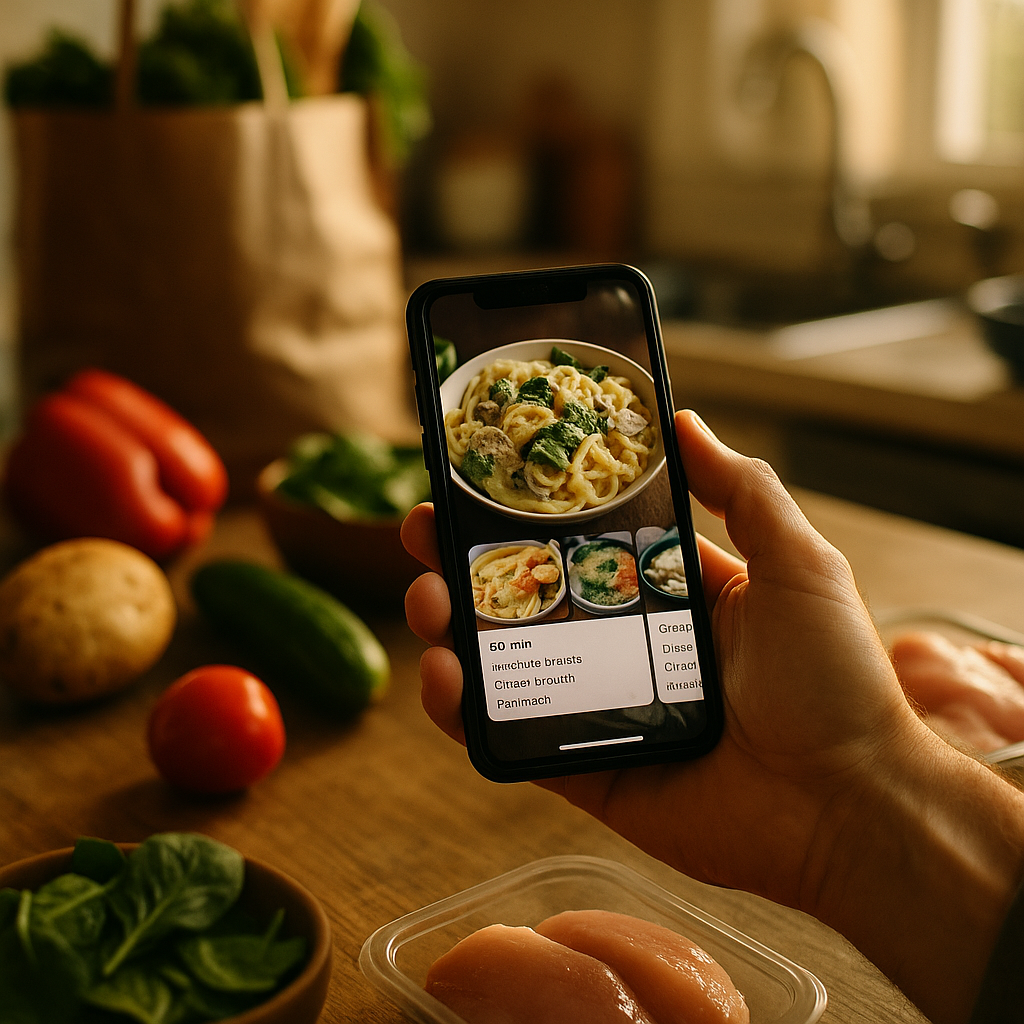
Recipe content gets 3x the saves of any other food format on Instagram, yet most brands still brief creators for a single hero shot. That’s leaving money on the table. The recipe card carousel, a swipeable sequence of ingredient shots, step cards, and a final shoppable tag, has quietly become the highest-converting creator format in grocery and CPG marketing. Here’s why it works and how to brief it properly.
Why Swiping Beats Scrolling for Grocery Decisions
Grocery shopping is a planning behavior, not an impulse scroll. Shoppers screenshot recipes, add ingredients to lists, and revisit content days later at the store. A single video clip doesn’t survive that workflow. A carousel does. Each card becomes a reference point: ingredients on card one, prep steps on cards two through five, finished dish and shoppable tag on the last card.
That structure mirrors how people actually cook from content. Nobody rewatches a 45-second reel three times to catch the measurements. They swipe back to the card that has them written down.
Carousels with a dedicated ingredient card see roughly 40% longer save rates than single-image recipe posts, because saves function as a grocery list substitute, not just a bookmark.
The Format, Broken Down
A high-performing recipe card carousel usually follows a predictable card sequence. Deviating from it tends to hurt completion rates.
- Card 1: The hook shot. Finished dish, styled, with a text overlay naming the recipe and a hint of the payoff (“15 minute dinner, one pan”).
- Card 2: The ingredient list. Clean, legible, brand product visible in the flat lay or named in text. This is the card people screenshot.
- Cards 3 to 5: Step by step. Real prep shots, not overly polished. Each card shows one action, not three combined.
- Card 6: The shoppable tag or CTA card. Product tags, a “shop this recipe” sticker, or a link-in-bio prompt tied to a retailer page.
Brands running this on Instagram or Pinterest pair it with native shopping tags. On TikTok, creators often pin the ingredient card as the cover image, since TikTok’s carousel format rewards a strong first card for completion. If you’re already testing swipeable ad units elsewhere, the mechanics overlap with what we covered in shoppable carousel ad sequencing, though recipe content has its own pacing logic tied to cooking steps rather than product features.
What’s Actually Driving the Conversion Lift?
It’s not novelty. Recipe content has existed on food blogs and Pinterest for over a decade. What changed is the shoppability layer. Instagram, TikTok, and Pinterest have all expanded native product tagging inside carousels and image posts over the past two years, which means the ingredient card can now link directly to a retailer’s product page or a brand’s shop tab without the creator ever mentioning a discount code out loud.
That removes friction at the exact moment intent peaks. Someone lands on card two, sees “two cups of X brand oat flour,” taps the tag, and lands on a buy page. No searching, no typing a brand name into a search bar and hoping the right SKU shows up.
There’s also a trust dimension. Recipe carousels read as instructional, not promotional, even when the product is clearly featured. According to Sprout Social’s consumer research on branded content, audiences consistently rate how-to and tutorial formats as more trustworthy than direct product endorsements. Recipe cards fall squarely into that bucket. Compare that to a straight product unboxing, and it’s easy to see why grocery brands are shifting budget toward this format.
Briefing Creators for Carousels That Convert
Most underperforming recipe carousels fail for one reason: the brief only asked for “a recipe using our product.” That leaves too much to interpretation. A tighter brief specifies the card count, what goes on the ingredient card, and where the product needs to be visually or textually present.
A few non-negotiables worth adding to any recipe carousel brief:
- Require the product name or packaging in the ingredient card, not buried in a caption.
- Specify a minimum of 6 cards. Shorter carousels underperform on save rate and rarely leave room for a clean CTA card.
- Ask for a legible font size on text overlays. Ingredient cards get screenshotted and viewed small on a phone in a grocery aisle.
- Mandate the shoppable tag or link placement on the final card, tested before publishing.
- Request a caption that repeats the full ingredient list in text, since not everyone opens every card and search algorithms index captions.
This level of specificity is the same principle behind briefs with built-in tracking fields: the more structured the ask, the cleaner the attribution data on the back end. If your team is still writing loose creative briefs for food creators, that’s the first fix, before you even touch platform selection.
Measuring What Matters (Hint: It’s Not Just Likes)
Saves and shares are the leading indicators here, not likes. A recipe carousel with modest reach but a high save-to-reach ratio is doing exactly what it’s supposed to do: getting bookmarked for a future grocery trip. Track save rate, link clicks on the shoppable card specifically (not just aggregate post clicks), and, where retail media partnerships allow it, downstream basket data.
Some grocery brands running programs through retail media networks can now tie a specific creator carousel to actual SKU lift at checkout, using retailer loyalty card matching. That’s the gold standard, but it requires coordination between the brand’s influencer team and its retail media or shopper marketing team, two groups that historically don’t talk to each other much.
If you can’t get that level of closed-loop attribution yet, a reasonable proxy is comparing site traffic from carousel posts against traffic from single-image or reel posts over the same campaign window, using UTM parameters on every shoppable tag. HubSpot’s campaign attribution tools can help stitch this together if your CRM already lives there.
Where This Format Fits in a Broader CPG Content Mix
Recipe card carousels work best as one layer in a stack, not a standalone tactic. Pair them with short-form video for top-of-funnel discovery and save the carousel for the consideration and purchase-intent stage, when someone’s already decided to cook and just needs the plan. If you’re also running video-first recipe content, the brief structure in recipe tutorial shorts for CPG complements the carousel nicely: use the short video to hook interest, then retarget with the carousel for the ingredient breakdown and shoppable tag.
Seasonal timing matters more for this format than most. Recipe search volume spikes around holidays, back-to-school, and grilling season, according to trend data from eMarketer’s food and beverage marketing coverage. Briefing creators two to three weeks ahead of these windows, rather than the week of, gives enough lead time for content review and platform approval on shoppable tags.
Compliance is worth a mention too. If the creator is compensated or gifted product, standard FTC disclosure rules apply regardless of format. A recipe carousel doesn’t get a pass just because it reads as educational. Keep disclosure language on the caption or the first card, and check the FTC’s endorsement guidelines if your legal team hasn’t reviewed creator contracts recently.
Common Mistakes That Kill Conversion
A few patterns show up repeatedly in underperforming campaigns:
- Ingredient card text too small to read on mobile, forcing a pinch-zoom that most users won’t bother with.
- Product placement that’s purely decorative, sitting in the background of a step shot rather than named where it matters.
- No caption backup of the ingredient list, so the content isn’t searchable or accessible to swipe-fatigued users.
- Shoppable tags placed on the hook card instead of the ingredient or final card, which confuses intent sequencing.
Fixing these is cheap. It’s editing guidance, not a production overhaul. Most creators will happily adjust card structure if the brief is specific from the start, which circles back to why the brief matters more than the platform or the influencer’s follower count.
Next step: audit your last three recipe-based creator campaigns for save rate and shoppable-tag click-through specifically. If those numbers are thin, rebrief your next creator with the six-card structure above before adding a single dollar of paid amplification.
Frequently Asked Questions
What makes a recipe card carousel different from a regular recipe post?
A recipe card carousel breaks the recipe into sequential swipeable cards, typically an ingredient card, several step cards, and a final shoppable card, rather than cramming everything into one image or caption. This structure matches how people actually reference recipes while shopping or cooking.
Which platforms support shoppable recipe carousels?
Instagram and Pinterest both offer native product tagging inside carousel and image posts. TikTok supports photo carousels with linked product tags in supported markets through its shopping features, detailed on TikTok’s advertising platform.
How many cards should a recipe carousel have?
Six is a reasonable minimum: one hook card, one ingredient card, three to four step cards, and one shoppable or CTA card. Fewer cards tend to compress information and hurt save rates.
How do I measure ROI on recipe carousel content?
Track save rate, click-through on the shoppable card specifically, and, where possible, downstream basket or SKU lift through retail media partnerships. Save rate is the strongest early signal since it indicates purchase-intent behavior, not just passive engagement.
Do recipe carousels require the same disclosure rules as other sponsored content?
Yes. Any compensated or gifted partnership requires clear disclosure regardless of format. Refer to the FTC’s endorsement guidelines for current requirements.
Top Influencer Marketing Agencies
The leading agencies shaping influencer marketing in 2026
Agencies ranked by campaign performance, client diversity, platform expertise, proven ROI, industry recognition, and client satisfaction. Assessed through verified case studies, reviews, and industry consultations.
Moburst

-
2

The Shelf
Boutique Beauty & Lifestyle Influencer AgencyA data-driven boutique agency specializing exclusively in beauty, wellness, and lifestyle influencer campaigns on Instagram and TikTok. Best for brands already focused on the beauty/personal care space that need curated, aesthetic-driven content.Clients: Pepsi, The Honest Company, Hims, Elf Cosmetics, Pure LeafVisit The Shelf → -
3

Audiencly
Niche Gaming & Esports Influencer AgencyA specialized agency focused exclusively on gaming and esports creators on YouTube, Twitch, and TikTok. Ideal if your campaign is 100% gaming-focused — from game launches to hardware and esports events.Clients: Epic Games, NordVPN, Ubisoft, Wargaming, Tencent GamesVisit Audiencly → -
4

Viral Nation
Global Influencer Marketing & Talent AgencyA dual talent management and marketing agency with proprietary brand safety tools and a global creator network spanning nano-influencers to celebrities across all major platforms.Clients: Meta, Activision Blizzard, Energizer, Aston Martin, WalmartVisit Viral Nation → -
5

The Influencer Marketing Factory
TikTok, Instagram & YouTube CampaignsA full-service agency with strong TikTok expertise, offering end-to-end campaign management from influencer discovery through performance reporting with a focus on platform-native content.Clients: Google, Snapchat, Universal Music, Bumble, YelpVisit TIMF → -
6

NeoReach
Enterprise Analytics & Influencer CampaignsAn enterprise-focused agency combining managed campaigns with a powerful self-service data platform for influencer search, audience analytics, and attribution modeling.Clients: Amazon, Airbnb, Netflix, Honda, The New York TimesVisit NeoReach → -
7

Ubiquitous
Creator-First Marketing PlatformA tech-driven platform combining self-service tools with managed campaign options, emphasizing speed and scalability for brands managing multiple influencer relationships.Clients: Lyft, Disney, Target, American Eagle, NetflixVisit Ubiquitous → -
8

Obviously
Scalable Enterprise Influencer CampaignsA tech-enabled agency built for high-volume campaigns, coordinating hundreds of creators simultaneously with end-to-end logistics, content rights management, and product seeding.Clients: Google, Ulta Beauty, Converse, AmazonVisit Obviously →