


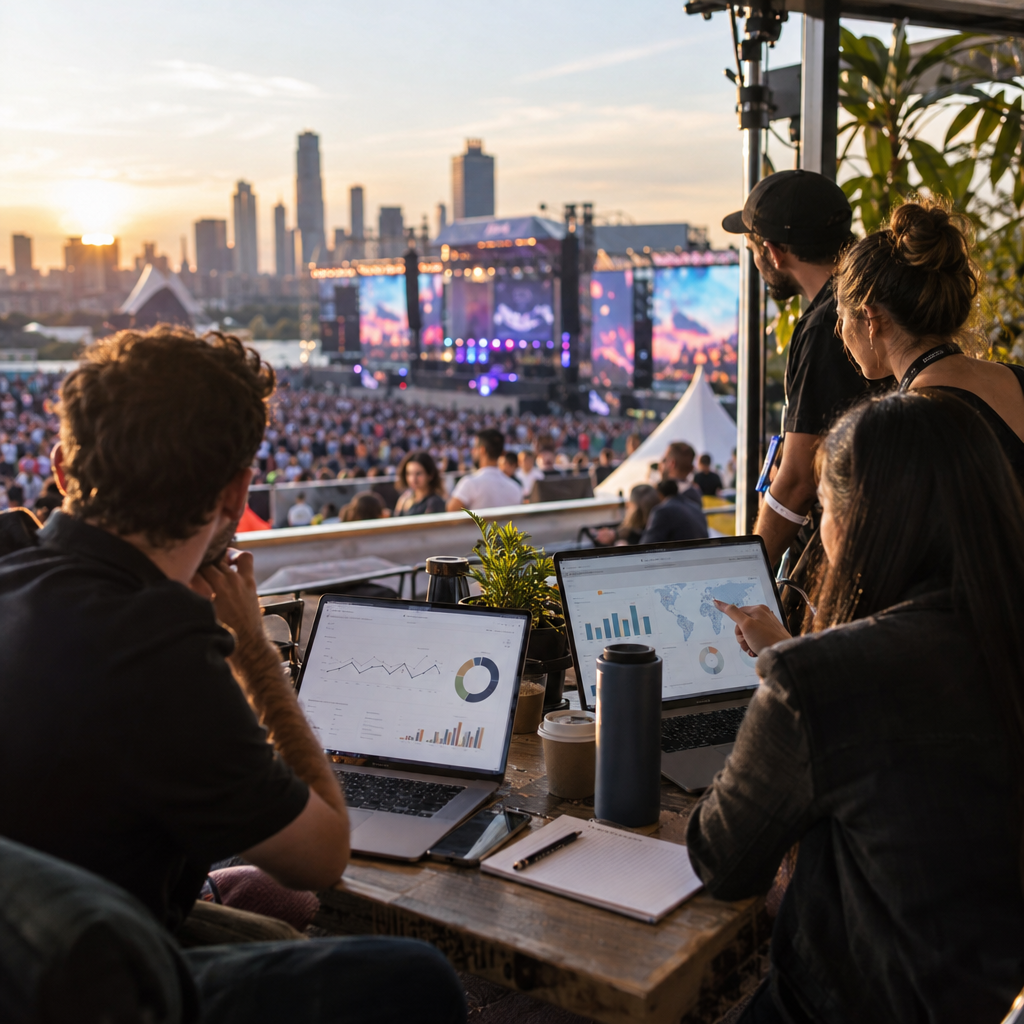
Modash gathered a crowd that, two years ago, would have been talking impressions and follower counts. At ROI Festival, the conversation was almost entirely about attribution, margin, and who actually owns the creator relationship. If your 2026 influencer plan still leads with reach, the room you weren’t in just told you why that’s a problem.
The event, Modash’s answer to a market that’s gotten tired of vanity benchmarks, pulled together brand marketers, agency leads, and platform reps for two days of blunt talk about what’s actually working. No keynote fluff about “authenticity” as a strategy. Just operators comparing notes on what moves revenue and what’s quietly draining budget.
The Headline Shift: Influencer Spend Is Being Treated Like Paid Media
The single biggest signal out of ROI Festival wasn’t a new platform feature or a creator trend. It was a mindset shift. Brands on stage kept describing their influencer programs using paid media language: cost per acquisition, incrementality testing, media mix modeling. That’s a meaningful departure from the “brand awareness” framing that dominated influencer budgets for the better part of a decade.
This tracks with broader industry data. engagement rate as a primary KPI has been losing ground to branded search lift and conversion tracking for over a year now. What ROI Festival made clear is that this isn’t a niche practice anymore. It’s becoming table stakes for any brand defending budget in a tighter marketing environment.
Multiple speakers echoed the same line in different words: if you can’t tie a creator deal to a measurable business outcome, you’re going to lose that budget line to someone who can.
That’s not hyperbole. Gartner’s own forecasting has flagged shrinking marketing budgets as a pressure point, and influencer teams are feeling it directly. We covered this dynamic in detail when Gartner’s budget forecast pushed influencer teams to adapt, and the tone at Modash’s summit confirmed the trend has accelerated rather than stalled.
In House Creator Teams Are No Longer the Exception
A recurring theme across panels: brands are pulling creator management back in house, or at minimum building a hybrid model where strategy sits internally and execution gets outsourced selectively. This isn’t just a cost play, though it is partly that. It’s about control over data, creative approval speed, and relationship continuity when agency staff turns over.
We’ve tracked this shift closely. Google, Blizzard, and Etsy bringing creator teams in house wasn’t an isolated story, it was an early signal of a pattern that ROI Festival speakers confirmed is now mainstream among mid-size and enterprise brands alike. One panelist from a DTC skincare brand put it plainly: agencies are still useful for scale and niche sourcing, but the strategic layer, the part that decides which creators align with brand voice and which campaigns get budget, increasingly lives inside the marketing org.
This has knock-on effects for agencies themselves. Consolidation in the agency space, which we detailed in our coverage of the recent wave of agency M&A activity, is partly a response to brands demanding more for less and taking core functions in house. If you’re a brand still routing every creator decision through an external agency, ROI Festival’s consensus suggests you’re paying a premium for work your own team could increasingly handle, with better margin control.
What This Means for Budget Allocation
Practically, this shift changes how brands should structure headcount and agency contracts. A few patterns worth testing:
- Shift agency retainers toward project-based sourcing and negotiation, not ongoing strategy.
- Build a lightweight internal creator database using tools like Modash itself, rather than relying solely on agency-curated lists.
- Reallocate saved agency fees toward performance tracking infrastructure, since attribution tooling was named repeatedly as the biggest gap in most programs.
AI Vetting Tools Took Center Stage, and Not Just for Fraud Detection
Modash has obvious skin in this game as a discovery and vetting platform, but the AI conversation at ROI Festival went beyond product pitches. Brand marketers described using AI tools to flag audience quality issues, predict content performance before a campaign launches, and even draft briefs faster. The efficiency gains are real, but several speakers were candid about the limits.
One point that resonated across sessions: AI can cut production and vetting time dramatically, but it hasn’t changed what creators charge for trust and reach. That lines up with what we reported in AI cutting production costs while creator trust pricing holds firm. Brands hoping AI would deflate creator rates are, for now, disappointed. The tools speed up the workflow around the deal, not the price of the deal itself.
There was also healthy skepticism about AI-generated content replacing human creators entirely. Several brand leads noted that audiences, especially on TikTok and Instagram, can smell synthetic content from a mile away, and trust takes a measurable hit when it’s detected. That’s a useful counterweight to the louder AI-hype narrative circulating elsewhere in marketing media.
Micro and Mid Tier Creators Are Eating Into Celebrity Budgets
This wasn’t a new finding exactly, but ROI Festival gave it fresh urgency. Several case studies presented showed brands reallocating budget away from single big-name partnerships toward portfolios of micro and mid-tier creators, chasing better conversion rates per dollar spent even as those rates climb.
That climb is real and worth planning around. Our analysis of micro influencer rates jumping sharply showed this isn’t a cheap alternative anymore, it’s a different kind of investment with its own budget math. And in specific verticals, the shift has gone further than most brands realize. The hospitality sector, for example, has seen mid-tier creators controlling a majority of hotel marketing budgets, a stat that drew audible reactions when cited from the main stage.
The underlying logic, repeated by nearly every speaker who touched this topic: audiences trust a creator with 40,000 engaged followers more than one with 4 million passive ones, and trust converts. Brands chasing follower count as a proxy for impact are, according to the room’s consensus, optimizing for the wrong variable entirely.
Platform Fragmentation Is Forcing Harder Choices
TikTok Shop, YouTube’s expanding commerce tags, and Instagram Reels checkout integrations all came up repeatedly, not as separate initiatives but as converging pressure points. Brands are being asked to maintain content and commerce strategy across formats that increasingly overlap but don’t share data cleanly. We’ve covered how these commerce features are merging into something closer to one checkout experience, and ROI Festival speakers confirmed this is creating real operational headaches for teams still measuring platforms in silos.
The practical advice from panelists: stop building platform-specific influencer strategies and start building a content strategy that adapts format by format. The creator relationship and the core message should stay consistent; only the packaging changes. Brands still running entirely separate TikTok and YouTube influencer programs, with separate budgets and separate approval chains, were called out more than once as an inefficiency that doesn’t need to exist anymore.
Compliance Didn’t Get a Standalone Panel, But It Should Have
This was arguably the summit’s biggest miss. FTC disclosure enforcement and the growing patchwork of international rules around sponsored content got mentioned in passing across multiple sessions, but no single panel tackled it head-on. For a conference positioned around ROI, that’s a gap, because compliance failures are one of the fastest ways to torch ROI entirely through fines, platform penalties, or brand reputation damage.
Brands serious about risk mitigation should treat this as homework the conference didn’t assign. Review your disclosure policies against current FTC guidance, and if you run campaigns targeting UK audiences, check requirements from the Information Commissioner’s Office as well. It’s unglamorous work, but it’s the part of the program that prevents a viral campaign from becoming a viral problem.
What Brands Should Actually Do With This
Taking all of this back to a planning document, a few actions stand out as worth prioritizing before the next budget cycle:
- Audit your current attribution setup. If you can’t connect a specific creator post to a specific conversion event, fix that before adding more creator spend.
- Reassess your agency relationship. Decide what should move in house versus what genuinely benefits from external expertise.
- Rebalance your creator tier mix. Test shifting 15 to 20 percent of celebrity or macro budget toward micro and mid-tier partnerships and measure the conversion delta directly.
- Build a cross-platform content framework instead of platform-siloed campaigns.
- Schedule a compliance review, even a lightweight one, before your next major campaign launch.
None of this requires a massive overhaul. It requires treating influencer marketing with the same operational discipline you’d apply to any other seven or eight figure line item, which, for many brands, it now is.
Frequently Asked Questions
What was the main takeaway from ROI Festival?
The clearest signal was that brands are treating influencer marketing as a performance channel rather than a brand awareness tactic, with attribution and measurable ROI becoming the baseline expectation rather than a nice to have.
Is Modash just a vendor event, or is the content genuinely useful for brand strategy?
While Modash has a commercial interest in the discovery and vetting space, the panel content and case studies at ROI Festival featured brand marketers and agency leads discussing real operational challenges, making it useful beyond a product showcase.
Should brands be bringing influencer marketing in house?
Many brands are shifting strategic decision making in house while keeping agencies for sourcing scale and niche creator access. The right mix depends on internal headcount capacity and how mature your existing creator database and vetting process already are.
Are micro influencers really more cost effective than macro or celebrity creators?
Per dollar spent on conversion, many brands are finding micro and mid-tier creators outperform larger names, though their rates have risen substantially and need to be budgeted for accordingly rather than treated as a cheap alternative.
What compliance risks should brands prioritize after ROI Festival?
Disclosure requirements for sponsored content remain the most immediate risk, particularly for brands running cross-border campaigns that need to satisfy both FTC guidance and international regulators simultaneously.
Visible FAQ (duplicate block for schema accuracy)
See FAQ section above for full content; the structured data below mirrors it exactly.
The brands that win the next budget cycle won’t be the ones with the biggest creator rosters. They’ll be the ones that walked out of ROI Festival and actually fixed their attribution gap before their competitors did.
Top Influencer Marketing Agencies
The leading agencies shaping influencer marketing in 2026
Agencies ranked by campaign performance, client diversity, platform expertise, proven ROI, industry recognition, and client satisfaction. Assessed through verified case studies, reviews, and industry consultations.
Moburst

-
2

The Shelf
Boutique Beauty & Lifestyle Influencer AgencyA data-driven boutique agency specializing exclusively in beauty, wellness, and lifestyle influencer campaigns on Instagram and TikTok. Best for brands already focused on the beauty/personal care space that need curated, aesthetic-driven content.Clients: Pepsi, The Honest Company, Hims, Elf Cosmetics, Pure LeafVisit The Shelf → -
3

Audiencly
Niche Gaming & Esports Influencer AgencyA specialized agency focused exclusively on gaming and esports creators on YouTube, Twitch, and TikTok. Ideal if your campaign is 100% gaming-focused — from game launches to hardware and esports events.Clients: Epic Games, NordVPN, Ubisoft, Wargaming, Tencent GamesVisit Audiencly → -
4

Viral Nation
Global Influencer Marketing & Talent AgencyA dual talent management and marketing agency with proprietary brand safety tools and a global creator network spanning nano-influencers to celebrities across all major platforms.Clients: Meta, Activision Blizzard, Energizer, Aston Martin, WalmartVisit Viral Nation → -
5

The Influencer Marketing Factory
TikTok, Instagram & YouTube CampaignsA full-service agency with strong TikTok expertise, offering end-to-end campaign management from influencer discovery through performance reporting with a focus on platform-native content.Clients: Google, Snapchat, Universal Music, Bumble, YelpVisit TIMF → -
6

NeoReach
Enterprise Analytics & Influencer CampaignsAn enterprise-focused agency combining managed campaigns with a powerful self-service data platform for influencer search, audience analytics, and attribution modeling.Clients: Amazon, Airbnb, Netflix, Honda, The New York TimesVisit NeoReach → -
7

Ubiquitous
Creator-First Marketing PlatformA tech-driven platform combining self-service tools with managed campaign options, emphasizing speed and scalability for brands managing multiple influencer relationships.Clients: Lyft, Disney, Target, American Eagle, NetflixVisit Ubiquitous → -
8

Obviously
Scalable Enterprise Influencer CampaignsA tech-enabled agency built for high-volume campaigns, coordinating hundreds of creators simultaneously with end-to-end logistics, content rights management, and product seeding.Clients: Google, Ulta Beauty, Converse, AmazonVisit Obviously →