


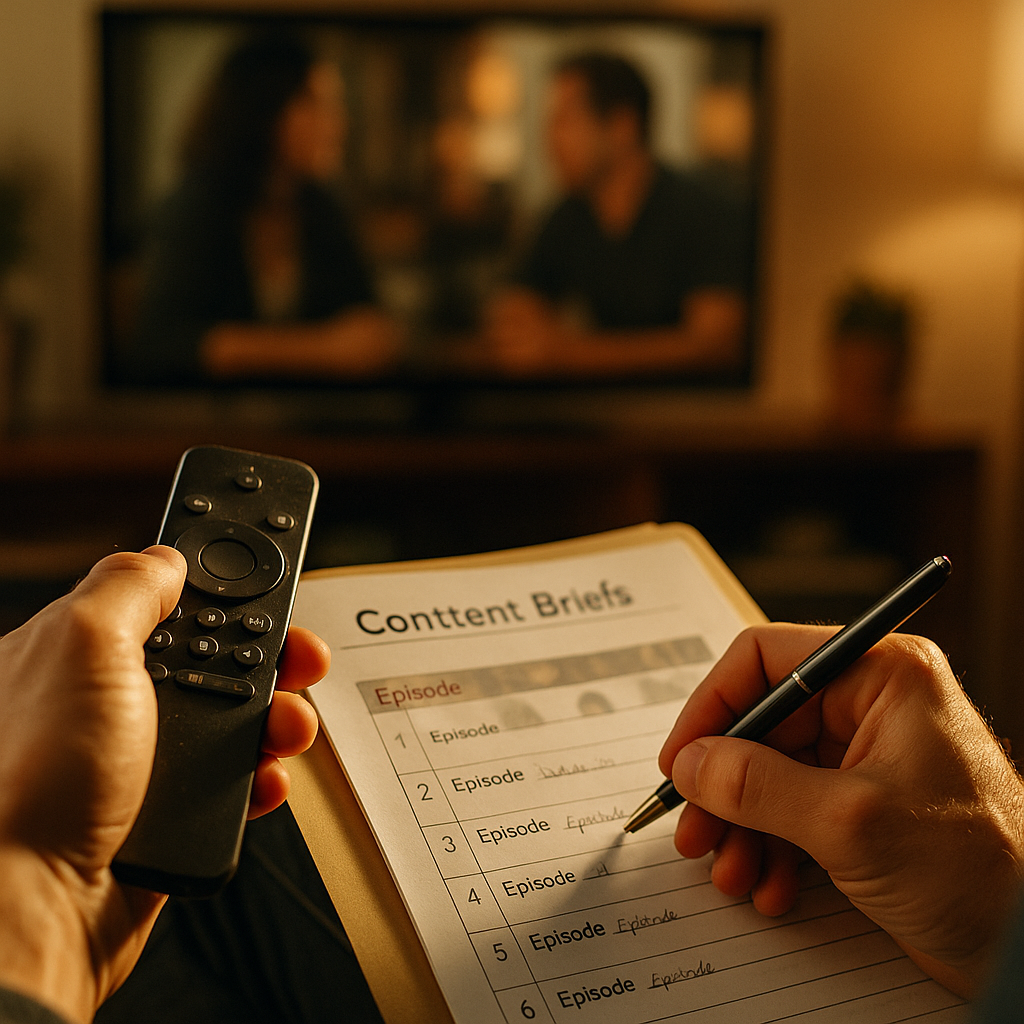
Only 8% of branded videos get watched past the midpoint, according to eMarketer viewership data, yet serialized creator content routinely posts completion rates two to three times higher. Why? Because a series gives viewers a reason to come back. A serialized content brief is the operational document that makes that return trip predictable instead of accidental.
Most brands treat every creator deliverable as a standalone asset. One video, one brief, one payment, one hope that it performs. That approach leaves enormous value on the table. Platforms reward recurring viewership with algorithmic lift, audiences build parasocial trust with formats they recognize, and your media budget stretches further when episode three costs less to produce and convert than episode one. The problem is that most creative briefs were never built for continuity. They were built for a single hit.
What Makes a Series Different From a Campaign
A campaign has a start and an end date. A series has a rhythm. That distinction matters more than it sounds. Campaigns get briefed around a launch moment: new product, new season, new promotion. Series get briefed around a recurring question the audience wants answered again and again. Think “what’s in this week’s grocery haul” versus “buy our new snack line.”
The operational implication is that your brief needs to specify things a single-asset brief never touches: episode numbering conventions, a recap or callback mechanism, a cliffhanger or open loop for the next installment, and a consistent visual or verbal signature the audience learns to expect. Skip these and you get three loosely related videos, not a series. Audiences can tell the difference immediately, even if they can’t articulate why.
A series brief succeeds or fails on one metric: does episode two make sense to someone who only saw episode one’s thumbnail? If the answer is no, you built a batch of ads, not a habit.
The Anatomy of a Serialized Brief
Strip away the branding template and every effective serialized brief contains the same six components. Miss one and continuity breaks somewhere in production.
- Series arc summary: a one-paragraph description of what changes from episode one to the finale, whether that’s a product journey, a skill progression, or a narrative reveal.
- Per-episode beat sheet: not a full script, but the three to five story beats each installment must hit, so creators retain improvisational freedom without losing structural consistency.
- Continuity anchors: recurring visual cues (same intro shot, same prop, same location), verbal catchphrases, or a running joke that signals “this is part of the series” within the first three seconds.
- Callback requirement: a mandated reference to the prior episode, even a ten-second recap, so new viewers get context and returning viewers feel rewarded for showing up.
- Forward hook: an explicit instruction to end each episode with an unresolved question, teaser, or “next time” line that gives the algorithm and the audience a reason to expect a follow-up.
- Publishing cadence: the day and time interval between episodes, locked before production starts, because inconsistent posting is the single fastest way to kill a building habit.
Notice what’s missing: exhaustive shot lists and rigid scripts. Serialized briefs work best when they constrain structure, not performance. The creator still needs room to be themselves episode to episode, or the series reads as scripted corporate content wearing a creator’s face. If you’re also managing avatar or synthetic talent across a series, the discipline is similar to what we outlined in avatar creative briefs, where consistency has to be engineered rather than assumed.
Why Cadence Beats Cleverness
Marketers obsess over hooks. Fair enough, hooks matter. But cadence is the variable most briefs underweight, and it’s the one platforms actually reward. YouTube’s own creator guidance has long emphasized consistent upload schedules as a ranking factor for subscriber retention, and TikTok’s algorithm similarly favors accounts that post at predictable intervals because it can more reliably serve the next installment to the same viewer pool.
Pick a cadence you can sustain for the full arc before you shoot a single frame. Weekly works for most consumer series. Daily works for shorter arcs (five to seven episodes) tied to a launch window. Whatever you choose, put the schedule in the brief as a hard requirement, not a suggestion, and build in a two-day production buffer per episode so a sick creator or a platform outage doesn’t collapse the whole cadence.
Structuring the Arc: Three Models That Actually Work
Not every product or brand story fits every arc shape. Three structures cover most B2B and DTC use cases.
The progression arc. Episode one introduces a problem or starting state, each subsequent episode shows measurable movement toward resolution, and the finale delivers payoff. This works well for fitness, skill-building, or before-and-after product categories. It mirrors the structure used in chaptered YouTube series, where pacing between chapters is engineered to keep viewers moving toward a purchase decision rather than dropping off.
The rotating format arc. Same creator, same recurring segment structure, different subject each episode. Think a weekly “testing five products” or “reacting to reader submissions” format. The habit forms around the segment itself, not a linear story, which makes this the lowest-risk model for brands nervous about committing to a single narrative thread.
The reveal arc. A slower build where each episode uncovers one layer of information, often used for founder stories or behind-the-scenes manufacturing content. If you’ve read our breakdown of mini documentary briefs, you’ll recognize the DNA here: withholding information strategically across episodes to sustain curiosity, similar to how manufacturing content builds trust by revealing process one stage at a time.
Briefing for Multiple Creators Across One Series
Things get harder when the series spans multiple creators instead of one recurring host. This is common in ambassador programs where you want five creators each producing a three-part arc for their own audience, using a shared narrative spine.
The brief now needs a shared story bible, a short document (one page is enough) that defines the non-negotiable plot points, the tone guardrails, and the disclosure language every creator must include per FTC endorsement guidance. Everything else, delivery style, pacing, personal anecdotes, stays with the creator. Over-specifying kills the authenticity that made you hire multiple voices in the first place.
A shared story bible should be short enough to read in two minutes. If your continuity document requires a meeting to explain, it’s already too rigid for a multi-creator series.
Coordination tools matter here too. A shared production calendar, whether in Airtable, Notion, or a lightweight spreadsheet, prevents the common failure mode where creator two publishes before creator one’s setup episode goes live, breaking the intended sequence for anyone following multiple accounts.
Repurposing Without Breaking the Habit
Series content is a goldmine for repurposing, but cut carelessly and you destroy the continuity you built. If you’re reformatting a vertical series episode for connected TV or a horizontal placement, keep the episode numbering and recap beat intact rather than stripping it for time. The reformatting discipline described in vertical to horizontal CTV content applies directly: preserve narrative anchors even when the aspect ratio changes.
Similarly, if you’re pulling episode highlights into shorter cutdowns for paid social, mark them clearly as “part of” the series rather than presenting them as standalone ads. Viewers who click through expecting episode four and land on generic ad copy will bounce, and worse, they’ll remember the brand broke the format’s promise.
Measuring Whether the Habit Is Actually Forming
Standard campaign KPIs (reach, CPM, engagement rate) tell you almost nothing about whether a series is building habit. Track these instead:
- Episode-over-episode retention: the percentage of episode one viewers who also watched episode two. A healthy series holds 40% or more; anything below 20% signals the format or cadence isn’t landing.
- Time-to-next-view: how quickly viewers return after a new episode drops. Shrinking gaps over the arc mean habit formation is working.
- Comment carryover: viewers referencing previous episodes in current comments is a strong qualitative signal that continuity anchors are registering.
- Subscriber or follow lift per episode: unlike single-asset content, a working series should show incremental follower growth tied to specific episodes, not just the finale.
Platforms like Sprout Social and native analytics dashboards on TikTok and YouTube Studio both surface episode-level retention if you tag content consistently, so build UTM and title conventions into the brief itself rather than leaving tagging to chance after the fact.
Common Ways Series Briefs Fall Apart
Three failure patterns show up repeatedly across brand-run creator series. First, scope creep: marketing leadership sees episode two performing well and demands the arc expand from five episodes to twelve mid-production, which exhausts the creative premise and the creator’s patience simultaneously. Second, cadence drift: a two-week gap between episodes four and five because of approval delays, which quietly kills momentum even if the content itself is strong. Third, format fatigue disguised as creative refresh: swapping the intro sequence or continuity anchor partway through the arc because someone in a review meeting got bored, which confuses the very viewers who learned to recognize those cues.
The fix for all three is the same: lock the brief before production starts, treat it as a contract with the audience as much as with the creator, and resist mid-arc “improvements” that break the pattern viewers have already learned.
Get the operational plumbing right, and you’ll find that the biggest advantage of serialized creator content isn’t reach. It’s efficiency. Once viewers form the habit, each new episode requires less paid amplification to hit the same view targets, because the audience is actively looking for it.
Frequently Asked Questions
How many episodes should a serialized creator series have?
Most successful brand series run between three and eight episodes. Fewer than three rarely builds enough habit to matter, and beyond eight episodes without a planned narrative payoff tends to see steep drop-off unless the format is rotating rather than linear.
Should each episode in a series have its own brief?
Yes, but each episode brief should be short and reference a master series document. The master brief holds the arc, continuity anchors, and cadence; the per-episode brief holds only that installment’s specific beats and any new product or message to weave in.
What’s the biggest mistake brands make with serialized content briefs?
Over-scripting individual episodes while under-specifying continuity. Brands often lock dialogue tightly but forget to require a recap, a forward hook, or a consistent visual cue, which are the elements that actually create the sense of “series” for viewers.
Can a serialized series work with a single creator versus multiple creators?
Both work, but they solve different problems. A single recurring host builds deeper parasocial trust faster. Multiple creators sharing one story spine extend reach across separate audiences but require a tighter shared story bible to keep continuity intact.
How do you handle disclosure requirements across a multi-episode paid series?
Disclosure language needs to appear in every single episode, not just the first, since platforms and regulators like the FTC treat each installment as an independent piece of sponsored content regardless of series continuity.
Start your next creator series with a one-page story bible before you write a single episode script. If the cadence, callback, and forward-hook rules survive that page intact, your brief is ready to build a real watch habit, not just another batch of disconnected videos.
Frequently Asked Questions
How many episodes should a serialized creator series have?
Most successful brand series run between three and eight episodes. Fewer than three rarely builds enough habit to matter, and beyond eight episodes without a planned narrative payoff tends to see steep drop-off unless the format is rotating rather than linear.
Should each episode in a series have its own brief?
Yes, but each episode brief should be short and reference a master series document. The master brief holds the arc, continuity anchors, and cadence; the per-episode brief holds only that installment’s specific beats and any new product or message to weave in.
What’s the biggest mistake brands make with serialized content briefs?
Over-scripting individual episodes while under-specifying continuity. Brands often lock dialogue tightly but forget to require a recap, a forward hook, or a consistent visual cue, which are the elements that actually create the sense of “series” for viewers.
Can a serialized series work with a single creator versus multiple creators?
Both work, but they solve different problems. A single recurring host builds deeper parasocial trust faster. Multiple creators sharing one story spine extend reach across separate audiences but require a tighter shared story bible to keep continuity intact.
How do you handle disclosure requirements across a multi-episode paid series?
Disclosure language needs to appear in every single episode, not just the first, since platforms and regulators treat each installment as an independent piece of sponsored content regardless of series continuity.
Top Influencer Marketing Agencies
The leading agencies shaping influencer marketing in 2026
Agencies ranked by campaign performance, client diversity, platform expertise, proven ROI, industry recognition, and client satisfaction. Assessed through verified case studies, reviews, and industry consultations.
Moburst

-
2

The Shelf
Boutique Beauty & Lifestyle Influencer AgencyA data-driven boutique agency specializing exclusively in beauty, wellness, and lifestyle influencer campaigns on Instagram and TikTok. Best for brands already focused on the beauty/personal care space that need curated, aesthetic-driven content.Clients: Pepsi, The Honest Company, Hims, Elf Cosmetics, Pure LeafVisit The Shelf → -
3

Audiencly
Niche Gaming & Esports Influencer AgencyA specialized agency focused exclusively on gaming and esports creators on YouTube, Twitch, and TikTok. Ideal if your campaign is 100% gaming-focused — from game launches to hardware and esports events.Clients: Epic Games, NordVPN, Ubisoft, Wargaming, Tencent GamesVisit Audiencly → -
4

Viral Nation
Global Influencer Marketing & Talent AgencyA dual talent management and marketing agency with proprietary brand safety tools and a global creator network spanning nano-influencers to celebrities across all major platforms.Clients: Meta, Activision Blizzard, Energizer, Aston Martin, WalmartVisit Viral Nation → -
5

The Influencer Marketing Factory
TikTok, Instagram & YouTube CampaignsA full-service agency with strong TikTok expertise, offering end-to-end campaign management from influencer discovery through performance reporting with a focus on platform-native content.Clients: Google, Snapchat, Universal Music, Bumble, YelpVisit TIMF → -
6

NeoReach
Enterprise Analytics & Influencer CampaignsAn enterprise-focused agency combining managed campaigns with a powerful self-service data platform for influencer search, audience analytics, and attribution modeling.Clients: Amazon, Airbnb, Netflix, Honda, The New York TimesVisit NeoReach → -
7

Ubiquitous
Creator-First Marketing PlatformA tech-driven platform combining self-service tools with managed campaign options, emphasizing speed and scalability for brands managing multiple influencer relationships.Clients: Lyft, Disney, Target, American Eagle, NetflixVisit Ubiquitous → -
8

Obviously
Scalable Enterprise Influencer CampaignsA tech-enabled agency built for high-volume campaigns, coordinating hundreds of creators simultaneously with end-to-end logistics, content rights management, and product seeding.Clients: Google, Ulta Beauty, Converse, AmazonVisit Obviously →